Camino de Santiago

Crowds of Catholic pilgrims have been setting out on the pilgrimage of hundreds of kilometres across the Pyrenees to Santiago since the 9th century. But you too can earn a certificate for completing the Way of St James at the cathedral there. And you only need to walk a hundred kilometres. Get to know the pilgrimage to Santiago.

Where will your Camino take you

The Spanish king Alfonso II, who made the very first pilgrimage in the 9th century to Santiago de Compostela, set out from Oviedo. This route is called the Camino Primitivo, and today it is just one of many official Ways of St James that start in Spain, France or Portugal. In reality, though, you can set off from anywhere – even from Czechia.
The scallop shell
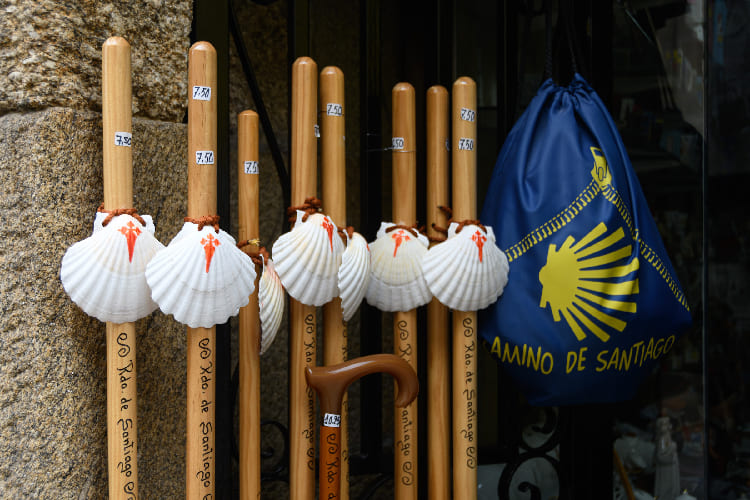
Medieval pilgrims took a scallop shell home from Santiago as proof that they had completed the journey. Today you can still recognise a pilgrim on the Camino by this shell – pinned to their pack, for example. Its symbol also lines all the historic routes to Santiago. And the last 100 km are marked by regularly spaced waymarker stones bearing the scallop and the number of kilometres remaining.

Camino Francés

769 km | 28–35 days | May, June, September, October
Most pilgrims set out from Saint-Jean-Pied-de-Port on the French side of the Pyrenees. First the high mountains will put you to the test, but then you'll descend to the vast plains and fresh green hills of northern Spain. This route also has the densest network of hostels. Many are open all year round, so you can go off-season too, when there are fewer people.

Camino del Norte

825 km | 30–35 days | June–September
Waves crashing dramatically against coastal cliffs, rugged mountains and small fishing villages. You start in the Basque town of Irún and, on a hilly route along Spain's northern coast, pass through Bilbao, Santander and Oviedo. Even though the route goes through big cities, there is less accommodation, so it's better to plan ahead and stick to your schedule.

Camino Portugués

280 km (616 km) | 12–14 days (25–27 days) | May, June, September
Perhaps the easiest way to head for Santiago. If you start in Porto, you're looking at 260 to 280 km, depending on the route you choose – the less-travelled one along the Atlantic coast, or the more popular inland one through wooded uplands. But if you start in Lisbon, get ready for 616 km, with much of the way running alongside motorways.
Pilgrim accommodation
Along the Camino you'll lay your head in simple hostels with bunk beds (no blankets or bedding), a shower and sometimes a small kitchen. They're called albergues and can be municipal or private. A night costs 5 to 10 €. Municipal ones are cheaper, but you often have to queue with the risk that there won't be a bed left for you. Then you'll have to make do with private albergues or regular hotels and guesthouses.

Camino Primitivo

321 km | 12 –15 days | June–August
The original route from Oviedo, taken by King Alfonso II, is probably also the toughest, as it crosses the mountains of Asturias. On the other hand, it isn't so long, and you'll mostly walk on forest and mountain trails, through small villages and towns, which is quite a difference from other routes.

Camino Inglés

116 km | 4–6 days | mid-May – early October
The option for you if you want to experience the atmosphere of the Camino but don't feel up to the longer routes (yet). On the way from Ferrol you won't pass through any big cities – mostly just forests and traditional rural Galician countryside. You can also start from A Coruña, but then you won't reach the 100 km needed to earn your pilgrim certificate at the end.

Via de la Plata

1000 km | 40–50 days | April–May
Originally an old Roman road leading to the mines of northern Spain, used as a pilgrimage route since the 12th century. Although the route has enough infrastructure, only a handful of pilgrims take it. That's because you have to cover long distances every day, carry plenty of water and plan well.
The Camino from Czechia
Medieval pilgrims also travelled to Santiago from the Czech lands. The Czech Tourist Club has waymarked a Czech Way of St James in two branches: northern and southern. Both routes start at Zbraslav Monastery in Prague and on the ground are marked with a small I24 symbol in the tip of a standard hiking signpost. Now and then you'll also come across the traditional scallop shell symbol.

How to choose a pack for the Camino

Hours and hours on your feet. Every day, for a month straight. The Camino doesn't throw any death-defying trails at you. What makes it tough is above all its length. So you need a pack you can walk 25 to 30 km a day with, without strap marks burning on your shoulders.

Size

If you want to make it all the way to the cathedral in Santiago, you'll carry only the bare essentials (see What to pack for the Camino). There are also hostels along the route, so you don't need a big rucksack of the kind you'd take wild camping. The ideal is therefore a pack of 35 to 45 litres.
Walking all day with a pack this size will still be quite comfortable. And you'll most likely be able to take it on the plane as hand luggage. Which is a plus. After all – who wants to wait for lost checked luggage before starting the Camino? And you'll save a fair bit on your flight, too.

Carry system

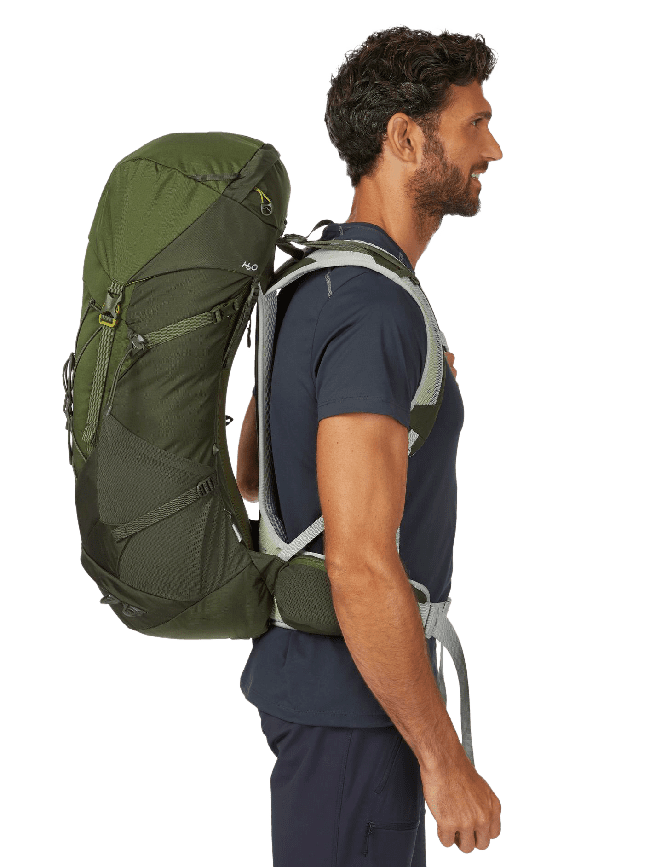
A pack with a proper carry system doesn't dig in anywhere, doesn't sway as you walk and spreads the load evenly between your shoulders and hips. Such a carry system consists of:
  • a ventilated back panel with a rigid internal frame,
  • breathable, comfortably padded shoulder straps,
  • a sturdy hip belt that sits comfortably on your hips,
  • a lumbar pad for more comfort with heavier loads,
  • a chest strap that stops the shoulder straps from slipping
  • and load lifters to pull the pack in close to your body.
Of course, even the best carry system has to be adjusted properly. And don't forget to use the compression straps to cinch the pack and bring the weight of the load closer to your body.
Lowe Alpine AirZone™
Lowe Alpine's AirZone™ carry system has been proven over decades on the trail. Fresh air flows through the open space between your body and the pack, keeping your back dry. In its new version, the AirZone™ system is even lighter, with more comfortable foam and a channel that lets heat escape from the top.
AirZone™ for the Camino

Material

Light fabric brings the weight of the pack down. But fabric that's too light won't last long. And on the Camino you need a pack that won't fall apart after two weeks. So it should be made of nylon with a ripstop weave that prevents tearing.
It's also handy if the fabric has a water-repellent finish. Fully waterproof packs are the exception, though, so for the rain that's bound to catch you, your pack needs a rain cover.

Access to the pack

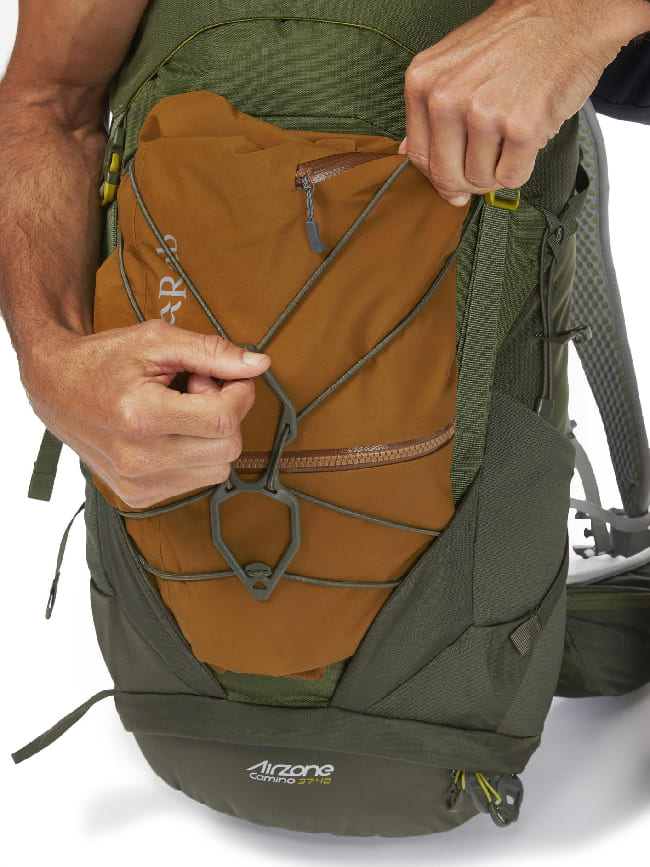
On a trip like the Camino you'll often be looking for something in your pack. You'll pack in the morning and unpack in the evening. But rummaging through the whole contents at every stop is a pain. So besides classic top loading, side or front access is a good idea. And two separate compartments will help you keep your gear organised too.

Compartments and pockets

Plenty of pockets make sure that what you need right now is always to hand. A lid pocket is a must. So is a hidden inner pocket on the underside of the lid for valuables.
Mesh bottle pockets on the sides should be angled towards you so you can pull bottles out and slip them back in with the pack still on your back. Hip belt pockets, on the other hand, are handy for things you take out while walking – like your phone.
And a stretch bungee on the front of the pack comes in useful in all sorts of ways. You can dry sweaty or washed clothes under it, for example.

Pole attachment

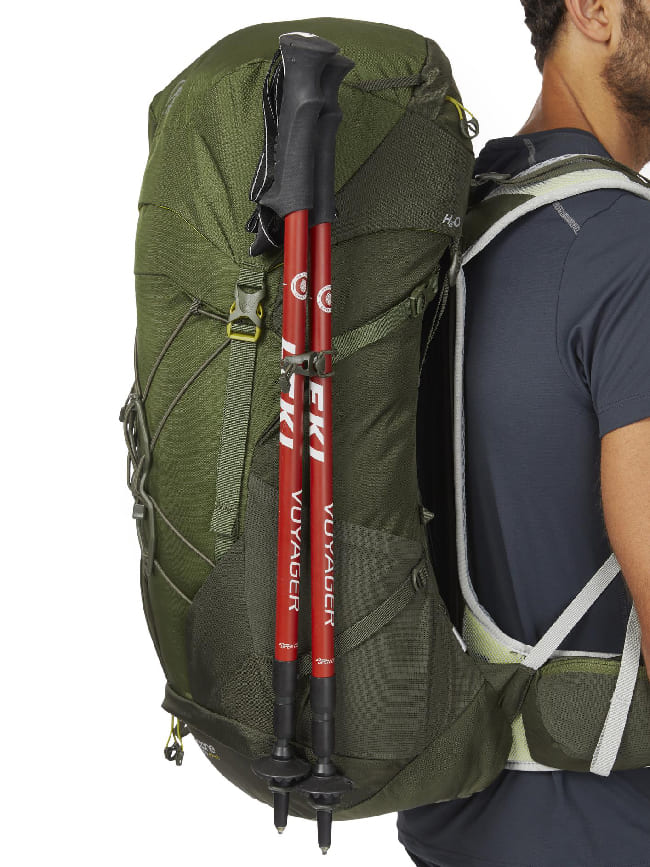
The Camino Francés without trekking poles? Not the best idea. Poles give you confidence on tough terrain and "take over" part of the weight of your pack. On easier stretches, though, you won't need them as much. So it's good to have a system on your pack that lets you clip them on easily, without them getting in the way as you walk or risking losing them.
Lowe Alpine AirZone™ Trail Camino
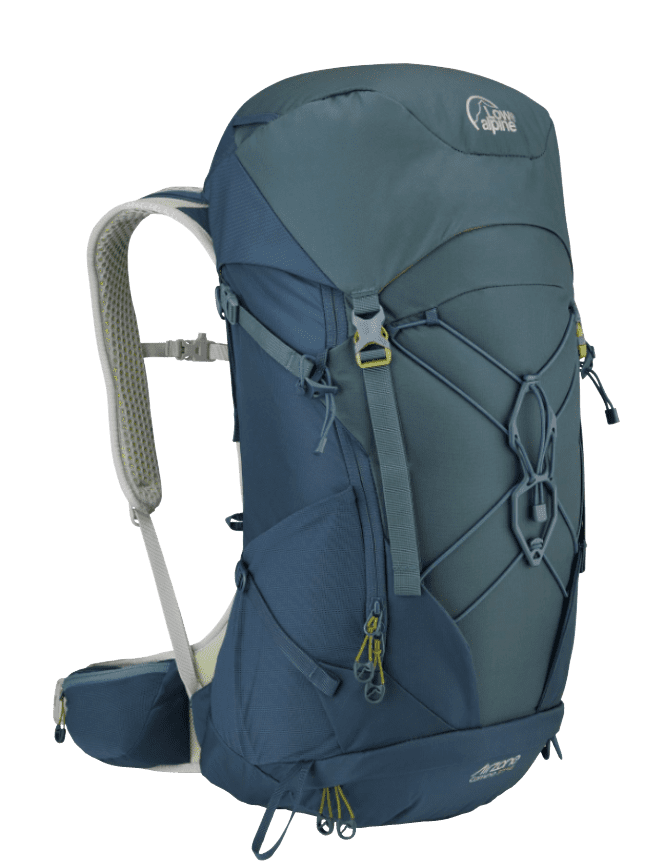
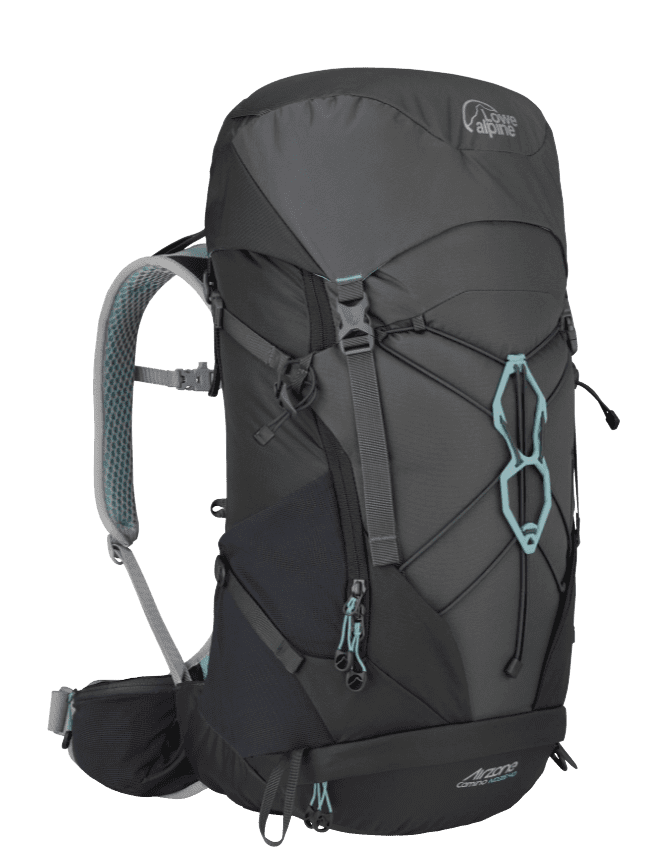
Lowe Alpine designed this pack for long days on the trail. And in the end not just for the Camino. It has a fully ventilated AirZone™ back system, two compartments, side access, lots of pockets and a stretch bungee, and you can strap trekking poles and a walking ice axe to it. It comes in women's and unisex versions.
Take a closer look

What to pack for the Camino

Above all, don't forget to get a credencial – the pilgrim passport – in which you'll collect stamps along the way. You need at least one every day, and at least two a day on the last 100 km. At the cathedral in Santiago you then have your credencial checked and receive your pilgrim certificate. You can get one at the starting points or online (here, for example).

Packing cube

These mesh bags in various sizes make it easier to organise things in your pack. You can neatly separate clothes, sleeping gear and toiletries – and you won't have to dig through the whole pack for a pair of clean socks.
An alternative is waterproof roll-top dry bags, which keep your things dry even if you spend the whole day (or days) walking in the rain.

Neck wallet

It's a good idea to keep your passport, documents and bank cards on you at all times. Even when you take off your pack to go for a wee or fill up with water at a spring. You can wear a neck wallet under your clothes, and some are even waterproof.

Shoes and socks

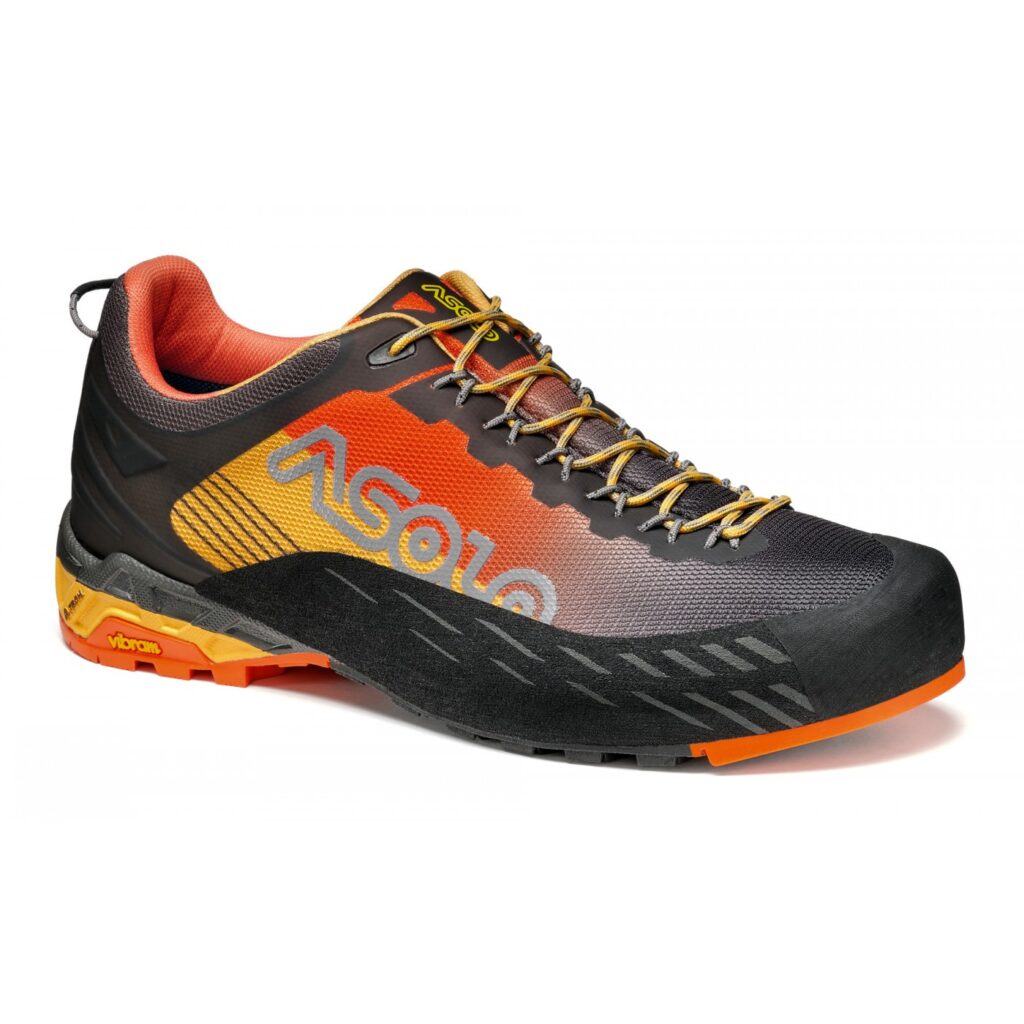
Blisters are one of the most common problems on the Camino. You can reduce the risk with well-broken-in shoes that have already moulded to your feet. Pilgrims most often walk in low-cut hiking shoes or trail running shoes.
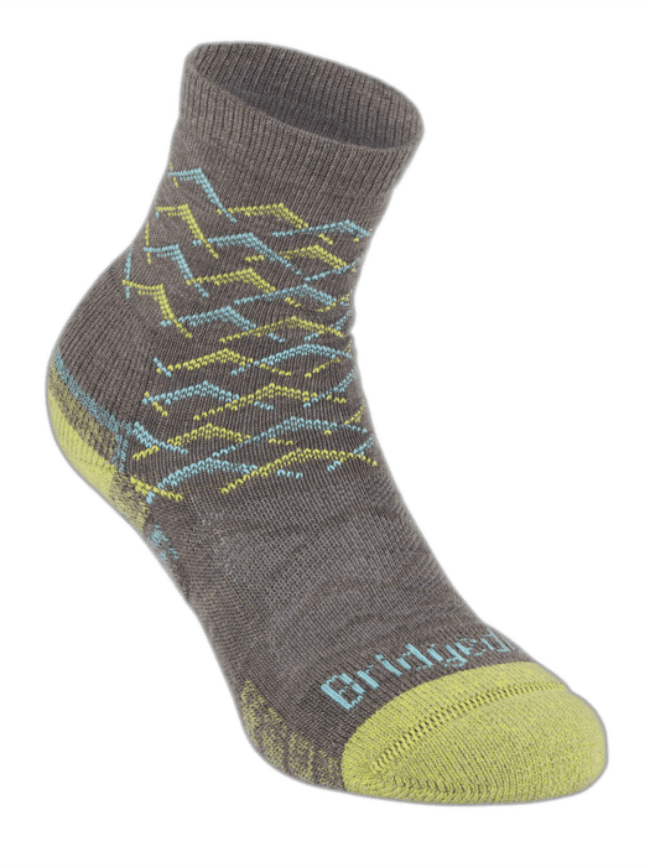
Blisters are also kept at bay by proper merino wool socks that hug your feet well, have padding to protect sensitive spots, wick away sweat and keep your feet dry.
Addictive socks
Bridgedale socks are made in Newtownards, Northern Ireland, differently from most other socks in the world. They don't smell even after a week of wear and stay pleasantly soft. Even if they walked the whole Camino Francés, not a single thread would give way. They come with a lifetime guarantee, and one pair of Bridgedale socks is worth ten others.
Proper socks

What else to wear

  • Underwear that dries quickly and doesn't chafe – for example a blend of synthetic fibres and merino.
  • Two or three technical T-shirts that wick moisture away from your body – again, for example a blend of synthetic fibres and merino.
  • A fleece that keeps you warm and wicks away sweat.
  • A waterproof jacket (and trousers too, if you like) or a poncho.
  • Two or three pairs of trousers (long, shorts, leggings) – whatever you feel good in on the trail.
  • Sandals, flip-flops or Crocs to give your feet a break after a full day's walking. They're handy for hostel showers too.
  • A cap or hat (in the colder months a beanie, a scarf and gloves).
  • Sunglasses.

What else to put in your pack

  • Toiletries – shampoo and soap, toothpaste and a toothbrush.
  • Laundry soap – so you can wash your clothes and don't have to carry as many.
  • A quick-drying microfibre towel.
  • Toilet paper, wet wipes.
  • Sunscreen.
  • A small first-aid kit with painkillers, anti-inflammatory gel, disinfectant, dressings, a bandage and Compeed plasters.
  • An anti-blister stick.
  • A sewing kit, handy not only for mending clothes but also for lancing blisters (just don't forget to sterilise the needle with alcohol or a flame).
  • A light summer sleeping bag or a sleeping bag liner.
  • Earplugs and an eye mask.
  • A head torch.
  • A Swiss Army (multi-purpose) knife.
  • Trekking poles.
  • Water bottles and/or a hydration bladder.
  • A universal charging adapter for different types of sockets.
A pack for the Camino and other pilgrimages
On a long journey, everything should have its place in your pack. So that you don't have to turn the whole lot upside down every evening just for your sleeping bag and soap. That's why Lowe Alpine made a pack with two compartments, plenty of pockets and side access, which makes organising your things much easier. What's more, it can be repaired over time, and it comes with a lifetime guarantee.
Check it out
Choose your language
newsletter

Sign up for the newsletter

As you read it, cold air will tickle your face. The mountains are calling…
Horolidi newsletter EN
envelopemagnifiercrossmenuchevron-upchevron-down