How to make it fit well

No strap on a pack is there just for decoration. What's more, the bigger the pack, the more straps you'll find on it, and each has a different job. So it pays to know what each one does, when to reach for which strap and how to tighten it properly.

Know your pack

That's the basis. A pack's carrying system isn't just the shoulder straps. The bigger the pack (and so the heavier the load), the more you need to take weight off your shoulders and shift it to other parts of your body. So the carrying system is made up of:
pack construction drawing

All about pack design

How do the different parts of a pack work, how can they make your life easier out there, and which pack design suits which activity best? Find out in our Advice section.
pack design

Adjusting your pack: 
step by step

1
Load the pack with weight – similar to the gear you'll be carrying in it.
2
Loosen all the straps of the carrying system.
3
If the pack has an adjustable back panel, set it to your back length (the scale will help).
4
Put the pack on and tighten the hip belt – so that the pack rests with all its weight on the top of your pelvis.
Adjusting the chest strap
5
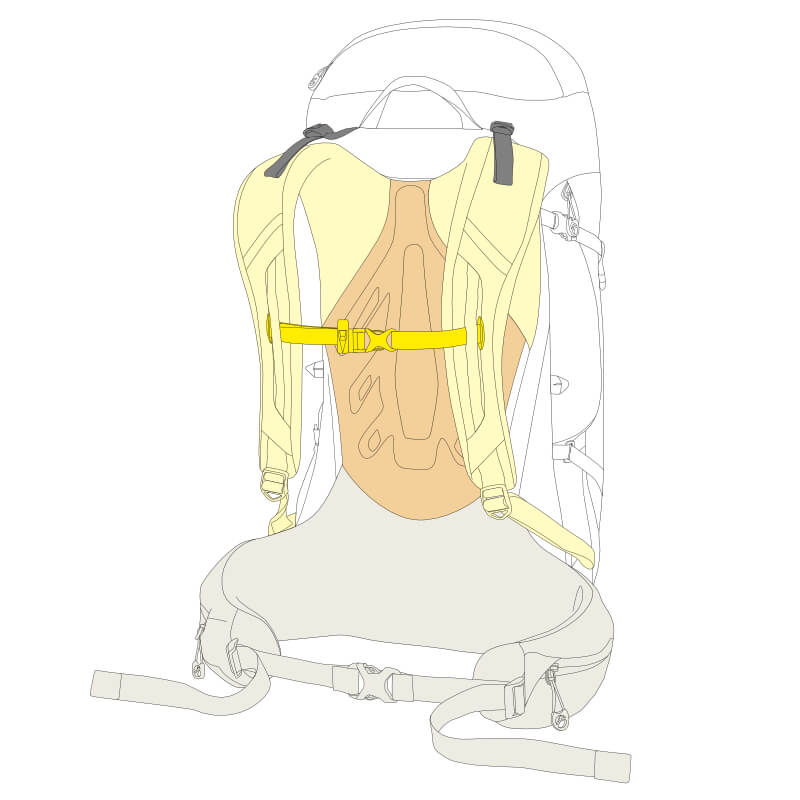
Tighten the shoulder straps – so that the pack comes closer to your body without taking too much load off the hip belt.
6
Use the load lifters to pull the top of the pack towards your back:
  • Loosening the lifters creates a gap between the top of the pack and your back. Air will flow through it and cool you down. But the pack won't be very stable.
  • Tightening the lifters closes the gap between pack and back and the pack sits better on your body – especially on rough ground and climbing terrain.
  • Tightening them hard lifts the shoulder straps – this shifts the weight of the pack onto your chest and takes load off your shoulders.
7
If the pack has extra stabiliser straps on the hip belt, tighten them. The tighter you pull them, the more stable the pack will be (on demanding terrain), but the less comfortable.
8
Position the chest strap about 10 cm below your collarbone, clip it and tighten it.
Weight distribution in a pack

Now pack it properly

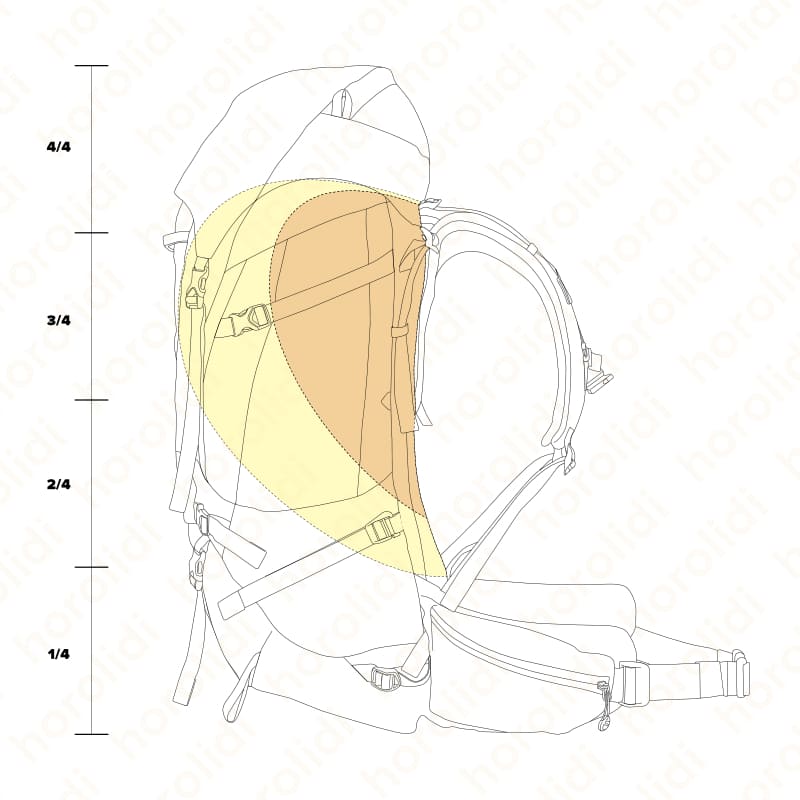
Adjusting your pack is one thing. Packing it properly is another, and just as important. Especially with big trekking packs, you need to pack so that the centre of gravity is as close as possible to your upper back. So the heaviest things go against your back (e.g. hydration bladder, tent, a tin of beans) and the lightest in the bottom compartment (typically your sleeping bag) and under the lid (clothes, toiletries). Then the pack will really sit well.
Light items
Medium-weight items
Heavy items

What to pack in winter

Prevention is the best cure, and in our Advice section you'll find out what to pack so that nothing catches you out on a winter hike, winter climb or ski tour.
pack for winter

A pack for decades

You can sling any pack on your back and carry what you need in it. But only a proper pack won't get in your way when you move and won't turn your shoulders into mincemeat. You can drag a proper pack up an ice face or through a rainforest without a single stitch giving way. And trust us, you'll know a proper pack when you see one.
Choose your language
newsletter

Sign up for the newsletter

As you read it, cold air will tickle your face. The mountains are calling…
Horolidi newsletter EN
envelopemagnifiercrossmenuchevron-upchevron-down