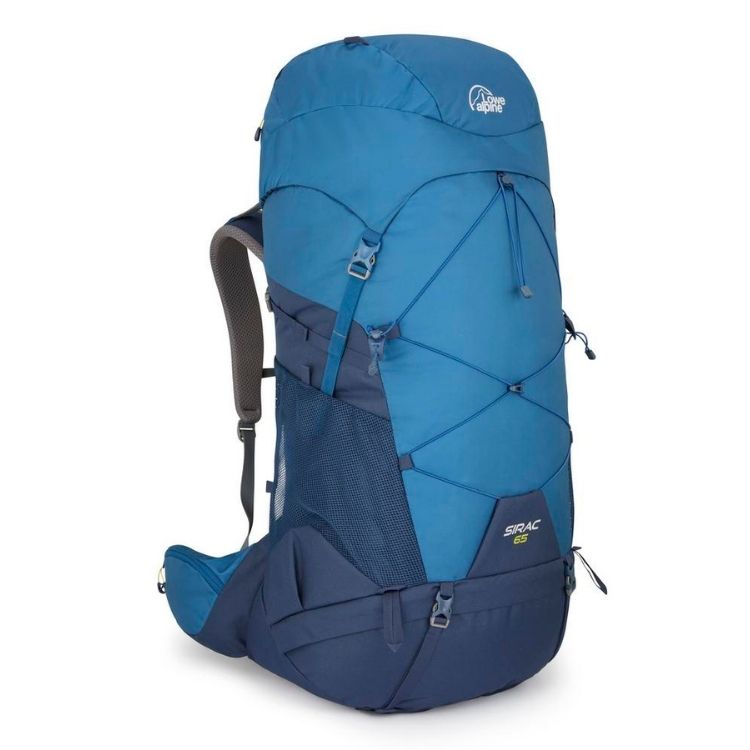
For a pack that serves you well

First you need to choose your pack well – so it suits the activity you want to use it for. And then you need to know how the different parts of the pack work – and how they can make life out there easier.

The carry system

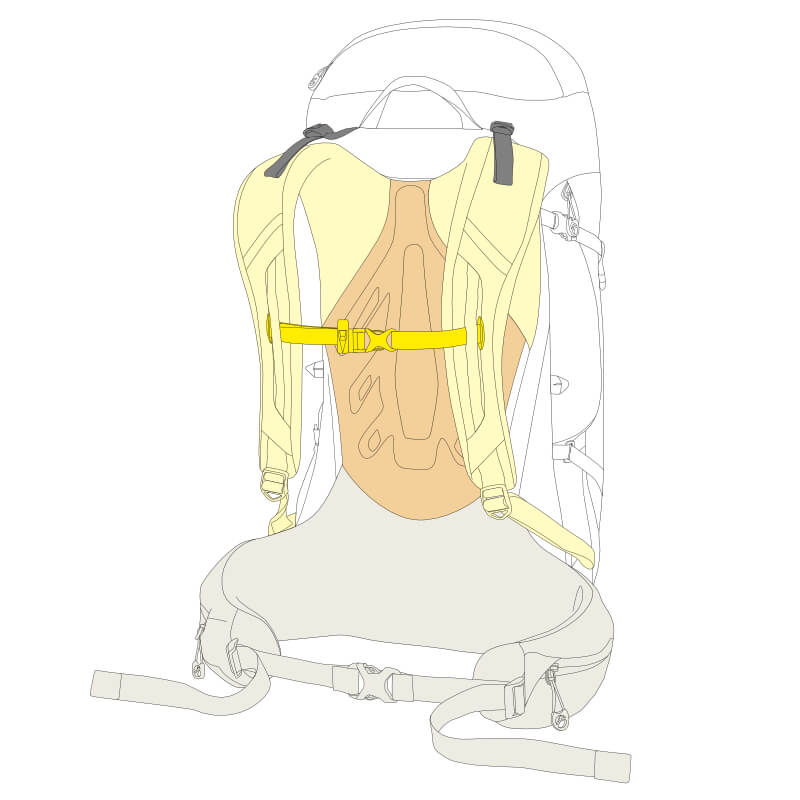
It wobbles, bounces up and down, digs into your collarbones and the straps cut into your neck – a pack that doesn't fit is a pain. But often it's not just the pack's fault. How happy you are depends on the type of carry system and setting it up correctly using:
drawing of a backpack's design

Back panel

The bigger the pack, the more sophisticated the back panel. As the weight of the load grows, so does the need to spread the load across your whole body.

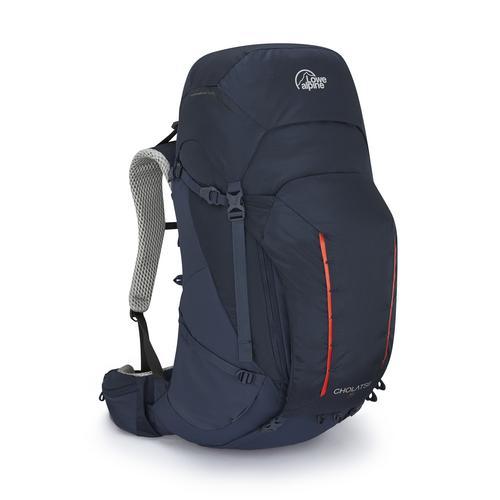
Standard fit

Mainly for men 170 - 185 cm tall. The pack is shaped for a build with broader shoulders and narrower hips.
Lowe Alpine Cholatse 52:57 >

Long fit

Mainly for men 185 - 200 cm tall. The pack is shaped for a build with broader shoulders and narrower hips.
Lowe Alpine Cholatse 52:57 Large >

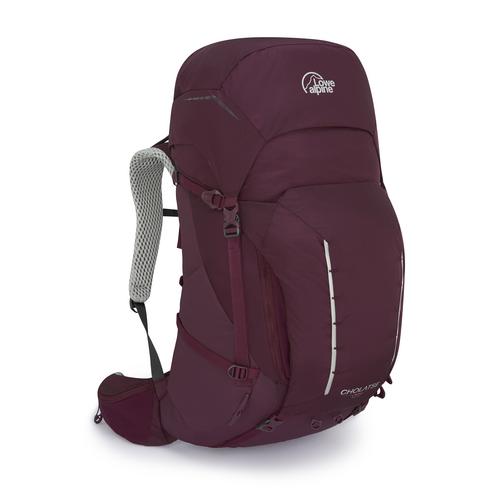
ND fit

For women 160 - 175 cm tall and smaller men. The pack has a narrower, shorter back, a wider lower section and a hip belt for wider hips.
Lowe Alpine Cholatse ND50:55 >

Fixed back panel

This back panel has a fixed size, determined by the pack's volume and purpose. It's used on packs for day trips and traverses with a not-too-heavy load. And also on climbing packs, where a simple design is essential.
Lowe Alpine AirZone Active ND22 >

Adjustable back panel

It's indispensable on large trekking packs for multi-day trips with lots of gear. Sliding the top of the back panel changes the distance between the shoulder straps and the hip belt – and a correctly adjusted pack then spreads the load evenly between your shoulders and hips.
Lowe Alpine Manaslu 65:80 >
Do you always need a breathable back panel?
In summer, definitely – for getting out on hot days, the most breathable back panels are ideal (e.g. AirZone from Lowe Alpine).
Extra-breathable back panels aren't built for heavy loads, though – so with large trekking packs it's always a compromise between breathability and load-carrying.
Climbing packs, on the other hand, don't need a back that's breathable at all – a shaped panel without mesh or channels forms a firm but thin layer, so the pack sits perfectly against your body while you climb. A back panel like this often sheds snow too, and on ski packs it also serves as the main access to the pack.

Shoulder straps

Tightening them sets how high on your back you carry the pack. The bigger the pack, the more padded the shoulder straps – and the greater the need to get them working together with the following features.

Hip belt

It becomes more useful the bigger the pack and the heavier the load – it transfers the weight to your pelvis and hips, taking the strain off your shoulders. On large packs it carries up to 80 % of the weight. On smaller packs it mainly helps keep the pack stable on your body. The stiffer the hip belt, the more weight it can carry.

Lumbar pad

You'll only find it on bigger packs. And the bigger the pack, the denser the foam the pad is made of. When you try the pack on, it may feel uncomfortable in this area, but out on the trail it'll be exactly the opposite.
close-up of the lumbar pad

Chest strap

It keeps the shoulder straps in place – stopping them slipping off your shoulders. It's usually height-adjustable, so it doesn't squeeze your chest (or, for women, sit awkwardly across the bust).

Load lifters

They're often forgotten, and that's then the reason why the pack doesn't fit well. You'll find them at the top of the shoulder straps – tightening them pulls the pack in towards your shoulders so it moves as one with your body.

How to fit a backpack

The bigger the pack (and the heavier the load), the more you need to take the weight off your shoulders and transfer it to other parts of your body. Our Advice section shows you how.
step by step

Pack body

Every type of pack has its own specific design features and clever little touches that make it easy to carry the gear you need for the activity the pack is designed for.
Gear belongs inside first and foremost – a pack hung all over with jangling bits and bobs just looks awful. What's more, things hanging off the pack upset how stably it sits on your body and can snag on anything out there.

Pack fabric

As a pack's weight goes up, so does its durability – against abrasion or tearing, for example. But the reverse is true too – lightweight packs take a beating when you crawl through thickets or squeeze through rocky gorges.
Ripstop weave stops torn fabric (nylon or polyester) from ripping further – a small tear won't get bigger and you can happily keep using the pack for years.
Can a pack be waterproof?
Only a handful of 100% waterproof packs with coated fabric and taped seams are on the market. And a rain cover sadly isn't all-powerful – in heavy, persistent rain, water will "seep" into the pack through the back. The truly reliable waterproof solution is to pack your things inside the pack in dry bags or plastic bags.

Volume and organisation

Lots of stuff calls for lots of pockets – that way your pack stays tidy and you can quickly find what you need. Trekking packs often have two separate compartments – the lower one is for your sleeping bag or other lighter things you won't need during the day.
Climbing packs, by contrast, have a minimum of pockets – the simpler the design, the tougher and more reliable the pack will be in harsh conditions.
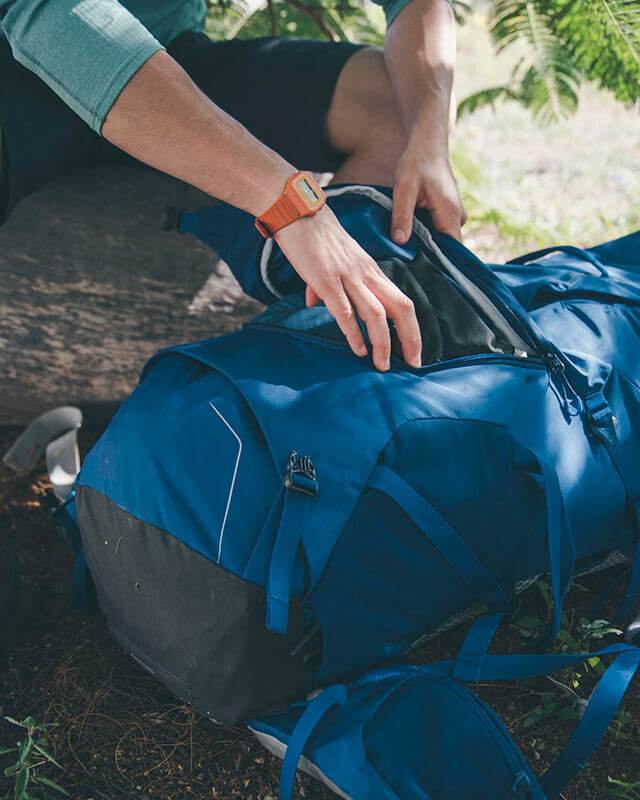
On bigger packs, side access to the main compartment or a zip-open front panel comes in handy – so you can get to some things without rummaging through the whole pack.
100 litres
Activity: demanding treks, expeditionsTime outdoors: weeks to monthsGear weight: 20 to 35 kg
80 litres
Activity: heavy-load trekking, mountain traversesTime outdoors: from a weekend to several weeksGear weight: 15 to 25 kg
50 litres
Activity: hiking, hut-to-hut trekking, alpinism, ski touring traversesTime outdoors: long days, multi-day trips from a weekend to a weekGear weight: 10 to 20 kg
30 litres
Activity: hiking, running, cycling, climbing, via ferratas, ski touringTime outdoors: from an hour to a full dayGear weight: 1 to 15 kg
5 litres
Can you run with a pack?
With some, definitely – some are even designed for it. The shoulder straps are shaped like a vest and thanks to a flexible back panel the pack moves as one with your body – so it doesn't bounce when you run.
Ultralight and running packs are made from lightweight materials and have a load capacity of just 5 to 7 kg – though a lighter load is also essential for the pack to sit properly on your body. Thanks to their special design, plenty of gear is within reach without taking the pack off your back.
attaching an ice axe to a pack

Compression straps

Tightening them adjusts the pack's volume to the amount of stuff you're carrying inside. And that makes the pack sit better on your back. Compression straps are always on the sides of the pack – one on each side on smaller packs, often two on bigger ones.
You can also use them to attach gear on the outside – skis, poles or a sleeping mat, for example.

Gear loops

Only bulky items belong on the outside of the pack – ideally ones that are light, so they don't upset how stably the pack sits on your body.

How to attach gear to your pack

A pack hung with jangling gear on every side doesn't sit as well on your body and ends up being more of a nuisance. Badly attached gear can even be dangerous – on a via ferrata, for instance. So how do you strap poles, ice axes, a helmet, a rope, skis or a sleeping mat to your pack?
Use the right loops

A pack to last decades

You can sling any pack on your back and carry what you need in it. But only a proper pack won't get in your way as you move and won't turn your shoulders into mincemeat. You can drag a proper pack up an ice face and through a rainforest without a single thread coming loose. And believe us, you'll recognise a proper pack when you see one.
all about lowe alpine
Choose your language
newsletter

Sign up for the newsletter

As you read it, cold air will tickle your face. The mountains are calling…
Horolidi newsletter EN
envelopemagnifiercrossmenuchevron-upchevron-down