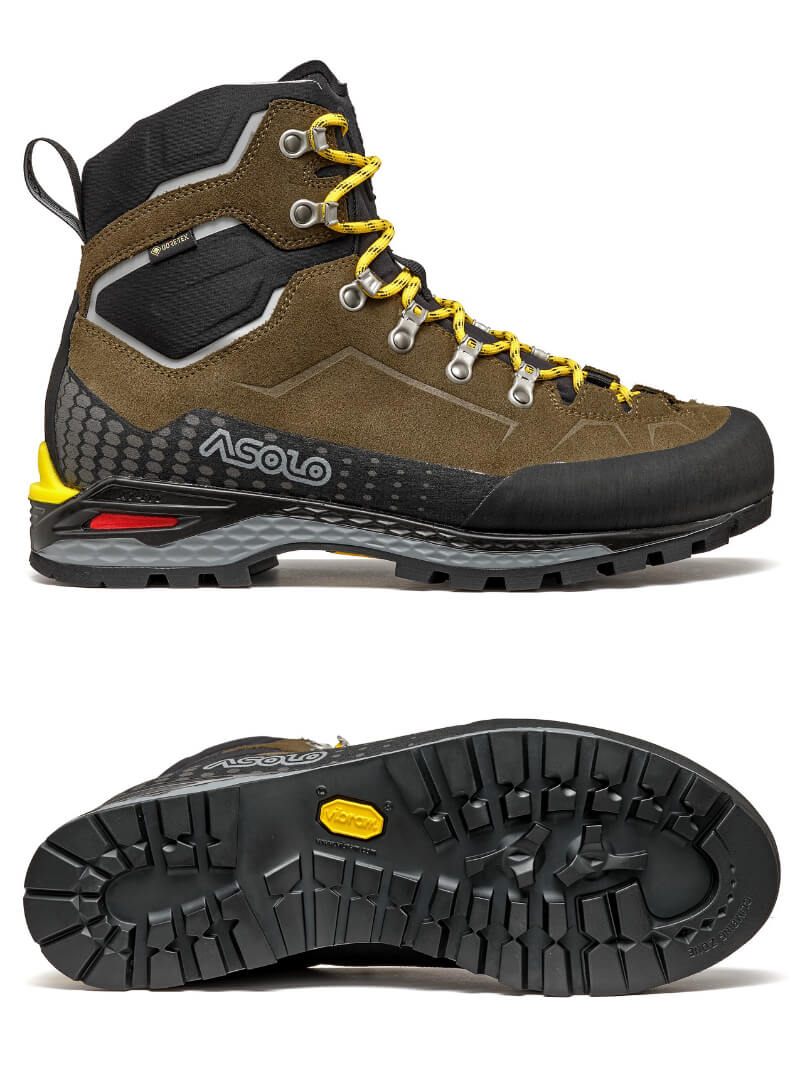
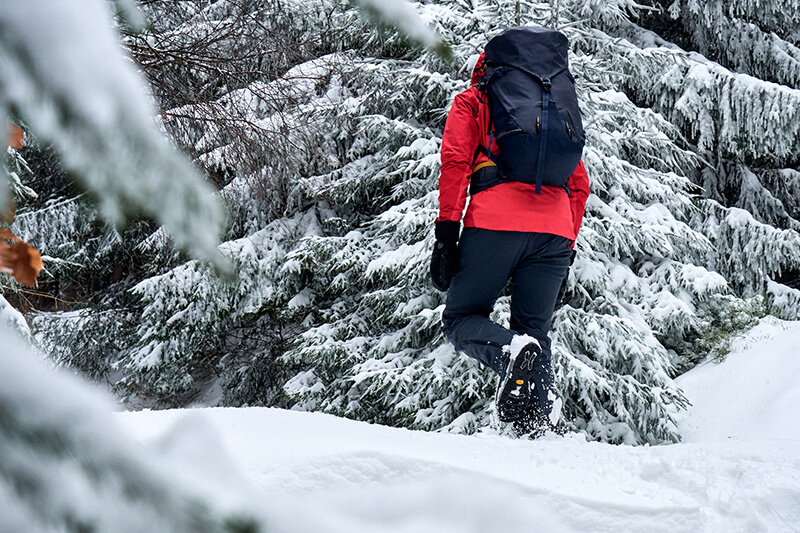
Find out at last why you slip

Grip or durability? Even mountain folk can't have it all, because these two properties pull in slightly opposite directions. There are loads of rubber compounds and loads of tread patterns, and every sole is about balancing one against the other. So let us explain what you're actually walking on.
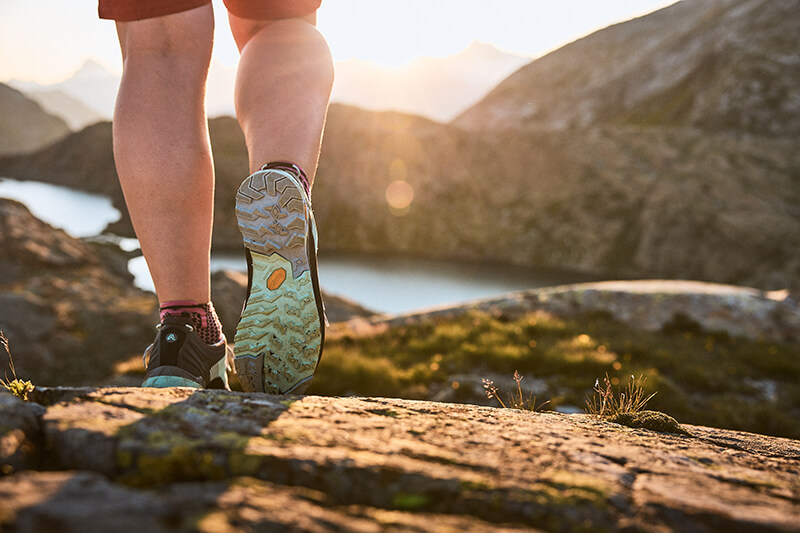
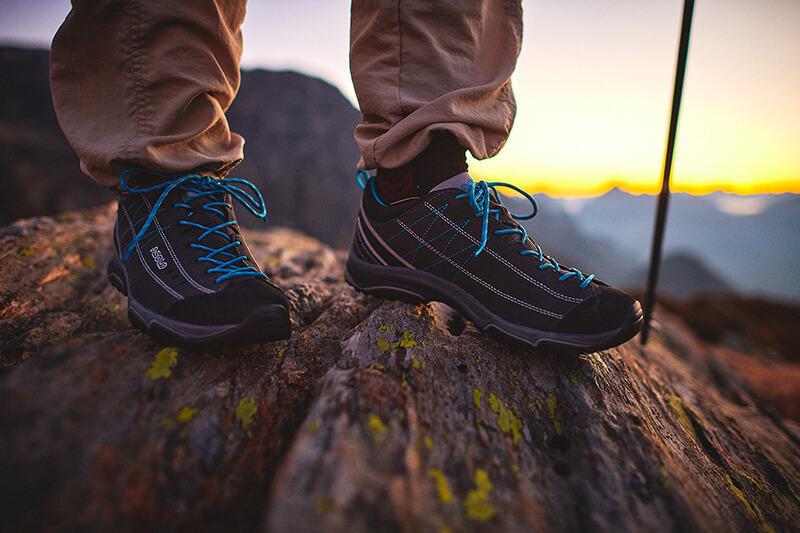
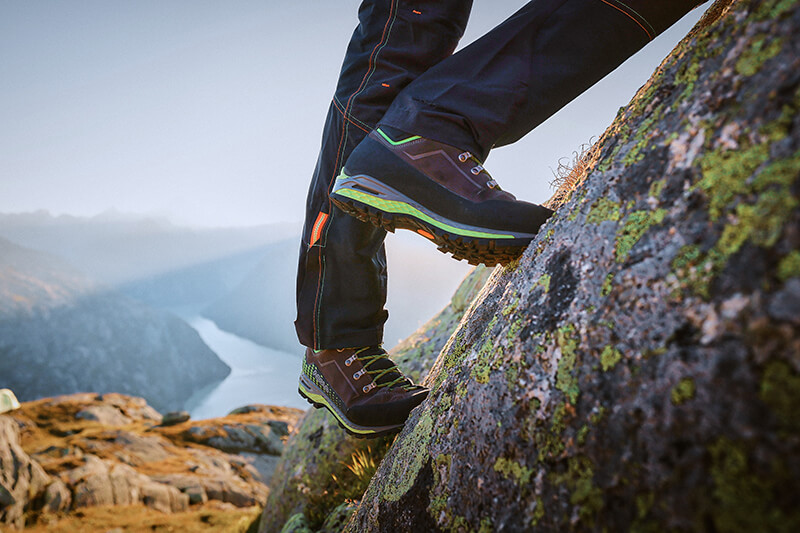
Close-up of feet in Asolo boots dangling over the landscape at sunrise

Compound: hard vs. soft

Soles are just like tyres. Softer rubber grips better, especially on wet surfaces, but it also wears out faster. Harder rubber lasts longer, but the grip won't be quite as good.
Outdoor boot soles contain natural rubber, which grips reasonably well on all kinds of surfaces. Various additives and the manufacturing process then decide whether the sole will be softer or harder – and it's always about finding the best possible compromise for the intended activity.
Hard compound
vs
Soft compound
grip
durability
Hard compound
vs
Soft compound
grip
durability

Vibram®

The yellow octagon symbol on the soles of many outdoor boots is unmistakable. Vibram® is the leader in sole manufacturing – it makes more than 40 million of them a year. It often develops soles directly in cooperation with boot makers so that their properties match specific models. But Vibram® is not the only sole manufacturer.
Vibram logo
Close-up of a Vibram sole

Tread: smooth vs. aggressive

You get the best contact with rock from a completely smooth sole that grips the surface with its whole area. That's why specialist climbing shoes have no tread at all. But on earthy or muddy ground, or on loose stony terrain – of which the mountains have plenty – you need a tread that "bites" into the ground.
Vibram® alone offers around 1,000 different types of sole. And again – not all treads are equal – each use calls for a different one.
Close-up of an Asolo sole mid-stride
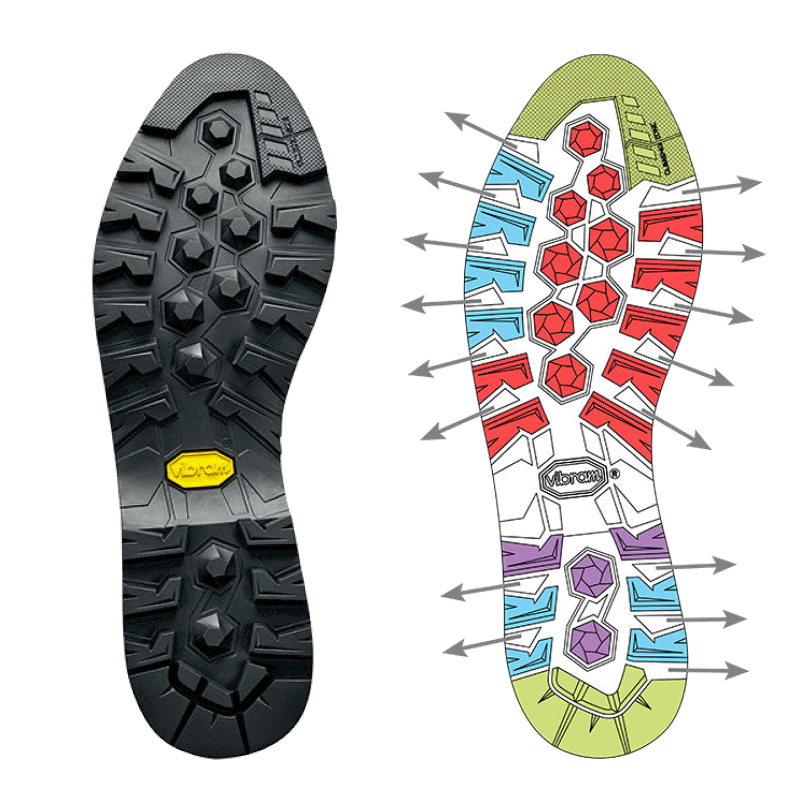
Asolo_konstrukce-bot_casti-podrazky

Every part has its job

Green – grip
Purple – braking
Red – traction
Blue – stability
White – self-cleaning
Climbing zone
A special toe shape used on via ferrata and high-mountain boots. It makes it easier to use small footholds on rock.

Five types of sole

The surface you walk on. How steep the ground is where you're heading. And of course the moisture you can't avoid out there. You need to take all of that into account when you're looking in the shop at the sole of your future boots.

1. Comfort for easy terrain

Use: surfaced paths, easier terrain at lower mountain elevations, everyday wear.
Tread: less aggressive, shallower for lower weight and more comfort.
Compound: softer for grip in dry and wet conditions, comfort and a better roll on hard surfaces.
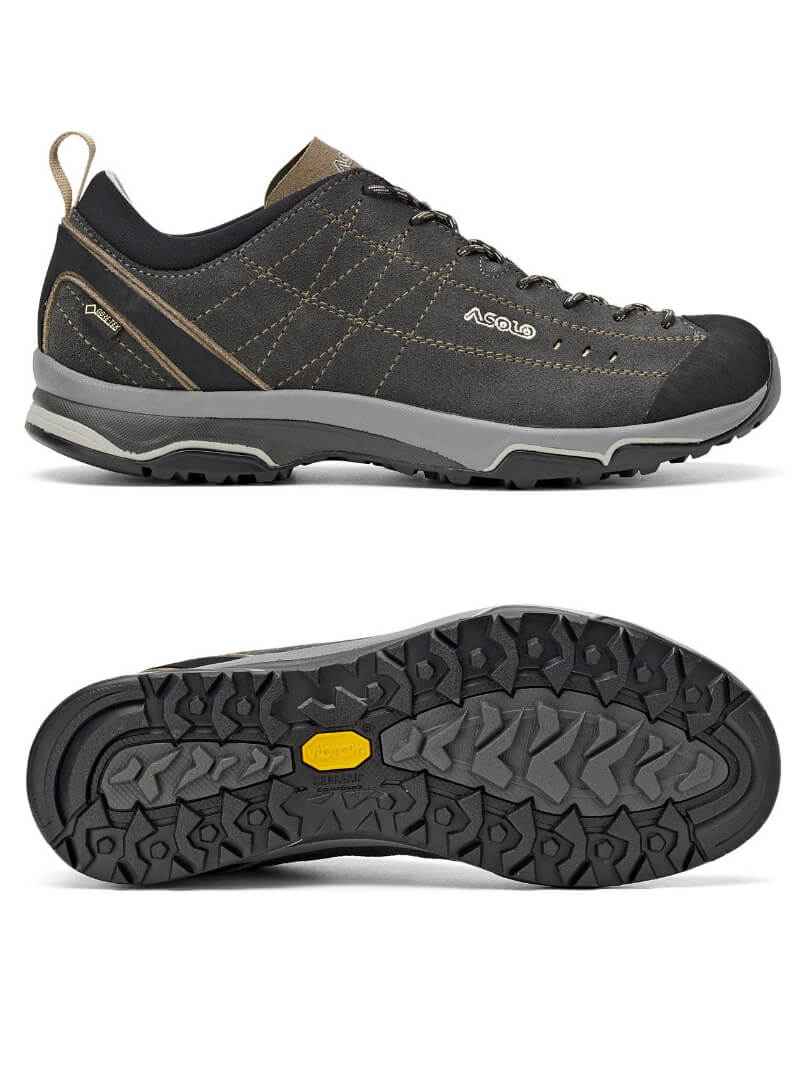
Asolo Nucleon

Asolo Nucleon GV

Asolo developed the sole of these low, light and comfortable trekking shoes together with Vibram®. Its ideal terrain is fine gravel, earthy or muddy trails, or grass. The sole has a self-cleaning design and uses the MegaGrip compound, which is on the softer side (and therefore very grippy) yet unusually resistant to wear. An almost perfect balance of both properties.

1. Comfort for easy terrain

Use
Surfaced paths, easier terrain at lower mountain elevations, everyday wear.
Tread
Less aggressive, shallower for lower weight and more comfort.
Compound
Softer for grip in dry and wet conditions, comfort and a better roll on hard surfaces.
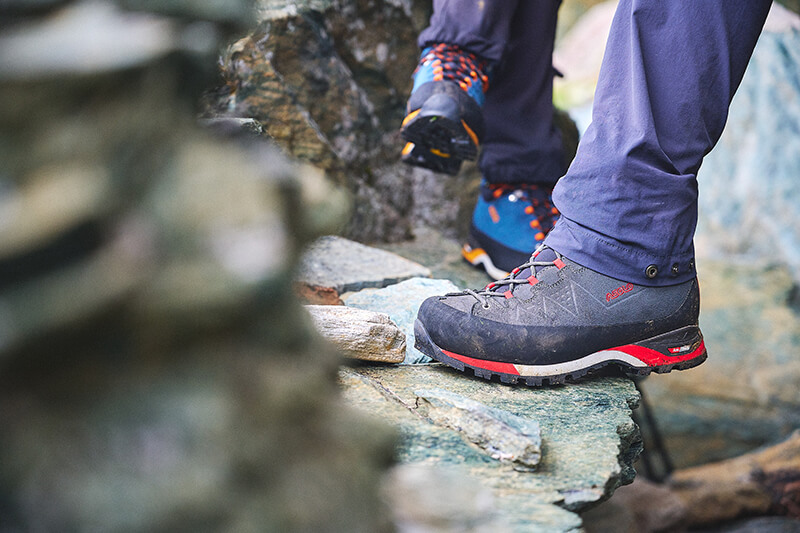
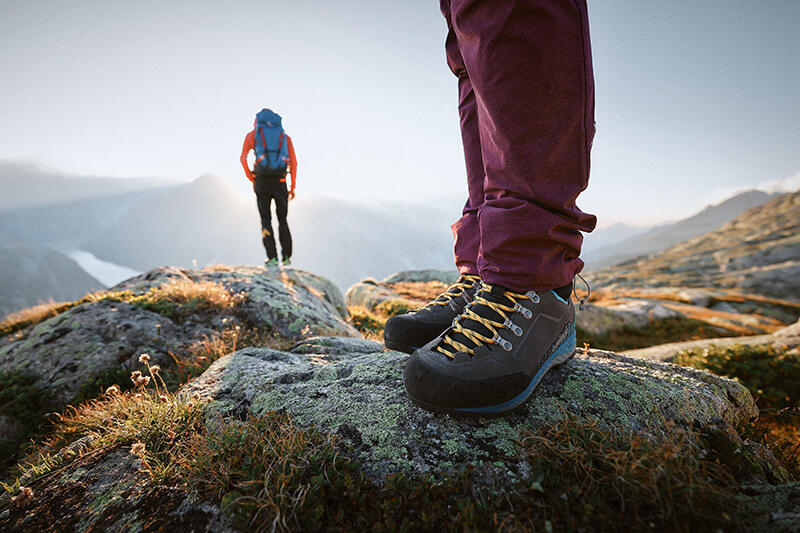
Close-up of Asolo Nucleon shoes on rocks
Asolo Nucleon

Asolo Nucleon GV

Asolo developed the sole of these low, light and comfortable trekking shoes together with Vibram®. Its ideal terrain is fine gravel, earthy or muddy trails, or grass. The sole has a self-cleaning design and uses the MegaGrip compound, which is on the softer side (and therefore very grippy) yet unusually resistant to wear. An almost perfect balance of both properties.
Take a closer look

2. Versatility for mountain hikes

Use
Czech mountains, the Tatras and lower parts of the Alps – mud, rocky trails, slippery roots.
Tread
Deeper, so the sole doesn't clog with mud and stays stable on descents.
Compound
A little harder for more durability, yet still very grippy in dry and wet conditions.
Detail Asolo TahoeDetail Asolo Tahoe

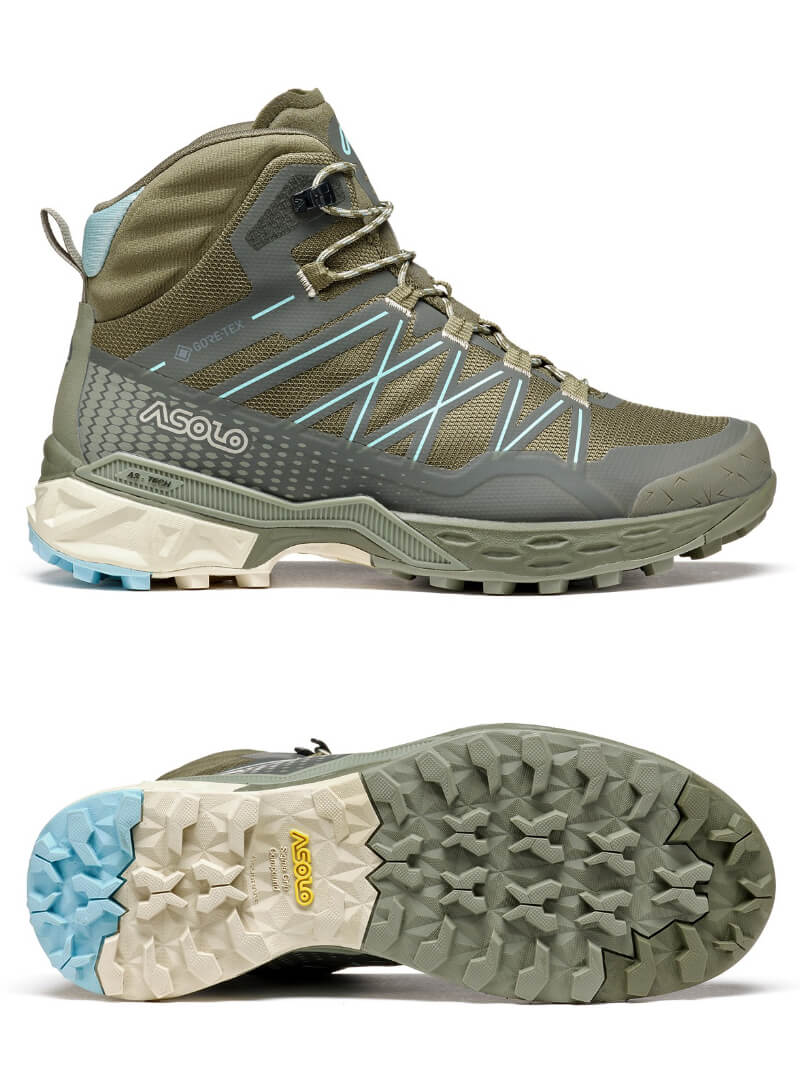
Asolo Tahoe MID GTX

For the fastpacking category, the shoemakers of the Zanatta family developed the AS-Tech support structure, which adds torsional stability and limits unhealthy knee rotation. The Asolo Cross sole with its Sigma Grip compound is exceptionally durable and delivers excellent traction even on the roughest mountain terrain – wet surfaces included. It is made entirely of rubber, with no metal parts.
Take a closer look

3. Robustness for demanding treks

Use
Varied terrain with a heavy pack on your back – from muddy trails to rocky slopes.
Tread
Deeper, with more lugs for good traction on all types of terrain.
Compound
Harder for more support and abrasion resistance – so it doesn't wear out quickly.
Close-up of Asolo Traverse on a trailClose-up of Asolo Traverse behind a rock

Asolo Traverse GV

Support, comfort and traction. A higher sole and Asoflex thermoplastic supports add torsional stability while protecting your foot from impacts and pressure points on rocky, unstable ground. The Asolo/Vibram Master sole has a self-cleaning design and uses the Vibram Mont compound, which is durable and reliable on the toughest terrain (even at low temperatures).
Take a closer look

4. Grip for high-mountain routes

Use
High alpine terrain – loose scree, snowfields, rock climbing sections.
Tread
Deep, sharp lugs for traction on loose and soft ground, plus a smooth climbing toe.
Compound
Harder, with a balanced mix of grip on smooth rock and low wear.
Close-up of Asolo Freney while scrambling up a rockClose-up of Asolo Freney on rocks

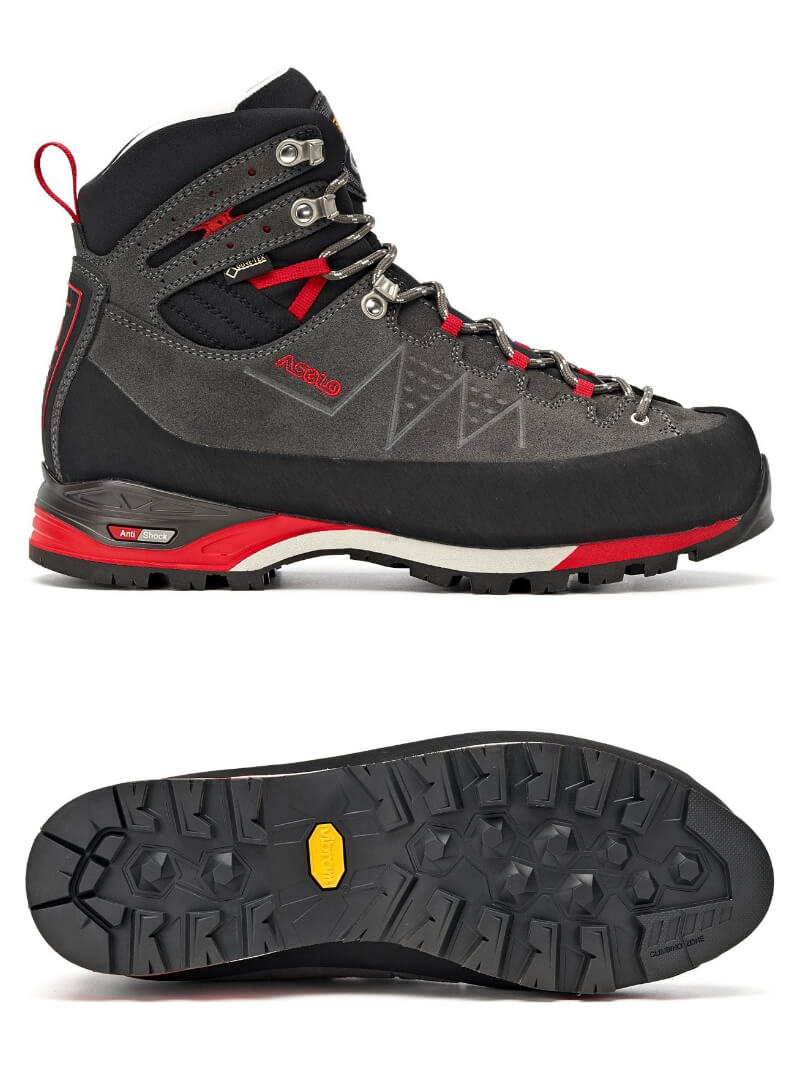
Asolo Freney EVO GV

These versatile mountaineering boots from the Zanatta family's shoemakers have a grippy Vibram 1229 Mulaz sole with a smooth climbing toe that lets you stand even on small rock edges. An EVA insert under the heel absorbs impacts, supporting stability and comfort. A PU layer protects the sole from damage and a TPU heel insert is there for attaching semi-automatic crampons.
Take a closer look

5. Anti-slip for winter boots

Use
Cold, icy or snowy surfaces – winter hiking and snowshoeing.
Tread
Blocks in the middle of the sole act like sandpaper on icy ground.
Compound
A special winter compound that doesn't stiffen in the cold, so it keeps its high grip.
Asolo Nuuk in the snowAsolo Nuuk in the snow

Asolo Nuuk GV

For these winter boots, suited to everyday wear and lighter winter hikes, the team in Nervesa della Battaglia used a sole with the Arctic Grip compound. Even though it contains no metal parts, it holds exceptionally well on slippery and icy surfaces. The tread has a self-cleaning design and the outer edges give you sure footing in fresh and slushy snow. Your feet are kept warm by an insulated membrane, GORE-TEX Insulated Comfort.
Take a closer look

A new sole instead of the old one

Soft or hard – no sole lasts forever. Each one wears down over time or – thanks to the hydrolysis of polyurethane – comes away from the boot completely. But that's no reason to throw your boots away. You can send them in for repair. And in 3–4 weeks they'll come back to you in shape for more years in the mountains:
  • with a new sole,
  • midsole,
  • rubber rand,
  • laces,
  • insole,
  • cleaned upper
  • and repaired seams.
All about boot repair

Boots from a family of shoemakers

An honest shoemaker will make you boots that last. Boots that won't split at the seams halfway through a two-week trek. An honest shoemaker will even repair your boots after years of wear and get them ready for more years of adventure. And such shoemakers really exist – in the Italian Zanatta family.
All about Asolo
Asolo family photo – history
Choose your language
newsletter

Sign up for the newsletter

As you read it, cold air will tickle your face. The mountains are calling…
Horolidi newsletter EN
envelopemagnifiercrossmenuchevron-upchevron-down