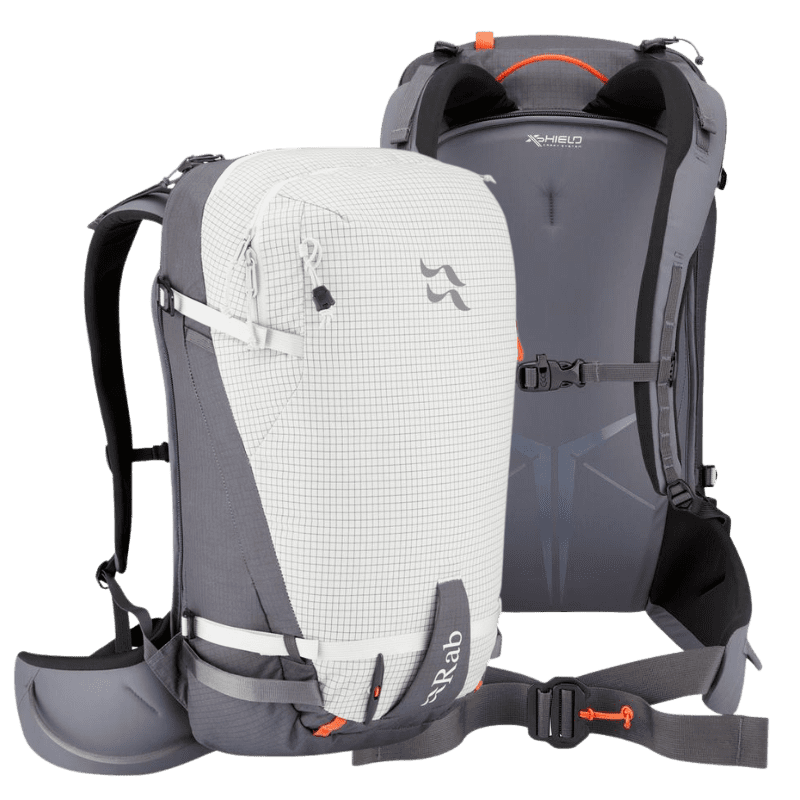
How to attach gear to your backpack

So what actually belongs on the outside of a pack? A jangling pack with gear dangling left and right never sits that well on your body and mostly just gets in the way. And if it snags on something while you're climbing, it can even be dangerous. So your pack should be compact on the outside. Nothing should stick out too far or hang off it carelessly.
What goes on the outside

Gear so bulky that it won't fit inside the pack. Gear you need to grab quickly. And gear that won't get in the way as you move and won't snag on anything. Backpacks are usually designed to carry the following items on the outside:
  • trekking poles,
  • ice axe(s),
  • helmet,
  • rope,
  • skis,
  • sleeping mat.

How to attach trekking poles

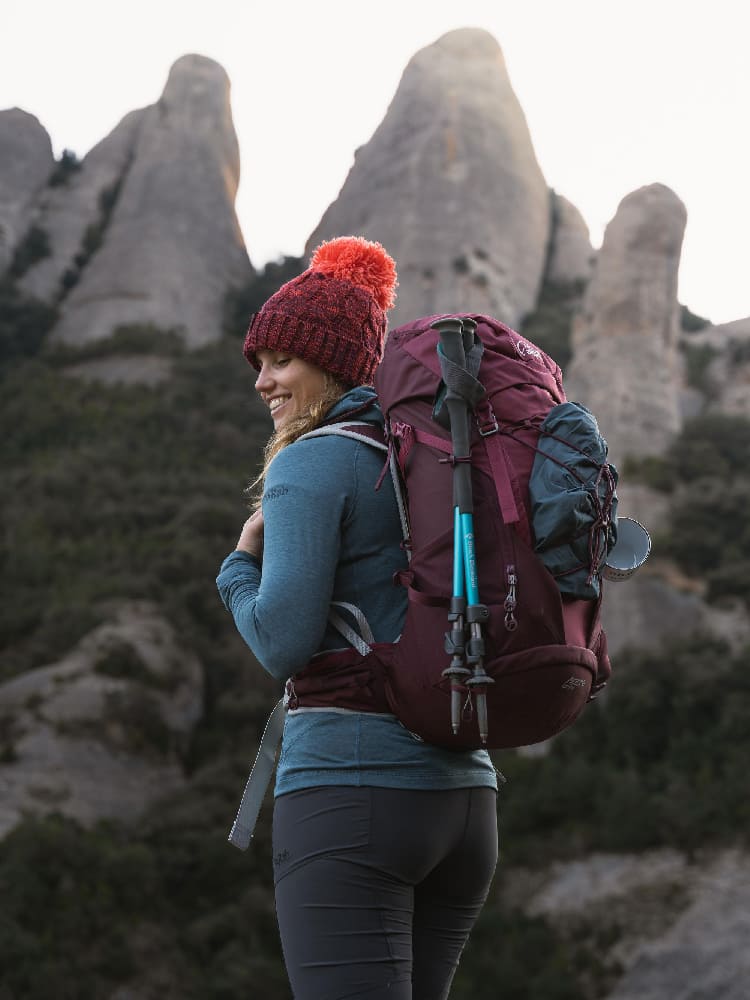
Most hiking packs are designed with telescopic trekking poles in mind. At the bottom there is usually a loop or special holders for the tips, and the upper part of the pole is held by a bungee cord. Alternatively, the top of the pole goes under the side compression strap, which has a dedicated loop for it.
Trekking poles on a pack
Good to know: Put the poles on your pack with the tips pointing down. If they stick up above the pack, you could hurt someone nearby.
Attaching trekking poles

Under the compression straps

The pole tips secured in the TipGripper system and the upper part of the poles in the loop on the side compression straps.

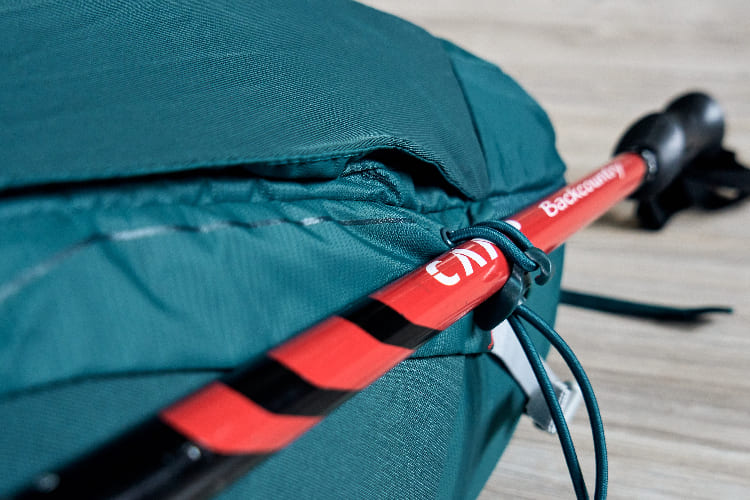
With a bungee cord

The upper part of the trekking poles secured under a simple, quick-to-use bungee cord.

How to attach an ice axe

A walking ice axe is something you need close to hand in tricky mountain terrain. That's why most hiking packs have at least a fabric loop at the bottom to attach the axe head. The shaft is then secured much like the poles – with a bungee cord or under the side compression strap.
Attaching ice axes to a pack
Good to know: Hiking packs usually only let you attach one ice axe. Only mountaineering packs can take two (technical ice tools are used in pairs).

Fabric loop

A walking ice axe attached with a fabric loop and a bungee cord. To attach the head, thread the shaft through the loop all the way up to the head, then flip the whole axe up against the pack.

HeadLocker

Ice tools attached with the HeadLocker system: just slip the metal toggle through the head of the tool and secure the shaft with a bungee cord.

How to attach a helmet

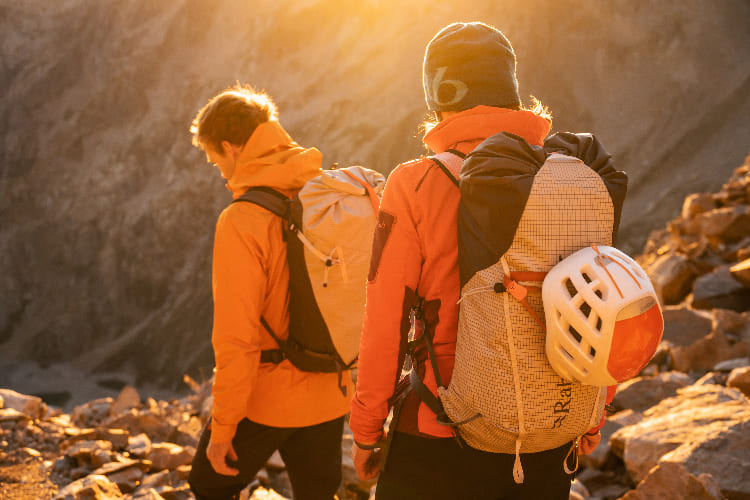
A helmet often won't fit inside your pack. Or you don't even want it in there, so the polystyrene foam doesn't get damaged by the rest of your gear. Some ski and mountaineering packs come with a stretchy mesh to tuck the helmet under. Most packs don't have one, though. So how do you attach a helmet then? Above all, so that it sits firmly on the pack and doesn't swing about – which gets pretty annoying when you're walking.
Attaching a helmet to a pack
Good to know: Some packs have fabric loops on the front that you thread the chin strap through, then tighten it to hold the helmet in place. Otherwise, use the side compression straps to thread the strap through.

Under the compression straps

A helmet attached by threading the chin strap through the side compression straps. Loosen the strap fully first and tighten it once it's threaded. Then the helmet won't budge on the pack.

In the built-in mesh

A helmet held under a stretchy mesh that can be unclipped and stowed inside the pack or packed into its own dedicated pocket.

Side straps

A helmet attached by threading the chin strap through the side compression straps. Loosen the strap fully first and tighten it once it's threaded. Then the helmet won't budge on the pack.
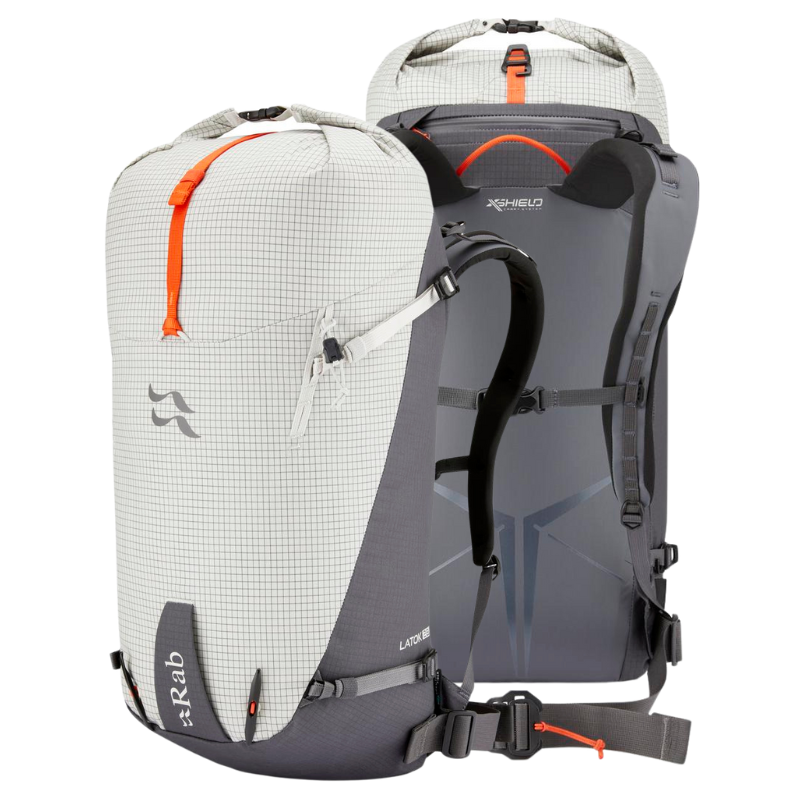
Rab Latok backpack
A helmet attached by threading the chin strap through the side compression straps. Loosen the strap fully first and tighten it once it's threaded. Then the helmet won't budge on the pack.
Rab Latok backpack

How to attach a rope

If at all possible, it's always better to keep the rope inside your pack. Only there is it protected from rain, snow and everything else that can make the rope harder to handle when you're climbing. If it won't fit, use the strap under the lid and the side compression straps to attach it to the pack.
Attaching a rope to a pack
Good to know: A rope you carry on your pack isn't coiled as a mountaineer's coil but as a butterfly coil. And so it doesn't flap about and get under your feet, make the loops shorter than for a mountaineer's coil when coiling it around your neck – roughly down to the top of your hips.

Under the lid

A rope fixed under the strap beneath the lid and secured at the sides with compression straps.

Under a dedicated strap

A mountaineering pack with a roll-top closure – so no lid. The rope goes under a special strap designed for the job.

How to attach skis

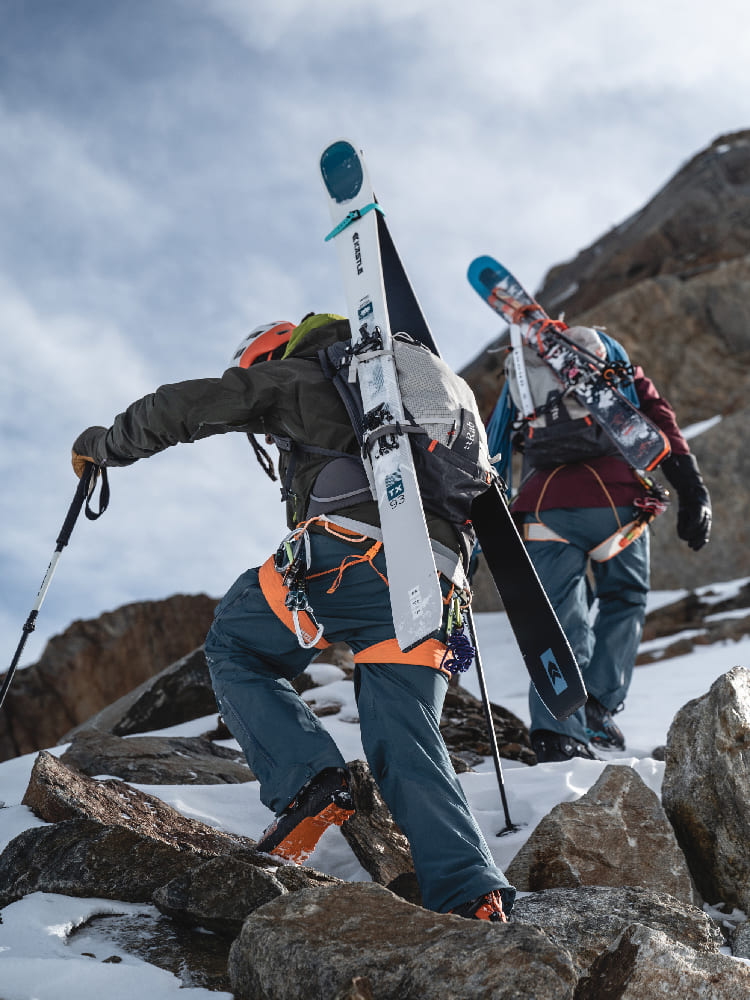
You can strap skis to pretty much any pack that has two compression straps on each side – an upper and a lower one. Slide the skis through the lower strap until the bindings catch on it. Then secure them to the pack with the upper strap.
Attaching skis to a pack
Good to know: When attaching skis this way, it's a good idea to lock the brakes in the position where they don't stick out below the skis. Otherwise the skis are harder to secure to the pack and the protruding brakes can damage it, too.

On the sides of the pack

Skis attached to a pack with the side compression straps. It's best to lock the ski brakes in the position where they don't stick out.

On the front of the pack

Ski packs often also let you carry skis diagonally across the front. There's a large loop or strap at the bottom of the pack and a tightening strap at the top for this. The top strap usually packs away into a small pocket, so it's not in the way when you don't need it.

How to attach a sleeping mat

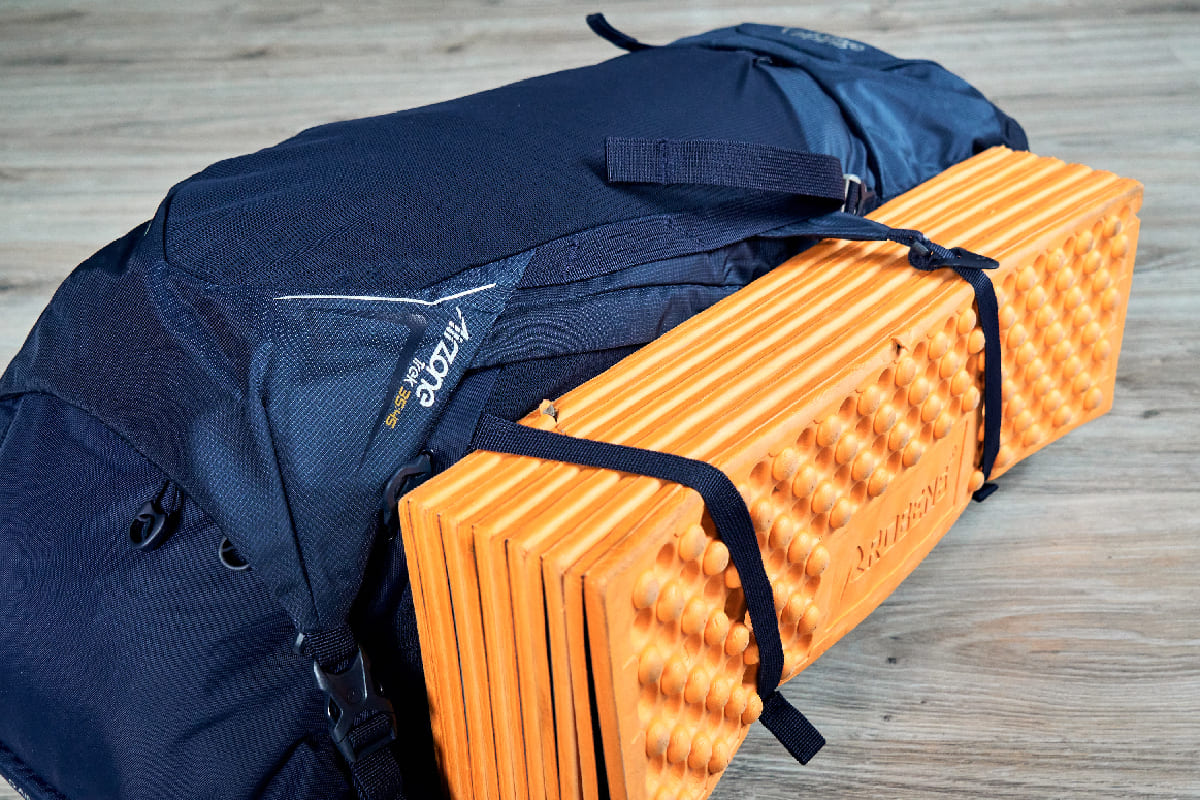
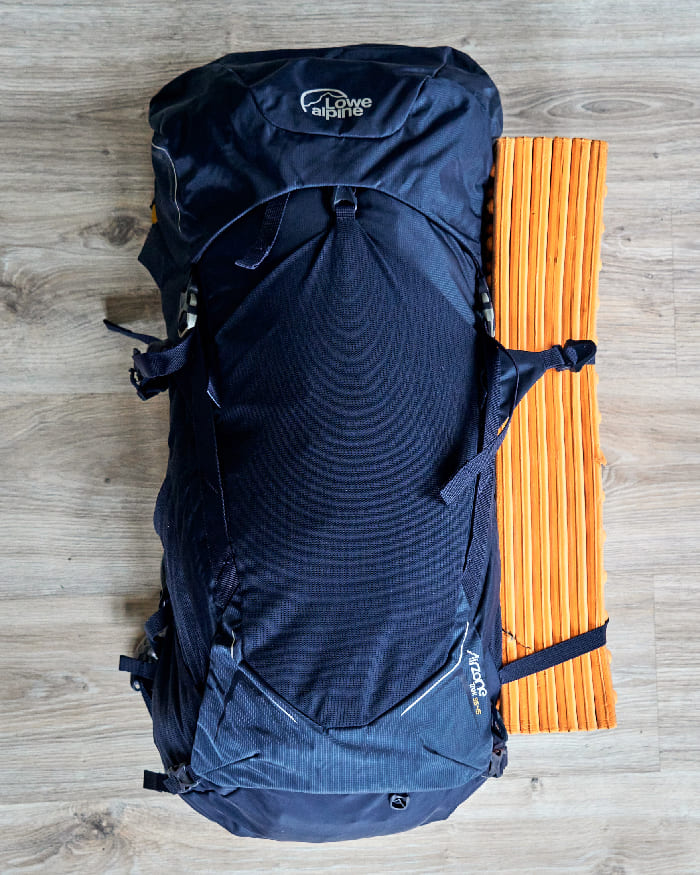
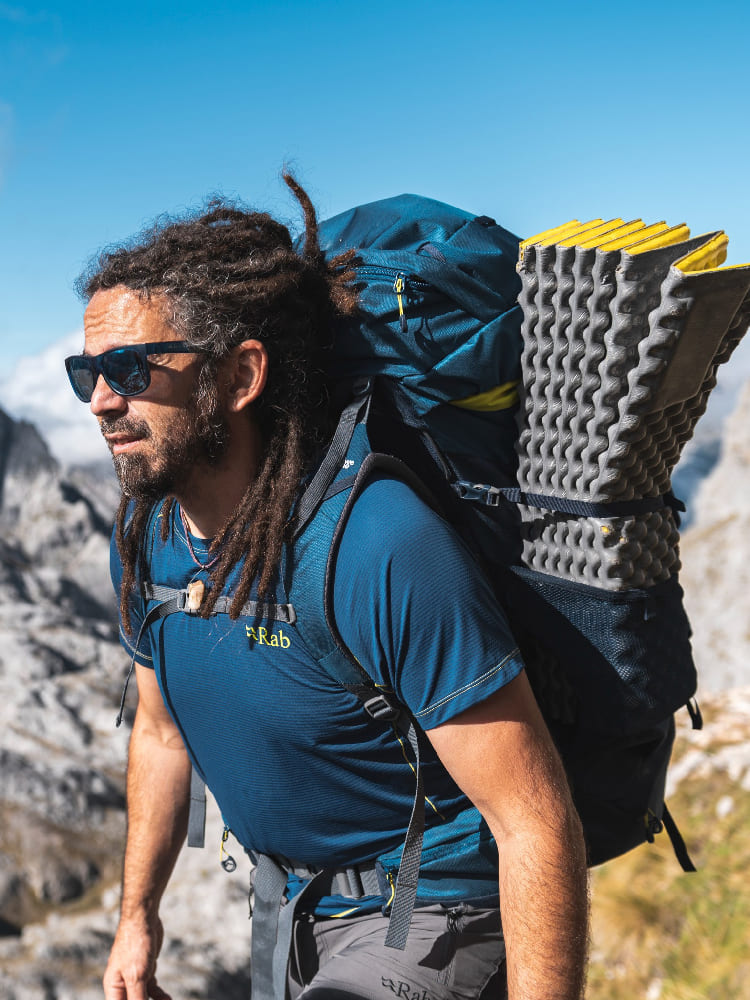
Most hiking packs are built on the assumption that you'll need to attach something under the side compression straps now and then. So they're long enough to fit even a bulky foam sleeping mat. And that's exactly where it belongs – despite its size, it's least in the way there.
Good to know: Some hiking packs have a side entry into the main compartment. So it's best to attach the mat on the opposite side to that side entry – so the mat doesn't stop you opening it.

Under the compression straps

A foam sleeping mat attached to a pack with the compression straps. The lower strap usually has no release buckle, so you have to push the mat through underneath it. Sometimes it's right at the limit of the strap's length, but the mat usually fits.

A pack for decades

You can throw any pack on your back and carry what you need in it. But only a proper pack won't get in your way as you move or turn your shoulders into mincemeat. A proper pack will make it up an ice face or through a rainforest without a single stitch giving way. And trust us, you'll know a proper pack when you see one.
Choose your language
newsletter

Sign up for the newsletter

As you read it, cold air will tickle your face. The mountains are calling…
Horolidi newsletter EN
envelopemagnifiercrossmenuchevron-upchevron-down