How to choose an ultralight backpack

Grams matter. But, at the end of the day, they're not everything. Because low weight on its own won't save you. It should go hand in hand with durability – and with how well an ultralight pack, loaded up for a week-long, month-long or even longer trek, actually carries on your back.

Light = no extras

Before you get yourself an ultralight pack, there's something else you need to discover first. Above all, the art of packing minimally, even for a long trip. No unnecessary extras. And in the end you also need to learn to be creative with what you're already carrying. Ultralight packs usually have a smaller capacity and lower load limit, which really makes you think about your packing.

Light packs don't last. Or do they?

That used to be true. Modern ultralight materials are often surprisingly tough (take Cordura with Spectra® fibres, for example). Combined with the right construction, some ultralight packs can carry a hefty load of gear – and even be comfortable doing it.

Ultralight materials

Combining minimal weight, durability and load capacity, and on top of that delivering comfort without sacrificing any functionality. A tough task that calls for the very best materials. How do you spot them?

The "D" number

The toughness of a fabric is revealed by its denier value, marked with the letter D – e.g. 100D Ocean High Tenacity Nylon Ripstop. The higher the value, the tougher (but probably also heavier) the material. And a pack's durability also depends on where the materials are placed. It's good to have the tougher ones on the bottom and the lightest ones in less stressed areas.

Ripstop

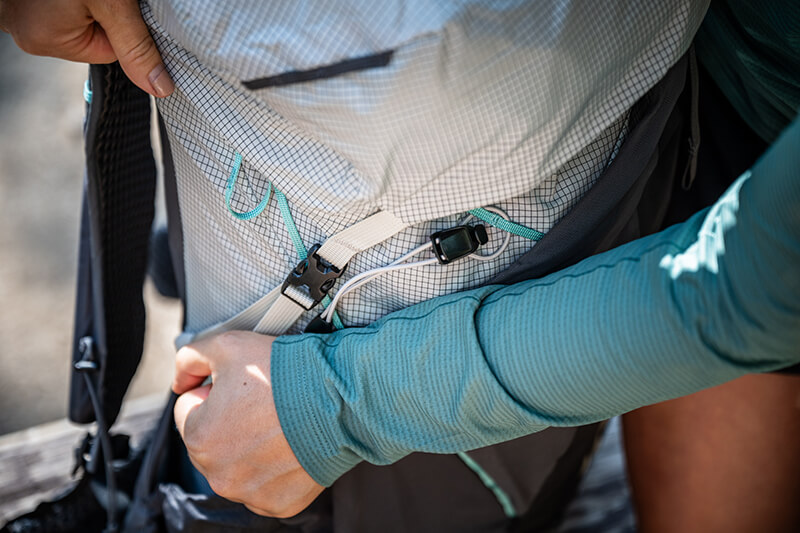
If a fabric has the word Ripstop in its name, it means it's far more resistant to tearing – and if a tear does appear, it won't spread any further. That's thanks to stronger threads, which you can recognise in the fabric by their distinctive square grid. Critical seams are usually double-stitched as well.

Water resistance

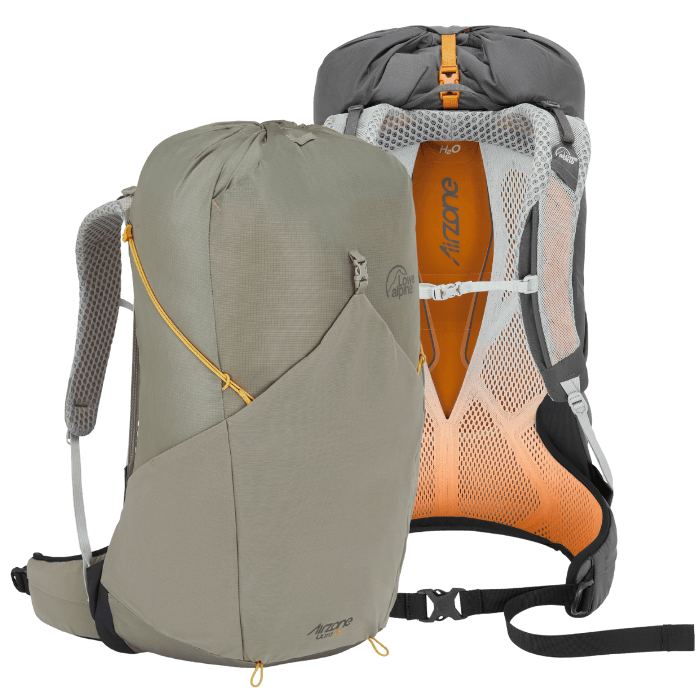
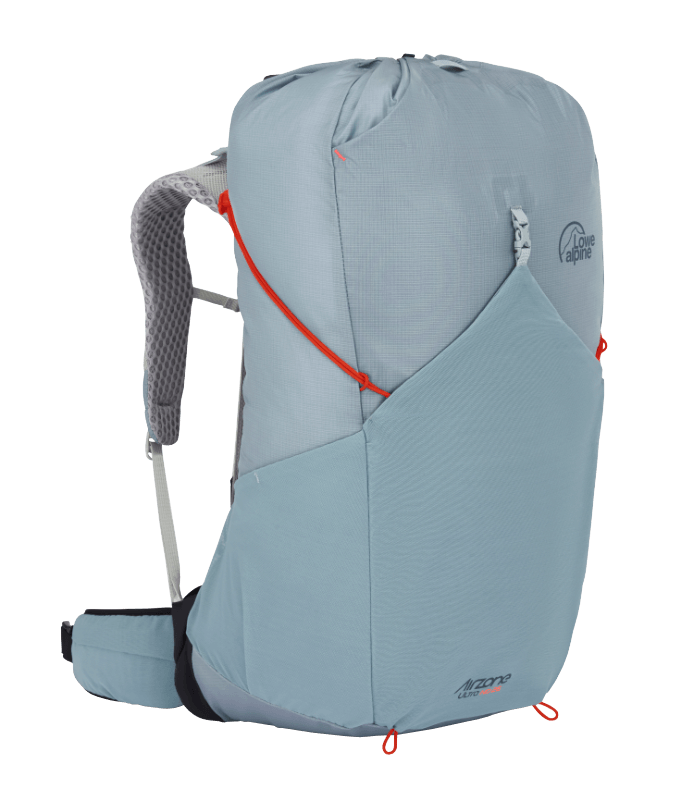
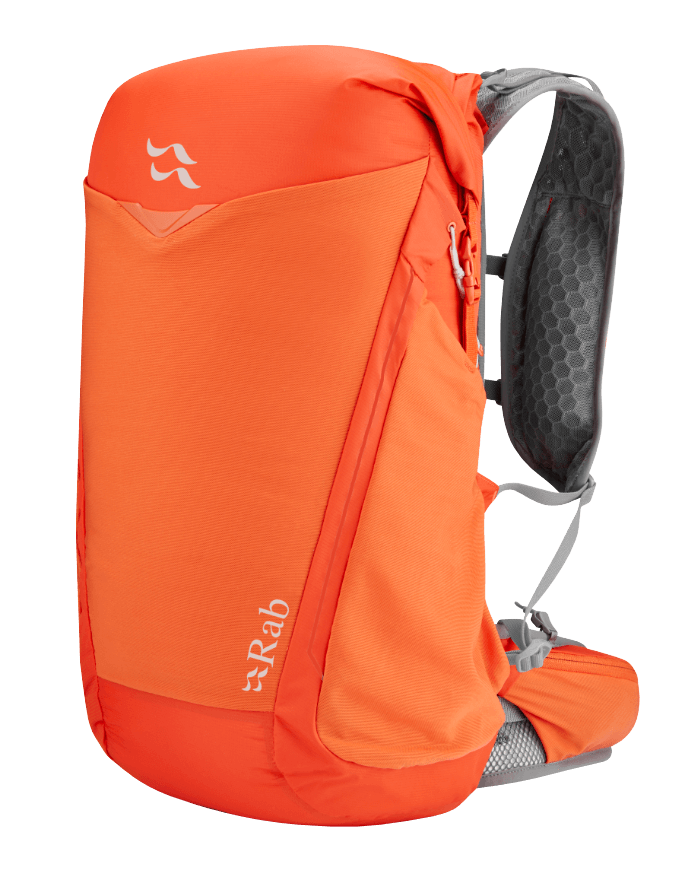
Every decent pack has at least a water-repellent fabric finish (e.g. Lowe Alpine AirZone Ultra). Others even have a waterproof coating and taped seams (e.g. Rab Aeon Ultra), so the gear inside stays dry even in heavier rain. And sometimes the waterproofing comes from the nature of the material itself (e.g. Rab Latok 20).

Purpose first, then the pack

In the end, it's about choosing an ultralight pack based on where you'll use it. For short fast & light dashes upwards, durability isn't such an issue – the main thing is the lowest possible weight, and a more delicate material is an acceptable price to pay. On a long trek that might take several months, on the other hand, it's wiser to sacrifice a few grams and get a pack that won't fall apart halfway.

Pack construction

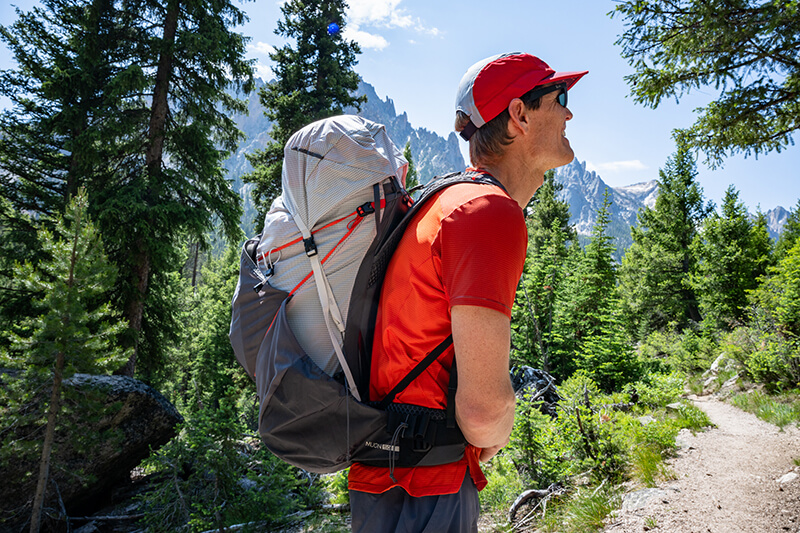
How many kilos can you load into an ultralight pack, and how well will it carry? That depends above all on what kind of back system the pack has.

Framed packs

These packs have a sophisticated carrying system – usually with an aluminium or other back stay that spreads the load evenly and also transfers the pack's weight to your hips. Naturally, the weight of the pack goes up with it – but if you're going to carry 10–12 kilos every day (including food and water), a framed pack is the more sensible choice.

Frameless packs

These packs, on the other hand, have almost no carrying system. They're the lightest of the light, but because they often don't even have a hip belt or back padding, the whole load sits on your shoulders. Carrying a heavier load in a pack like this isn't very comfortable. And the ability to pack well always plays a big role, so the contents don't dig into your back.

Closing the pack

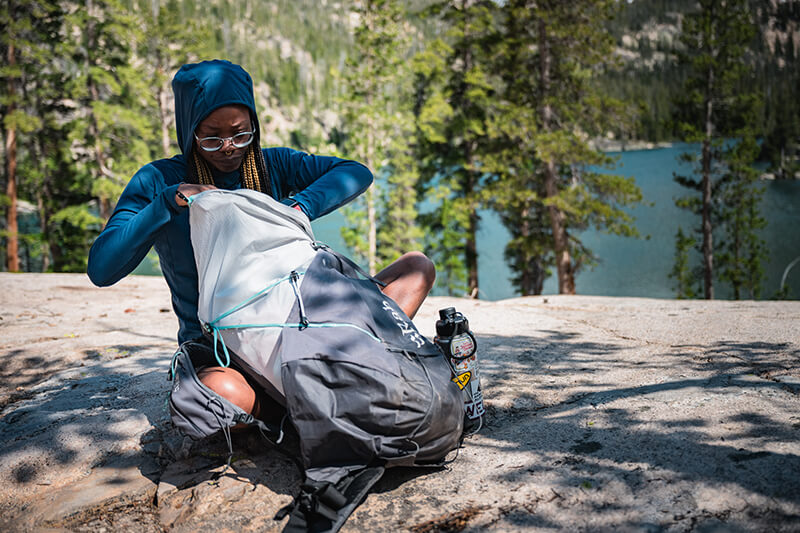
Saving weight also means giving something up. Ultralight packs often don't have a classic lid with one or two pockets, just a roll-top closure. The missing storage space is made up for by another advantage, though – easily adjusting the volume in height by means of that very roll-top. And after all, the simpler the construction, the less chance of anything going wrong.

Women's packs

Not every ultralight pack comes in a women's version. But if it does (e.g. Lowe Alpine AirZone Ultra), the difference isn't just the colour – it's above all in the construction. A women's pack is built for a smaller frame and has specifically shaped shoulder straps that match the build of a woman's body.

Pockets and attachments

When you decide to go light, it's all the more important that every little detail on the pack is well thought out, works reliably and helps your trip run smoothly.

Front stretch pocket

This is an all-purpose space where you can stuff wet clothing, for example, which you don't want to put in the main compartment with the rest of your gear and which can slowly dry there as you walk. Or you can carry a waterproof jacket, a toilet trowel... well, anything you want close at hand in the front stretch pocket.

Quick-access pockets

Constantly taking off your pack for your phone, a snack bar, a tissue or sunglasses is a pain. That's why it's good if an ultralight pack has well-placed pockets you can reach on the move. Definitely on the hip belt and ideally on the shoulder straps too, where you can also slip in soft flasks of water.

Compression straps

A pack always carries better when the things inside are stabilised. That's what compression straps on the sides, or on the bottom, are for. On ultralight packs, traditional webbing straps are replaced with lighter, tough elastic cords, for example, which still do their job and can also be used to attach gear (e.g. a sleeping mat) to the outside of the pack.

Loops and details

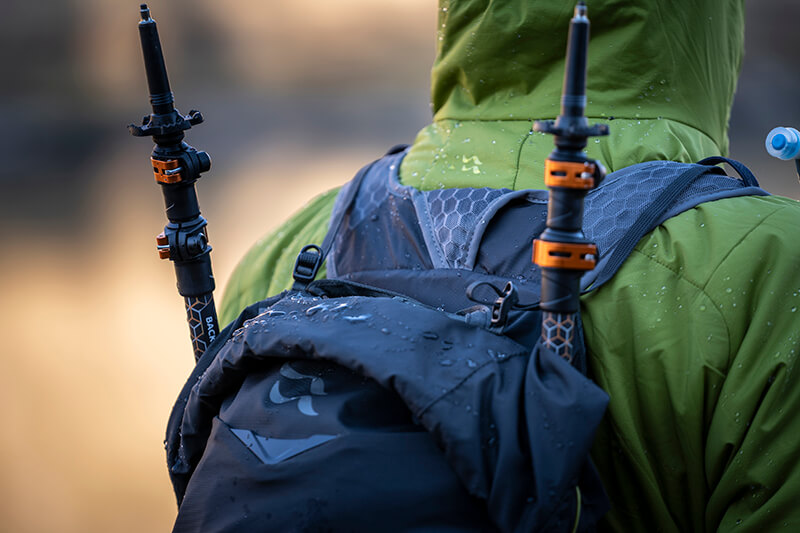
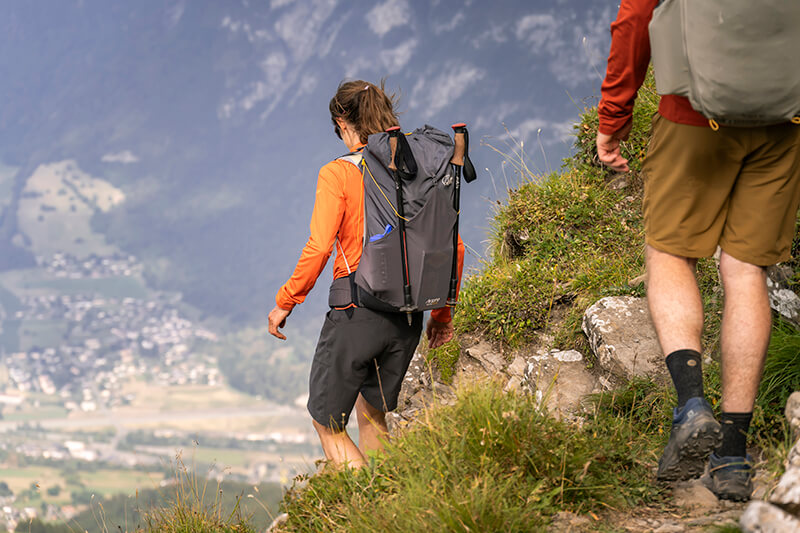
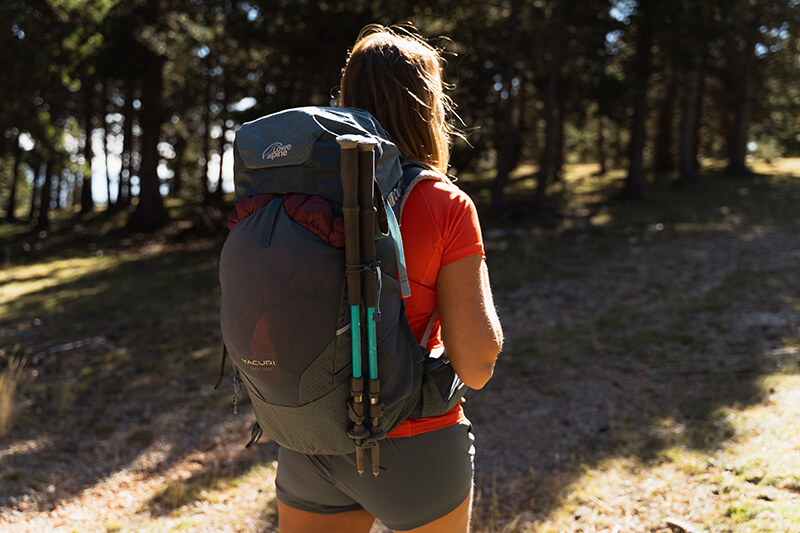
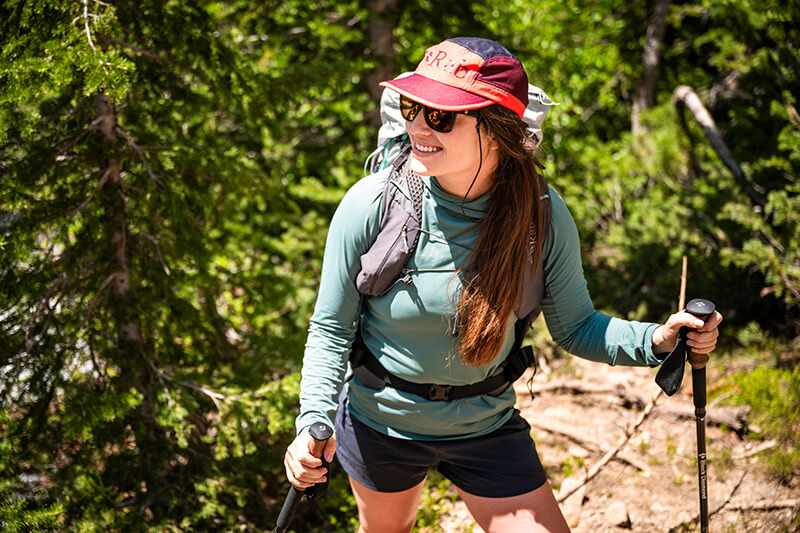
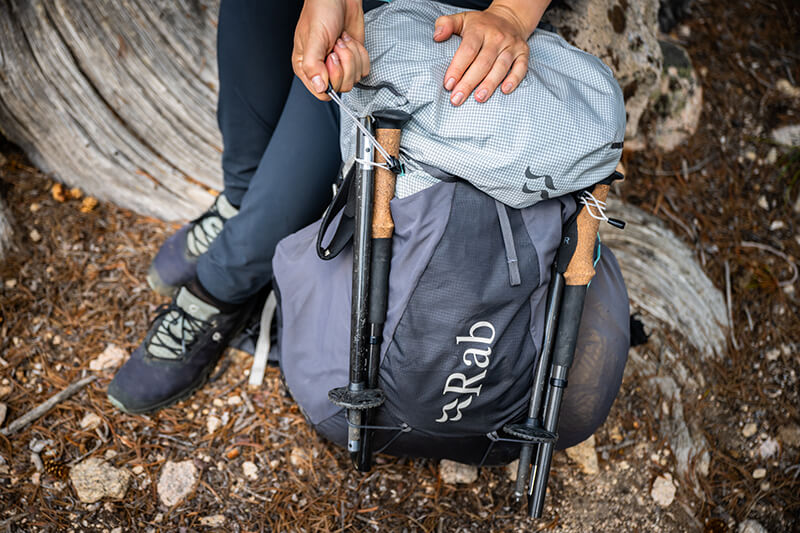
Even on an ultralight pack you need to be able to attach at least your trekking poles. That's what the various loops are for, often used together with the compression straps. On some packs you can stow your poles on the move – on the shoulder straps (e.g. Rab Muon). And ultralight climbing packs even let you attach ice axes (e.g. Rab Latok 20).

Something extra

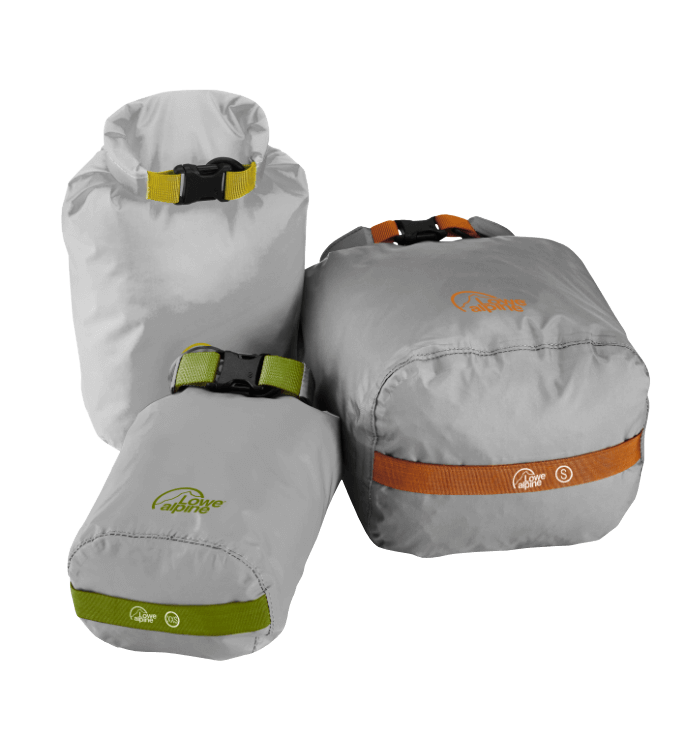
When packing an ultralight pack, you always have to think about how to arrange things inside – if only so that the weight of your gear is well distributed and the pack carries well. Organisers such as a packing cube, or straight away dry bags, will help you keep things organised and in the right order.

Pack volume

What's the goal? That has to be the first question. For a trek lasting several months, where you only get to restock after several days alone away from civilisation, a 50-litre pack with a higher load capacity and a well-designed carrying system might be right. But an experienced minimalist trekker might get by with a 40-litre pack.
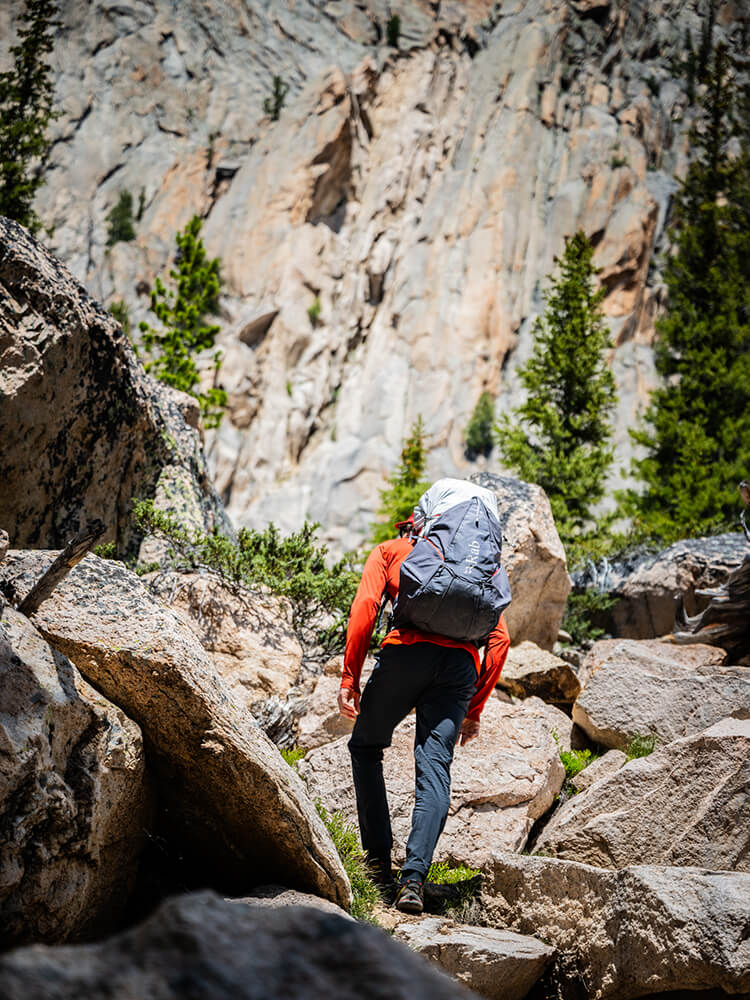
A brisk fast & light outing, from a day to a weekend, can be done with a volume of 20 to 30 litres. Thanks to vest-style shoulder straps, you can often run or even climb with ultralight packs like these (e.g. Rab Latok 20).

Roll it and cinch it

Ultralight packs have the advantage that, thanks to their not-too-stiff construction, you can shrink them quite well with the compression straps – depending on how much is inside. And the roll-top helps reduce the volume too. So in the end one pack can do both a day trip and a trek lasting several weeks.

Ultralight backpacks

The designers at Rab and Lowe Alpine manage to get the weight really low through their choice of materials and clever design. But they never do it at the expense of durability and functionality. Their packs simply have to be dependable.

Rab Muon

An ultralight pack with a sophisticated carrying system and surprising durability.
To the e-shop >

Lowe Alpine AirZone Ultra

A featherweight fast & light pack with the airy AirZone carrying system.
To the e-shop >

Rab Latok 20

A climbing pack with super-tough Spectra® fibres and loops for climbing gear.
To the e-shop >

Rab Aeon Ultra

An ultralight pack made of water-resistant material, with taped seams and a roll-top closure.
To the e-shop >
Rab and Lowe Alpine backpacks
Choose your language
newsletter

Sign up for the newsletter

As you read it, cold air will tickle your face. The mountains are calling…
Horolidi newsletter EN
envelopemagnifiercrossmenuchevron-upchevron-down