First impression when you put it on?
Same as with other Rab packs – it's like I'm carrying nothing.
How do you like the design?
I'm a fan of black backpacks. And this version looks elegant and goes with any outfit.
What about materials and build quality?
In all the time I've used it, not a single defect. So, great. It'll last ages.
And the weight?
Ideal for a pack this size – a great compromise between weight and durability. Around a kilo feels nice.
Rab Protium is a versatile backpack for full-day hikes, mountain ascents, via ferratas or fastpacking. It comes in sizes from 18 litres (1000 g) up to 35 litres (1150 g) – always in a unisex version and a women's version with a narrower build.
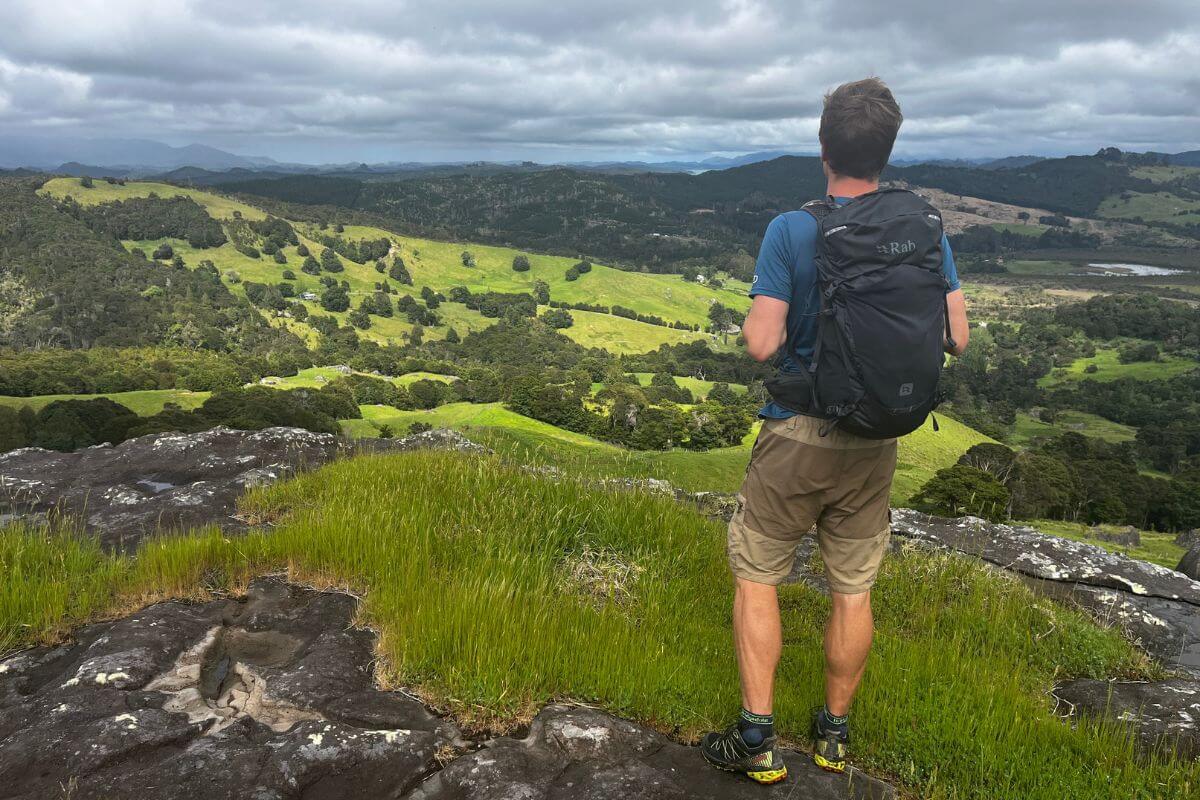
Duke’s Nose. A classic New Zealand tramp. After a few kilometres of warming up comes the usual – wading through mud. And then the trail heads almost straight up the fall line. No zigzagging here. So Filip and his Rab pack plunged into overgrown bushes and pushed through a prickly jungle.
“Even after several full days of pushing through thorns, the outer mesh pockets aren't torn at all,” says Filip, rating the pack's durability and adding that even after trips like that he found no damage on it.
The Rab Protium pack is made from 100D ROBIC® Nylon Ripstop with Hydroshield water-repellent protection. It also comes with an integrated rain cover – tucked away in a pocket at the bottom of the pack.
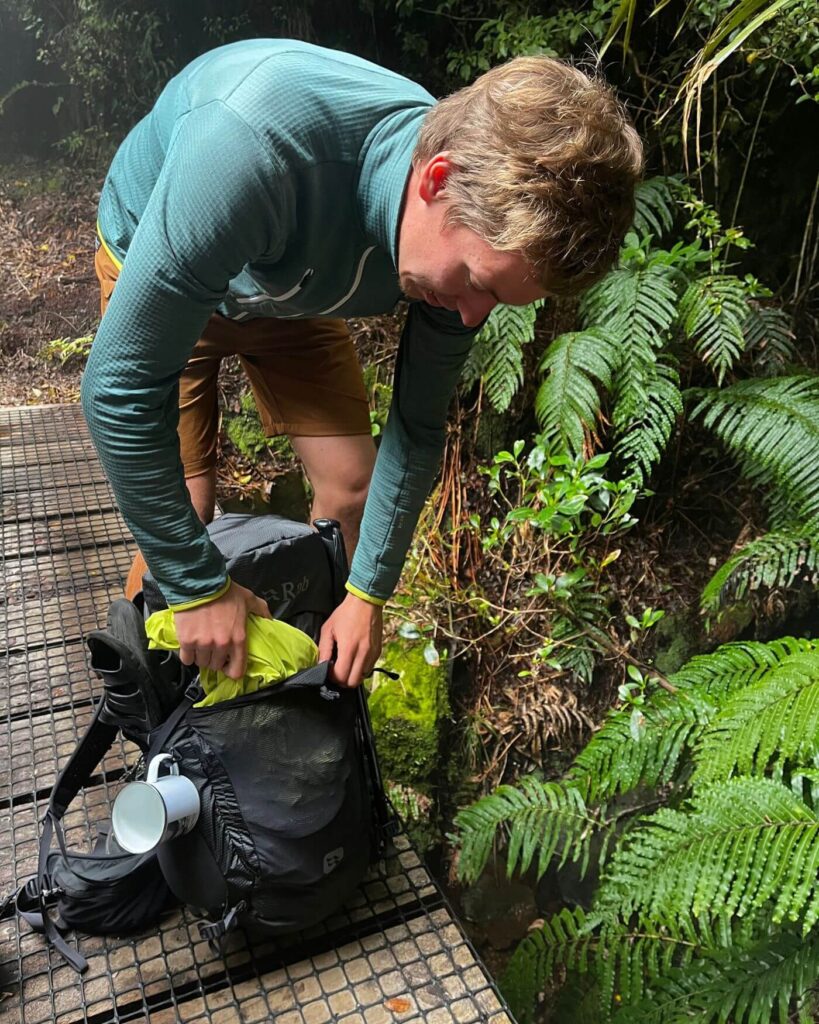
In New Zealand you soon get used to bush-bashing – it stops surprising you. What Filip didn't expect on Duke’s Nose, though, was the last kilometre. Climbing on rock with a decent drop below your feet. “In places there was a steel cable, but not quite enough for my taste. A sort of via ferrata without the protection,” Filip recalls. “That's where it really helped how narrow the pack is and how well it sits on your back.”
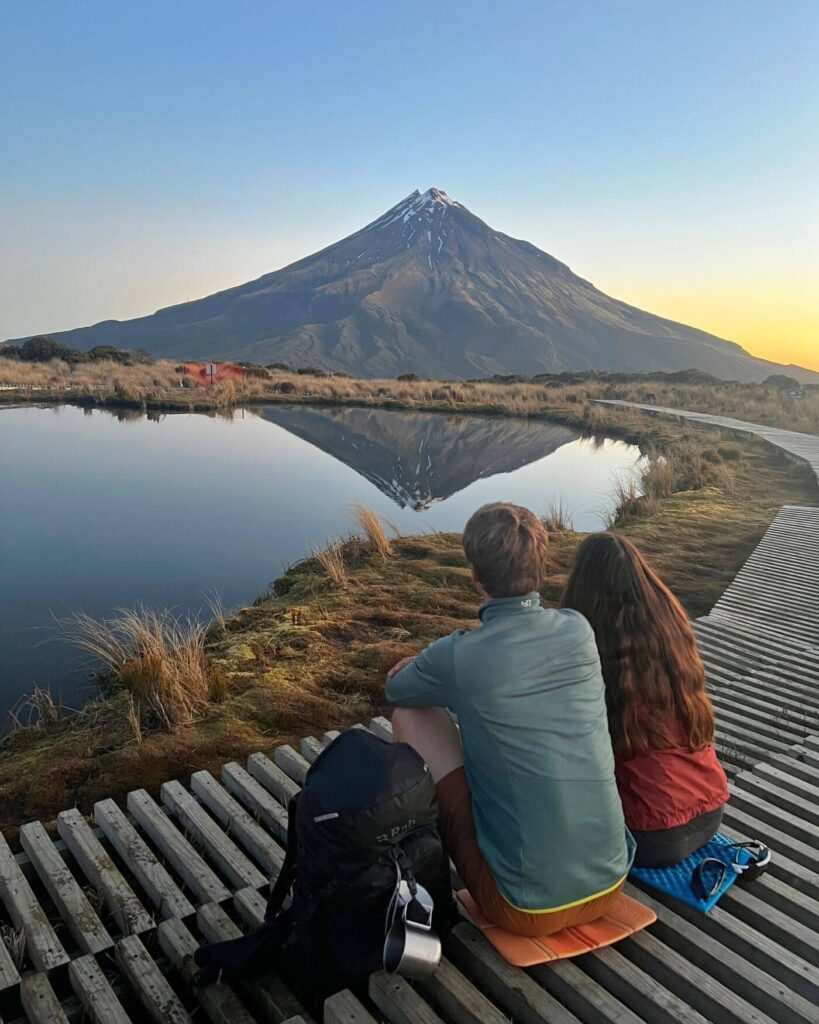
So that test was passed. By both Filip and the pack. “On a two-day trip to Taranaki volcano, though, I probably overloaded it quite a bit,” says Filip, describing how he filled the pack to the brim and strapped his sleeping bag to the outside. “But you couldn't tell at all. The back panel always adapted to my body and ventilated well, so my back didn't sweat much.” And the hip belt? “It's wide enough, so it transfers the weight and doesn't dig into your hips.”
The Air Contour™ carry system features a semi-rigid moulded ABS panel that flexes with your body while keeping the pack's shape. The back length adjusts from 48–53 cm in the men's version and 43–48 cm in the women's.
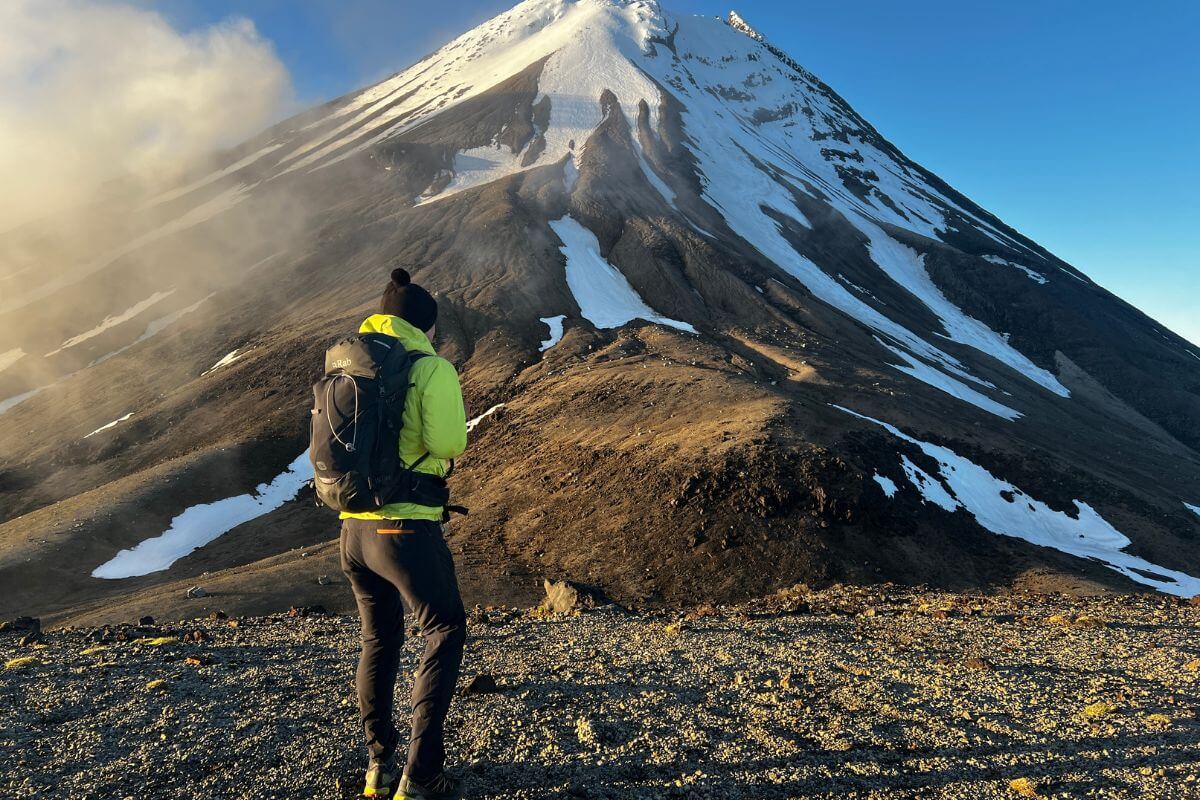
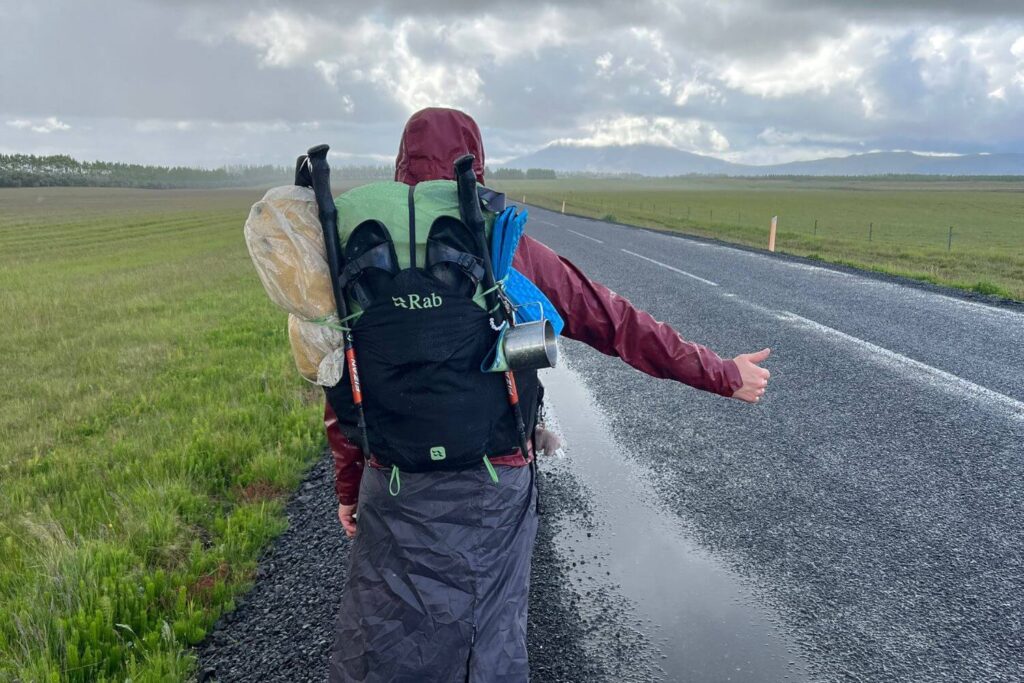
There was a downside, though. “What I missed was a loop on the shoulder strap for attaching a hydration bladder magnet,” Filip points out, adding that the trekking pole attachment worked brilliantly. And the hip belt pockets too. “Those won me over straight away, because I use them a lot. And I really got used to the front mesh pocket, which is perfect for things I want close at hand.”
Filip is a lifelong fan of Osprey packs, though – so a comparison was inevitable (specifically with the Osprey Stratos 34, author's note). “In my view, the Rab Protium handles space organisation better. So with the same volume I managed to fit a lot more into it,” Filip highlights one of Rab's main strengths. “You don't have to just chuck everything in. You can sort things neatly,” Filip sums up the New Zealand trial, naming the area where the pack stands out most.
Rab Protium has an inner pocket with a key clip, a roomy front stretch pocket, side mesh bottle pockets, hip belt pockets, an attachment system for trekking poles and an ice axe and loops for strapping even more gear to the outside.