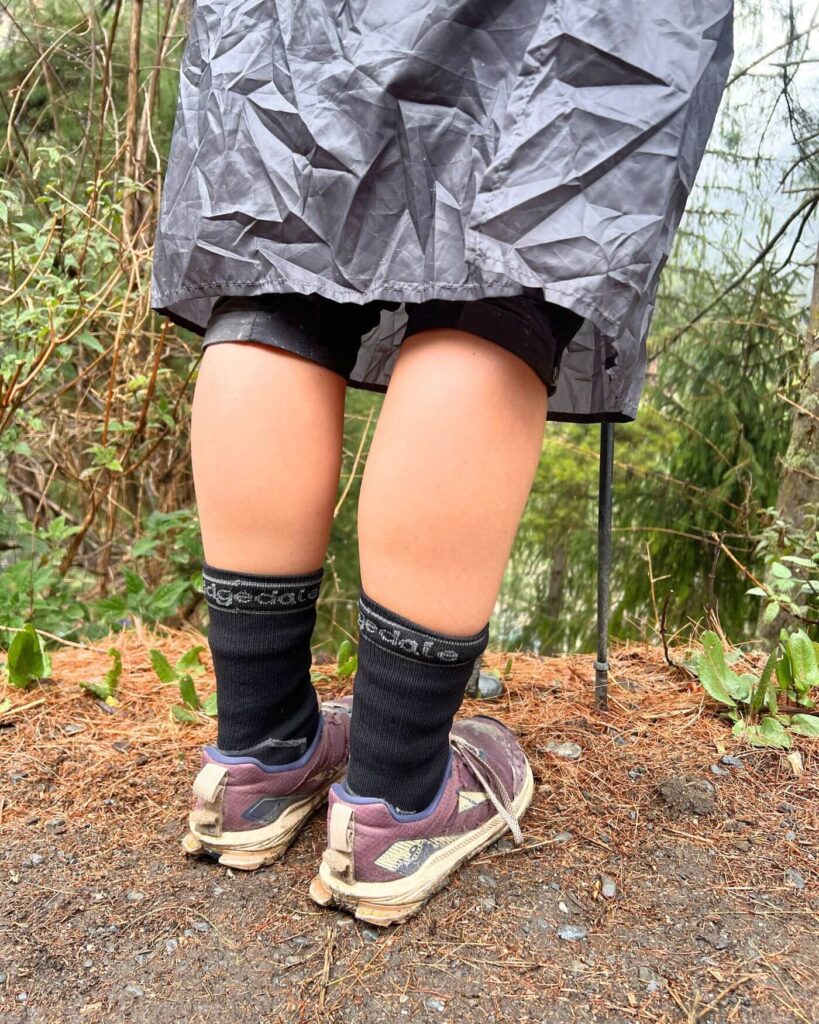
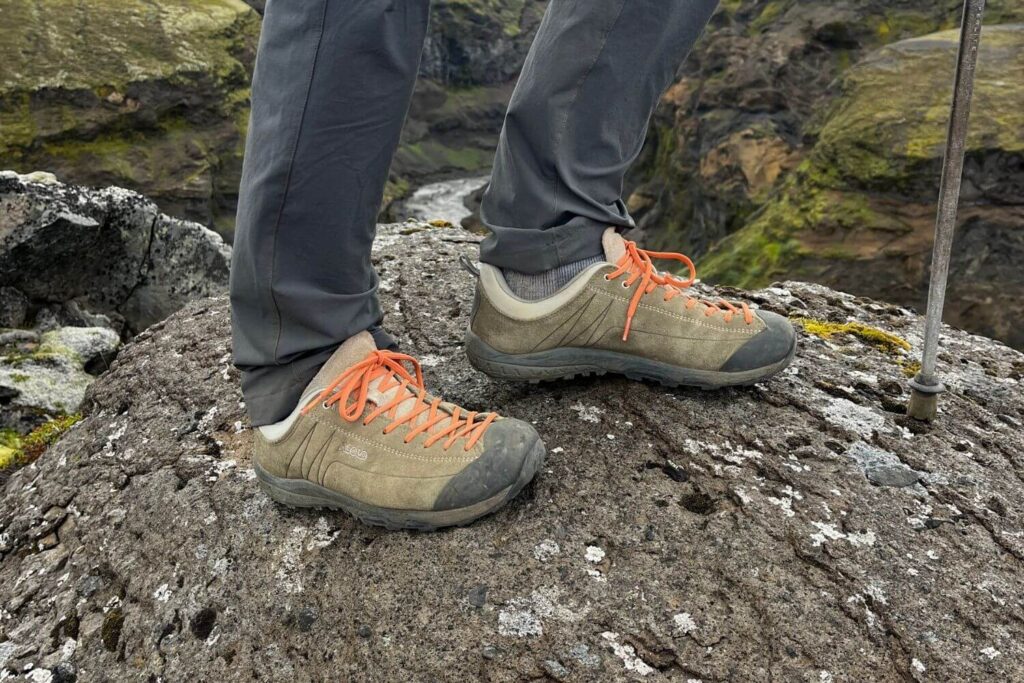
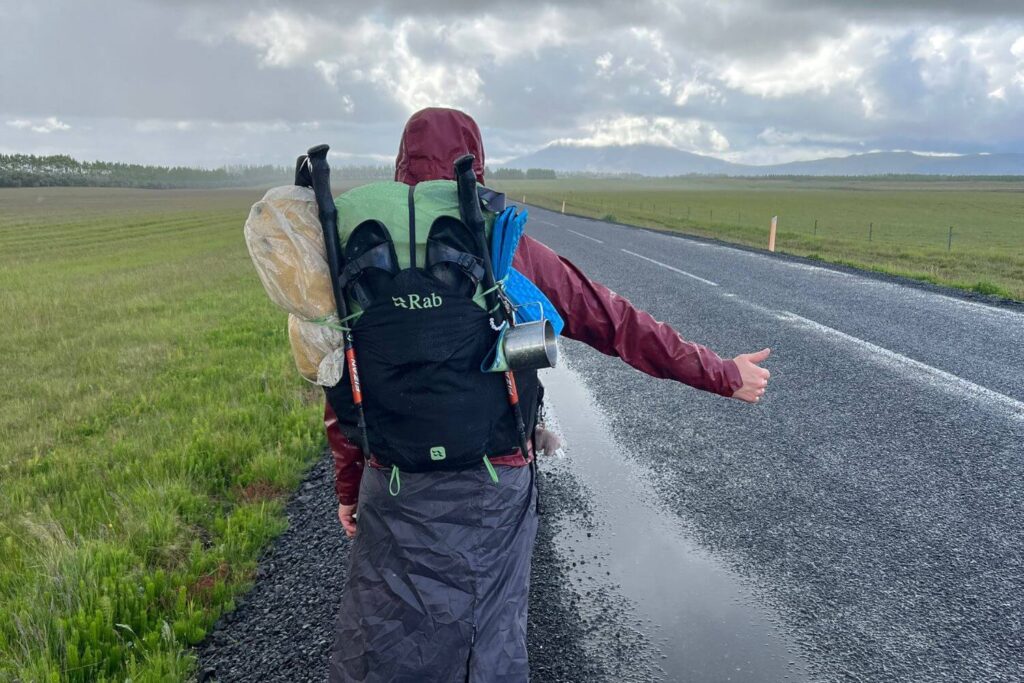
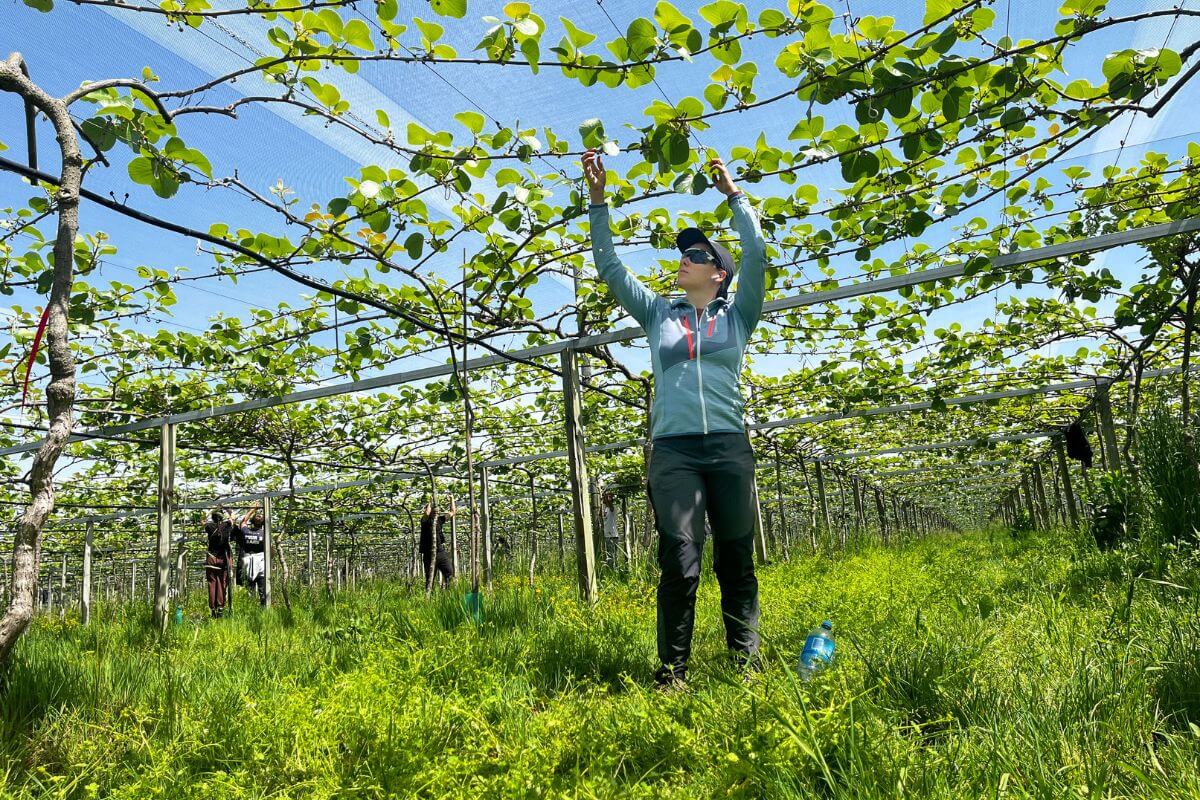
Six months travelling around Japan, New Zealand and then a quick hop over to Nepal? That doesn't come cheap. So Kika and Filip topped up their budget with all sorts of jobs, including work in a kiwi orchard. And there too (or rather, especially there) waterproof socks came in seriously handy.
"Every morning the orchard was dripping with dew," says Kika, who doesn't wear boots with a membrane. "Without waterproof socks my feet would have been totally soaked within the first minute of work. My mornings would have been a lot worse without them."
Bridgedale Storm Sock waterproof socks feature a Hydrotech membrane with a 10,000 mm hydrostatic head and solid breathability of 15,000 g/m2/24h. Like all Bridgedale socks, they come with a lifetime guarantee.
Once the socks had proved themselves in the orchard, Kika could take them on proper trips into the mountains too. "The socks came with me on loads of New Zealand treks and I used them most after river crossings," she explains – fording barefoot isn't safe. But that also means you climb out with your boots completely drenched.
"When colder weather joined the party, waterproof socks were priceless. After crossing a river I took off my wet socks, put on the waterproof ones and slipped back into my soaked boots." Only now with dry feet – which stayed dry despite the wet boots.
The socks have a three-layer construction. Inside, soft merino wool keeps a pleasant climate – it resists odour and stays warm even when damp. In the middle is a laminated membrane, protected from damage on the outside by a tough nylon knit.
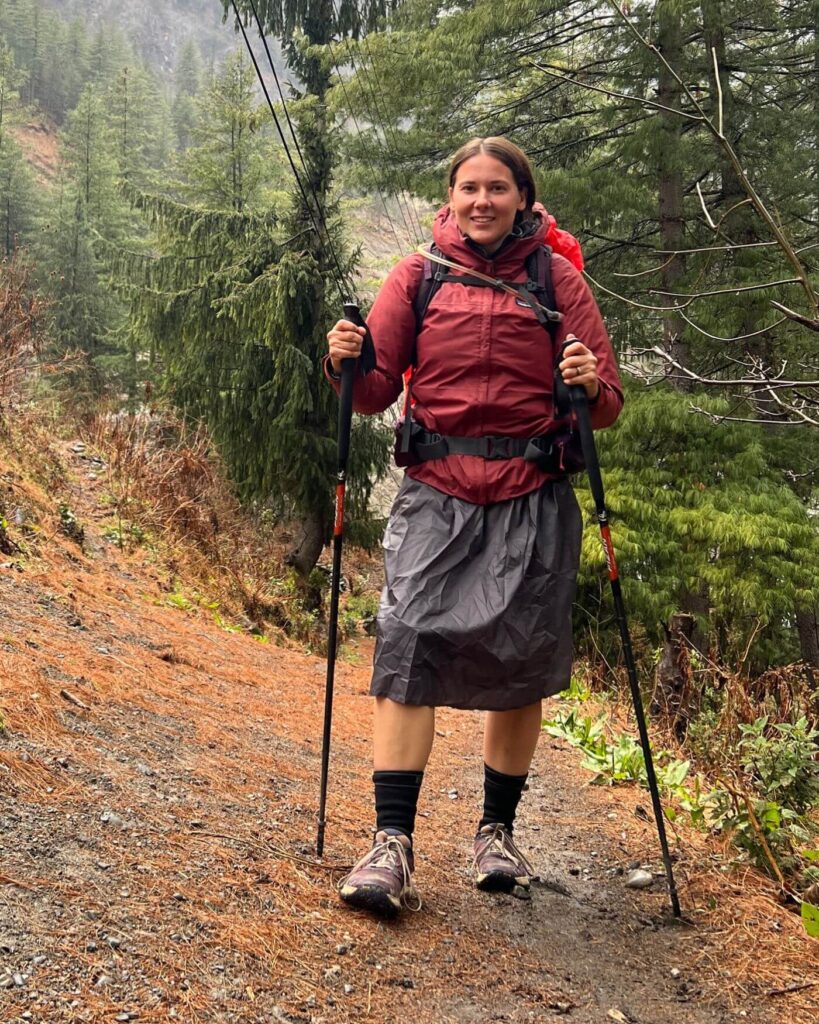
"They also came in handy when the trail was really boggy," Kika adds – she didn't use them so much in the rain itself, but more in situations like the trip to Gertrude Saddle.
"Of course I had them ready in my little pack, because this part of the country is famous for raining non-stop. We got lucky and not a single drop fell all day. But on the way we were surprised by snow." And the waterproof socks didn't let her down then either. "Not only were my feet nice and dry. They were warm too."
Waterproof socks are best suited mainly to colder conditions – spring, autumn, winter. You'll get the most out of them as a backup pair when your boots get soaked. Or in the morning when the grass is full of dew. Read more about how to use them and their limits in our Advice section.
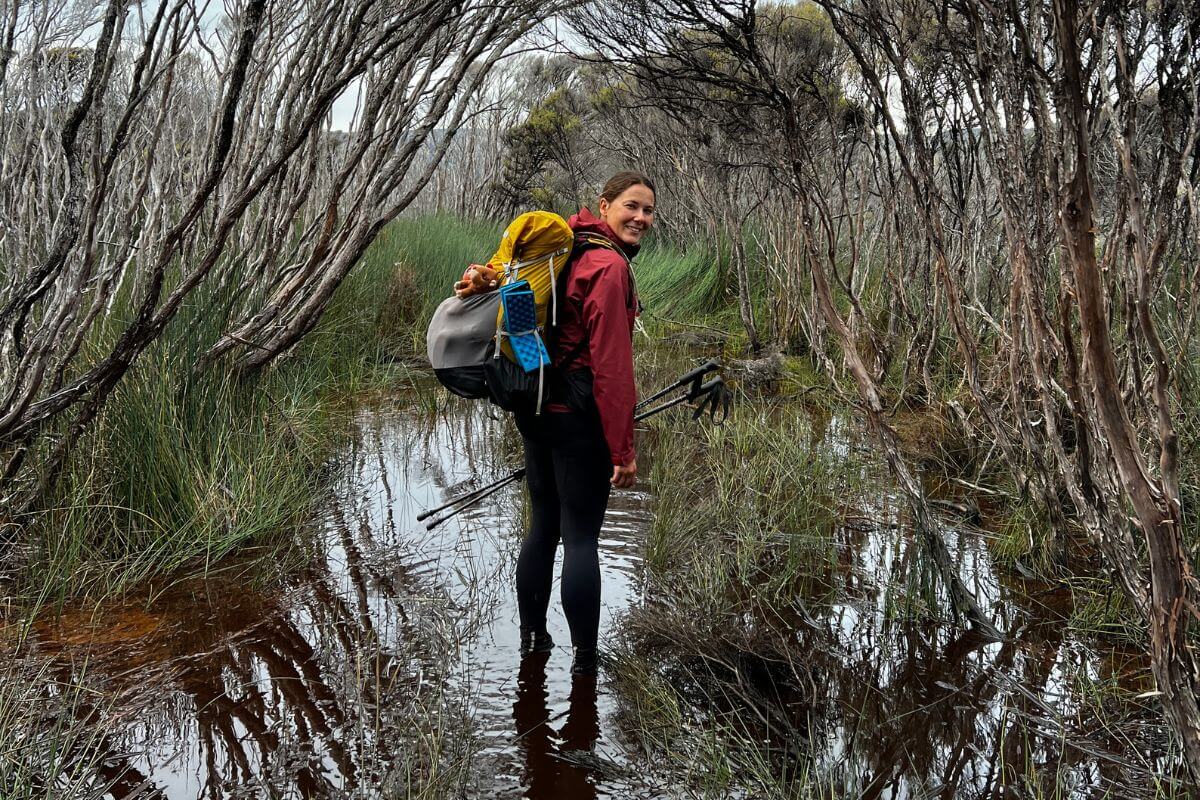
As we mentioned, Kika wears lightweight trail shoes, which usually don't have a waterproof membrane. And that's exactly where waterproof socks are – in her own words – a total game changer. "They're great in the morning in wet grass, too. So you don't start the day with wet feet," she suggests another use.
"Of course, because they're socks with a membrane, they don't wick sweat as well as ordinary socks," Kika points out one possible downside. "But slightly sweatier feet are definitely better than squelching around in rainwater."
She says they're comfortable even when worn for longer. Luckily, even in New Zealand the rain stops now and then. "When the sun came out after the rain, an hour or two strapped to my pack was enough and the socks were dry again," Kika praises, though she adds in the same breath that "after washing they take longer to dry, because they have to dry on the inside too."
Bridgedale Storm Sock come in three cuff heights – low ankle, classic mid-calf and knee-high. And in three weights too: Heavyweight for winter, lighter Midweight for e.g. autumn trekking, and Lightweight, ideal for mountain running or biking.
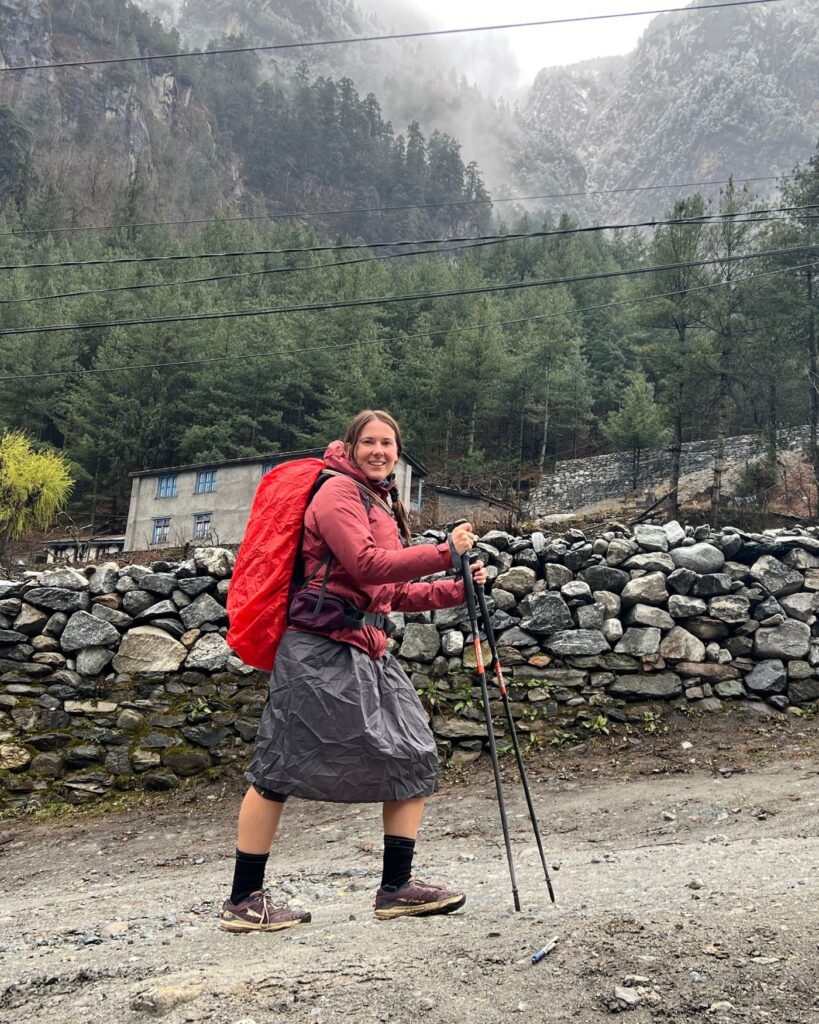
Kika's last note is that waterproof socks are a bit looser than ordinary socks. "They don't fit quite as snugly. But I think that's actually more of an advantage, because it leaves room to wear ordinary socks underneath – for extra comfort."
Even after a six-month travel odyssey like that, Kika found no signs of wear on the socks. So she wraps up her test by saying that "my Bridgedales are always there for me and keep my feet dry even when it's bucketing down and I'm splashing through puddles."
The Bridgedale lifetime guarantee means a guarantee for the whole life of the product. In other words – as long as the socks are fit to wear, you're covered for workmanship and materials. If a manufacturing defect appears during that time, we'll replace the damaged pair with a new one.