Quiet, please. How not to disturb the mountain peace

A whistle for no reason. Poles tapping on rock. Loud laughter below the summit. Music from a phone. They sound like small things – but in the mountains everyone hears them. Birds, deer, squirrels. And the other people who came up here precisely for the silence. Why does it matter? And how do you learn to be quiet in nature?

Silence isn't emptiness

The mountains used to be a refuge from noise. A place where you could finally breathe out. And today? We have to fight for peace and quiet again. But not against other people. Everyone can only start with themselves – and inspire others by example.
Silence isn't just the opposite of noise. It's a space. Mindful, safe and healing.
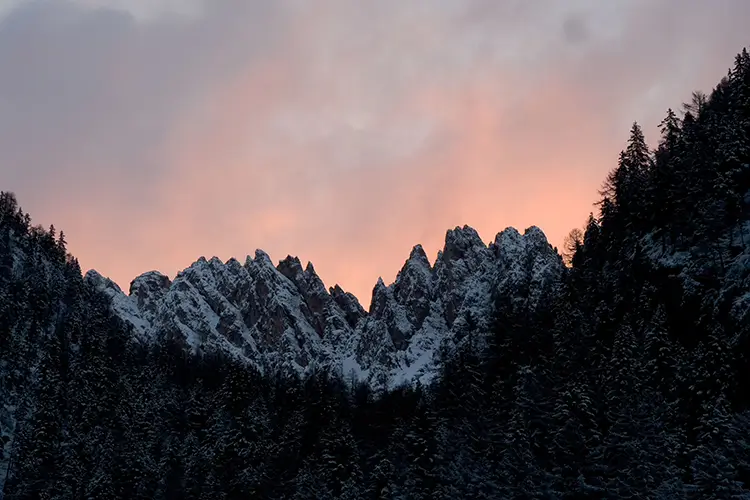
Snowy mountain peaks silhouetted against the setting sun – photo Greg Boswell
"Silence is not the absence of something, but the presence of everything."
Erling Kagge

Why silence matters

Have you noticed how you can hear everything up there? A whoop on the crag carries across the valley and wakes the whole forest. Deer scatter, chicks in the nest fall silent – and that rare falcon? It might never come back.
But silence doesn't only matter to animals. Anyone who has ever walked a ridge alone or slept under the stars knows how silence changes your perception. Everything is sharper. Deeper. More important. Silence gives space its weight. Walk quietly and you hear more. The rush of a river. Chirping overhead. The wind playing in the pine needles. And sometimes even your own thoughts.
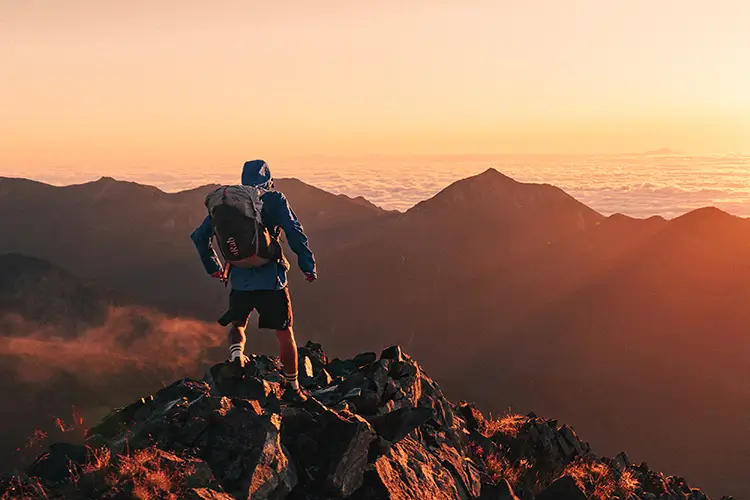
Trail runner at sunrise on a mountain summit in a Rab Downpour Trail Light Jacket with a Veil XP 30 pack – photo Jake Baggaley

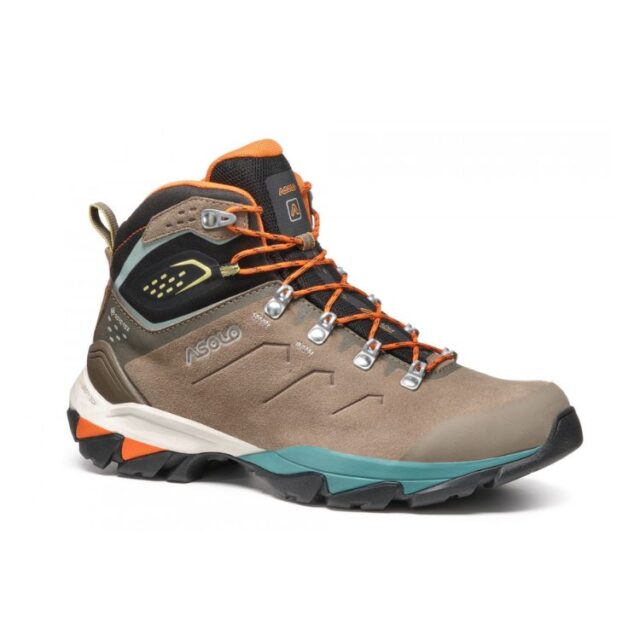
Asolo Acadia

You tread softly. But surely. These lightweight boots from the Zanatta family of shoemakers have a grippy sole that holds you even on wet rocks. They're waterproof and also come in a wide fit. Simply put, you'll feel good in them. Because in Italy they know how to make comfortable boots for quiet mountains.
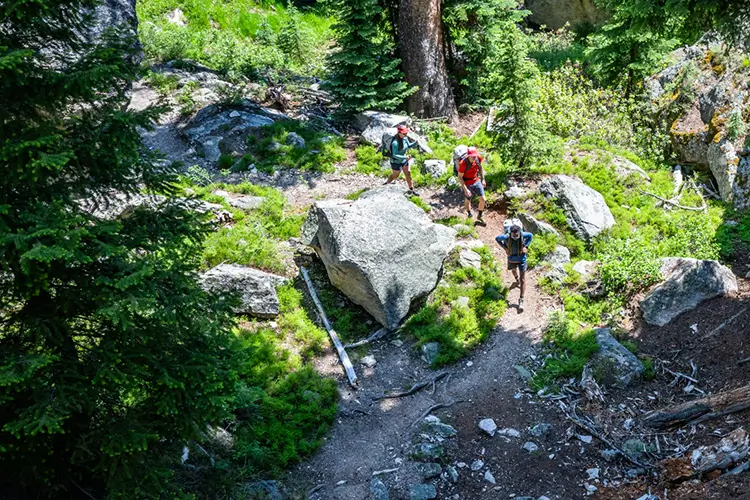
Group of hikers climbing a forest trail in summer mountain scenery – photo Jeremiah Watts
"Mountains are quiet teachers with a loud echo."
Reinhold Messner
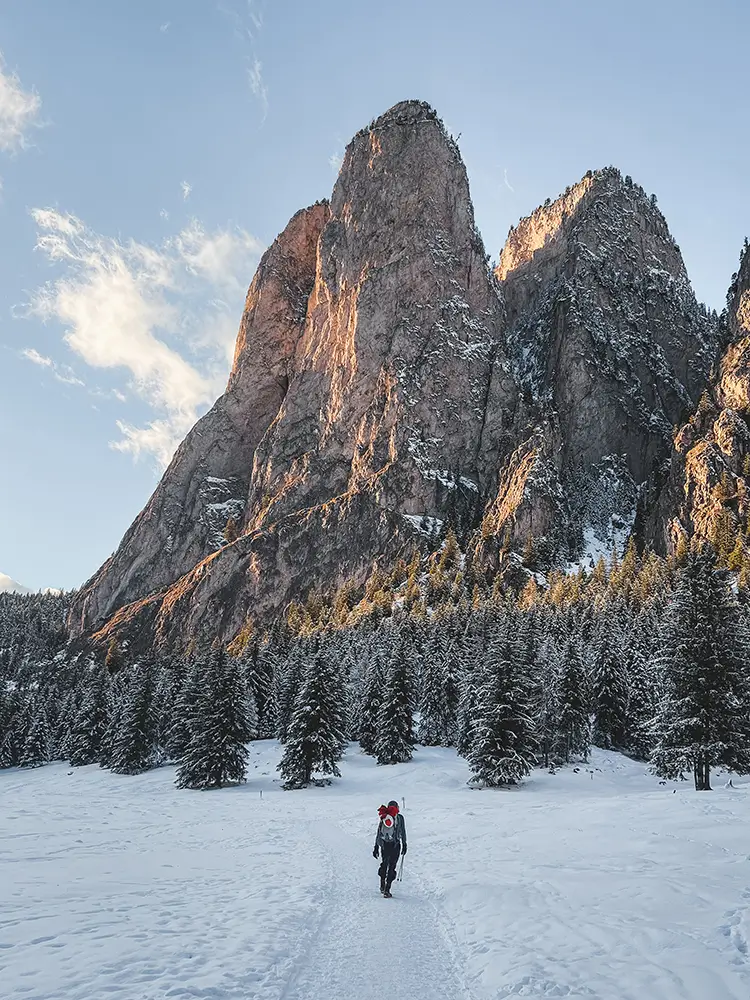
Lone hiker in a winter landscape heading towards majestic rock walls in the morning light – photo Greg Boswell

Everything that makes a racket

It's not just about shouting. Noise in nature doesn't sound like a concert – and yet it can be just as disruptive. Music from the phone in your pocket is enough. A loud conversation on the trail. Whistling "just because". A tent zip in the middle of the night.
They sound like small things. But out there they carry a long way. And the silence you break doesn't belong only to you.
"Silence doesn't mean turning your back on the world. It means hearing everything."
Erling Kagge

Try to notice

How many sounds are you carrying with you? Are the karabiners on your pack jingling? Do others hear you a bend in the trail before they see you? Do you talk more than you need to? Can you actually hear the forest, or only yourself? Maybe some of it can be "switched off".
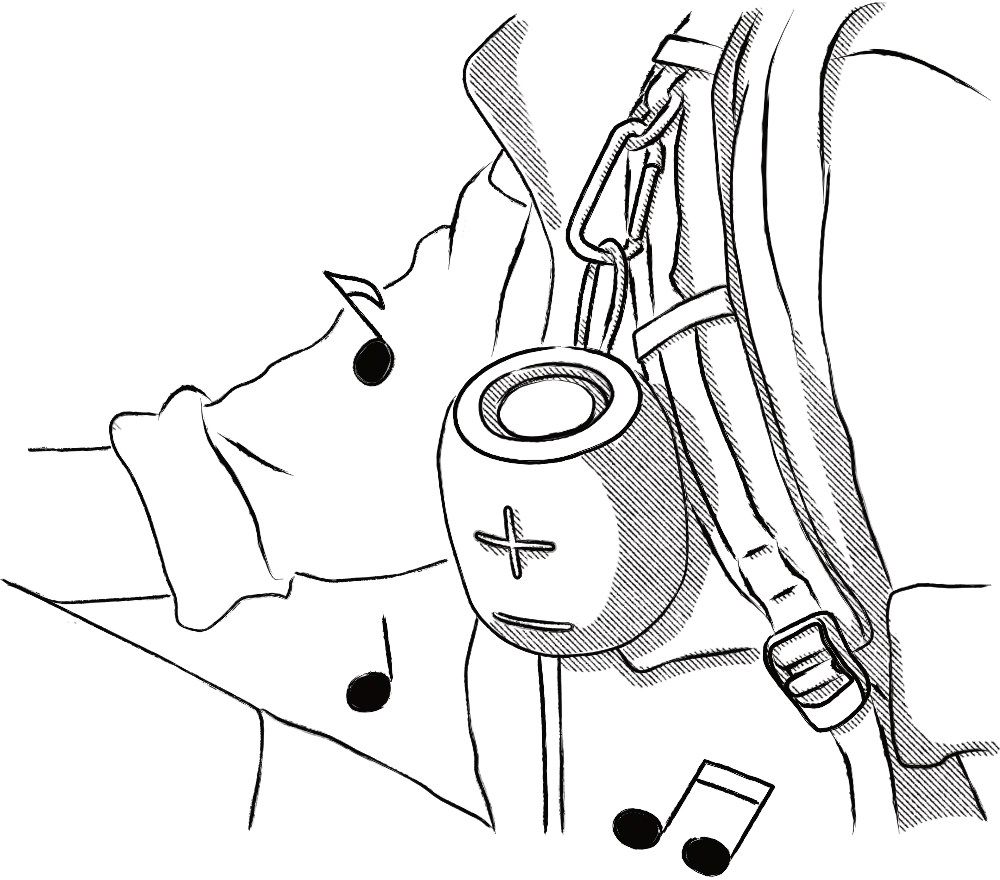
  • Music from a phone or a little speaker.
  • Loud talking and guffawing through the woods.
  • Whistling, singing, needless shouting.
  • Karabiners and other gear jangling on your pack.
  • Slamming a car door in the car park at 4 in the morning.
  • A head torch on full beam (light makes a racket too – visual noise).
Illustration of noisy gear on a pack – music, carabiners and visual noise disturbing the silence of nature

How to move quietly

Silence isn't about standing still like a tree stump. Silence is a skill, and it starts with how you move out there. Try a few simple rules.
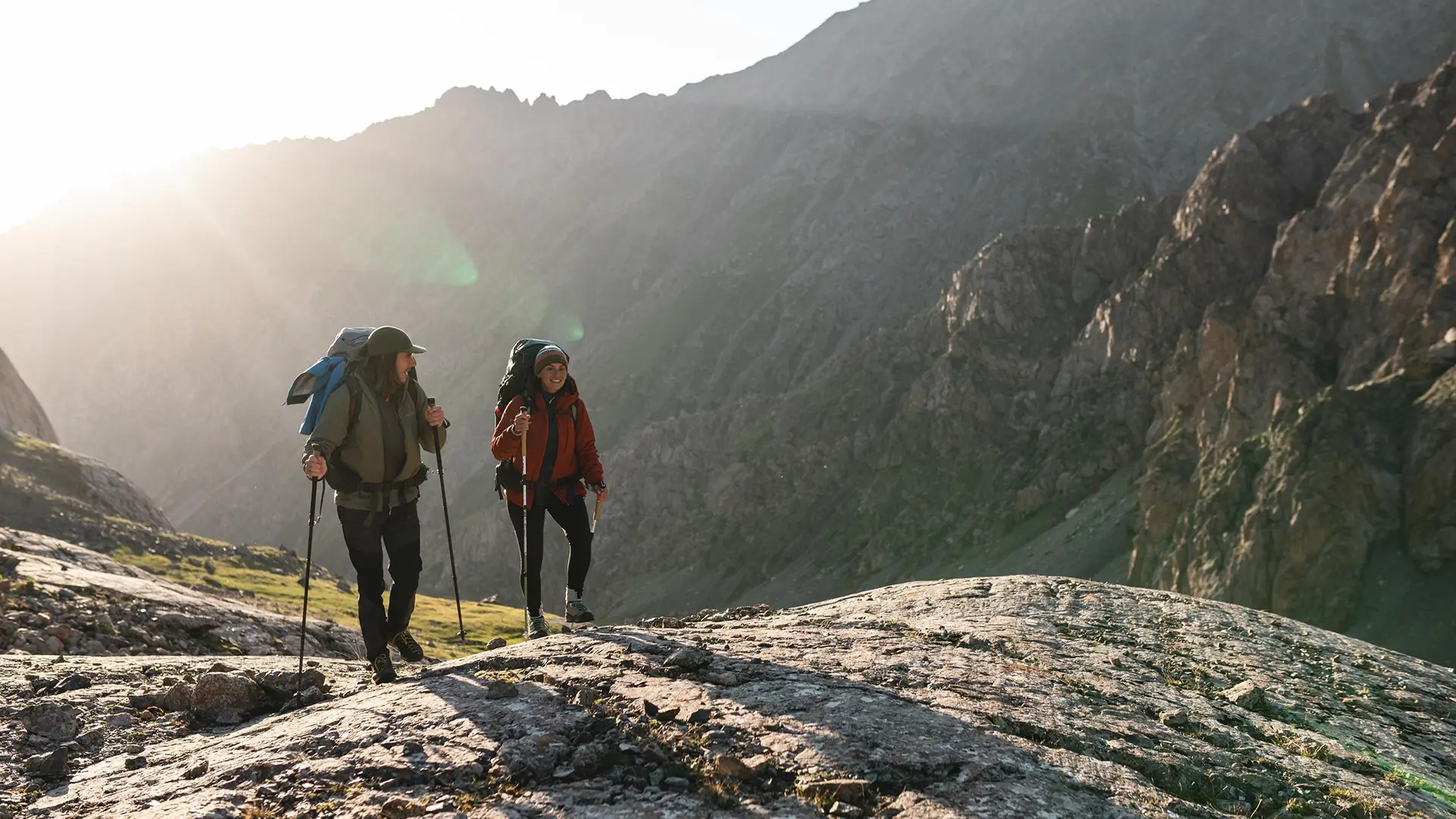
Two hikers in Rab mountain clothing climbing in the morning sun, photo by Daniel Hug
Step by step
  • Don't stomp like a tank – try a softer footfall, as if barefoot.
  • Tread carefully on rocks – so they don't go tumbling from your feet into the valley.
  • On pine needles or grass you can literally "flow". Listen to it.
  • Whenever you can, slow down and feel the ground beneath you.
Sort out your gear
  • Karabiners and crampons – the ironmongery goes inside the pack.
  • Helmet, ice axe, poles – strap them tight to the pack so they don't clank.
  • Before you set off, take a few steps – and listen for what makes noise.
Talk less, more quietly
  • Don't try to shout over your footsteps – save it for when you stop.
  • A low voice is plenty.
  • There's no need to comment on every turning.
  • Silence between words isn't awkward – it's precious.
Head torch with common sense
  • Use the red light if you can.
  • Don't put your head torch on full beam unless you need to.
  • And above all: not in anyone's eyes – people's or animals'.
"It is possible to walk slowly, lightly, quietly – and let the mountains invite you in."
Nan Shepherd

Silence at camp

During the day, plenty of sounds get lost. But once the sun goes down, the noises die away – and every new one stands out all the more. Sit in your sleeping bag in the evening and listen. You'll soon notice everything that disturbs the peace – without it having to be loud.
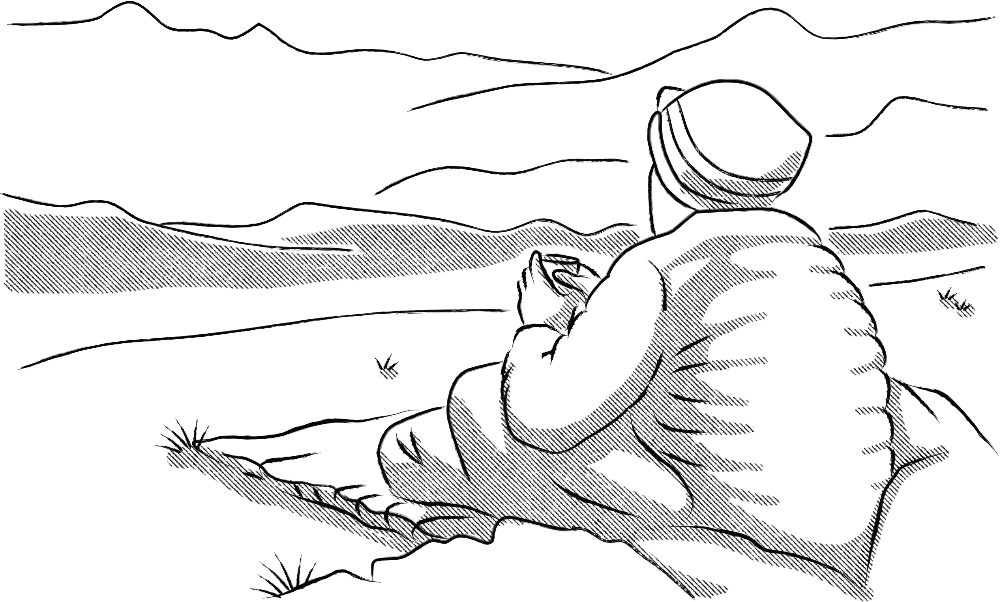
Hand-drawn illustration of a person sitting on a sleeping mat enjoying a view of the mountains

Silence as a tool

Silence isn't just about being considerate. It's an aid. A compass. A way to perceive more and find your bearings better – in nature and within yourself.
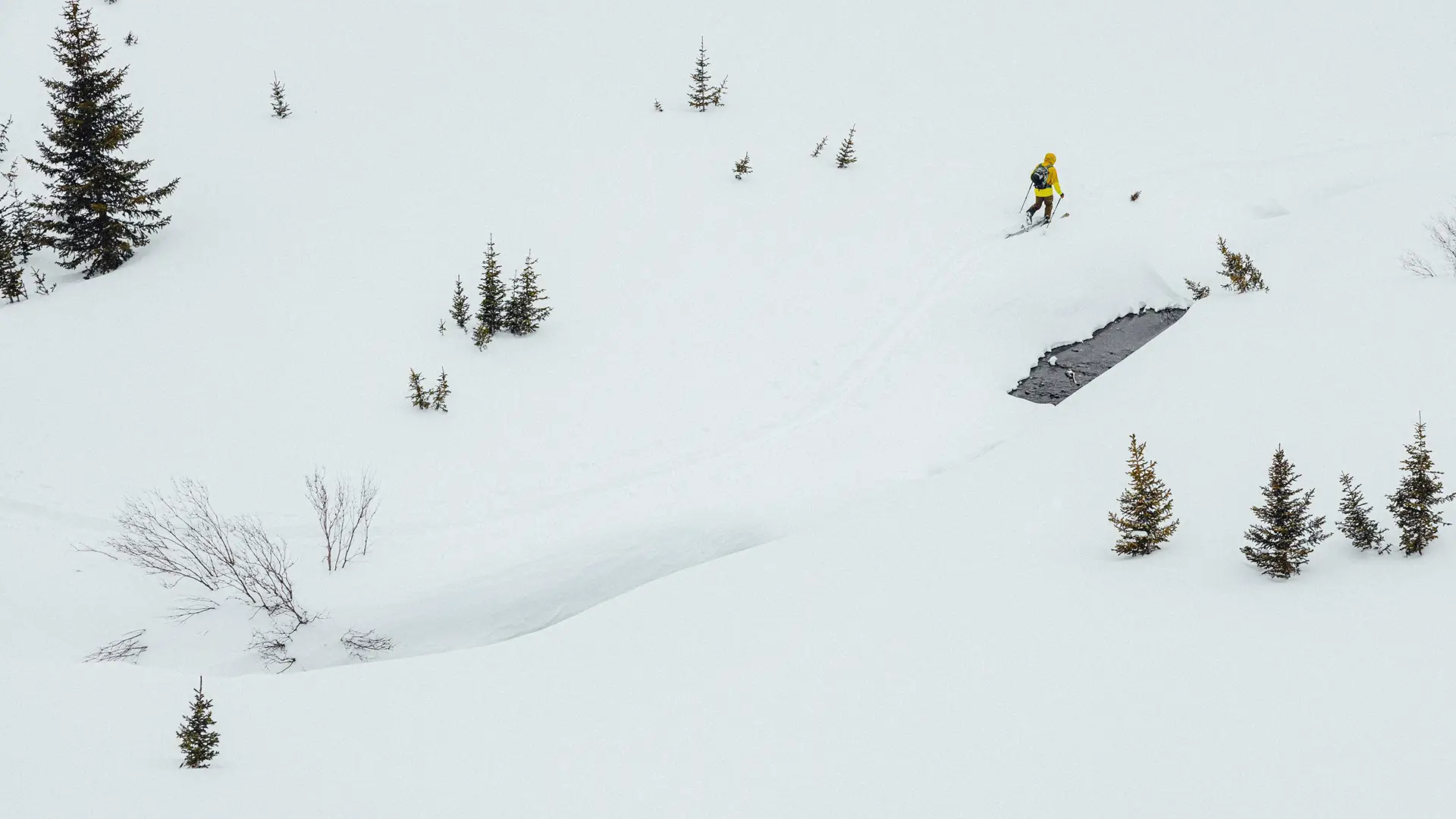
Lone hiker in a yellow Rab jacket on a winter hike through a snowy mountain landscape
Listen to the landscape
  • Wind in the treetops tells you something is on its way.
  • The sounds of snow warn you of a risk you can't see.
  • Birds falling silent signal a change that's coming.
  • When you're quiet, you hear more – even your own intuition.
Feel the silence within
  • In silence, thoughts don't skim the surface – they settle deep down.
  • Your brain gets a rest. You start hearing what usually slips past you.
  • There's room for calm, gratitude and new ideas.
"Only by going alone in silence can one truly get into the heart of the wilderness."
John Muir

Rab Protium

Nature doesn't notice a proper mountain person. And a proper mountain person doesn't notice a proper pack. All-day hikes, fastpacking, via ferratas. The breathable back panel with its semi-rigid frame flexes exactly to your body. It simply adapts. And the pockets and compartments are exactly where you need them most.

When you meet someone noisy

Not everyone came to the mountains for the silence. And not everyone knows they're disturbing it. Often it takes very little – just a friendly nudge. Don't start with a reproach. Don't explain in an "I know better" way. Noise can be quietened, ego much less so. Something like this might do the trick:
"Up here I usually switch everything off – including myself."
"The acoustics here are so beautiful that I try not to talk at all."
"Can you hear that? It feels like the forest is breathing."
And sometimes leading by example is enough – you go quiet and slow down. Because silence is contagious. Just not through pressure. Through presence.
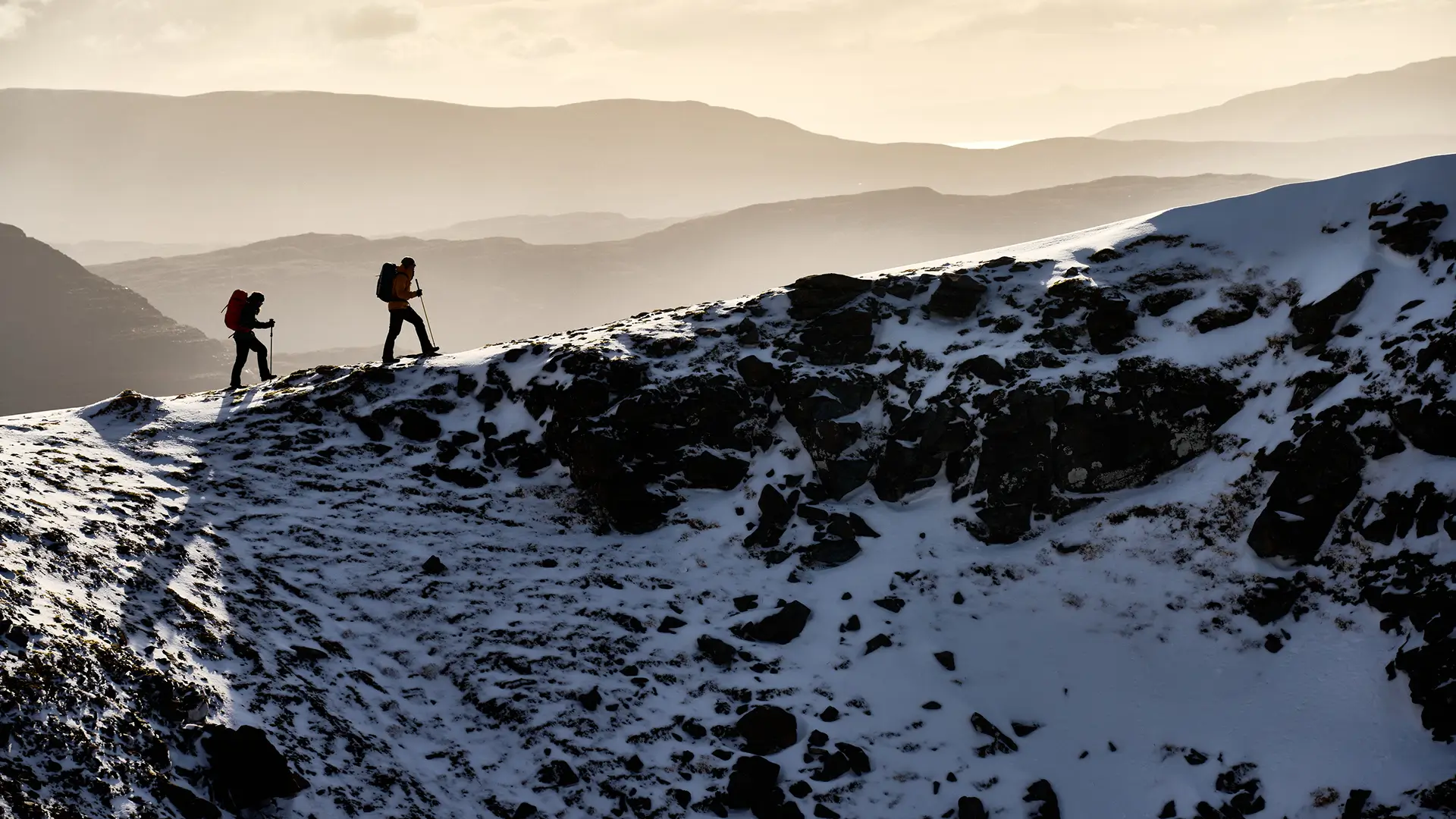
Silhouettes of two hikers climbing a snowy mountain ridge in the morning light – photo Hamish Frost
"Silence in itself is rich. It is exclusive and luxurious. It is a key to unlocking new ways of thinking."
Erling Kagge

Ten rules of the quiet mountain person

Hush when nature speaks. 
The creak of snow says more than words.
Leave the music at home. 
Nature has its own playlist.
Speak softly. 
And only when you need to. Make every word count.
Don't turn your pack into an orchestra. 
Tie down what rattles. Wrap up what rustles.
Footsteps aren't drums. 
Tread so you don't wake the whole forest.
At night, be like a shadow. 
Light and sound both carry a long way.
Dim your head torch.
You don't need to shine like a billboard.
Silence between people isn't awkward. 
It's room for being present.
Silence isn't boring either.
It's a rare state of mind.
Be the one who starts.
Inspire. Silence spreads quietly. But it spreads.
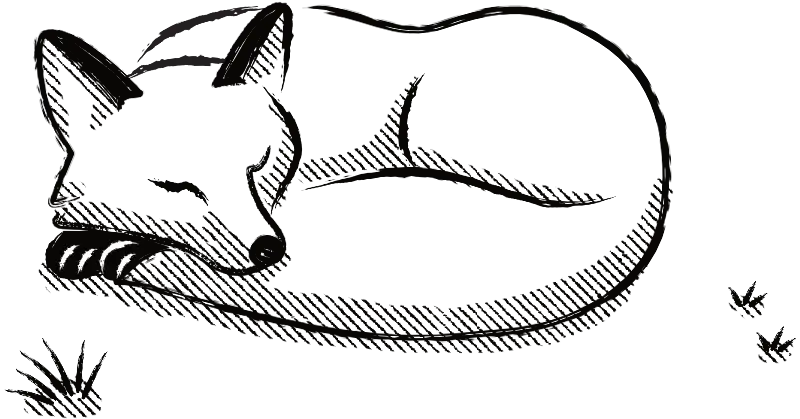
Illustration of a sleeping fox as a symbol of peace and quiet in nature

Bridgedale Hike MW

So we're not keen on noise. What about smell? These merino socks from Newtownards in Northern Ireland soon quieten that down too. You can wear them for a week straight and they'll still be pleasantly soft. And how long do they last? Crazy long – years of use without wearing through. After all, they come with a lifetime guarantee. Just be warned – they're addictive.

Silence is your choice

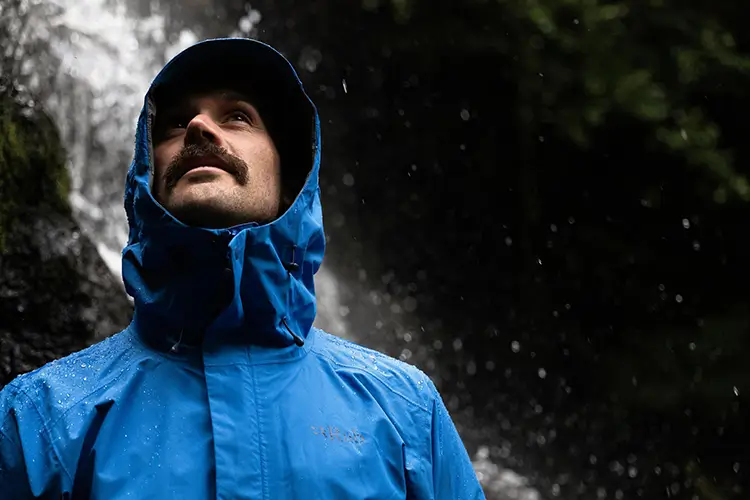
Man in a blue hooded Rab Downpour Jacket in a damp setting by a waterfall – photo Krystle Wright
In the mountains, every sound is multiplied. Even the ones that seem harmless. A whistle. A stone dislodged by a careless step. A remark tossed into the wind. When you let silence ring out, you hear things that otherwise get lost – water, wind, snow. And maybe even yourself.
Silence isn't something you have to search for far away. You just have to not break it. Notice what you're putting out into the world. And whether it's worth it.
"There are many kinds of noise. But there is only one silence."
Kurt Tucholsky
Choose your language
newsletter

Sign up for the newsletter

As you read it, cold air will tickle your face. The mountains are calling…
Horolidi newsletter EN
envelopemagnifiercrossmenuchevron-upchevron-down