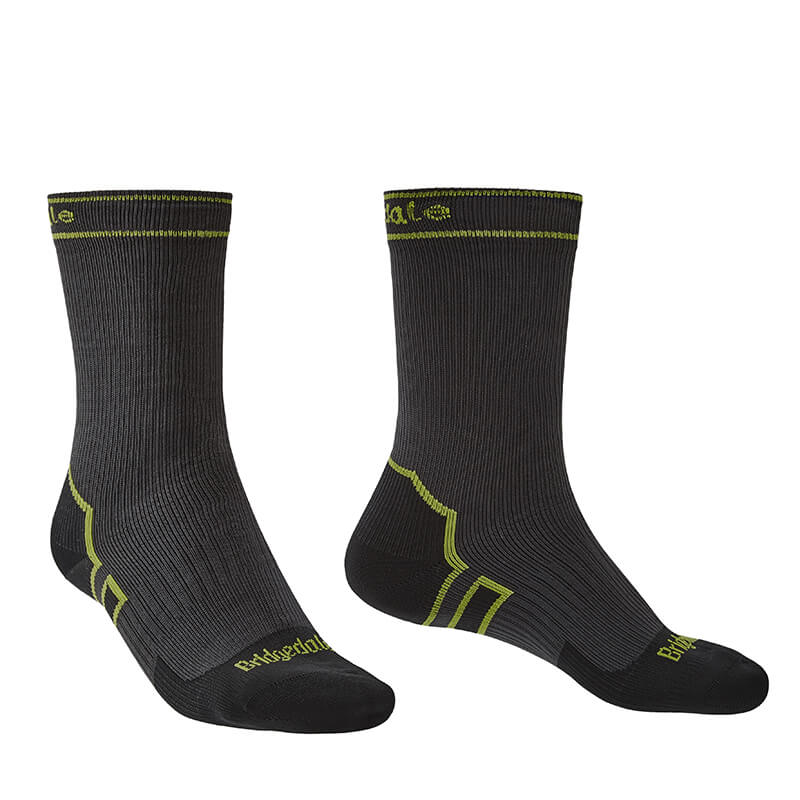
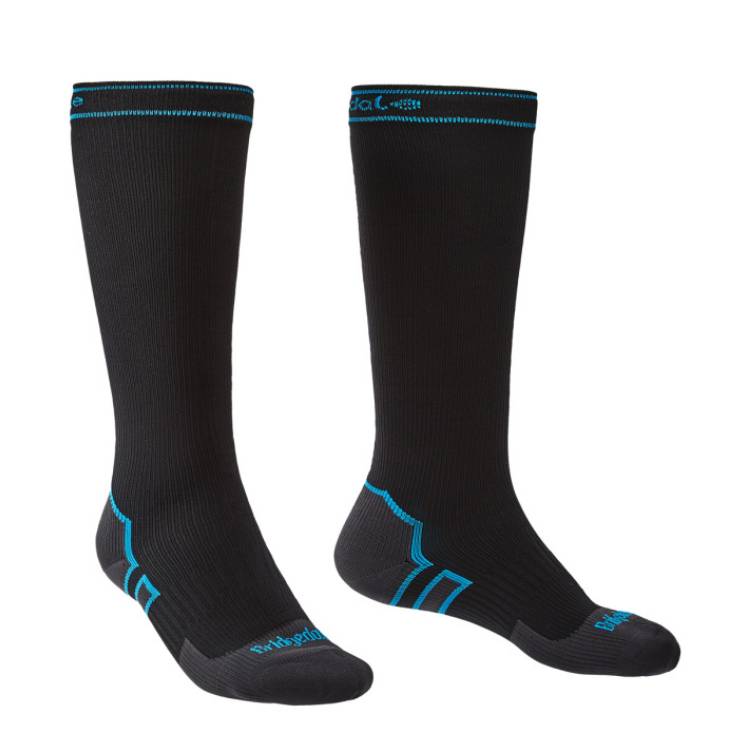
They do. Just maybe not quite the way you'd imagine at first. Out there – and on a longer trek especially – waterproof socks can make lots of wet situations more bearable and keep you surprisingly comfortable. But they have their limits too. They aren't 100% watertight, and they can't be.
Physics is merciless. The membrane in waterproof socks usually has a hydrostatic head of 10,000 to 15,000mm. But when a 70 kg person walks – without a rucksack and in a well-cushioned shoe – a pressure of 40,000 to 50,000 mm of water column builds up under the big toe and heel. And when running it can be as much as double that.
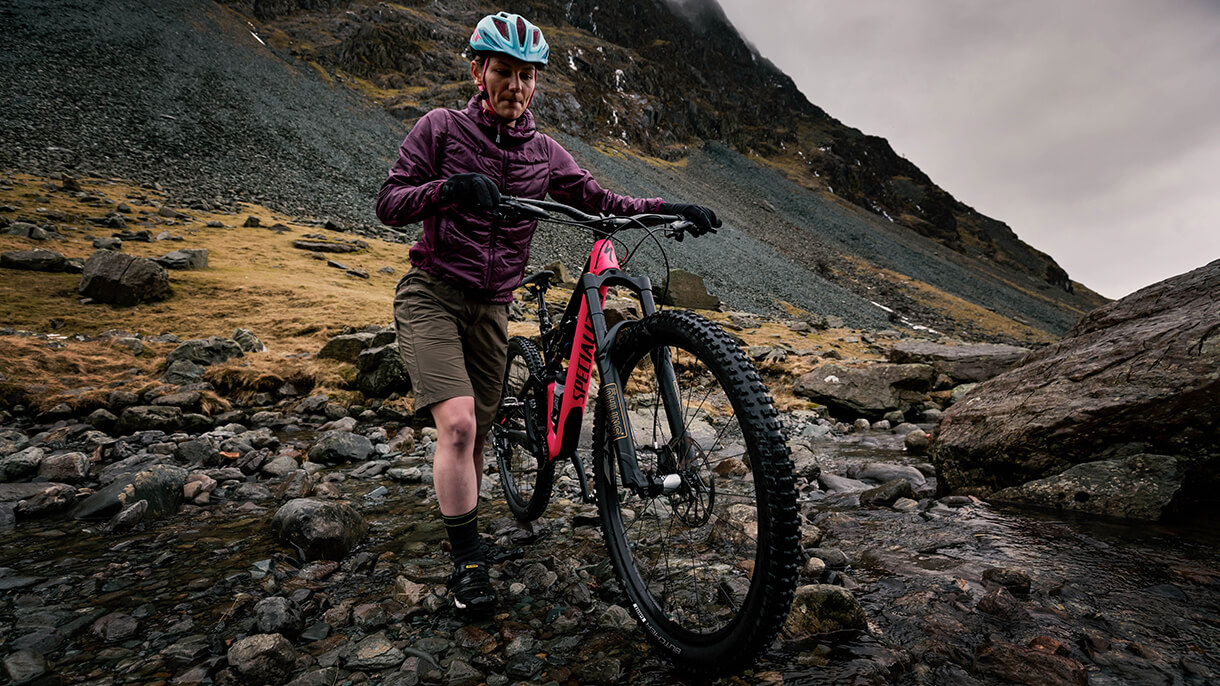
No membrane can withstand that kind of pressure. So after hours of trudging through wet grass or wading through wet snow in boots full of water, moisture will eventually push its way into waterproof socks too. But they're still a big help. And their benefit lies in something other than keeping your feet 100% dry.
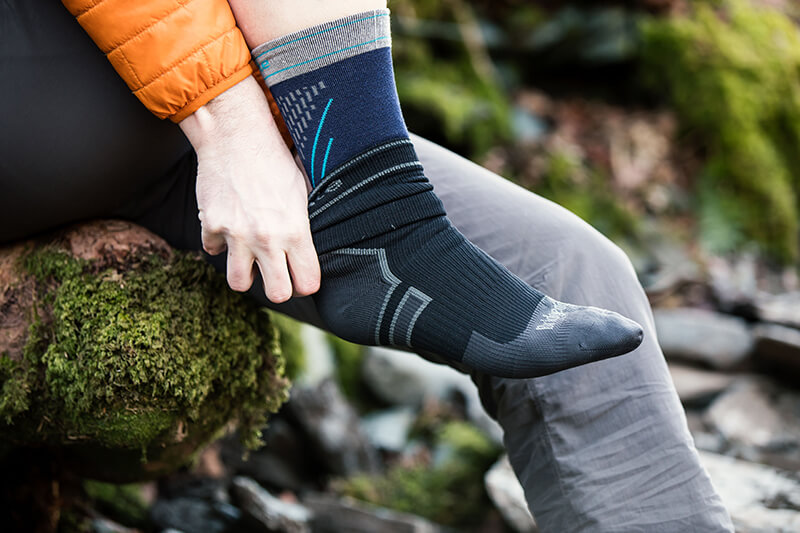
The outer nylon layer provides abrasion resistance.
The inner merino wool layer, which stays warm even when damp and resists odour, keeps you comfortable.
In the middle is a waterproof, breathable and stretchy membrane.
For extra comfort on cold days you can also wear thin merino liners under your waterproof socks to soak up moisture.
The point of waterproof socks
Even if some moisture gets into waterproof socks, there won't be much of it after all, and it warms up quickly. So the socks then work rather like neoprene – they keep you warm. And especially in cold conditions, they make sure your feet stay in a pleasant environment. Ordinary socks can't do that.
Backup socks
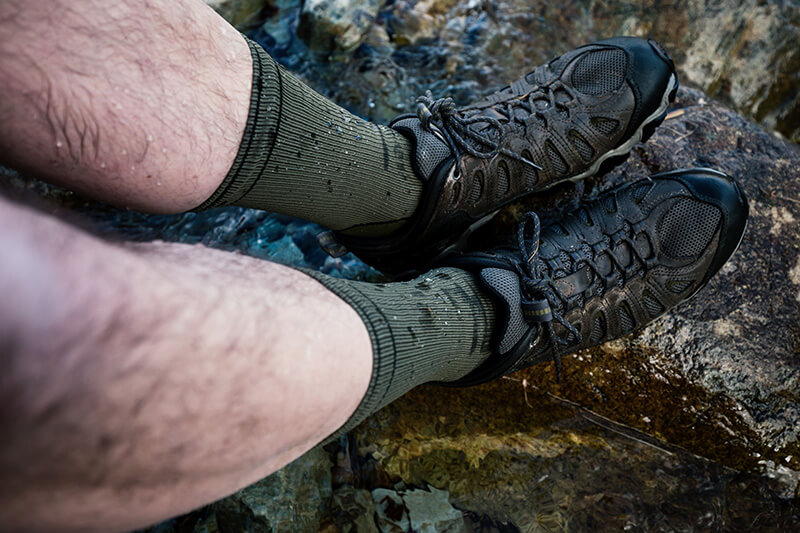
Waterproof socks are most useful as a backup – a temporary alternative to regular socks. For example, it's lovely to pull them on after a full day's trek in wet conditions – when you stop for the evening, start cooking and set up camp. Then it's no problem to slip back into wet boots in them, because your feet will stay warm.
The socks will get damp on the outside from the boots, but then all you need to do is roll them up, squeeze the water out and take them into your sleeping bag – so they're ready for wet boots again in the morning. After a while of walking – perhaps once it warms up during the day – swap them for regular ones and dry them on your rucksack.
Preventive socks
A cold morning and dew-covered grass mean your boots will be soaked within a few metres. So it's a good idea to start that kind of day in waterproof socks. Once it warms up later and the dew has gone from the grass, swap them back for regular ones – and both boots and socks will dry out during the day.
After all, even well-waxed leather hiking boots get damp after a full day of walking in rain or wet snow, and can then take two days to dry. And if they freeze overnight, starting the day in a frozen boot isn't exactly fun. Waterproof socks come in handy again.
Ideal use? In trainers
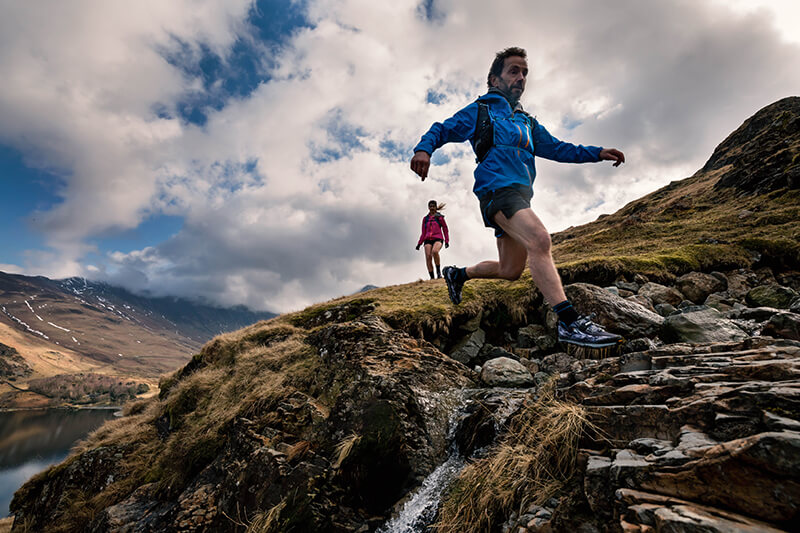
Running shoes or light (non-membrane) trekking shoes with waterproof socks inside, which keep you warm when cold and wet set in. That's where they make the most sense.
In running shoes or light breathable trekking shoes with good thin socks you can comfortably walk more than 40 kilometres a day, which is hard going in hiking boots. And when things get tough – snowfields or long-lasting rain, for example – that's when waterproof socks come into their own.
Caring for waterproof socks
No membrane lasts for ever. Although the one in these socks is fairly tough and stretchy, its lifespan is limited too. That's why it's best not to spend whole days in waterproof socks, but to use them only for limited periods. And swap them for regular ones as soon as you can.
Never wring wet socks by twisting them. Really, don't. It can damage the membrane. The right way is to roll the socks up and squeeze the water out by hand – right side out and inside out.
Wash waterproof socks at 40 °C, ideally inside out, on a gentle cycle, with detergent free of softeners and no fabric conditioner. Don't wring!
Waterproof socks need to be dried not just on the outside but also turned inside out, otherwise they stay damp inside and can go mouldy.
As soon as something sharp gets into your shoes (e.g. small stones), it's wise to tip it out straight away so it doesn't damage the sock membrane.
Because all waterproof socks are thicker than regular ones, it's not a good idea to wear them in shoes that are too tight – high pressure can damage the membrane.
Don't wear waterproof socks without shoes. You never know what you'll step on.
Soaked already?
You put on waterproof socks and after a few hundred metres you already feel damp. Is that normal? It can be. But most likely it's just a feeling of cold caused by the moisture outside. Or it's the moisture from your own sweat, because your shoes aren't breathable enough, or the warm humid air simply can't take any more moisture.
You can't cheat physics. So waterproof socks work best in cold, wet weather and in light, breathable shoes. In those conditions they keep your feet warm and can even protect them from frostbite.
Socks from Bridgedale
In Newtownards, Northern Ireland, they've been making socks for more than a hundred years. And in a completely different way from any other socks in the world. That's why they can handle thousands of kilometres, don't smell even after a week on your feet and stay pleasantly soft. And they come with a lifetime warranty.
Storm Sock LW Ankle
Lightweight waterproof socks with maximum breathability and minimal insulation.
As you read it, cold air will tickle your face. The mountains are calling…
The mountains are calling
Get the newsletter that makes your day. Thrills, know-how and the secrets of true mountain folk.
We guard your personal data – and your inbox from nonsense. We only send the good stuff.
Cookie settings
You'll meet cookies even on the way to the mountains. How do you want to deal with them?
Functional cookies
Always active
Without these cookies the site won't work properly – and that won't make you happy. Because they are essential for the website to function, they cannot be disabled.
Preferences
The technical storage or access is necessary for the legitimate purpose of storing preferences that are not requested by the subscriber or user.
Analytics cookies
The technical storage or access that is used exclusively for statistical purposes.These cookies let us count visitors and see how they use the site. We use this to improve it – so you can always find what you're looking for quickly and easily, without anything getting on your nerves.
Marketing cookies
These cookies record your visit and let us remind you of us from time to time through ads – for example on Facebook, Instagram or Google.


 To the shop >