Where You Can Bed Down. Bivouacking Without Trouble

Sleeping under the open sky is a small ritual of freedom. But not every “overnighter” vanishes without a trace in the morning – and then we all pay for it. Here’s how to sleep outdoors without breaking the law, annoying the landowner or leaving a mark bigger than the one your sleeping mat leaves.

One night out won’t break the world

Or will it? What can happen? It’s not just about you. Hundreds, thousands of other people think the same. Each with a sleeping bag, a little campfire and a bag of crisps. Each one “just sleeping over”. Suddenly the dwarf pine turns into a latrine – and then comes a ban. For everyone.
Bivouacking is freedom – but also a fragile agreement. Between you and nature. Between you and the people who come tomorrow. Behave considerately – and you can sleep outdoors your whole life. If not, you may be the last one who could.
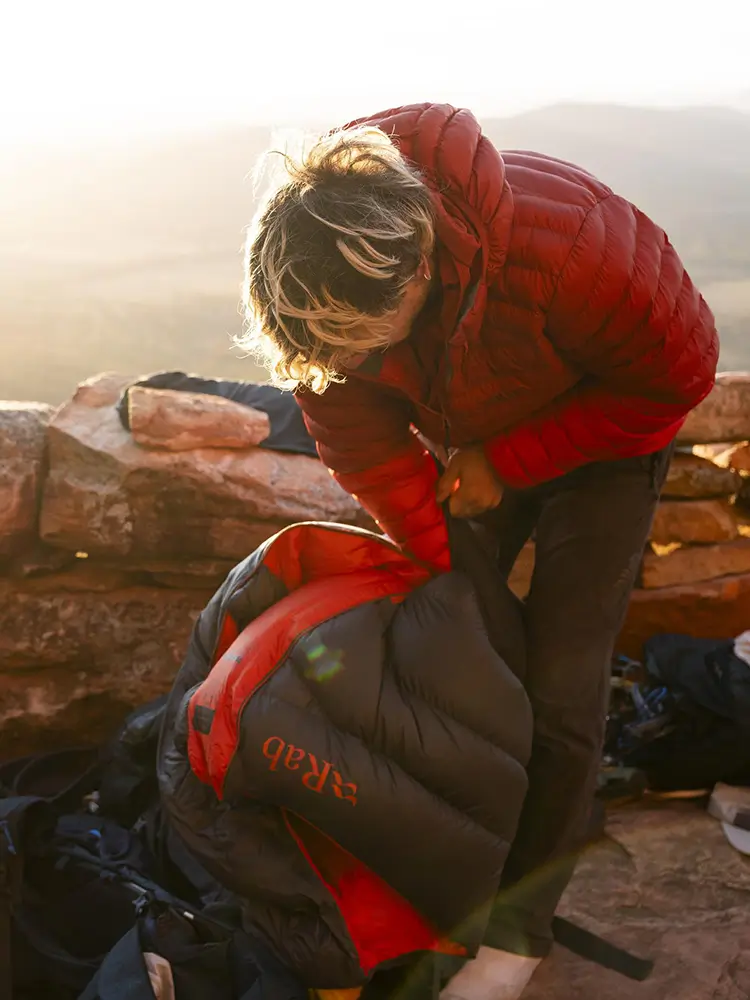
Person in a red RAB down jacket packing a sleeping bag of the same brand on a rocky spot in the morning sun after a night outdoors.

Not all nights out are equal

There’s a difference between just crawling into a sleeping bag for the night – and pitching a tent with a fire pit and a washing line.
Ripstop
A fabric with thicker threads woven in a grid. If the pack gets torn, the grid stops the tear from spreading. Works against branches, rocks and airport conveyor belts.
Denier (D)
A unit that defines the thickness of a fibre. The higher the number, the tougher the fabric – and the heavier. 200–300D is fine for town. 400–600D can take some punishment.
DWR finish
A treatment that repels water. Drops slide off the fabric instead of soaking in. It wears off over time – but you can restore it with a waterproofing spray.
Reinforced base
You chuck your pack on wet ground, drag it over rocks, sit on it. The base needs to be made of tougher fabric – higher denier, rubberised or Cordura.
Reliable zips
The zip is the weakest link. When it bursts in the rain on a ridge, the improvising begins. YKK zips are the gold standard. They run smoothly, don’t snag and don’t split.
Tough buckles
Duraflex or ITW Nexus. Buckles that won’t crack easily – not in the frost, not even when you accidentally step on them.

Bivouacking

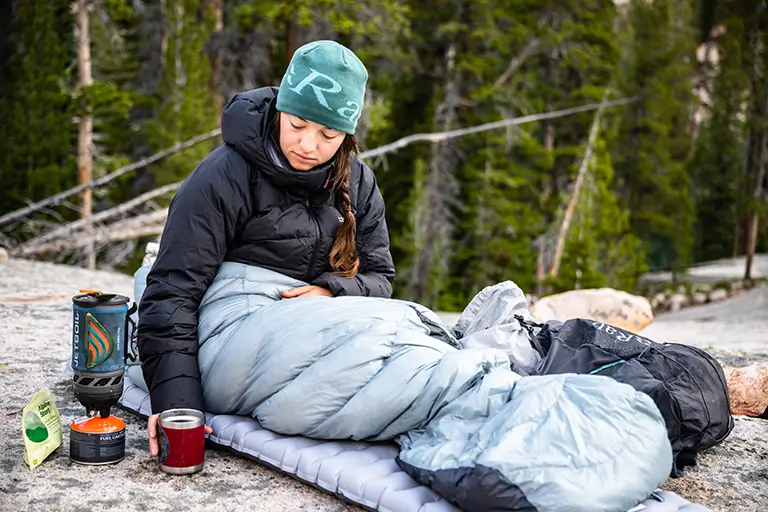
Bivouacking without a tent – woman in a sleeping bag on a sleeping mat under the open sky in the forest
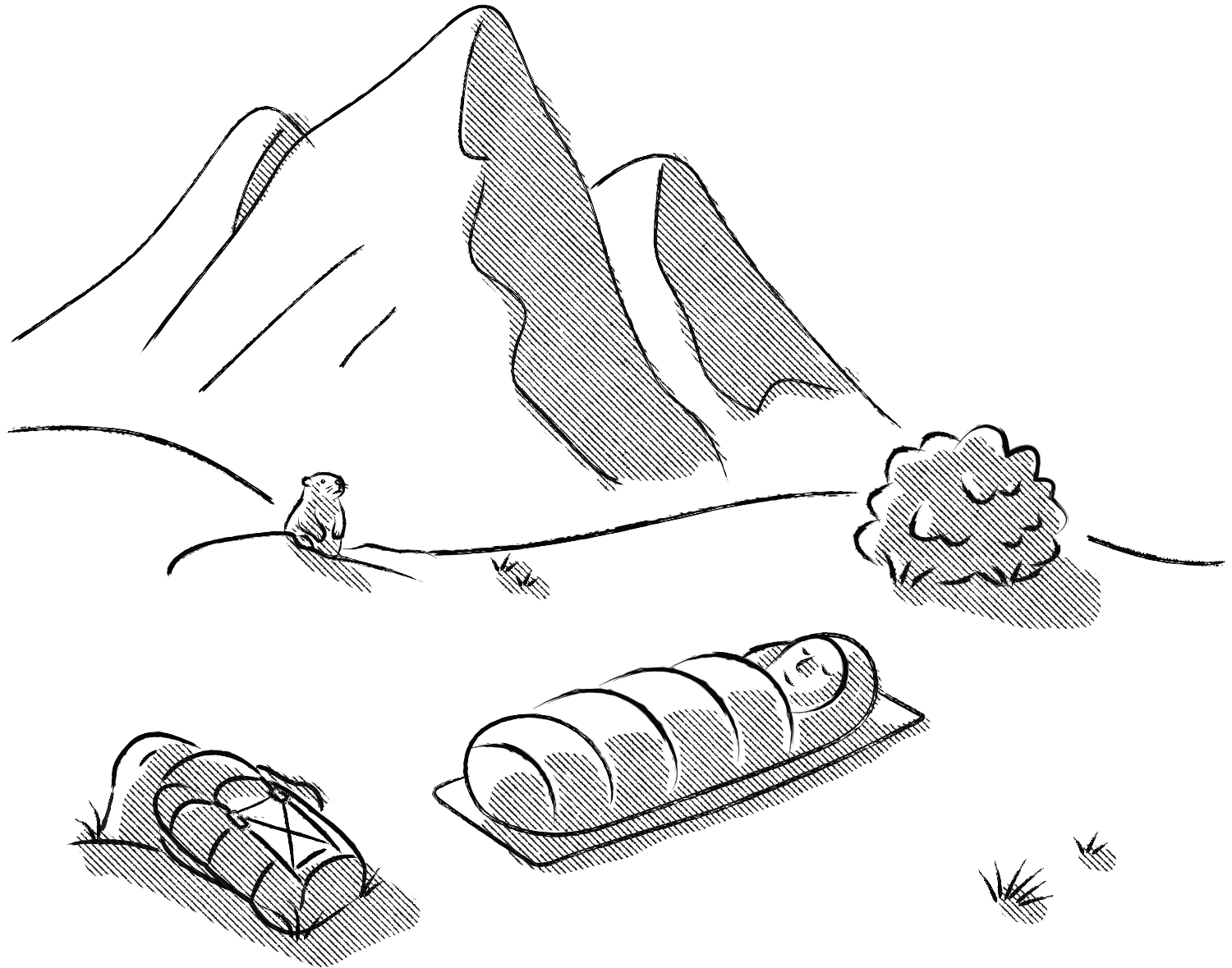
A night out without a tent – no fire, no noise, no trace. Just you, your sleeping bag and a mat – a tarp at most.
1
0
0

Camping

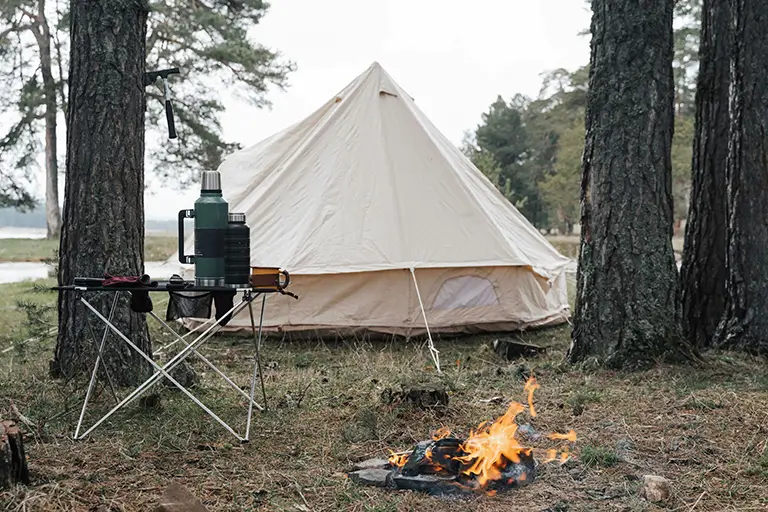
Classic camping with a tent, fire pit and gear in the forest among the trees
A tent or shelter, a fire, gear hung from trees, a dug latrine – and often breaking the law along with it.
1
1
1
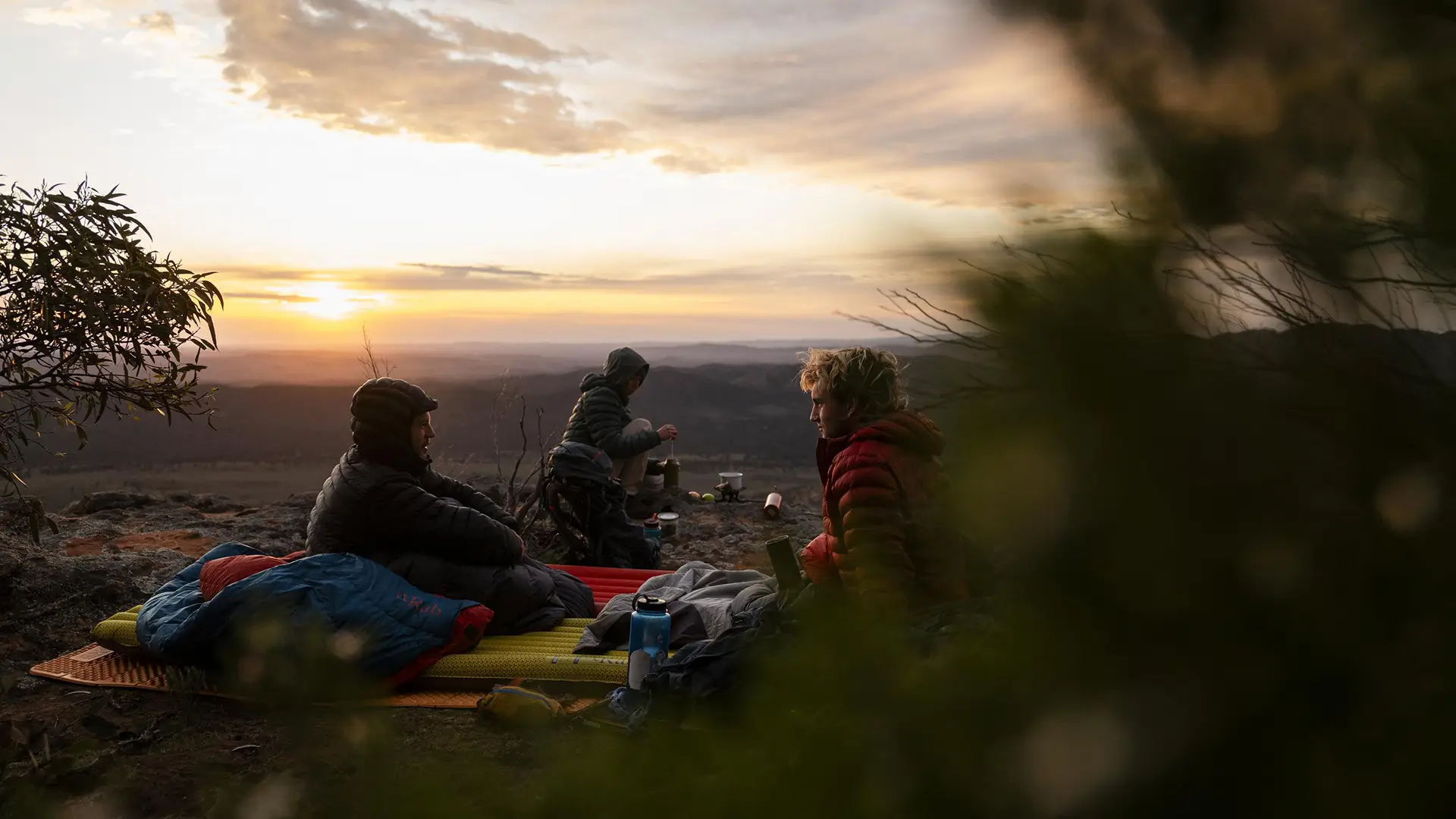
Group of three people in RAB down jackets and sleeping bags resting on a rocky outcrop at sunrise; one sits in a sleeping bag, another cooks on a stove overlooking the mountain landscape.
In some countries (Czechia, for instance) this difference is everything. A bivouac usually gets a pass. Camping doesn’t. The opening rule? 
The less you’re seen – the more you can do.

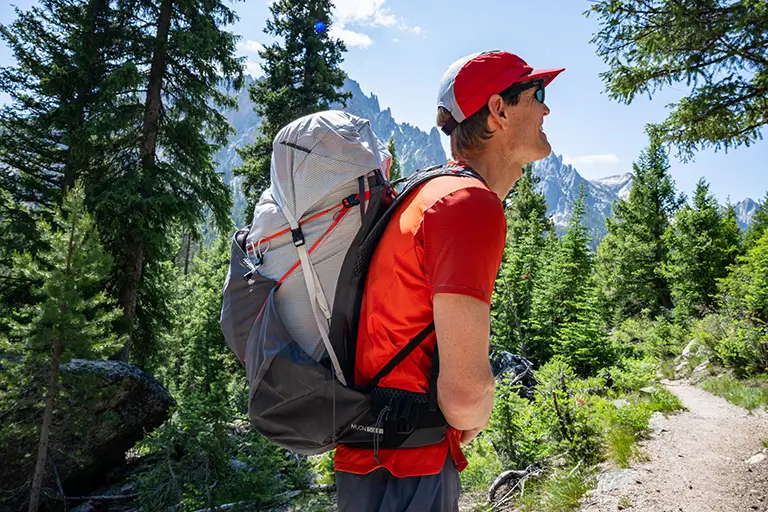
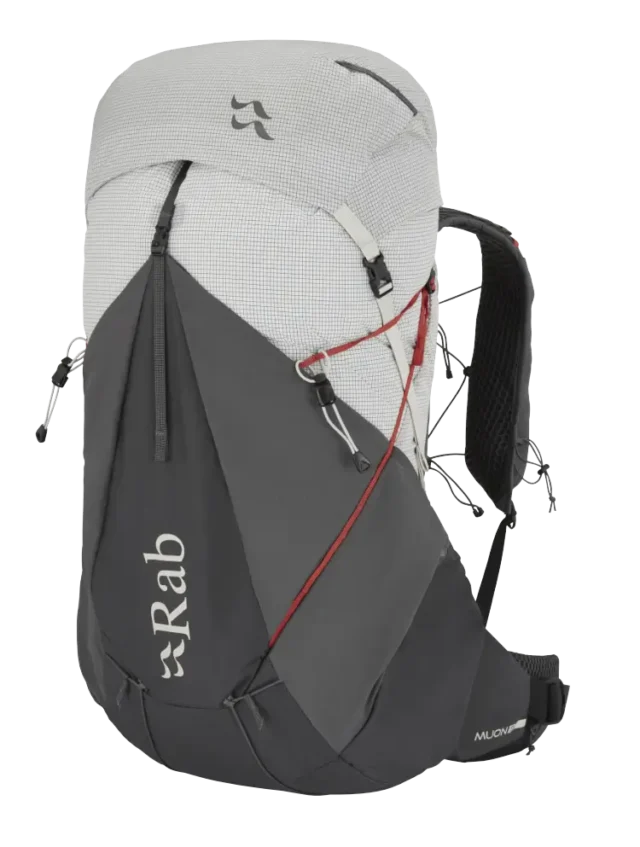
Rab Muon

When you travel light, you bivouac. Sleeping bag, light inflatable mat, tarp. This ultralight pack from Rab weighs less than 900 grams. It hugs your body – and thanks to its Spectra® Ripstop fabric it survives the toughest tests in terrain that forgives nobody anything.
Man with an ultralight Rab Muon pack on a mountain trail in summer scenery

What the law allows

Czech Republic

Good news: in Czechia you can sleep outdoors fairly freely. But you need to know how and where – in a Protected Landscape Area, a national park or a national nature reserve. Not every night out is legal – and not every one comes without consequences.
Not every night out is legal
Bivouacking
Camping
Ordinary countryside
Legal.
Banned outside designated sites.
CHKO (Protected Landscape Area)
Legal.
Banned.
NP (national park)
Only outside quiet zones. Complete ban in Bohemian Switzerland NP.
Banned.
NPR (national nature reserve)
Banned. No entry off marked trails.
Banned.

What’s it like in practice?

Sleeping in a forest or Protected Landscape Area without a tent or fire is usually tolerated. In national parks it depends on the park authority: Šumava, for example, tolerates bivouacs outside quiet zones, while Bohemian Switzerland bans everything. In a national nature reserve sleeping out is technically impossible, because you’re not allowed off the marked trails.

Slovakia

The law is clear: both bivouacking and camping are banned outside designated sites. The difference lies in how strictly (and where) it’s enforced in practice. Some places will leave you alone, elsewhere you’ll get fined even for a sleeping bag in the grass.
Bivouacking
Camping
Ordinary countryside
Banned without the owner’s consent, but often quietly tolerated.
Banned outside designated sites.
CHKO (Protected Landscape Area)
Banned. May be quietly tolerated in protection levels 1 and 2.
Banned.
NP (national park)
Banned. Except for permitted climbers’ campsites (e.g. Bielovodská dolina).
Banned.
NPR (national nature reserve)
Banned. No entry off marked trails.
Banned.

What’s it like in practice?

The law allows almost nothing. In practice, though, people do bivouac – mainly in less strictly patrolled areas and lower protection levels. In national parks, don’t even think about it – or you risk a fine. The exception is climbers’ campsites, where you can bivouac legally if you’re a member of a mountaineering association (a Czech one counts too).
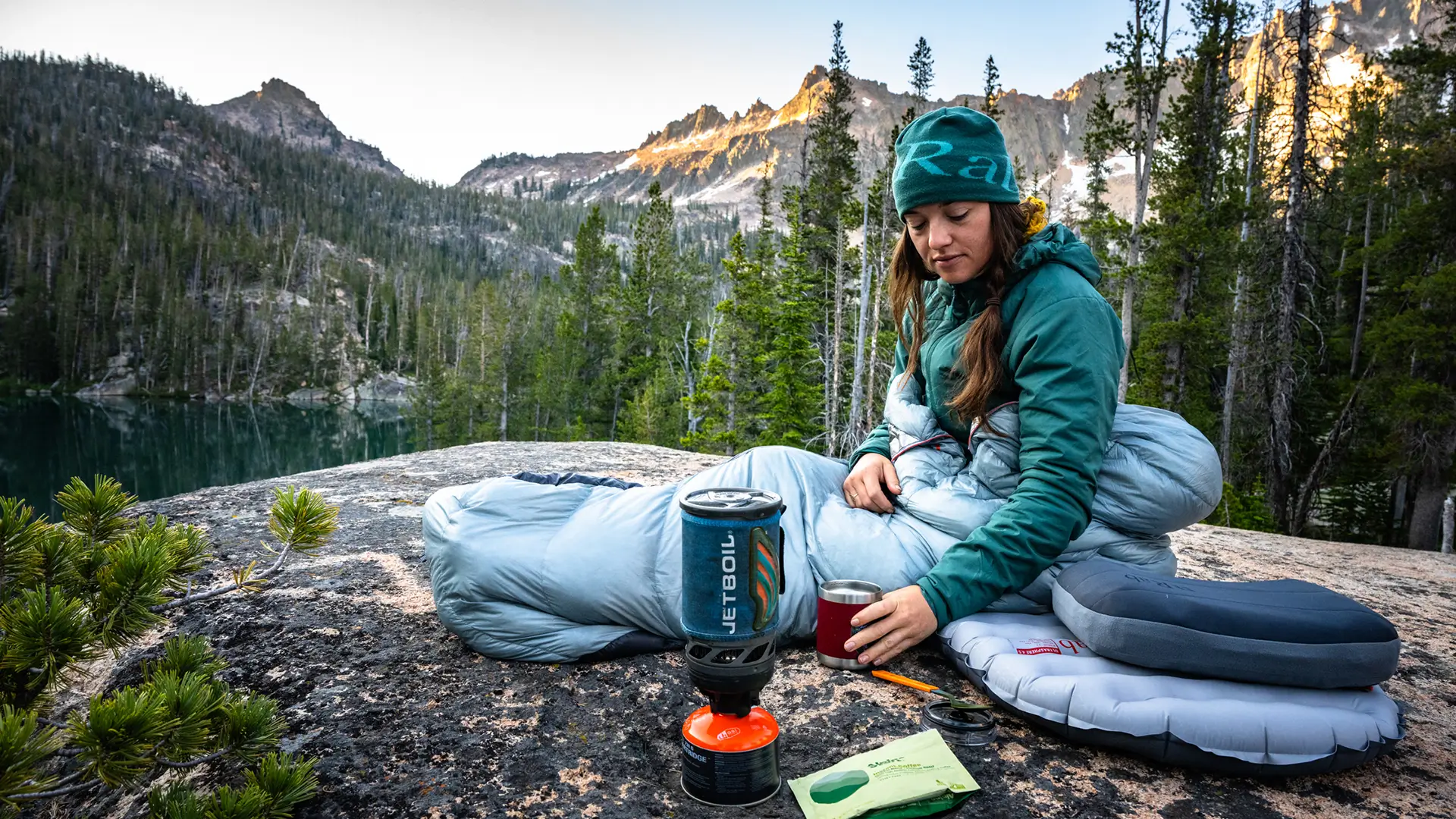
Woman in a RAB down jacket and sleeping bag sitting on a rock ledge by a mountain lake, making breakfast on a Jetboil stove; pine trees around and morning light on the peaks.

Austria

Sleeping outside campsites is banned in Austria – and often enforced. That goes for a bivouac without a tent too. In forests, national parks and Alpine valleys you can’t even lie down in a sleeping bag. The only exception is an emergency night out in bad weather – and even that has to be genuinely unplanned. Fines tend to be steep.

Germany

Neither a bivouac nor a tent is legal – unless you’re at a permitted site. Some federal states and nature parks turn a blind eye if you sleep alone under the stars and vanish without a trace in the morning. But elsewhere all it takes is for someone to spot you – and you’re in trouble. Officially, best not to try it.

Switzerland

Switzerland is kind to mountain folk – as long as you behave. A bivouac above the treeline is mostly allowed. Camping and longer stays aren’t. If you “bed down” high in the mountains – discreetly, without a tent, and you’re gone by dawn – nobody will say a word. Freedom here rests on trust and responsibility.

Italy

The rules vary from region to region, but in general: no tent, no fire pit, no camp by the lake. In national parks even a bivouac is illegal. Even so, people do bivouac in practice – mainly high in the mountains, where nobody sees you and you leave nothing behind. If you’re alone, with just a sleeping bag, and leave before the world wakes up, you’re usually left in peace.

France

A bivouac (sleeping bag only – no tent, no fire) is legal in most places, provided you stay just one night, high in the mountains, between 19:00 and 9:00. In the French Alps you’ll also often find designated bivouac spots near huts. The key is simple – be discreet, quiet and clean, and gone at daybreak.

Slovenia

Sleeping outside huts or campsites is banned – and checks are frequent. You can’t unroll a tent or even a sleeping bag by a stream or in the forest. If they find you, don’t expect mercy – Slovenians take protecting their mountains seriously. If you want peace of mind, arrange a bed in a hut.

Scandinavia

Scandinavia has a legal right to roam and to spend the night in nature. So you can sleep under the stars – with a tarp or even a tent – as long as you’re off private land, stay no more than two nights in the same spot and don’t harm nature or people. A fire? With common sense and not in the dry season. You’re trusted here – provided you behave so that nobody even needs to keep an eye on you.

United States

In national forests and on land managed by the Bureau of Land Management (BLM) you can legally sleep out even away from campgrounds, as long as you follow a few simple rules: max. 14 days in one place, at least 60 m from water and no trace. In national parks you need a permit and you may only sleep in designated zones. On long-distance trails (the Pacific Crest Trail) sleeping out is the norm. And if you behave with respect, America will leave you be.

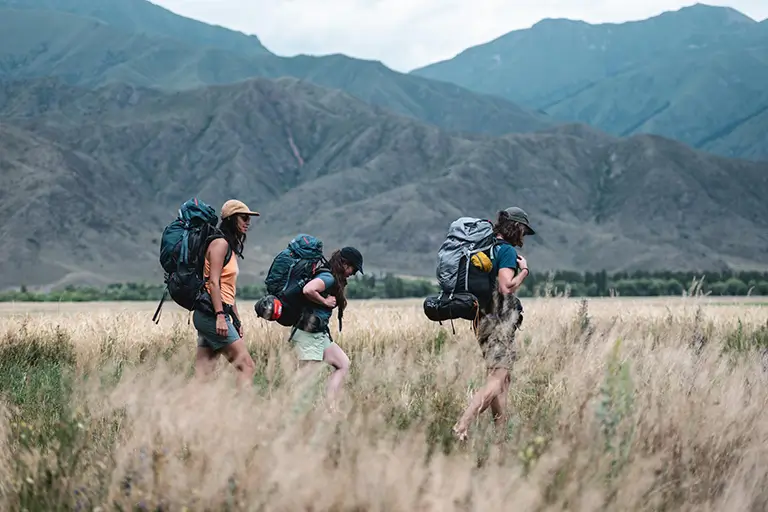
Eastern mountains (Georgia, Kyrgyzstan, Armenia...)

Nobody makes much fuss here – sleeping out is common, legal and natural. The mountains to the east mostly don’t do campsites, warnings or bans. As long as you don’t ruin a pasture or bother the locals, you can happily bed down by a lake or on a mountain pass. No need to hide – but you do need to be polite and humble. Because you’re a guest.

Asolo Fandango DUO

Now you know where you can go and where you can’t. Good – because these full-leather hiking boots from Asolo would go anywhere with you. The Zanatta family’s shoemakers made them from thick nubuck with as few seams in the upper as possible. That’s why they can take just about anything. They also have pulley lacing for even tightening.
Group of hikers with packs and Asolo Fandango Duo boots on a long-distance trek through the mountains

Rules of the invisible bivouac

A night somewhere up high can be the highlight of a trip. But only if you don’t leave so much as a print behind. Here’s a simple bivouac code – no legal clauses, but it works.
Arrive late, leave early
You don’t belong there. But that’s fine – as long as the place never knows a human was there at all. Arrive at dusk, leave at daybreak. Don’t stay through the day. Don’t build a base.
No tent, no fire, no trace
A tent and a fire pit – that’s a campsite. Not a bivouac. Just lie down as you are – under a tarp at most. If you cook, use a small stove – no smoky bonfire, no ring of stones. And when you leave, pick up even that apple core that isn’t yours.
Choose your spot with care
Far from paths, people and animals. Not on a pasture, not by a wayside chapel. Ideally a small flat patch hidden in the terrain, below the skyline. If nobody can find the spot – not even in the morning, when you’re already gone – you’ve won.
The toilet has rules too
Not near water, not near the trail. Wee in the bushes, poo in a little hole and bury it properly, paper included. Or take it with you. Wet wipes? Put them in a ziplock – not in the ground. Read more in Where to put your poo and how to leave no trace.
Quiet, dark and no circus
Music through headphones at most. Dim your head torch – and use red light if you can. No glaring, no racket, no singing campfire songs. Ideally the animals and the locals never even know you’re there.

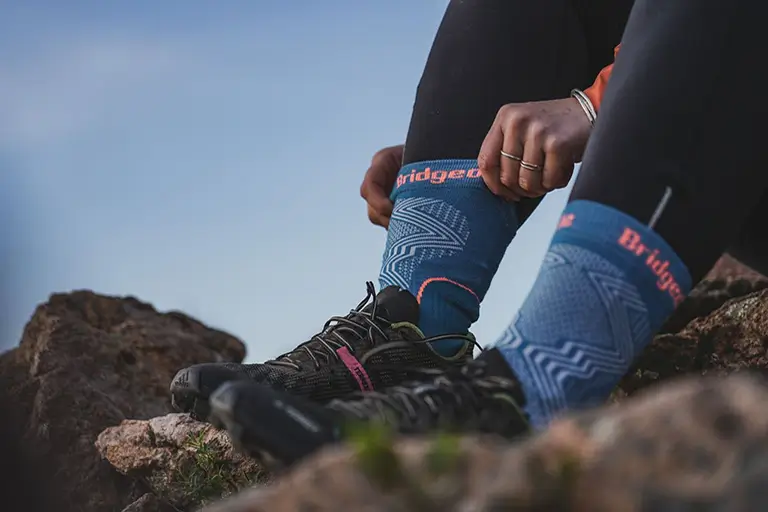
Bridgedale Hike UL MP

No noise, no glare – and ideally no smell either. That’s mostly for your sake. So you don’t need to pack seven pairs of socks for a week-long traverse. Take Bridgedale and one pair will do. They survive the impossible. Thanks to merino they don’t stink. And even after a week they stay pleasantly soft.
Close-up of Bridgedale Hike UL MP outdoor socks on a hike over rocky terrain

What to do if someone catches you

It can happen. A forester, a park ranger, a gamekeeper, a shepherd – or just a local who doesn’t like you being “in his forest”. How should you react? First of all – remember that you’re not in the right. But you can still keep it cool.
Or start like this – if you can, arrange your bivouac in advance. In small villages or at mountain shepherds’ huts, asking politely is often enough – and you’ll even get some extra water.
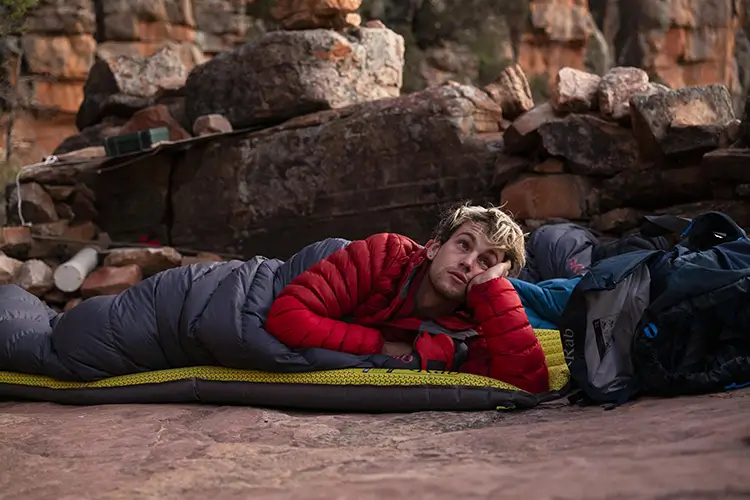
Man in a red RAB down jacket lying in a RAB sleeping bag on an inflatable mat, propped on his arm, amid rocky terrain with packs and outdoor gear.
Stay calm and polite
No arguing, no excuses, no superiority. Get up, smile, apologise. You’re not an intruder – you’re a visitor, albeit an unannounced one. And visitors behave with respect.
Show that you leave no trace
Picking up litter? No fire pit behind you? Pack packed and everything around looking just as it did before you arrived? That’s your best argument. When it’s clear you’re behaving considerately, most people will, at worst, just “explain” things to you.
Leave at once. And say thank you
Don’t negotiate, don’t play dead, don’t stay a minute longer. Thank them for their understanding and make yourself scarce. If you leave without a trace and without a fuss, you may even avoid a fine – and a tirade about “all those inconsiderate tourists”.

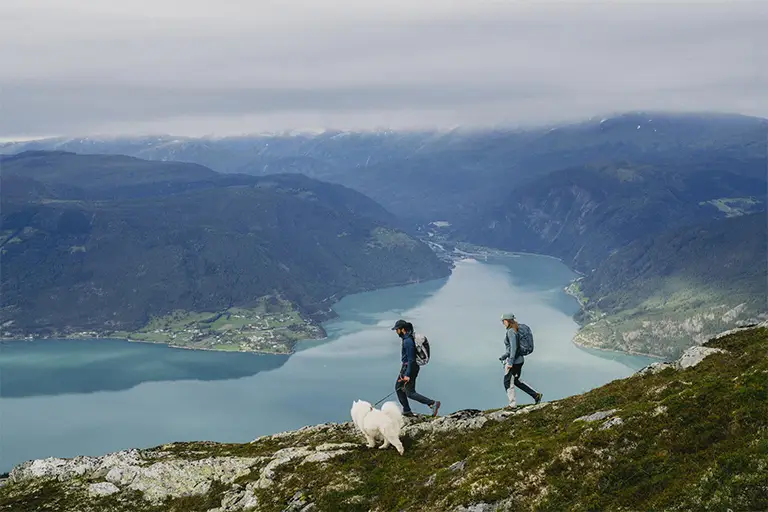
Asolo Nucleon GV

Don’t try outrunning a ranger in them. Not that they couldn’t manage it – but it’s better to use them for stepping over obstacles on the trail rather than over national park rules. Waterproof Gore-Tex® membrane, grippy Vibram® sole, tried-and-tested construction – and they’re made in Europe.
Two hikers and a dog in low Asolo Nucleon GV shoes on a ridge overlooking a lake

Gear for discreet sleeping

Want to blend in? Then don’t lug your living room along. Bivouac gear should be light, quiet and inconspicuous. Not because someone’s watching you – but because it simply makes sense. You’re sleeping outdoors, you’re a guest. You don’t want to disturb, you don’t want to do damage, you don’t want to leave a trace.
"Man in a beige hooded jacket looking into a dark blue Rab pack against a blue sky.

What’s handy

Sleeping bag
Ideally dark, not neon orange.
Sleeping mat
One that doesn’t rustle or slide downhill.
Tarp or poncho
Pitch it between trees or poles, or throw it over your sleeping bag.
Head torch with red light
Because a white beam in the woods looks like a UFO.
Small stove
Quiet, stable, ideally without a big open flame.
Rubbish bag
Your best mate. What you carry in, you carry out. And sometimes you take what isn’t yours too.
Toilet trowel
Small, light, metal or plastic. Because your poo isn’t a decoration.

Better not

Tent
Where you can, try going without. A tent signals “I’m camping”.
80-litre kit
It’s hard to hide with a pack the size of a fridge.
Foil blanket
It rustles, it shines, and at night you hear every step of your own shadow.
Fire
Seriously – not even a small one. Bivouacking isn’t a campfire with friends.
TSA lock
A classic. A small combination padlock to secure your zips. Handy when travelling by plane, bus or train. A TSA lock has one quirk – airport security can open it without breaking it. But don’t worry – the thief in your hostel won’t have a TSA key.
Security net
A braided metal cover for your pack. Lock it – and chain it to a hostel bed or a tree on the beach. Then you can go swimming, on a day trip, into town. Your pack will wait right where you left it.
Karabiner + hair tie
Sometimes a little goes a long way. A small karabiner to clip the zips together. An ordinary hair tie threaded through the sliders. If a thief grabs the zip and it doesn’t open straight away, they often give up.

Rab Exion

Everything has its place in this pack. So you don’t have to unpack the whole thing when you’re looking for your toilet trowel. Organisation is its strong point – pockets in the lid and on the hip belt, a front stretch pocket and a roomy front opening to the main compartment.
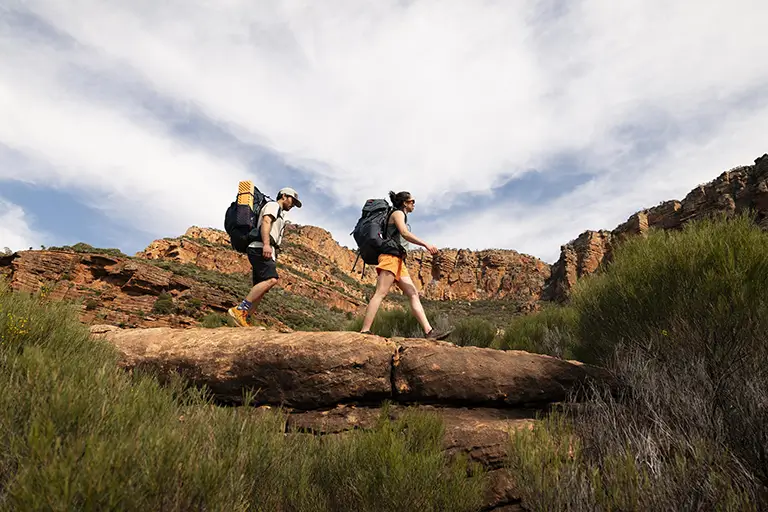
Two hikers with Rab Exion packs crossing a mountain landscape

Just one night. But done right

Sleeping outdoors is a gift. Being part of the landscape for a while – hearing the silence, gazing into the treetops, falling asleep under the stars. And it’s also a privilege that could vanish at any moment – if we treat it as a given.
It’s not so much about what you bring with you. It’s about what you leave behind. Wherever you are, be invisible, quiet and considerate. The mountains won’t crumble if you spend one night there like this. But they could, if everyone stopped caring.
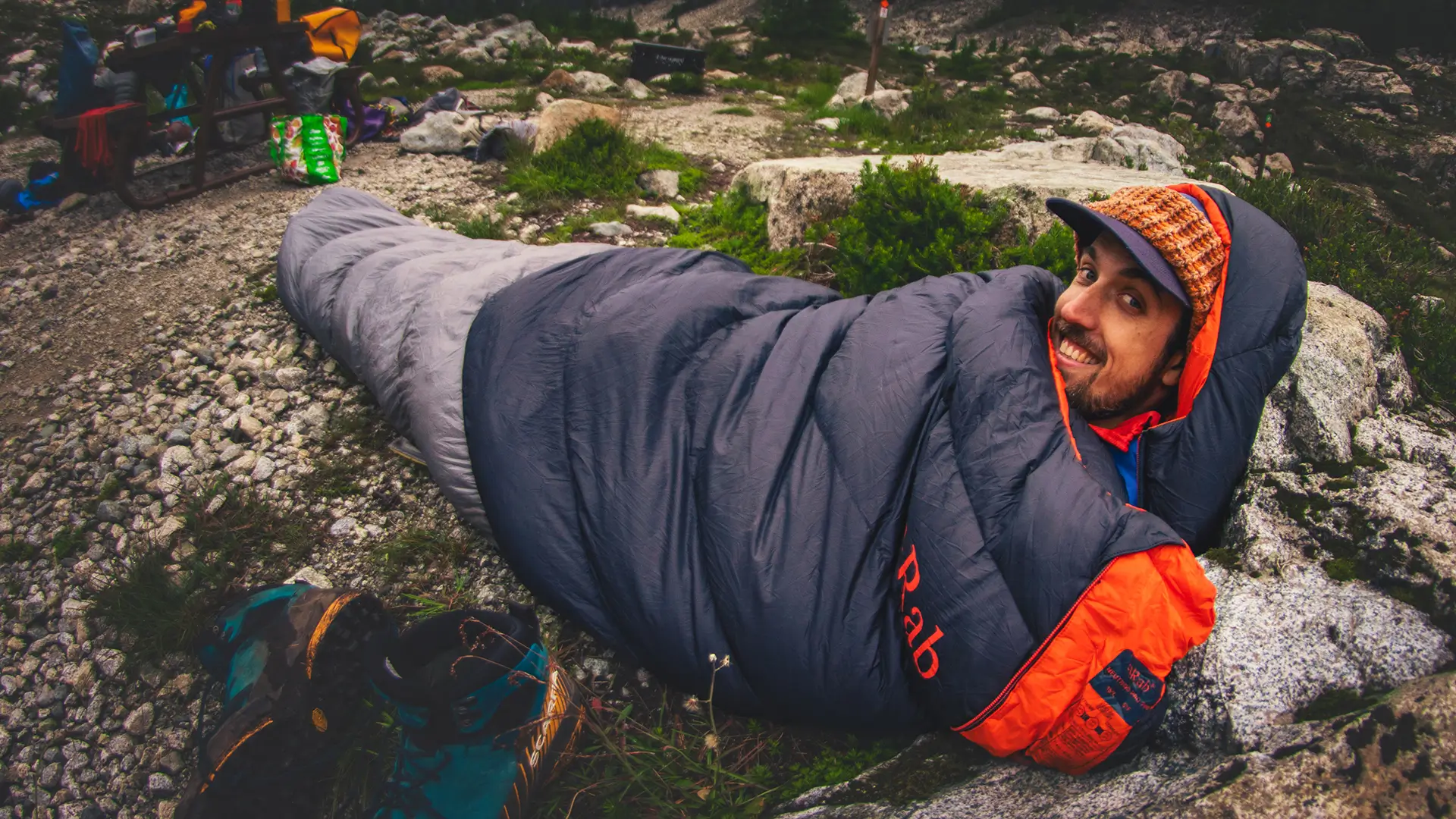
Man laughing from an orange-and-grey RAB sleeping bag during a bivouac in rocky mountain terrain; hiking boots and scattered gear in the foreground.
Choose your language
newsletter

Sign up for the newsletter

As you read it, cold air will tickle your face. The mountains are calling…
Horolidi newsletter EN
envelopemagnifiercrossmenuchevron-upchevron-down