What boots are made of

You'll find the right pair once you understand the materials and methods used in each part of a boot. Every element of the construction tells you what your boots will be like and what terrain they suit.

Last and construction

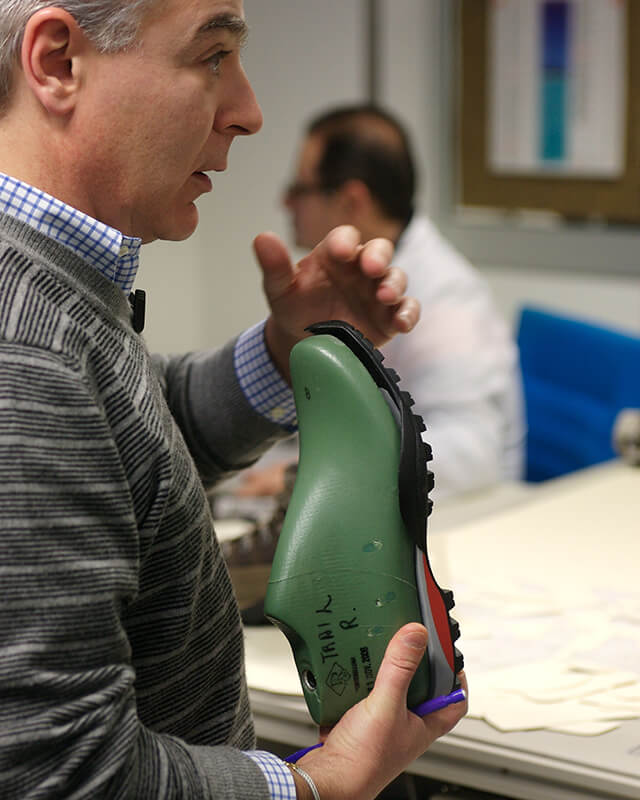
Will they fit or won't they? That depends on the last. This three-dimensional form made of wood, plastic or aluminium mimics the anatomy of the foot and determines the shape of the boot – the width of the toe box and the height of the instep and heel. Every manufacturer – and even every boot model – has its own last.
The comfort and stiffness of a boot then come from its construction. There are two basic types: strobel and board lasting.

Strobel

The construction for softer, comfortable sports shoes with a flexible sole that gives you energy return.
How it's made
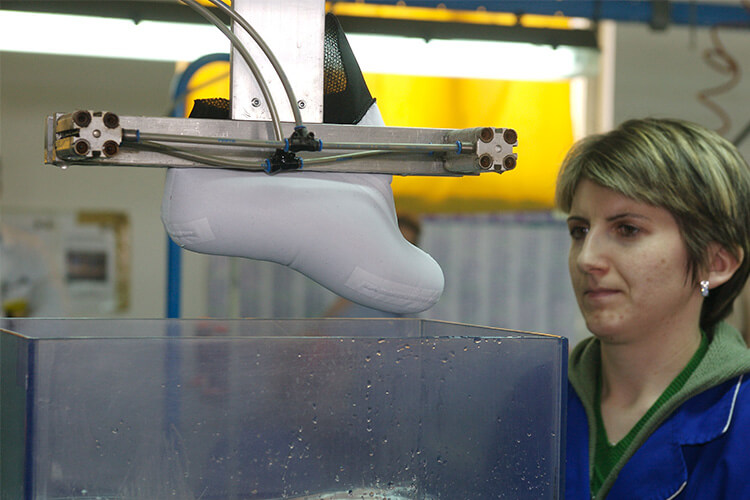
A light, non-stretch, foot-shaped piece of material is stitched to the underside of the finished upper. This creates a sock-like whole which, after being heated with steam, is pulled onto the last. As it cools, the upper tightens around the last and takes its shape.

Board lasting

The traditional Italian construction for truly tough boots with a stiff (less flexible) sole and a firm toe.
How it's made
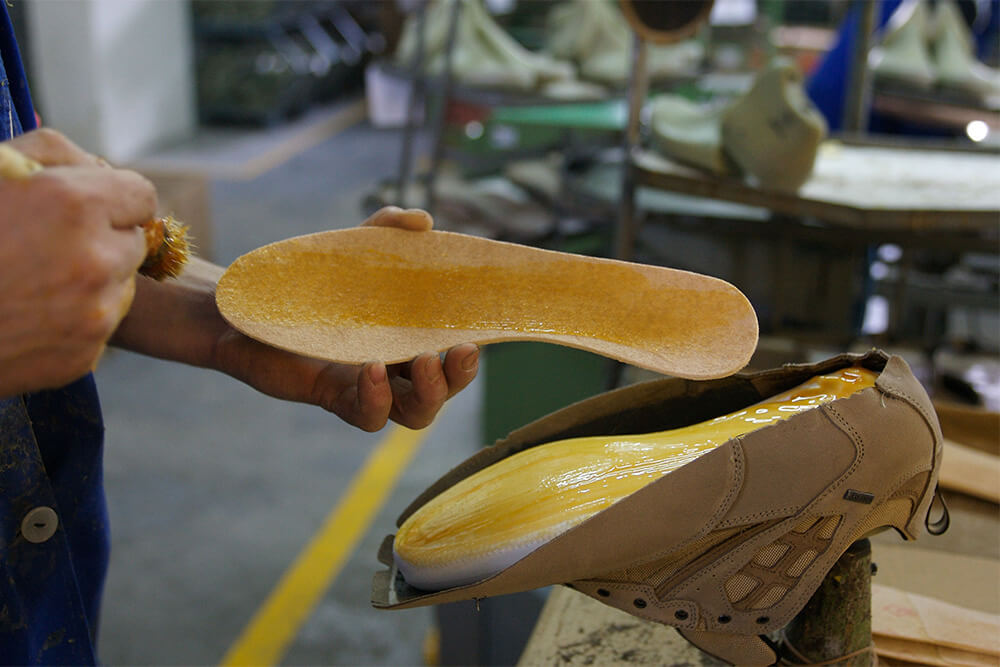
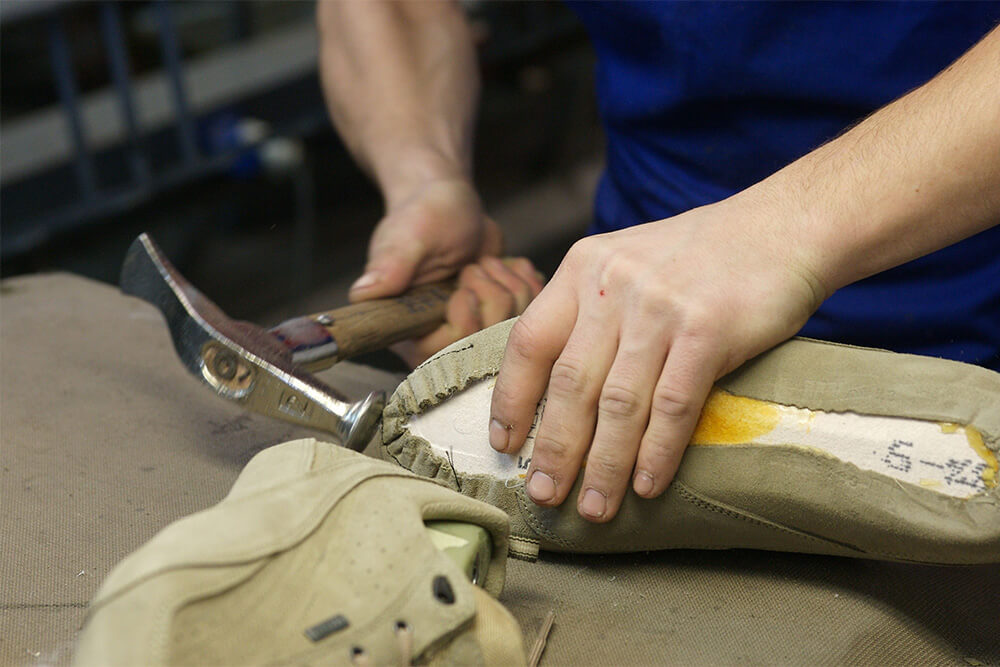
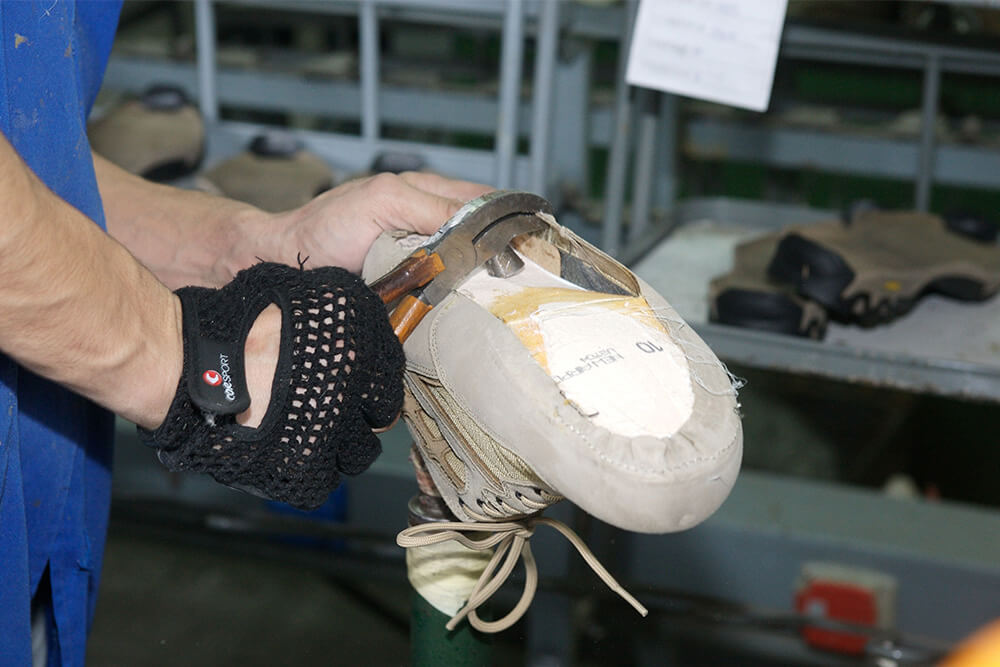
The lining is stretched over the last and a flat, foot-shaped board (made of cardboard or plastic) is glued to its underside. The upper is pulled over the last, folded under at the bottom and fixed to the board – which stretches the upper and shapes it.
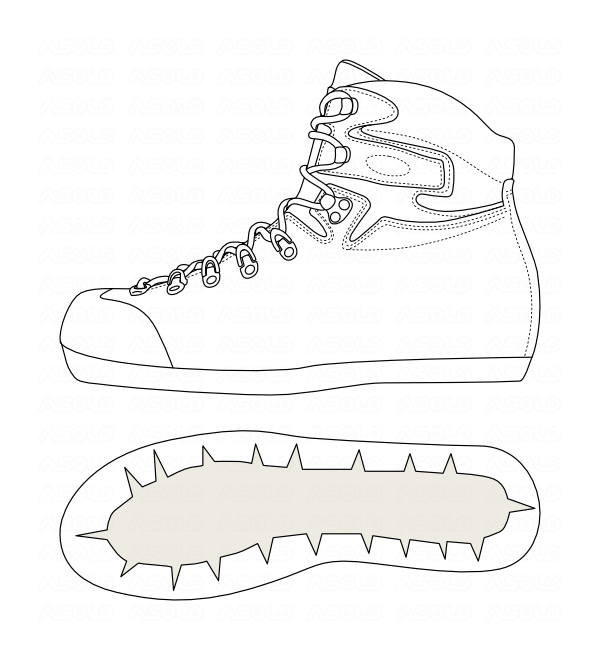
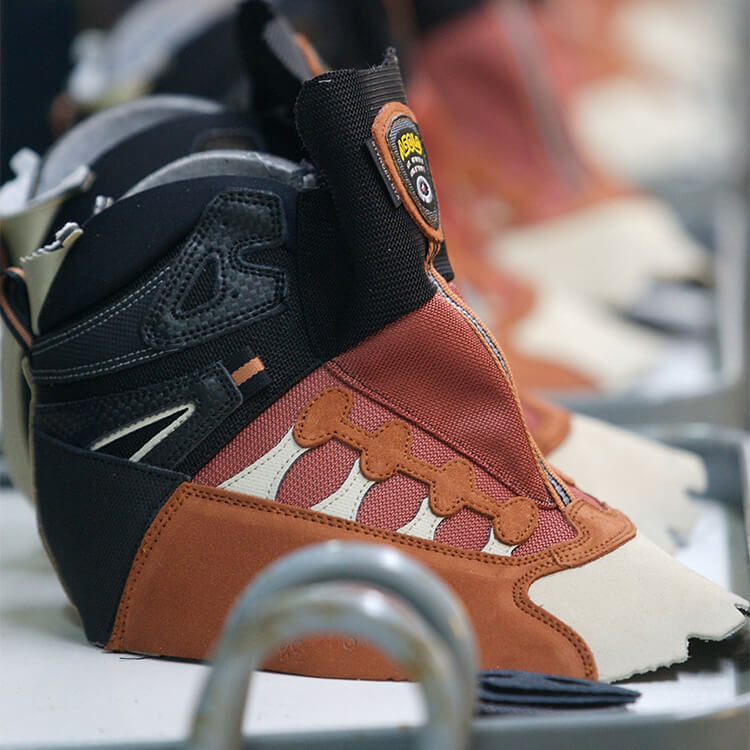
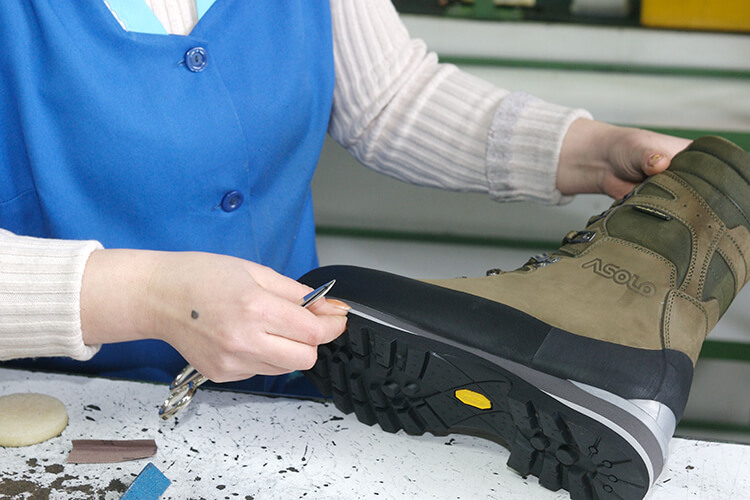
Asolo boot construction – upper detail

Upper

What can your boots take? Can you wade through snow, scree and mud in them? The upper material determines how tough the boots are – and how comfortable, too.

Leather and nubuck

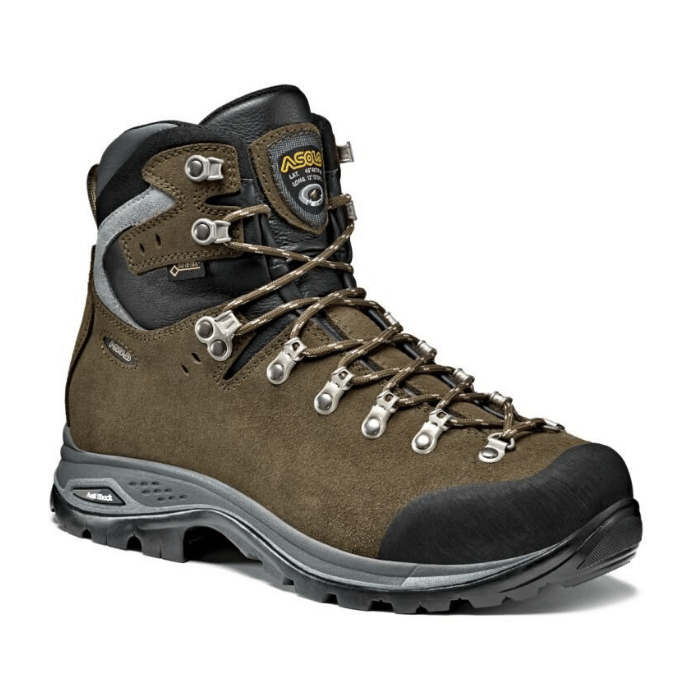
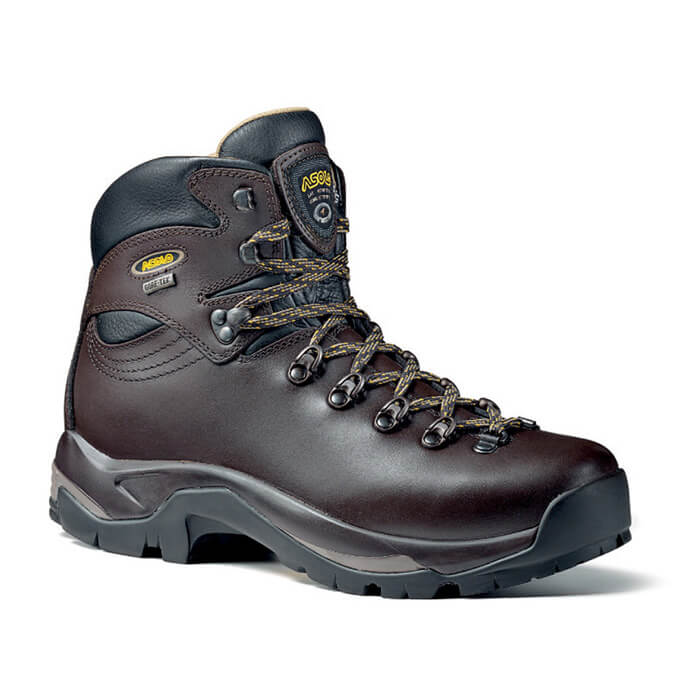
Leather boots are the toughest – against mechanical damage and moisture from outside. But they're not very breathable, and you need to dry them properly after use.
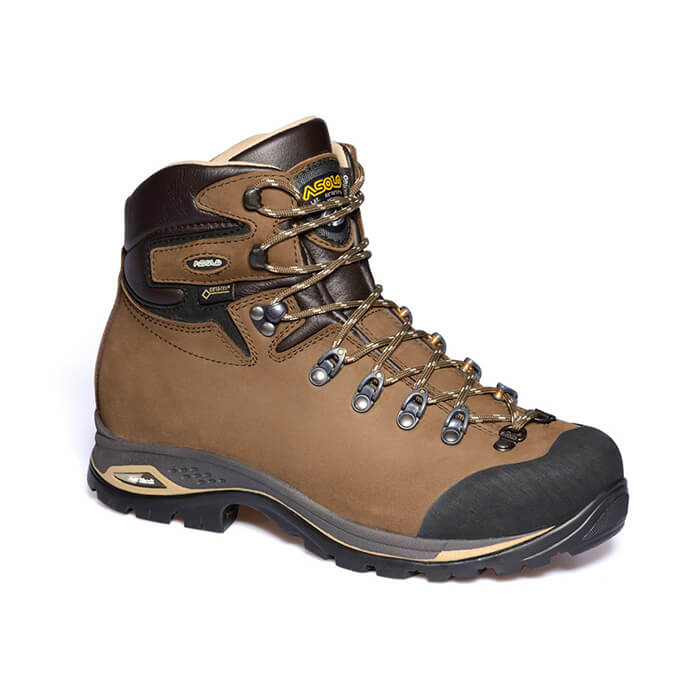
Asolo Greenwood EVO GV >

Suede

A lighter, less durable leather used for boots for easier terrain. Because it's buffed on the reverse side, dirt clings to it more than to smooth leather.
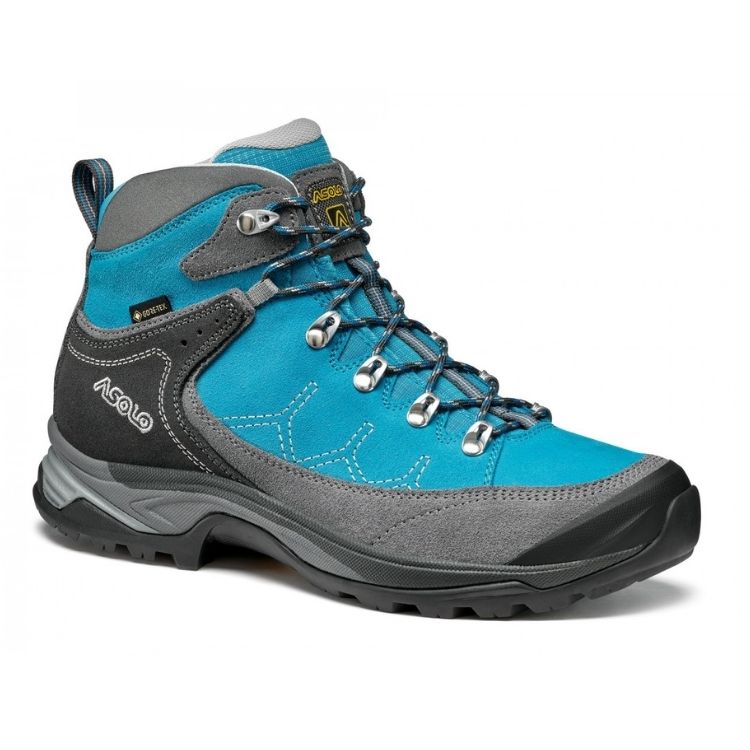
Asolo Falcon Lth GV >

Synthetic material

Boots made of synthetic materials and textiles are light and breathable. Their durability usually isn't high, though, so they're better suited to easy terrain.
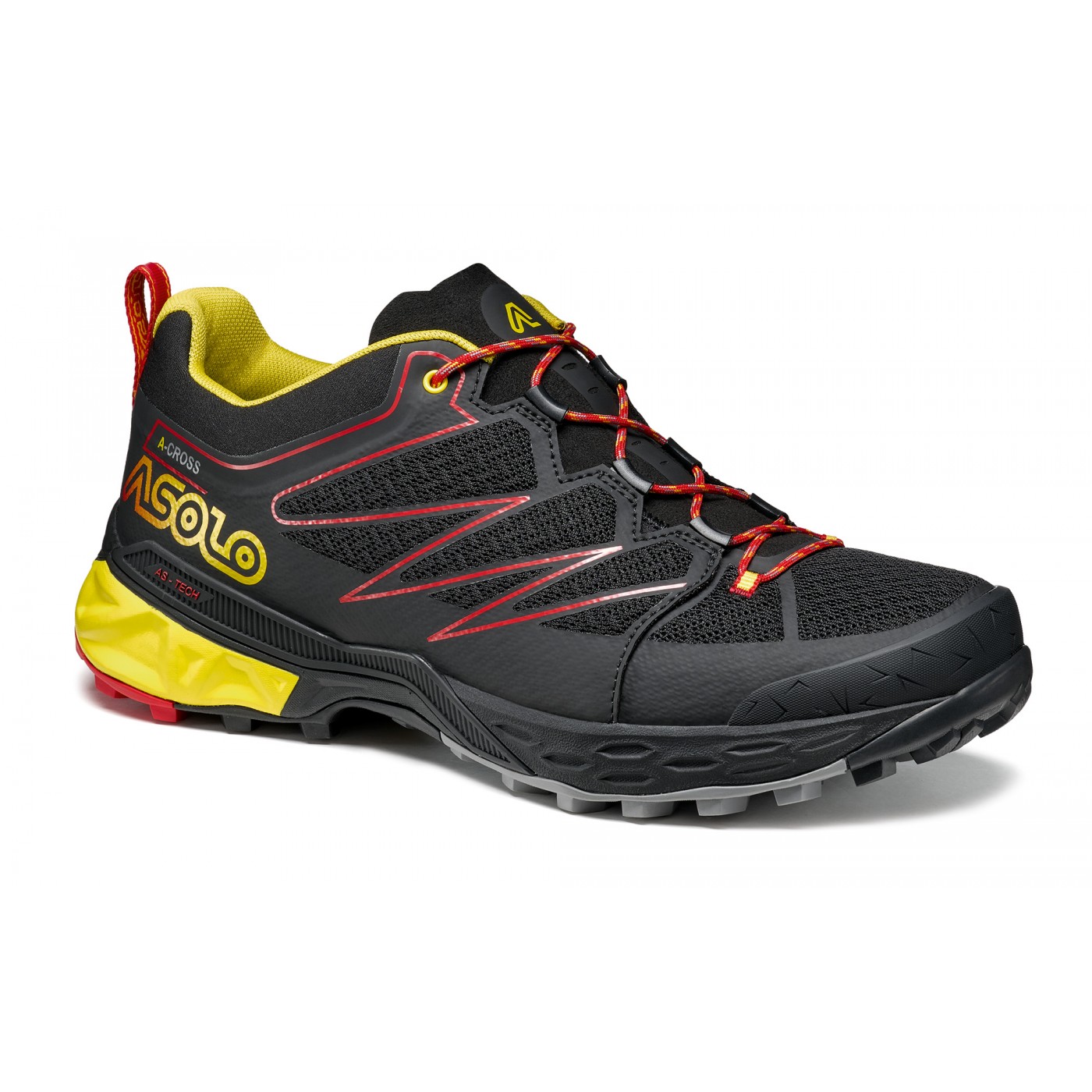
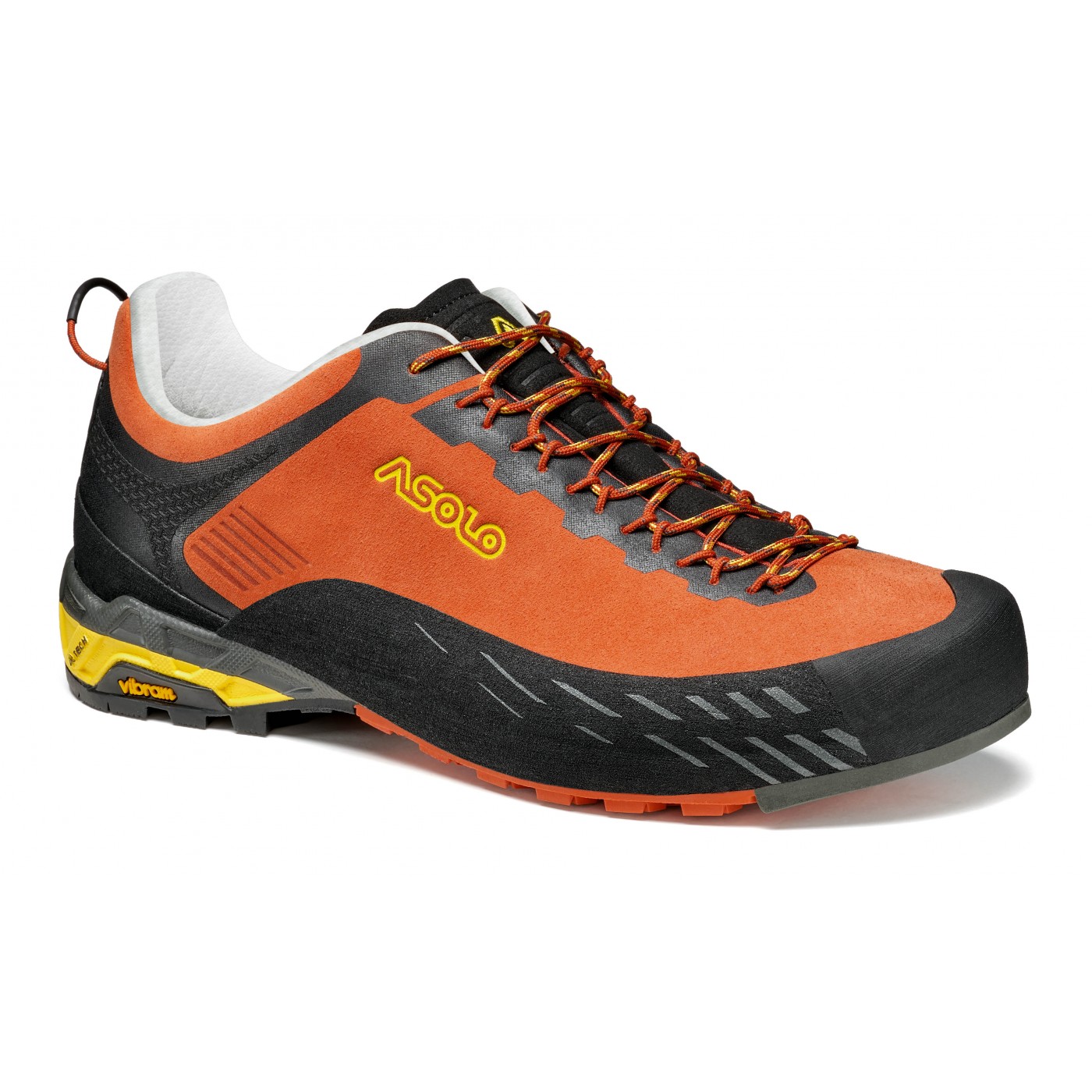
Asolo Softrock >

Leather and synthetics

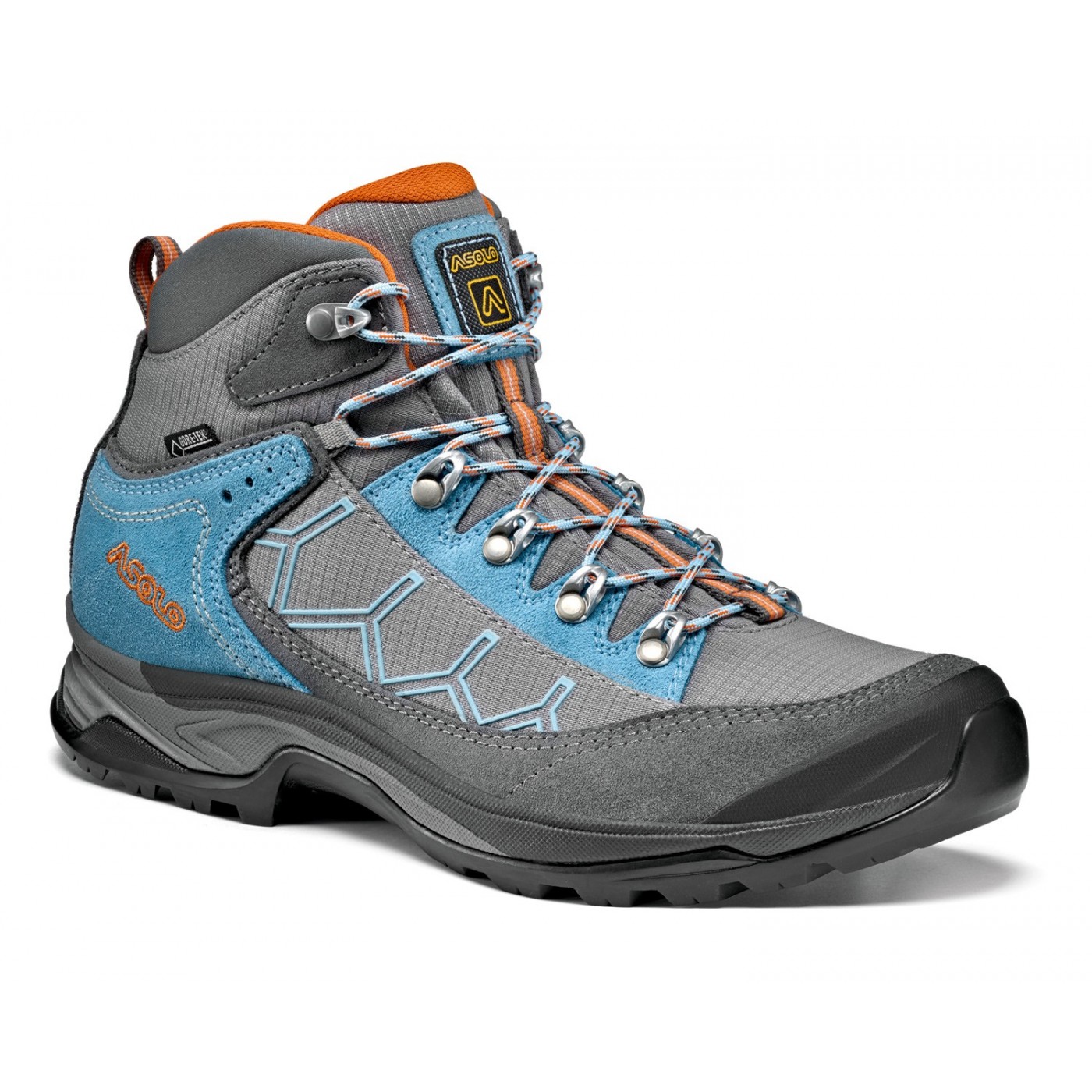
Tough leather in the areas under most strain, and a lighter (and often more breathable) synthetic material over the instep. The choice for moderately demanding terrain.
Asolo Falcon GV >
Boot construction – outsole

Rand

The upper takes a beating in the mountains. It gets attacked by loose stones and sharp rock, or scraped by coarse firn snow. A rubber reinforcement – the rand – protects it from damage.
Boot construction – rand

Toe reinforcement

For everyday hiking on trails and paths, where you only occasionally catch a root or a stone.
Asolo Fandango DUO GVAsolo Fandango DUO GV >

Side reinforcement

For via ferratas and terrain where your boots are often in contact with rock.
Asolo Eldo Lth GV >

All-round reinforcement

For high mountains with scree, rock, glaciers or snowfields.
Asolo Traverse GV >

Lining

What state will your feet be in after several hours of walking in the rain? That's down to the lining, which wicks moisture (sweat) away from your feet and may also stop moisture from outside getting in.

Leather lining

It moulds itself to the shape of your foot and feels pleasant because it absorbs moisture. But that's also its drawback – it dries slowly, so it isn't suitable for longer trips or winter, when a damp lining feels cold. With good care of the upper, though, it protects you reasonably well from moisture from outside.

Textile lining

It's light, adapts to the shape of your foot, wicks moisture and dries quickly. Materials such as Cambrelle by DuPont are used. Unlike leather, however, a textile lining doesn't resist moisture from outside, so it's often combined with a waterproof membrane.
Gore-Tex

GORE-TEX®

GORE-TEX® linings have several layers, one of which is a waterproof, breathable membrane. It works on a simple principle – one square centimetre of the material contains one and a half million pores, which are 20,000 times smaller than a drop of water but 700 times larger than a molecule of water vapour. So moisture can't get in, and sweat can get out.
Wet feet in GORE-TEX® boots?
Sadly, not even GORE-TEX® can change the laws of physics. If the upper is soaked with water (proofing helps prevent that) or the surrounding air is full of moisture, your sweat has nowhere to go – a saturated environment simply can't take any more moisture.
GORE-TEX®

Extended Comfort

A light membrane for summer and more intense activities – it wicks sweat away fast.
Asolo Nucleon GV >
GORE-TEX®

Performance Comfort

A membrane with a thin insulating layer for high mountains and colder seasons.
Asolo TPS 520 GVAsolo TPS 520 GV >
GORE-TEX®

Insulated Comfort

An insulated membrane with special insulation for winter conditions.
Asolo Eiger XT EVO GV >

Midsole

What will your knees say about an all-day march with a heavy pack on your back? How will they like the endless descent from the summit to the valley? The midsole absorbs impact and affects the stiffness of the boot, so it has a big say in your comfort.
Asolo boot construction – midsole

Eva

Ethylene Vinyl Acetate
A very light and flexible material used in approach shoes and lightweight trekking boots. Under heavy load (e.g. hiking with a heavy pack), however, the material's closed pores crack, EVA loses its springiness and stops cushioning impacts.
Asolo Falcon GV >

Pu

Polyurethane
A slightly heavier material that keeps its springiness even under heavy load. That's why it's used in hiking boots designed for demanding terrain and heavy-load expeditions. Unfortunately, it's subject to hydrolysis and, after some years, crumbles without warning.
Asolo Kongur EVO GV >
How to delay polyurethane hydrolysis?
It's a strange paradox – by wearing your boots as often as possible. The midsole of boots that get worn usually lasts seven years or more, while the midsole of boots that spend most of their time in a cupboard may succumb to hydrolysis after as little as four years.
Sadly, there's no adequate substitute for polyurethane. It often crumbles without warning and you suddenly lose your sole – in the middle of a week-long trek, say. That's why we recommend a preventive resole after about five years.

Outsole

Will you slip? The tread pattern and rubber compound determine how sure-footed you'll be on a muddy trail, wet rocks or via ferrata ironwork – and every sole works brilliantly somewhere, while on other surfaces its grip is limited.

Vibram®

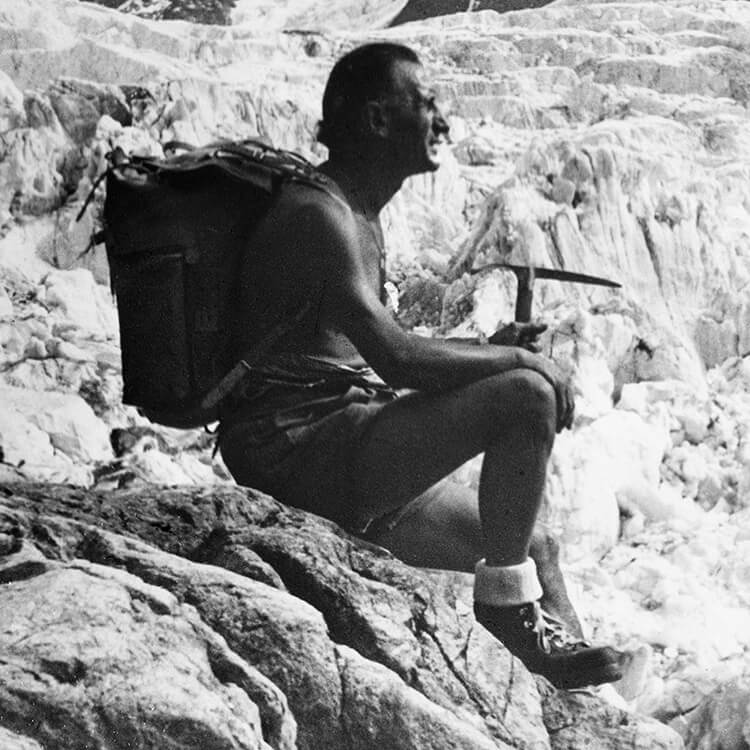
In 1937 the Italian mountaineer Vitale Bramani patented his invention under the name Vibram, formed from the first letters of his name – a highly durable sole with excellent grip on a wide range of surfaces. Today Vibram® makes dozens of soles – for light hiking, trekking with a pack, alpine climbing, via ferratas or winter hikes.
Vibram logo
Why do hiking boots slip on wet paving?
Because they belong in the mountains – to make the sole last longer, it's made of a harder, and therefore less grippy, compound. On wet paving (or on a via ferrata), boots with a softer sole will grip well – but they wear out sooner.
high grip, short lifespan
low grip, long lifespan
soft compound

Vibram® Megagrip

A softer (and therefore grippy) compound which is also very resistant to wear. It's used in hiking boots and low trekking shoes.
hard compound
Soles and how they differ

Why do hiking boots slip on wet paving?

Because they belong in the mountains – to make the sole last longer, it's made of a harder, and therefore less grippy, compound. On wet paving (or on a via ferrata), boots with a softer sole will grip well – but they wear out sooner.
soft compound
high grip, short lifespan

Vibram® Megagrip

A softer (and therefore grippy) compound which is also very resistant to wear. It's used in hiking boots and low trekking shoes.
hard compound
low grip, long lifespan
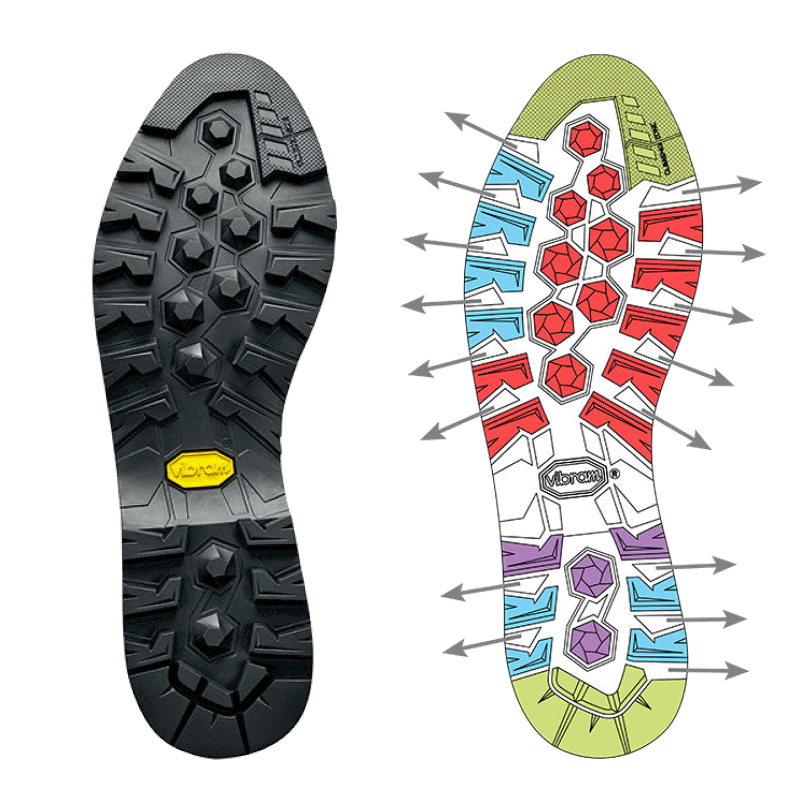
Asolo boot construction – parts of the outsole

Every part has its job

Green – grip
Purple – braking
Red – traction
Blue – stability
White – self-cleaning
Climbing zone
A special toe shape used on boots for via ferratas and high-mountain terrain. It makes it easier to stand on small footholds on rock.

Boots from a family of shoemakers

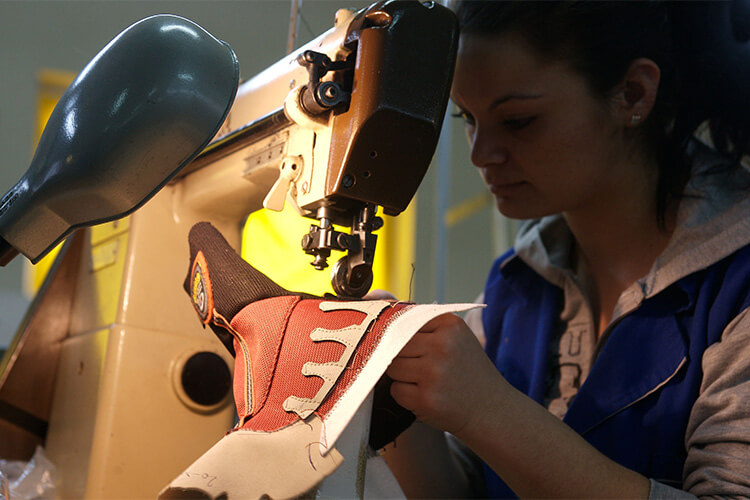
An honest shoemaker makes you boots that last. Boots whose seams won't give in the middle of a two-week trek. An honest shoemaker will even repair your boots after years of wear and get them ready for more years of adventure. And such shoemakers really exist – in the Italian Zanatta family.
all about the asolo brand
Choose your language
newsletter

Sign up for the newsletter

As you read it, cold air will tickle your face. The mountains are calling…
Horolidi newsletter EN
envelopemagnifiercrossmenuchevron-upchevron-down