Fine. Cut down on waste. Let's say you manage it at home somehow. You shop at a zero-waste store, have your veg delivered in crates straight from the farmer or grow it in your own garden. You compost your scraps and only the last one flushes. 🙂
But how do you go zero-waste with a mountain and travelling lifestyle?
All you have to do is get on a train and they're pushing a 200 ml plastic bottle of water on you. Free of charge. You check into a mountain hut, order dinner and it all starts adding up. Coffee at the petrol station comes in a disposable cup – what else. And let's not even start on how badly we need a fourth pair of skis, a nicer Gore-Tex jacket and a new beanie. We're terrible consumers. And one day the planet will send us the bill. Unless we ease off a little.
I said it last time: one of the main environmental problems is our rush. The phrase "fast food" says it all, and when I pop into McDonald's once in a blue moon for a cheeseburger, fries and a Coke, I'd rather sink into the ground with shame. All the rubbish I leave behind. That's a one-way ticket to hell. Why do they even serve the burger in a cardboard box?!
OK, we probably won't change the philosophy of McDonald's, KFC and Burger King. But we don't have to go there. Instead, we can pack a snack from home. In a box we'll use again.
And another culinary hell – napkins.
Do we really need to wipe our greasy mouths and floury hands after a margherita on paper napkins that go straight in the bin? What are those climbing trousers for? Just for show? OK, I get it, you want to keep your trousers clean. Me too. That's why I use an organic cotton handkerchief – I blow my nose into it, clean my ears, stop nosebleeds and give my hands a good wipe after a good meal. And after washing up in the loo your hands will dry. In about two minutes. Really. You can leave the disposable paper towel in the dispenser.
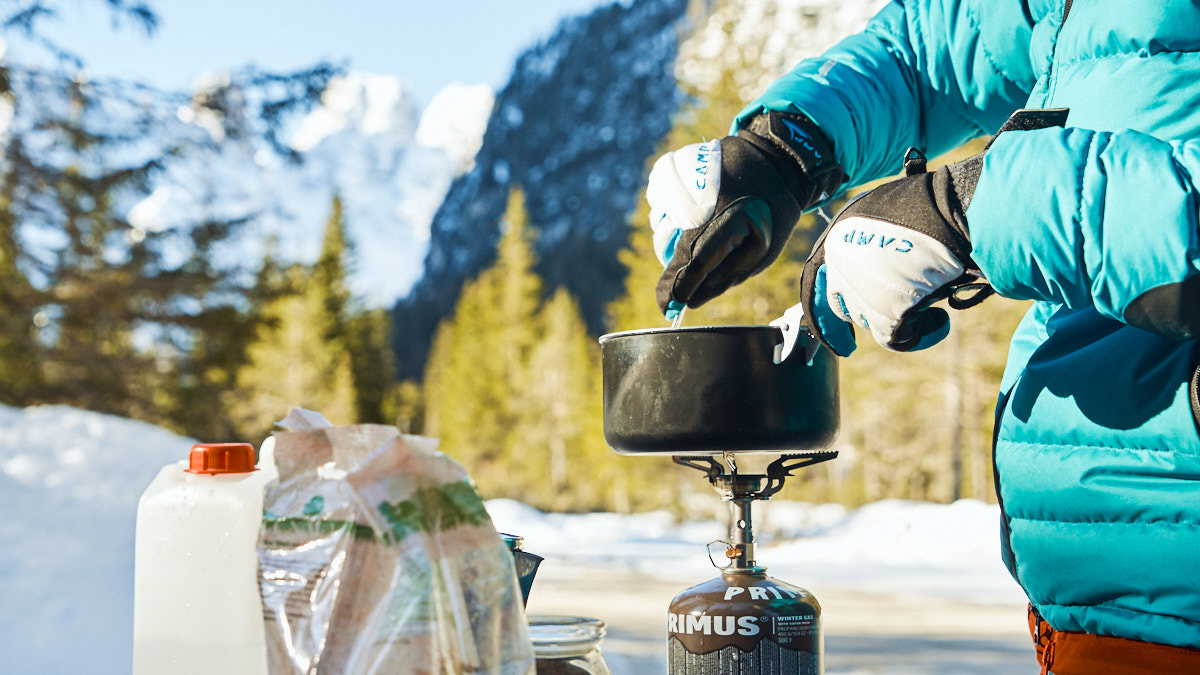
What's that in your hand? A disposable plastic cup? Surely not. Even Lidl has figured out that coffee from your own thermal mug not only tastes better but also spares nature. The petrol station staff will get it too when you slide your mug across the counter. Of course, most vending machines aren't built for your own mugs, and probably won't be for a long time. But if you're travelling by car, a small gas canister, a stove and a moka pot will easily fit. Not to mention that coffee like that tastes better than instant.

Here in Europe we've more or less learnt how to deal with plastic bottles. Still, every now and then on the way back from the mountains I fancy a Coke. A half-litre plastic bottle. Waste. What to do about it? No idea. Have sugar water instead?
Anyway, when travelling around Europe we don't have to buy bottled water. Mostly. And we don't have to take it on the train just because it's "free". Carry your own bottle and fill it from a tap, a spring, a well. There are options. It's trickier in exotic destinations, where a sip of tap water can send you straight to a Cambodian hospital. Which you really don't want. So there's not much choice but to buy bottled water. To cut the waste at least a bit, wherever we could we bought a five-litre jerrycan and refilled our own bottles from it. Not much, but better than nothing.
Maybe an even bigger hell in Eastern countries is plastic bags. They stuff everything in them. Even a can of Coca-Cola gets put in a bag at a Thai 7-Eleven. Two bags, just to be safe. With a straw as a bonus. As my bit of global awareness-raising, I always say: "No bag, please!" And I get a telling look: "Are you mad or what? Such a great thing, a plastic bag!" Is it worth it? It is. I believe that in the long run it is.
And the world at your feet. When it comes to sleeping, the most eco-friendly option of all is sleeping under the open sky. In the evening you heat up your own home-cooked food from a jar on a spirit stove (with a gas stove, the canister is the waste), bury your poo and leave the spot in the morning exactly as you found it the day before. Unfortunately, this often runs into nature protection laws, locals' hostility towards people sleeping in car parks below the crags and, on exotic trips, snakes, cockroaches and other creepy-crawlies. Simply put, more often than not it's not possible. Not everyone is cut out for this kind of night, and often it isn't even realistic. In the centre of Phnom Penh, for example.
Still, there are ways to reduce our footprint even when we sleep in a hotel, guesthouse or mountain hut.
For instance, we don't have to use the house towels. We can travel with our own instead. Especially when you move from place to place every day or stay in a hotel where they change the towels daily. And wash them daily. Such clean people.
Nor do we need disposable soap, shampoo, toothbrushes, toothpaste or razors. Leave them by the sink for someone less enlightened and use your own things.

Or better still – don't use soap and shampoo at all. I haven't touched either for more than a year and, lo and behold, I don't stink and my hair isn't greasy. On the contrary, my hair is healthier and I don't need body lotion for my skin (another packaging saved, by the way), because soap no longer dries it out. And body odour? What your body takes in, it gives out. Which brings us back to fast food and junk food, which then produce a junk stink. Unprocessed food, on the other hand, won't make you smell.
Especially not at a time when some fashion giants release a new collection every two weeks. And burn the old one. There's simply no keeping up with that, and we shouldn't even try.
You could talk for ages about the impact of conventional cotton farming on nature, farmers and our own health. In this article I'll stick to one example: defoliants. Cotton gets sprayed with them before the harvest. The defoliant burns off the leaves and makes picking easier. And defoliants included Agent Orange. The stuff the US army used during the Vietnam War to destroy whole jungles so the Viet Cong had nowhere to hide. Children with birth defects are still born in Vietnam today. So much for cotton.
Fast fashion just isn't the way. Certainly not for people who love nature.
And the saying "We're not rich enough to buy cheap things" is more relevant than ever. Or rather – this planet can't afford it any more. Buy clothes that last and have a simple, timeless design. A plain jacket will be in style today and in 10 years' time. And if you rip it on a rock, mend it. There are patches for down and membranes. You're bound to find a needle and thread at home. Or a handy seamstress in your town.
For a month in the Himalayas, we also don't need 10 T-shirts and 20 pairs of socks. Two of each will do. Bridgedale merino socks, for example, don't smell even after a week and are made to last up to 10 years.
And of course, we don't have to wash our clothes after every hike. Sunshine and fresh air work wonders.

Those four pairs of skis I mentioned at the start... I have them at home. And I'm not proud of it. I love skiing and spend half the winter on snow, but still – that's no excuse. Realistically, two pairs would do. Only now I can't decide which to sell. Not to mention that in the morning I can't even decide which skis to take out that day. Decision paralysis. Greed is a terrible thing.
Things only hold us back. And every new thing is potential waste.
As the Dalai Lama said: "If you have little in life, you also have little to worry about. If you have a lot, you also have a lot to lose."
So, enough about skis – moving on. Do we have to bring a souvenir home from every trip? Or are memories enough? Do we need a special backpack for every activity? Or will two or three versatile ones do? And anyway, do we have to own everything? We live in great times when borrowing, lending and sharing are so easy. People share cars, flats and things. If you don't have friends to borrow from, try one of the sharing platforms.
There's a whole lot we own and don't need. Sell it. Give it away. Or offer it for sharing. And you'll come out ahead. Both you and our planet.
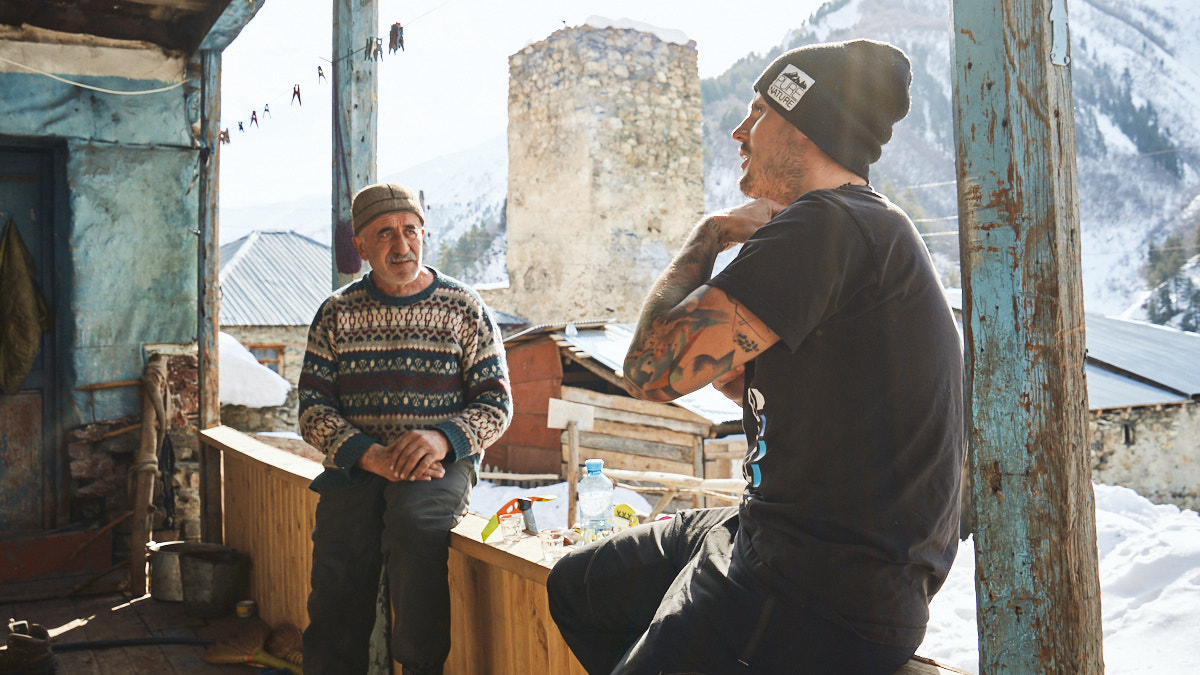
So, travel and waste.
Maybe you'll come up with other ways to cut it down. On a climbing trip to Croatia, for instance, it broke my heart when we bought food for several days at a supermarket and the plastic waste just kept piling up. How to deal with that? Maybe shop from local producers and small shops instead of Kaufland. In the end it has other benefits too. But we'll save those for next time.
Postscript: None of us is perfect. Not me, not you. And we never will be. But every small change we make in our lifestyle contributes to a better, cleaner planet. Do what you can.