
The money we save is more of a nice bonus, which we'd rather swap for a new guidebook to the best multi-pitch routes around Passo di Sella than for a little room with edelweiss carved into the bedhead and a can of Coca-Cola for five euros from the minibar. We were bending over live edelweiss a few hours ago on the descent from the Schubert route on Piz Ciavazes. And while we dip our feet into an icy pool below a waterfall to rinse off the leathery whiff of climbing shoes, the Coke chills too – bought for seventy-five cents at the Spar in Cavalese.
This is what we love. Gazing out of the open boot at the dark outlines of the Dolomite walls, gleaming white by day, which under a thousand stars take on a strange dominance over our human smallness. Snuggled waist-deep in down sleeping bags, we take turns reading aloud from the yellowed pages of a book about Himalayan tigers (Himálajští tygři), hunted down on the shelves of a second-hand bookshop. We pour the last two hundred millilitres of wine into our mugs and then let the door of our apartment click shut behind us.
We'll dream of a Bialetti releasing a steady stream of steam, and with it the smell of fresh coffee, into the mild morning air soaking up the warmth of the first rays of sun to clear the huge walls to the east. Good night. Or is it good morning already?

Better than being woken at four in the morning by drops of water falling in a steady rhythm onto your sleeping mat right by your head, because the ice coating the ceiling of the rock bivouac has started to change state with a sudden warm spell before dawn? Better than writhing with stomach cramps in the middle of the night and dashing bare-bottomed three times in half an hour out of a semi-warm sleeping bag and the steamed-up car into minus twenty, all while listening to your mate's reproachful “what the hell are you running around for?” Or better than not bothering to scout out a flat spot in time – while it's still light – and then spending the whole night dodging a root under your right thigh?
Definitely. It could be better.
But would you then remember the just-firm-enough hypoallergenic mattress with an Aloe Vera finish, the porcelain bowl with a warm wooden seat and the rain drumming on a tin roof?
“We wring out our soaked gear and enjoy a beautiful spot for the night. Wrapped up in down jackets, we stretch out comfortably on our bed of stone. To keep from falling, we've tied ourselves in to a rope slung over a rock spike.”
— Radan Kuchař, Ten Big Walls (Deset velkých stěn)
You're alive when things are happening to you. Not when you're just vegetating.
That's why we look for big overhanging boulders rather than big luxurious rooms. Parking off the beaten track rather than outside a guesthouse. A corkscrew lost at the bottom of the climbing gear crate rather than a busy head waiter recommending the right bottle. Red is best anyway. Ideally mulled in a Jetboil. Just turn the gas down in time. It catches fire.

Park overnight? Forbidden. Light a fire? Forbidden. Bathe in a waterfall? Forbidden. Climb the highest peak of the range under your own steam? Forbidden. Pitch a tent? Forbidden. Bivouac? Well, maybe in an emergency. But woe betide you if you abuse it.
What is allowed is building a cable car. A gondola. To carry thousands of people up every day who would never get there otherwise with their weak lungs and ample waistlines. And it's allowed to fly a supply helicopter over the mountains to bring in provisions to feed all those hungry mouths who, at two and a half thousand metres, crave a choice of at least ten main courses and an ice-cream sundae. "What, you don't do pizza?" I heard that myself at a hut in the middle of the mountains. I'd bet they'll be serving it within two years. A frozen Guseppe ham pizza at the very least.
But what harm does a climber do, stirring a pouch of Dobrý hostinec instant food with a bent aluminium spoon in stream water bubbling over a stove flame, having carried everything up here on his back – to the foot of an overhanging boulder with stones stacked around it as a windbreak – and carrying it all back down in the morning? And burying the brown stuff.
"A Tatra bivouac. Sleeping mat, sleeping bag, stove, a pretty girl... pure romance."
— video by an unknown author on YouTube
Responsibility may matter more than bans. Want to light a fire under a rock face? It looks like summer will be dry again, so think about whether it's a good idea – and if it is, put the fire out properly afterwards. Don't fancy squeezing into a stuffy Matratzenlager and trying to drown out the snoring with your own lip-smacking? Obviously you won't leave rubbish lying under the boulder. Unlike your poo, which you bury in the ground. Lightweight pocket trowels are easy to get hold of. Love the easy life of carrying your bedroom in the boot and stirring pasta with one-euro-twenty pesto in the shelter of the left rear wheel? Respect private land and the "No Camping" signs.

It's actually a wonderful feeling. Worn out from a whole day clawing your way up a six-hundred-metre wall, you collapse into that camping chair, crank the handle of the grinder for fresh coffee and set the silver Bialetti, its base by now permanently blackened, over the flame of the gas stove. You wash your hands, grimy with the classic mix of climbing chalk and rock dust, in water sparingly poured by your mate from a ten-litre jerrycan. And then you just sit there, slurping coffee from a tin mug that has also rinsed away the last of the dried wine, polishing off a three-day-old bundt cake and watching everyone gradually drive away, while you stay.
Only one problem stays too: the billy can greasy from that basil pesto, and deciding which of you will go and scrub it in cold water while the other rearranges the car for sleeping. Which you can survive. Or rather, savour?

Lowe Alpine AT Kit Bag holdall-backpack

Lowe Alpine Aeon backpack

Asolo Space GV trekking boots

Bridgedale Hike Ultralight socks
I climb mountains. I write about mountains. I photograph mountains. And I always come back happy. It's written in my name, after all.
It's time to pick up the unfinished work from the days when I lacked the money, the transport and the experience for trips to the big mountains. Back then, all it took for an adventure was to leave the comfort of the coloured stripe squeezed between two parallel white lines and fight my way through calf-scratching bilberry bushes onto an overgrown path heading into the unknown – perhaps to a hunting lodge built on a stone foundation in a clearing hemmed in by forest, to a mountain spring bubbling out of the ground to soothe a parched tongue, or into the depths of an ever-thicker spruce stand whose drooping branches swallowed my trail completely after two kilometres.
How old could it be?
Who stacked it from big gneiss stones into the steep slope?
And why did they go to so much trouble?
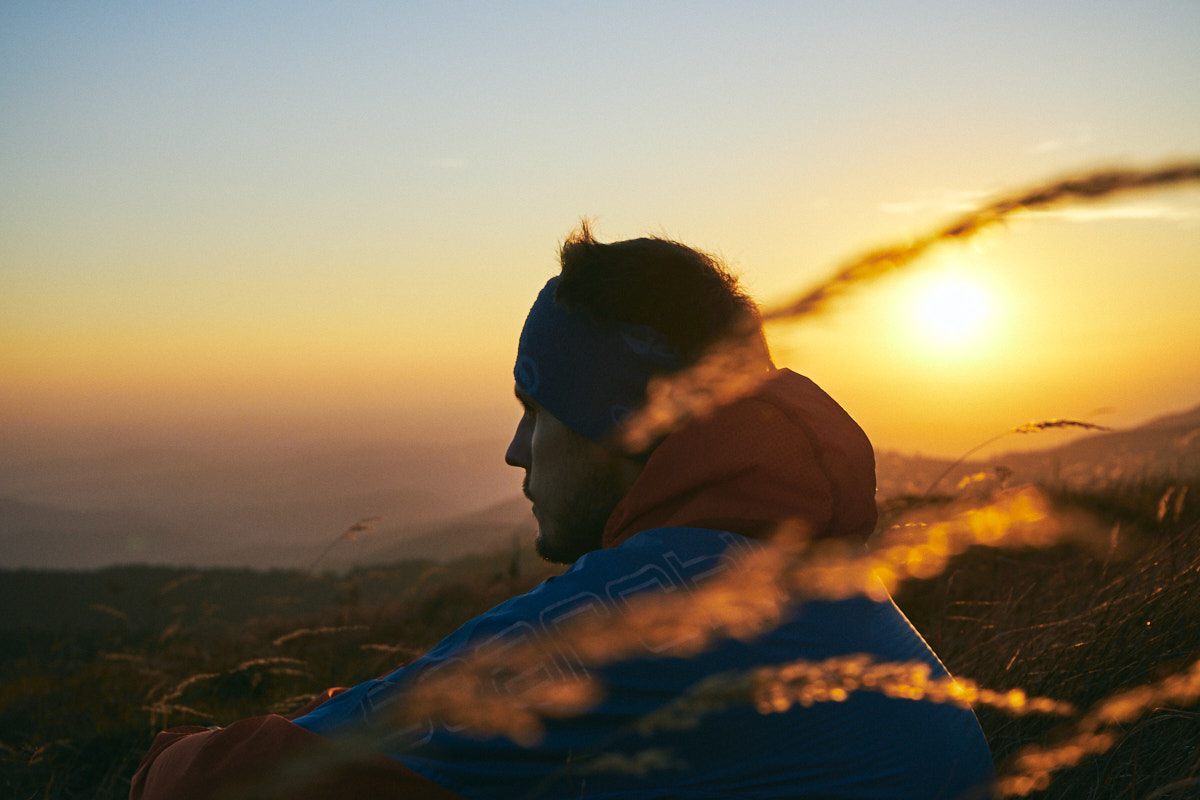
Now that it looks so likely I won't get beneath the glaciated peaks of the high mountains this year at least, my little notebook is filling up with a list of places I have to explore in my own hills. Rock faces whose rough surface has never yet been sprinkled with the sweat of my palms, and which may or may not hold together well enough to be climbable at all. Forest trails and hunters' paths through places where animal tracks still outnumber human ones. And cosy nooks where we'll cook dinner over a burning fuel tablet, crawl into down sleeping bags and open our eyes in the morning just as the sun comes up.
That's my plan.
And until the snow releases the highest parts of the mountains from its grip, I wander the woods – literally behind my house – and find places I had no idea existed. A rock formation marked on the map catches my eye; maybe it's good for climbing, or at least bouldering. So I step off the well-known trail into the forest, catch my bootlaces on fallen branches, scramble up the slope and suddenly I see a side of the Jeseníky Mountains I don't know – a deep valley stretching for several kilometres, hemmed in by steep spruce-and-beech slopes and closed off at its head by the wall of a white ridge. Completely different mountains.
It really is a perfect opportunity to seek out and discover adventure at home – perhaps on a smaller stage, but by no means smaller in scale. That's why, in the lines below, climbers and adventurers Katka Mandulová, Lukáš Jasenský, Richard Štěpánek and Ondra Šnopl take this idea further.

You can get lost even where you've been a hundred times.
You still had an expedition in play to the last seven-thousander of the former Soviet Union, the one you need for the Snow Leopard title. That's probably off for good now, isn't it? Do you have any backup plans for a season behind (most likely) closed borders? Any “expeditions” in the Czech mountains?
We haven't called it off for good yet, but this year's snow-leoparding isn't looking too promising so far. We'll be happy if we can run around outdoors freely. Pik Pobeda can wait. Maybe I'll finally get round to my old dream of only ever going to the swimming lake in Skalák – and climbing, of course. By the way, I feel I've been ahead of my time once again. Last November I prescribed myself some so-called sitting on my backside. I wanted to cut down on hitchhiking and shrink the radius of my weekend trips to less than 1,000 km from Prague. Little did I know that soon we'd all be sitting at home. It's no tragedy, though. We've got plenty of obscure climbing areas around Prague, like Klobouček and Babka. And for a big adventure we can head to Adršpach. They've got the Himalayas there, after all, so we won't get bored.
Please describe your favourite place in the Czech mountains. Without giving away its name.
I know a crystal spring where the forest is at its deepest… Haven't guessed yet? I feel joy and a certain satisfaction when I run up into the hills straight from my front door. Ideally when the running feels easy and I'm not puffing too much. Even though our little hills forgive nothing. Beech woods, a spring along the way, bilberry bushes – it can be foggy and grim for all I care – and at the top a little wooden chapel pops into view. I remind myself that the righteous live for ever, and I can run home.

What does adventure mean to you? And can you find it in the Czech mountains too?
Definitely. We've got beautiful sandstone rocks, and leading there is more than adventurous enough. Wriggling up a chimney, balancing on sandy friction slabs, trying a shoulder stand below the second ring bolt, or plucking up the courage to leap from tower to tower to reach the abseil anchor. Or scrabbling up some horror crack on hard Jizera granite, getting a bit frozen and ripping off chunks of skin. That's proper adventure. You can try long-distance ridge runs – you could easily run all the way around the whole country. A Czech Haute Route of sorts. And along the way you can eat wild raspberries, wade through streams and not meet a living soul. Or try running at night without a head torch – that's a pretty unusual experience too: you'll get lost even where you've been a hundred times, and you'll be delighted when you find yourself again.
We have a chance to slow down for a while.
You should have been packing right now for the peak of your climbing career – the Makalu expedition. What next? You did sacrifice an awful lot for it – including a permanent job.
We were due to fly out on 5 April, but everything turned 180 degrees at the snap of a finger. Right up to the last minute I believed it might still work out, but then it came. Still, I take it positively, even though I had to come to terms with it – after all, it was a year and a half of preparation, and for the last six months I went all in. I quit my job and put all my time into the expedition. Looking back, I'm glad I took that step, because you can't do these things at half throttle. After we found out for sure that Nepal had cancelled the whole spring season, we wondered whether to go in autumn instead. But the days are shorter and it's colder. The whole team agreed we'd simply postpone it to 2021. I think this expedition will be a turning point for me, kicking off a new chapter of my life. I'd like it not to stay at just one Himalayan expedition. Time will tell. Either way, this situation has shown us clearly that we can't take things for granted. Maybe the world, and above all humanity, will change because of it, and maybe not, but right now we have a chance to slow down for a while and think.
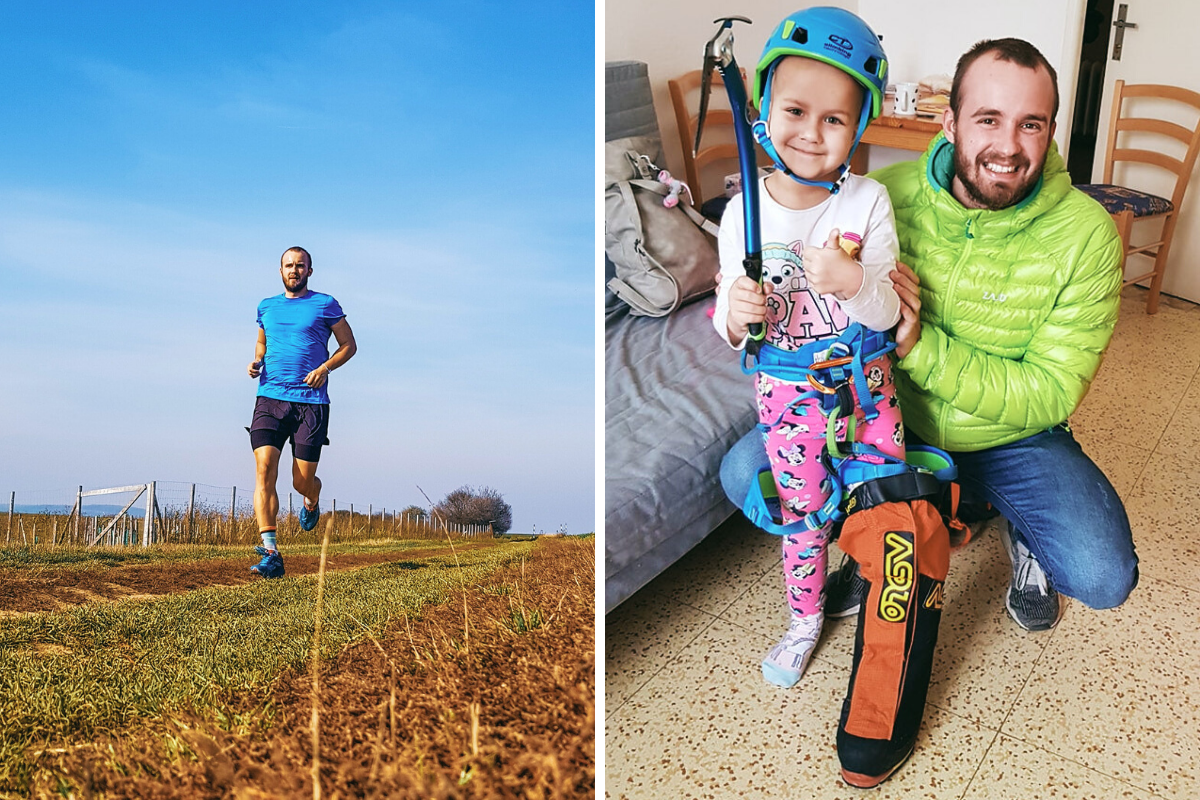
Do you have any backup plans for a season behind (most likely) closed borders? Any “expeditions” in the Czech mountains?
I'm an optimist, so I believe the borders will open up again. But that's still up in the air, so I'm also counting on spending the season in Czechia. In that case the plan is clear. I'd like to spend lots of time on the rocks and do a long-distance run or two. It's all somehow connected with being out in nature. And nature in Czechia really is beautiful and varied.
Please describe your favourite place in the Czech mountains. Without giving away its name.
It's not far from me, so I can pop over in the afternoon after work or towards evening. A forest of conifers and broadleaf trees. Here and there a rock block emerges, but it's mostly footpaths. In spring everything buds and smells wonderful. Wild garlic as far as the eye can see. In summer it's beautifully green, in autumn the colourful leaves rustle and in winter everything sleeps. If I want, I can just go for a walk or a run; if I fancy some height, I climb something. Right now, nature is waking up from its winter sleep. Birds are singing and every now and then some deer run past. It's a balm for the ears and eyes, but above all for the soul.
Nothing can stop an idea whose time has come.
You love climbing in the Jizera Mountains and you can find a beautiful project even “in the woods behind your house”. Do you already have plans for a season behind (most likely) closed borders?
My biggest and most beautiful project, not just for this season but for every season of my life, is my first child, due in May. And since they do a lot of stretching and exercising in their prenatal life, they're bound to become another lover of rocks and mountains. I believe in heredity.
As for climbing projects, I've got loads of them in my head. The biggest is an attempt to map the boulders and the lesser-known, less-visited crags around Liberec and Jablonec and create an online guide. I enjoy putting small pieces together into a whole, passing everything on and inspiring others. It warms your heart to see other climbers enjoying that kind of initiative. At first it didn't seem realistic enough, but luckily I have handy friends who had a similar idea, so something is starting to take shape. Climbers of Liberec and Jablonec, get excited! Other projects I'm looking forward to are first ascents. My friends and I have several on the go. I love this time spent on the rocks; it's something different from a classic climbing day. Spring will soon put on a T-shirt and trainers, the virus ban will be lifted and the right time will come to finish what we've started. Nothing can stop an idea whose time has come.
Please describe your favourite place in the Czech mountains. Without giving away its name.
There are lots of those places. My grandparents showed them to me. Back then they were much younger and I was a child. I travelled, walked and cycled a great deal with them, and I'm grateful to them for it. About every place I learned interesting things that I still remember today. They always taught me respect and humility towards nature, and that, sadly, is fading from today's society.
But I'll describe one place. It's not far from a rocky viewpoint, yet far enough off to the side to give you peace to sort out your thoughts. If a place like that makes you smile, it's the right place. Here you don't just smile – you feel you could fly with the birds high above the valley. The landscape lies below you as if painted on canvas. The solstice time, meaning June, and the colourful sunny days of October are the most beautiful here. Each season has its own scent. June is fresh, the grass is green, the resin smells and the heat isn't oppressive yet. October is colourful, the dry grass smells different and you're already wearing a jacket, but it's always an oasis for your soul. You sit here for a long time, cut off from everything, telling yourself you've done nothing today, yet a lot has happened inside you. You sit and tell yourself there are a thousand and one reasons to bow before the majesty of the trees. I often come back here, because I love escaping from the world of words into the world of thoughts. Here the sun conjures peace in your soul and the wind tests your resilience.

What does adventure mean to you? And can you find it in the Czech mountains too?
If I had to define adventure, I'd say it's life itself. I want to be in a world that gives me a choice; I want to choose my own paths. One of my paths is climbing. When you see someone with a rucksack and a rope, you can be pretty sure adventure is on its way, and there are countless adventures we can live through if we look for them with our eyes open. And the most beautiful one is the one we share with someone, whether you're in Nepal or in the Giant Mountains. When I climb warm rock, hear a karabiner clink against a ring bolt and hear my friends' voices, I realise that the finest thing among climbers is friendship. Friendship is certainty, friendship is like a protected tree, and friends should come before kings.
The key is not to confuse adventure with recklessness.
What were your plans for this season? And do you have any plans yet for a season behind (most likely) closed borders?
This year I wanted to cross the former Czechoslovakia on foot again. This edition of the 1000 Miles Adventure is the 10th, a jubilee, so I wanted to take the route the cyclists and kick-scooter riders follow. Walkers, you see, have a route made up of 22 checkpoints they must pass through. Between them they plan their own route, which is about 350 km shorter. I wanted to walk the full 1,600 km, because if everything had worked out, this edition would have earned me a first (a precious one to me). I'd have been the first in the history of the race to complete all three categories (cyclist, kick-scooter rider, walker/runner) in both directions – east to west and west to east. And more so-called civilian challenges and journeys across Czechia are waiting for me – mostly multi-day trips, whether charity-and-motivation ones or journeys with adventure in their DNA. There are plenty of plans, but...
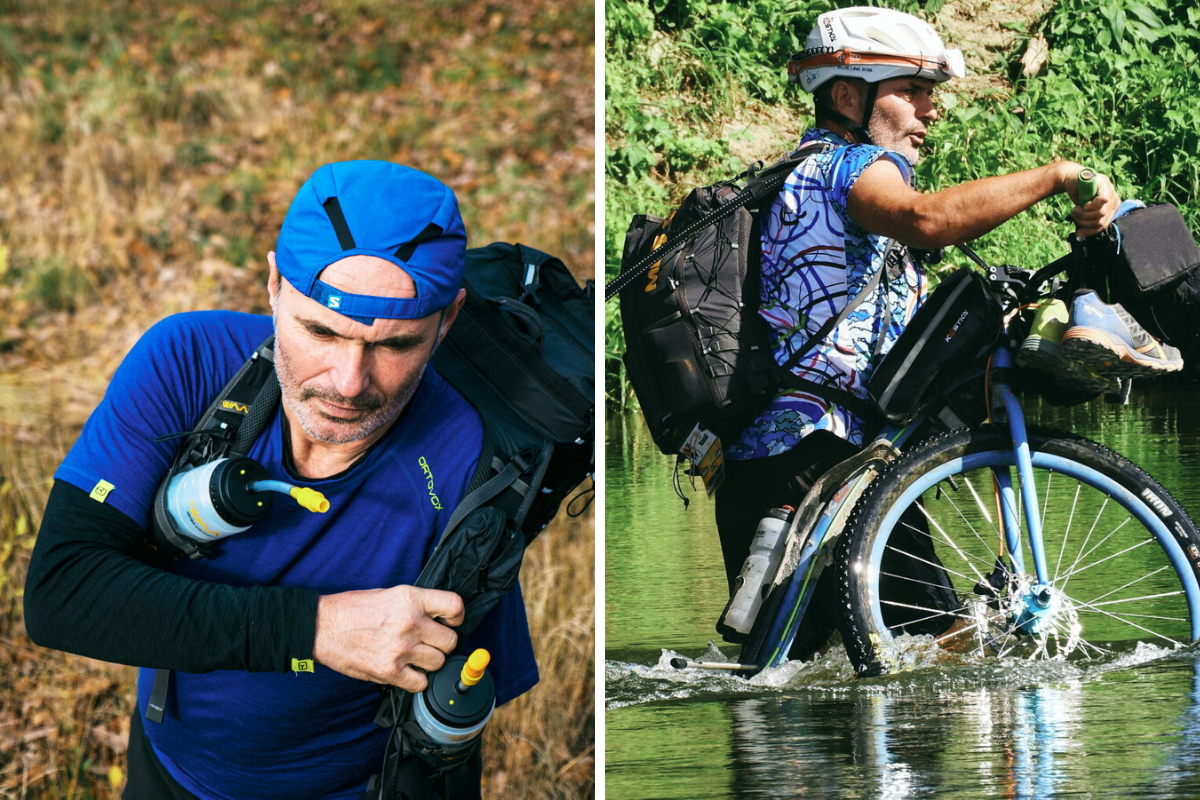
Please describe your favourite place in the Czech mountains. Without giving away its name.
I have to admit I don't have a place I'd call my absolute favourite. It's more places tied to particular memories or stories. But I'll try to describe one.
We're climbing through the forest. Our touring skis glide forward and in the distance a treeless hill rises. We'd dragged things out a bit, so some decided not to go all the way to the top. Only two of us set off. Just below the summit is the source of a river that shares its name with my home region. A year or two had passed since I last filled up with water here, but I wanted to taste that refreshing flavour again. We took our friends' empty bottles and promised to fill them. It's not often you meet an elephant in the Czech mountains. Here you do. Along frozen trails we reached the spring – or rather just the roof of the shelter that covers it. I don't know why I was surprised; it's winter and there's snow everywhere. We didn't go on to the top, even though in the summer months it takes about 10 minutes to get there.
As a multiple 1000 Miles finisher, there's probably no point asking you whether you've had adventures in the Czech mountains. But do you think you can have a homegrown adventure outside the framework of an extreme race?
For me, definitely. Of course it depends on what each person imagines by adventure. Adventure is directly proportional to the circumstances in which we find ourselves in a given place. The key is not to confuse adventure with recklessness. I've heard it many times – what an adventure it was – when in fact it was sheer foolhardiness that just happened to work out. Adventure can certainly include moving through unfamiliar places in a way and with a level of comfort we're not quite used to. For example: a multi-day hike in a region that's new to us, with everything we need for sleeping, eating and moving. Just deliberately avoid civilisation, sleep out in nature, maybe shift some of your walking into the night, and I'm sure adventure lies ahead. You run out of water, a lace snaps, you get soaked, there's nowhere to lay your head – and there you have it. How many people carry spare laces and various gadgets for sorting out problems? What is a disaster and a reason to go home for one person can be a challenge – and the adventure I mentioned – for another.

Lowe Alpine Misfit 27 climbing pack
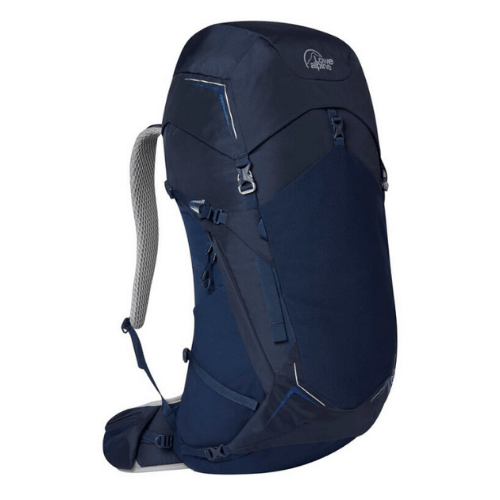
Lowe Alpine AirZone Trek hiking pack

Asolo Nucleon GV trekking boots

Bridgedale Hike Lightweight merino socks
I climb mountains. I write about mountains. I photograph mountains. And I always come back happy. It's written in my name, after all.
Slovenia's hidden treasures – or a guide that tells you where not to go?
Well, let's have a look at you. I'm curious what's inside. I open the hard front cover, glance at the contents and shelve them for "maybe later", then focus on the first lines of the editorial. I don't even read the final paragraph. The last two sentences of the one before were more than enough for the magazine to lose my sympathy for good.
"We went looking for places that are just as beautiful and, for now, far less visited. We'll share Slovenia's hidden treasures with you!"
For now, far less visited! Which is why we wrote about them in this rag, which we're releasing into the world for free, offline and online. And so these secret places – whose wild solitude and distance from the crowds heading for the overhyped hotspots of thrill-hungry adventurers we enjoyed so much on our visit – will become known to thousands more people. With which we've done our own small bit to destroy the much-praised breathtaking atmosphere we describe to you in this issue.

No, I don't like today's conquest of the mountains by giving everything away – on the internet and beyond. Adventure is ceasing to exist. There's nothing left to discover. Searching for a hundred-year-old hunters' path, now vanishing under blueberry bushes and being pushed into oblivion by ever-thickening spruce growth, happens mostly by studying satellite images on Google Maps and clicking through search results.
In the past, the location of a small tin bivouac shelter was only ever guessed at from a dot on a paper map.
Today, plenty of links show you the route described in detail. Including the final unmarked stretch, where you need to pay close attention, bear slightly left at the big boulder split by a quartz vein and carry on in that direction for about a hundred metres. Otherwise the path might lead you too far and you'd be hunting for the bivouac for many long minutes.
Heaven forbid!
Finally a bit of excitement, spiced with the unpleasant uncertainty of whether, as dusk draws in, you'll end up – instead of on a flat bunk in the bivouac – curled up in your sleeping bag among limestone rocks that refuse to let you get comfortable, under the nearest overhanging boulder.
But no. There's no room for that these days. Adventure has to come instant, just add water.
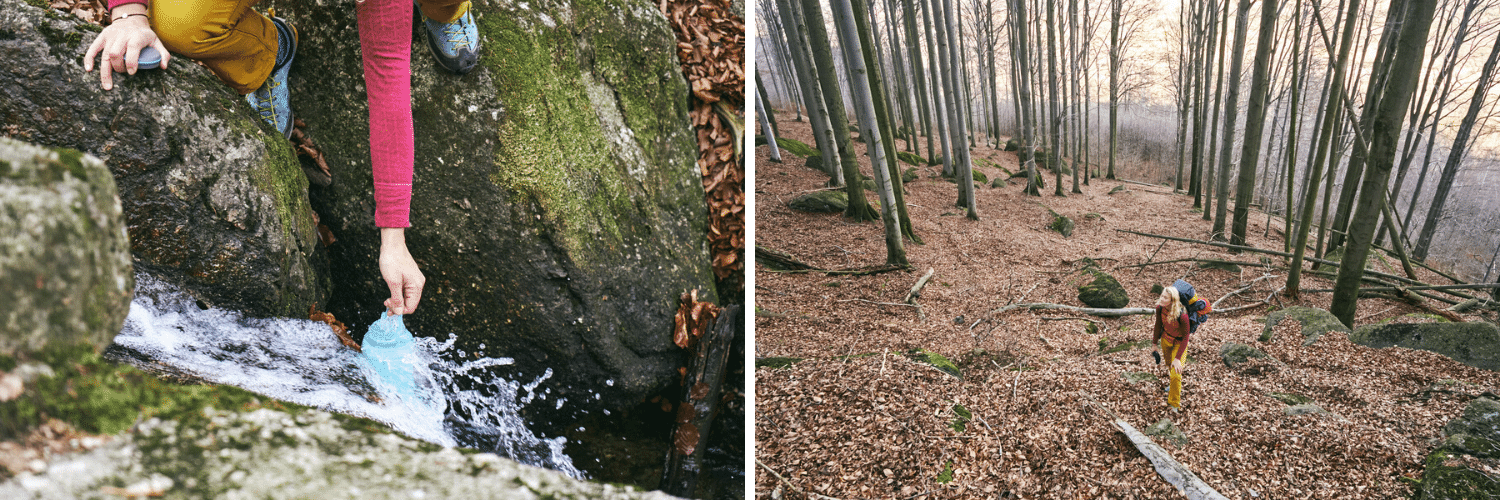
Giving away the unknown isn't necessarily bad. As long as it happens by word of mouth. Among friends, or friends of friends. "Hey, I heard there are supposedly the foundations of some old shepherd's hut below the ridges or something? Do you know where it is?" ... "Sure, it's called Volárna. You have to turn off at the Vegeťák..." Here and there, blah blah blah. That way, the only people who reach the mountains and those last precious places, still carefully hidden from the crowds, are the ones truly ready to explore. Those who can find their own way and don't mind having their shins scraped by overgrown blueberry bushes for half a day and countless times crawling back in defeat under low spruce branches to the main path, because the directions from a retired former mountain rescuer turned out to be a product of the time he was last there, leading the search for a lost Polish hiker.
But mass disclosure of the unknown brings another big problem, besides stealing the atmosphere of the mountains' hidden treasures.
It often brings unprepared people into the mountains.
People unable to deal with unexpected problems the magazine didn't mention. The line of ascent was clearly laid out. But a slope covered by a huge snowfield – a leftover from the last heavy winter – puts an obstacle in their way that nobody counted on. A slip could be fatal. An ice axe? They haven't got one. And the trouble doesn't end there. Fog has swallowed all the cairns marking the safe route in its mysterious depths, and the right direction becomes a big unknown in the grey wilderness. The internet just said: "Follow the cairns." Map? Compass? Haven't got those either. From afar, an ominous rumble carries through the thickening air, and within half an hour come crashes as if the whole sky were about to fall. Sheets of rain show no mercy. Suddenly it's snowing, and the already dark sky loses all its light as time goes on. How will they survive the night? A bivvy bag? A down jacket? Warm gloves? Haven't got them.

Yes, I picked an extreme case. And it really takes much less for internet-based preparation to turn into an unpleasant experience at the very least. "It says it's protected by a steel cable, but easily doable without clipping in. So we won't even bother renting via ferrata sets, right?" At that moment, lulled by the information available, they no longer take into account the vertigo one of them suffers from. They unintentionally overlook 26 August 2011 as the article's publication date. And reassured by the line "there was no need to clip in at all", it doesn't occur to them that in May a ferrata at 2,000 metres can hold quite a lot of snow, which changes the rules of the game completely.
Maybe if they'd planned with common sense instead of internet articles, they'd have taken gear to match their abilities.
Or not set out on such a bold venture at all.
Sadly, today's almost unbelievably easy access to information, combined with the relentless efforts of outdoor brands, TV channels and all sorts of other entrepreneurs to grab their slice of the growing mountain industry – yes, we really can call it an industry now – is flooding the mountains with people who are nowhere near ready for their pitfalls. Not to mention the lack of respect for nature itself.
"Experience it with us!"
"Get ready to head out!"
"Mountains of experiences!"
That's what many proclaim to the world in an effort to boost the green figures in their year-end accounts. But the other half of the message never goes out on air. And not even a jacket crammed with the latest technology, a super-clever belay device with a patent pending or an avalanche-risk app will protect anyone from the pitfalls of the mountains. Only experience and humility can do that. But nobody talks about that.

Giving away the unknown does no good to anything. There are more and more people, and with growing bank balances comes a growing hunger for experiences. The mountains are suffering. Just stand at the Hvězda park-and-ride above the spa town of Karlova Studánka on a sunny weekend morning and then – if you even fit on the bus – carry on with the crowd to the summit of Moravia's highest mountain. And is that what we want to do to those hidden treasures too, whether in Slovenia, the Jeseníky Mountains or still-exotic Georgia?
I decided long ago not to name specific places in my articles, and the smallest geographical unit I use is the name of the mountain range. I leave the rest shrouded in mystery. I describe only emotions and atmosphere. And I believe that's the right thing to do.
Let everyone find their own way into the mountains. Step by step. Let them head up first with an experienced friend, or join a climbing club. Let them learn about all the possible risks, navigation, essential gear and, above all, respect for nature.
And once they're prepared like that, the mountains will gradually open up to them.
That way we'll protect both the mountains and ourselves.
I climb mountains. I write about mountains. I photograph mountains. And I always come back happy. It's written in my name, after all.
This year marks the fiftieth anniversary of the tragic Peru 1970 Expedition. Beneath Huascarán, an earthquake back then killed all 15 members of the expedition along with seventy thousand other people. For us, a chance to pay tribute to these top Czechoslovak climbers and to thank them for the legacy they left us. After all, some of them came up with the Jizerská 50 race and got the first pioneering editions off the ground.

"Katka – this one's for you – the Jizerská 50 on wooden skis! Sign up!" That's more or less how the call from the Czech Mountaineering Federation reached me; the idea of reminding the wider public of the link between climbers and the Jizerská 50 was theirs. Fifteen bibs for climbers brave enough to start in period clothing on wooden planks from the seventies struck me as an irresistible offer. I was straight on the phone, begging them to find me a place in the team. Sometimes I can't believe the opportunities that come my way thanks to the readers of my Jasan poems.
We put together a strong team, including the daughter of one of the Huascarán climbers, Jana Jírová, and several elite climbers from the Czech scene. My brother Ondřej Mandula, who holds a Czech Mountaineering Federation award for ascents of peaks over 6,000 metres, historian Libor Dušek, who is making a film about the Huascarán expedition, Martin Leskovjan – a daring sandstone climber, Czech ski mountaineering champion Marie Zelená and two granddaughters of the Huascarán climbers – biathlete Bára Jírová and climber Svaťka Spěváčková. Each skier wore the bib number of one of the Huascarán climbers on their chest – the first fifteen numbers of the race, which are traditionally never handed out. The official numbering at the Jizerská only starts at sixteen. I got number 4, which belongs to Vilém Heckel, the famous photographer. His book Hory a lidé (Mountains and People) has been one of my favourites since I was little.

We had special arrangements – we started right after the elite women, just before the start of the main men's race. So they'd notice us, not that anyone could miss us among the cross-country skiers. We lined up in the tracks singing the national anthem and knocked back a shot of rum right at the start. For courage! No grease, no glide. But just past the stadium we ducked into the woods and cheered on the elite men at the Huascarán memorial. To be on the safe side, we let the first two waves of the race go before heading back out onto the course. We weren't going to risk a broken bamboo pole. And we didn't want to hold anyone up. Nice and easy we inch forward, the faster ones waiting for the slower ones who happen to have a technical problem, are gluing a gaping boot, or topping up with Rex Gold grip wax or rum. Lo and behold, by kilometre ten my brother reports an empty bottle. Luckily Honzík Špecián, owner of the Knajpa mountain hut, generously filled it back up – a sponsorship donation, he said, so we could keep going.
Over time we dropped back to the tail of the race, among the veteran racers. Some have the same kit as us, the same leg warmers and retro shell jackets, but also the prestigious bib numbers of entrants with 30 or more starts under their belts. We could have recruited them into our team. Our pace is steady, no slacking. From a certain point on, we keep overtaking the same racers. We're faster uphill, but they cut us down on the descents, even though we pole with all our might. For the hundred-and-fiftieth time on the course we meet and greet Mr Šťastný ("Mr Happy") and ask him if he's happy. Right up to kilometre 45 he always told us he was.
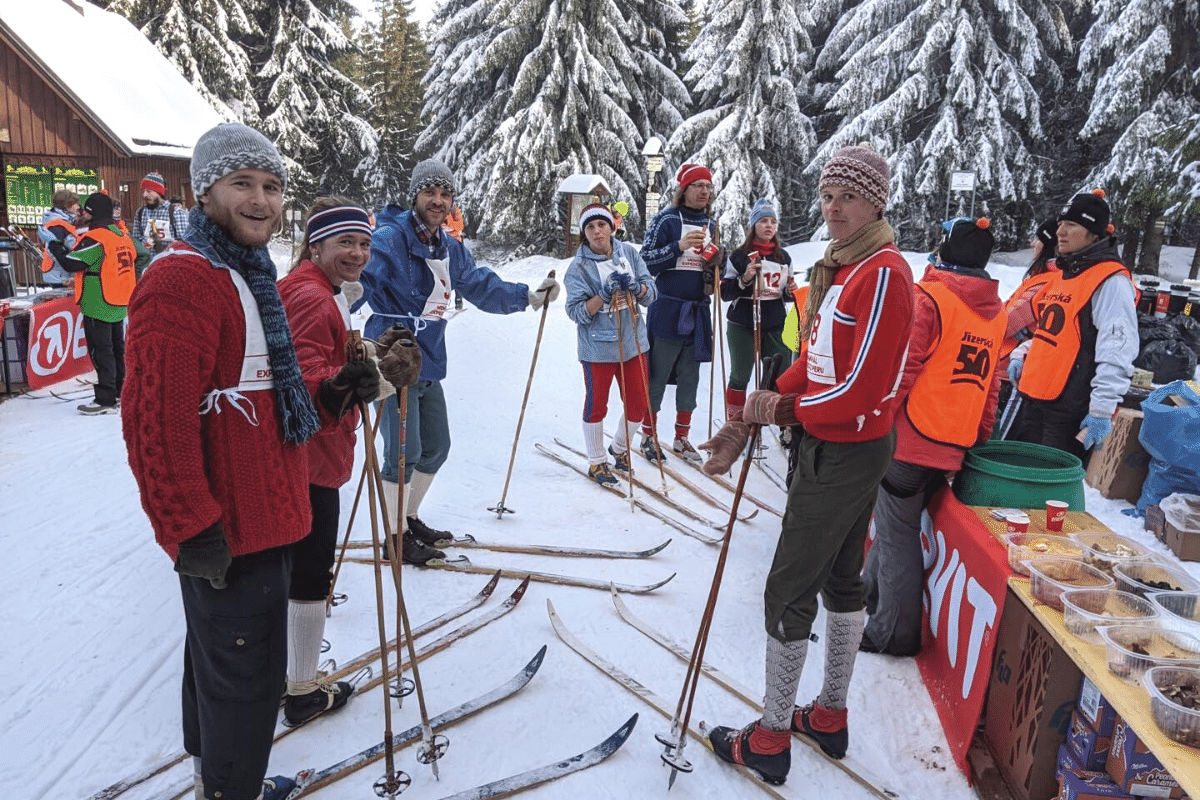
At the last feed station we earned our sausages – we'd been looking forward to them ever since Jizerka. We're served by the famous climber Alena Čepelková, who selflessly pours us tea. A storm is rolling in, but we'll be at the finish first. We made it in daylight. With minimal losses, a few blisters and aching legs, but happy that something so beautiful and symbolic had been seen through to the end. On top of that, we raised a decent sum for charity to support Tomáš, a climber who fell in the Tatras and needs help. I'm glad it all worked out – thanks to everyone, and hore zdar, as Czech climbers say!

Going by car would certainly have been more comfortable. In featherweight trainers rather than sturdy mountaineering boots. And in a clean T-shirt instead of the stinking rag I'd spent four days climbing, eating dinner and sleeping in. But we decided we'd had enough of pampering ourselves with the car. And that, as climbers, we ought to show nature not just a conqueror's attitude but a responsible one too – with minimal emissions. So this time the car stayed parked outside the house, and at 19:00 sharp we boarded a bus on Fügnerova Street in Liberec that took us to the platform of the Prague – Poprad night train. A single bottle of Chotěboř beer then helped us survive the night in a stuffy compartment where five passengers were jolted out of their shallow dreams several times a night, all at once, by the sleep apnoea of passenger number six.

The credit for our rapid awakening at a quarter to five in the morning goes to the icy wind sweeping along the platform, together with 150 ml of instant coffee for seventy cents from a vending machine. A tiny two-by-two-metre shop selling everything from postcards and fresh Fornetti pastries to cuddly marmots stays shut. The escalators are decorated with "Out of order" signs. And the way two locals are talking makes it obvious what their benefits were spent on. Through a small window with a shelf, ruled by a chipped porcelain saucer with a blue rim, comes the voice of a working pensioner, currently knitting a scarf. Am I going for a big one or a little one? "A big one." "Then 40 cents. A little one would be 30. Here's your paper. Next time you'll know." Tucked away behind the counter on the opposite side of the station hall, a lady stifles a yawn as she sells us two tram tickets to Smokovec for 3 euros. An hour of Poprad station was quite enough.
When the uniform voice of the Tatra Electric Railway announces Starý Smokovec over the loudspeakers, the sun is breaking through into a clear sky. We give the lower station of the Hrebienok funicular a wide berth on the right. We are climbers, after all, and not some spoilt lowlanders who ride up into the mountains by cable car, get in the way on the icy path without microspikes, never say hello and eat all the halušky in the huts, so there's nothing left for us mountain men who toil all day on the face and fight for our very lives. And besides, the first car doesn't run for another two and a half hours. So we walk. Alone, we climb up the start of Malá Studená dolina, and by just after eight we're forking up scrambled eggs at Zamkovského chata – a hospitable starting point for climbing trips into no fewer than three Tatra valleys. A cosy little wood-panelled room with a bunk bed, a bedside table, a shelf nailed to the wall and a few metal hooks screwed into the walls here and there. Among all the gems of climbing literature down in the restaurant, one book stands out in particular – Expedícia Vysoké Tatry 1955 (High Tatras Expedition 1955). In the evening, back from the heights, we read its chapters aloud, play climbing-themed memory and raise a glass of gentian spirit with the hut keepers. That's Zamka for you – pure bliss.
At the mouth of Malá Studená dolina, below the Lomnický hrebeň ridge, at an altitude of 1,475 m, a wooden hut was built in 1943. It had no official name, but the atmosphere created by Štefan Zamkovský and his wife Ľudmila with their warmth, and the reputation of Štefan Zamkovský – a top Tatra climber, excellent mountain guide and devoted rescuer – meant that nobody ever knew it as anything other than Zamkovský's hut.
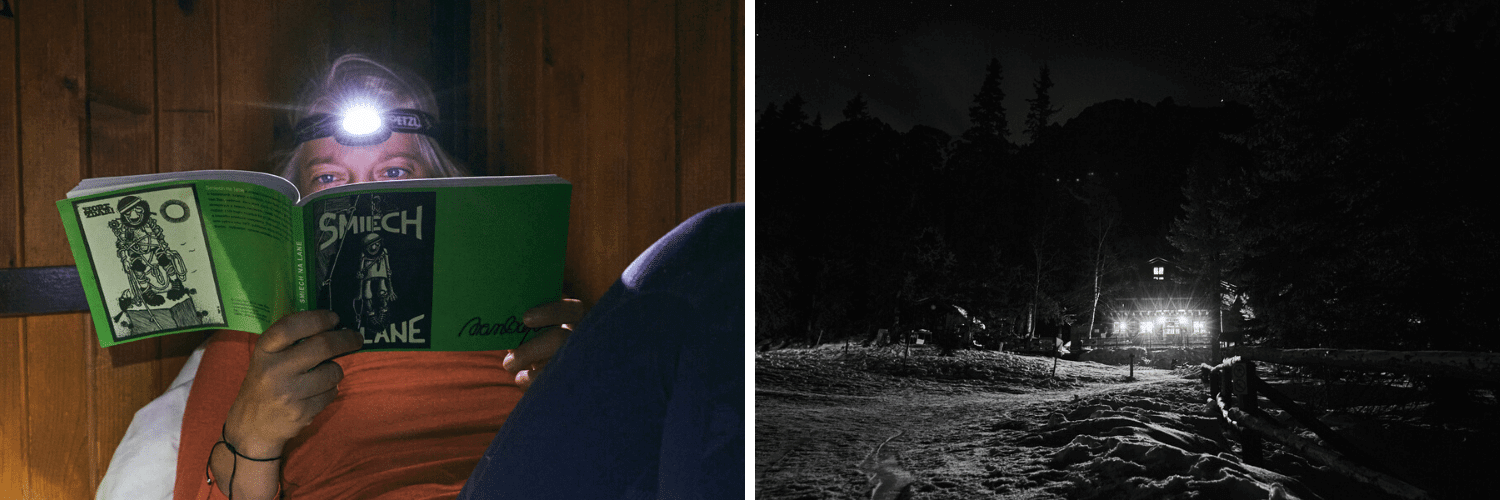
How much snow can there be around the hut? Twenty centimetres? It's the end of January and apparently the last proper snowfall here was on 26 December. A strange winter. The path to Téryho chata has been polished smooth by the boots of hundreds of people, and when we leave Zamka in the dark by headtorch before six in the morning, our feet slip several times however careful we are. On the slope below Téryho chata we put on crampons. Without the sharp points of those climbing irons you can't take a step in the icy Tatras in January. Before we leave the relative safety of the path, busy the day before, we tuck into a slice of bread at sunrise so huuuge that the last time I saw one like it was with woodcutters. In a fairy tale. We'll be hacking away today too and, hopefully, it'll be a fairy tale – up the Jordán route all the way to Lomnický štít. Over breakfast we have the giant high above our heads.
Károly Jordán was a Hungarian climber, mathematician, member of the Hungarian Academy of Sciences and professor at the College of Economics in Budapest. He was one of the leading Tatra climbers at the turn of the 19th and 20th centuries and initiated many interesting first ascents, including some in winter conditions. Karol Jordán, accompanied by Ján Franz Sr., was the first to climb Lomnický štít from Sedielko pod Lomnickým on 6 July 1900.
We swap bread for ice axes. The gully leading up to the right of Pyšný štít is full of hard, frozen firn – like in spring – and while a slip on the path meant at worst a hard landing on your backside, up here that kind of hesitation is not forgiven. We can't match our own steps to the existing footprints, so we kick our crampon points into the untouched snow a little to the side. Those signs of recent human presence were made by someone heading down the gully, who naturally took much longer strides than we can going up. He even tried to throw us off a little. But we don't blindly follow his tracks dropping down from Pyšný štít; instead we climb over an indistinct rock rib into the next gully. There the snow is completely virgin.
As the icy slope steepens and we take our second axes in hand too, two more heroes emerge from behind a rocky spur, far braver than us. "Look, look at them! That's impossible." Like us, they move on all fours over the slippery terrain, but unlike us without the sharp points of axes and crampons. Madmen? No. True Tatra natives. Chamois.
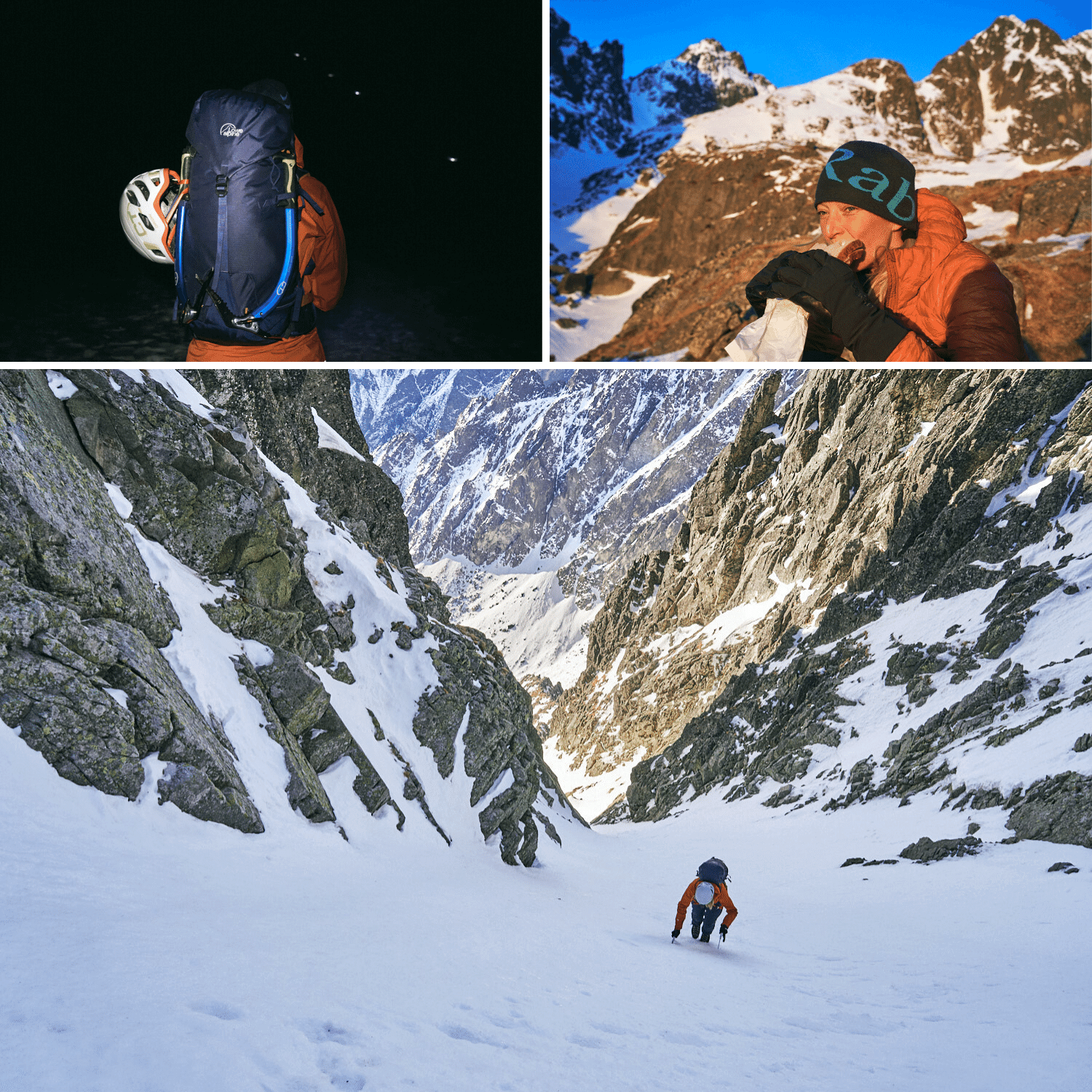
We end the steady rhythm of swinging axes and kicking crampons in the notch by Posledná veža. The rock climbing begins. The hard, reliable south-facing firn gives way to frozen, loose, faceted snow that treacherously hides the key footholds. Beneath our feet the steep Medená kotlina opens its jaws and there's no room left in your head for any of those worries from down in the valley. Luckily the crampon points always catch on something – you just have to believe it – and in the end your hands find the support they crave, on bare rock or on an axe sunk rock-solid into overhanging Tatra grass. What a relief the iron chains securing some of the particularly nasty spots are. We leave the dark north side behind us shortly before eleven, and in Sedlo pod Lomnickým we strap the axes to our packs. We won't need them any more. Under a clear sky the rock is free of snow, and the summit handshake is at most a few dozen minutes of easy climbing away, with the occasional help of chains, staples and pegs hammered into the Lomnický massif by the Hungarian Carpathian Society. The last obstacle in our way is the railing at the viewing platform.
The summit of Lomnický štít was probably first reached from Medené lávky by Jakub Fábry, a shoemaker and amateur miner from Kežmarok, sometime between 1760 and 1790. Members of his family searched for treasure and dug for gold in these parts. The first recorded tourist ascent was made from Malá Studená dolina on 16 August 1793 by Robert Townson, an English physician, naturalist and traveller, during his journey through the lands of the Austrian monarchy.
"Good heavens, where have you come from?" "Oh, from Téryho chata – just popped up for a beer, you know." "Goodness! And isn't it dangerous?" "Dangerous? Don't know. Well, a bit, probably. But mostly it makes you thirsty," we say, using that line to squeeze past a group of friendly elderly ladies straight to the bar. "Wait! And how are you going to get down?" I wave my axe to the right towards the gully leading down to Skalnaté pleso: "Down that gully, via Emerich's Lament." "Good heavens! Then let's hope we won't hear your lament from up here." "Of course you won't – cheers!"

For two more days we find joy, excitement and often the limits of our own courage in the icefalls and snow gullies of both Malá and Veľká Studená dolina. On Tuesday afternoon, when the sky over the Tatras clouds over, we head down. Shortly before six in the evening we turn up at Poprad station again, and even at this hour the place seems no friendlier than when we arrived. Our train leaves at 22:40.
How do you kill five hours? The cinema! Every town has a multiplex these days. Even Poprad. We walk across the dead town square, slide down the slope below Lidl and dash across the dual carriageway separating the Juh II housing estate from Cinemax. After the first three scenes, the hundred and seven minutes of the film Příliš osobní známost (Intimate Acquaintance) turn out above all to be far too long. Still, the thought of a hundred and seven minutes on the cold metal benches of Poprad station keeps us in our padded seats; we'll survive the soppy romance on the screen more easily, and we'll skip rating the film so as not to disgrace the scale. We cross the four-lane road back to the Juh II estate. On the slope below Lidl we put our crampons on again, and at the station I give my last snack bar to a homeless man. In the completely empty hall, two men sit down next to my rucksack. I pull the rucksack closer. The men leave. I'd like to leave too. How much more Poprad? An hour and a quarter? Oh well, that'll fly by.

Lowe Alpine Halcyon 35:40 pack

Asolo Alta Via GV hiking boots
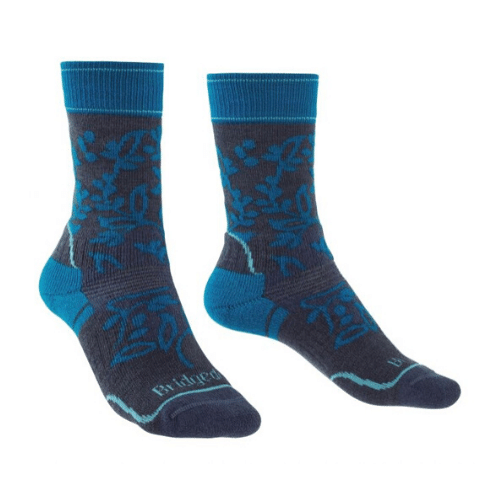
Bridgedale Hike Midweight socks

Rab Pivot GTX gloves
I climb mountains. I write about mountains. I photograph mountains. And I always come back happy. It's written in my name, after all.
Everything falls into place perfectly. My friend Jirka has been hanging around Tarragona for a while; he picks me up at Barcelona airport and we head for Siurana and Margalef. I've climbed in El Chorro and done the Basque Country, but I've never been here. So expectations are high. Before flying out I got outside to boulder a few times and sent a couple of 7Cs and 7C+s, so I dare say I've got the power. My endurance has always been much worse, but I'm counting on Catalonia having some shorter, punchy routes too, which are the kind I like.

First warm-up day – the morning is really cold, but with the first rays you start to perk up and the sun recharges your human batteries. A few first routes, getting to know the rock, and the climbing feels quite nice. We spend another two days in Siurana and I slowly start to feel that the climbing isn't going to click. I'm floundering on routes way below my max and messing up things I'd normally climb with ease. I suggest to Jirka a change of scene and a move to Margalef – where we spend the rest of our climbing days. I try routes at a grade that should be my max and whose style should suit me. But I can't make a single move on them. What's going on? What's wrong with me? All around I see climbers from all over the world climbing exactly THOSE grades without the slightest problem. I don't get it! My mood drops like shares on Black Friday and my frustration skyrockets. I've told myself a few times, and I know, that it's not just about the numbers but about enjoying a beautiful day on the rock with a friend. On the other hand, I enjoy pushing my physical and mental limits and looking for challenges.

I think to myself that I could allow myself the luxury of having shortcomings for a while, and after a time find my balance again, so that my disrupted order can be restored. But in eight climbing days in Spain I climbed fewer routes than in a weekend in the Jura. Not to mention the grades. Suddenly it just won't go. Something got stuck somewhere, something broke somewhere. My inner voice invites me to give up and urges me to accept defeat. I feel drained, disappointed, useless and tired. Do I need a break? A breather? Everyone has their own approach to life, their own pace, their own goals.
I didn't manage to find my motivation again during that Spanish trip, and I'm still not managing to. How do you start believing in yourself again? How do you get that fuel back, the drive for your head and mind? Is it about getting rid of the pressure in your head? That: "Go on! Fight! You have to!" Sometimes you probably need to set your ego aside and let things flow, let them come by themselves. You can train your body and your mind, but pushing your mind can often be counterproductive. Sometimes we're pushed by the people around us too, by the performances of others we want to match, and that's exactly what ties us down. Losing is always unpleasant. But what would it be like if it didn't exist? Would it be better?

So why am I actually writing this? I know that whatever stands in the way is also part of the way, and that the result itself should be on the same emotional wavelength as the journey to it. Sending a route is a fleeting joy. It lasts a week, a month… and after a while you're dissatisfied again and looking for a challenge. Of course we'd like MORE, MORE, 7C, 8C, 9C... Don't judge success or failure purely by performance, but see it as a process of self-discovery and self-improvement. The most important thing is how you feel. The only person judging you is you. Sometimes you have to accept yourself and your circumstances as they are. Defeats will keep coming and they'll always be an emotional blow. Upset, fatigue, chaos – and there's a lesson to be learnt from it. A lesson from defeat. Everything we go through is part of who we are; it's all up to us. If you want to achieve something too badly, it tends to tie you down. But if you love the thing itself, the movement itself – CLIMBING, which is my lifelong passion, my way of life – then it's easier to turn a crisis into a new opportunity.

