
Exactly! We were made for rocks. Strength, brains, agility. After watching the film How to Get Dad into Reform School (Jak dostat tatínka do polepšovny) for the twenty-sixth time, we'd learnt how to climb the Dragon's Tooth to perfection. So we're off to climb the Dragon! We're not scared of it.
But uh-oh! There is a Dragon's Tooth at Hrubá Skála, all right. But it looks completely different from the one in the film. I can't see the thread that Dad Luboš had his sling through, or the hold that broke off with him. The whole thing looks rather steep. Because it isn't that Dragon's Tooth. The film's Dragon's Tooth isn't called Dragon's Tooth at all, but Skaut. And here we are. Well, at the foot of the tower. The right one this time. Good morning!
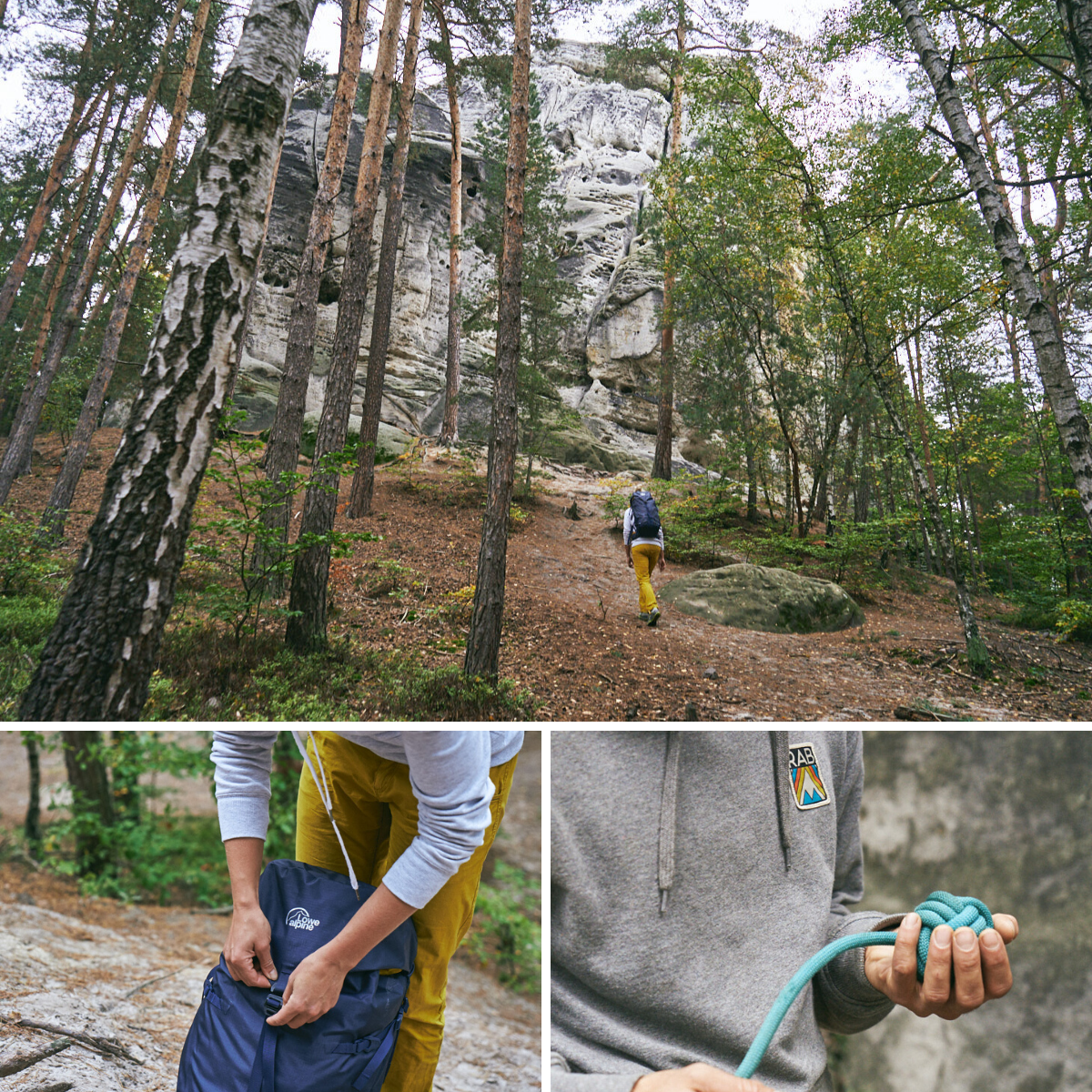
Right, so what did they say in the film? Oh yes, three points of contact. Of course. Nicely on your toes. And find the route with your eyes. Luckily this TV line is climbed so often that climbers' feet have worn unmissable footholds into the soft Hrubá Skála sandstone. Luboš had his sling placed somewhere around here, didn't he? Sure thing. A thread as big as they come. If you're following in the footsteps of the mountain rescue chief, you might as well go all the way. Only his sling was blue. All I've got is a yellow one. So we won't be photographing this bit.
Aha! And I can see it won't go down low. I'll have to go higher. There's a pocket above me. A hold on the right. Swap hands. And finally, that thread! "Pull down on it so it doesn't snap." Oh, I've been waiting a good 20 years for this moment. Every time I grab a thread on sandstone, I think of it. But today I'm holding THE thread, Vašek's thread. God, what a feeling. I'll just fondle it for a little longer. Hope I'm not holding anyone up.
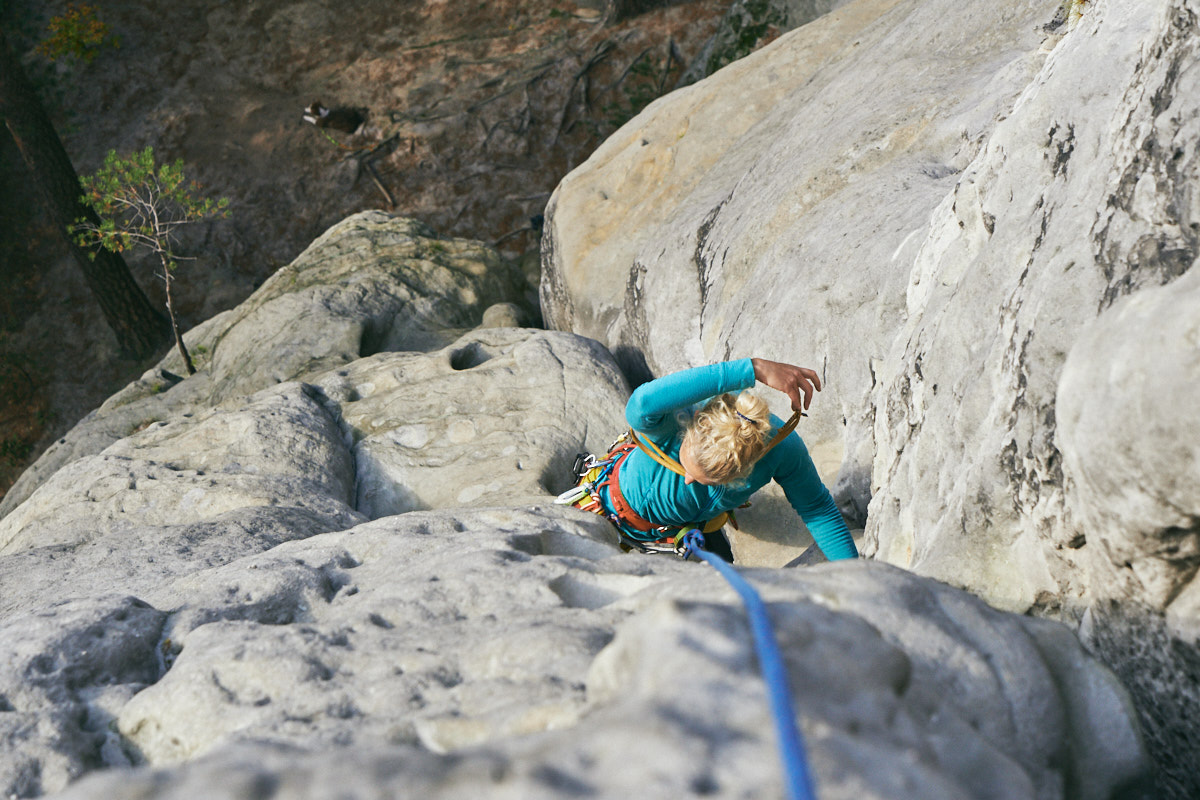

Which means Hovorka is fine, no fracture and ribs intact. We'll escape punishment today. No wonder, since I brought Mum to the rock with me. So we can keep playing at being climbers – let's climb even higher.
The Vašek-and-Luboš manual has one major flaw, though – there's no shot of how and where the two of them top out on the summit. Meanwhile, the guidebook Nejkrásnější cesty na písku (The Most Beautiful Sandstone Routes) says: "Up the face alongside the little crack to below the overhang." Right, that fits. The overhang is above our heads. And it goes on: "Up the crack over the overhang to the summit, or traverse right into the chimney and up it."
So let's get this straight. That crack must be some kind of mistake, surely!? It's all salted out, ugly, and there's bound to be some nasty friction slab waiting at the top anyway. I'm not going up that. But a chimney? On the right? Where exactly? The nearest chimney I can see is on Hrubá Skála castle behind me.

Even further right than I think. The chimney is round the corner. At one point I got properly wedged in there and very nearly burst into tears. But luckily there's nowhere left to fall – the chimney below the summit even has a floor.
And so we sit on top feeling like we're in a fairy tale. Not a soul around. Just sun, rocks, the apple we forgot at the bottom (damn), the Dragon's Tooth... ahem, Skaut, actually, and the two of us. Plus Mum. Which means Máňa can stay in the museum – we'll get down on the rope. We just have to find the abseil anchor, which is hidden here like a case for Columbo. Which brings me to another small flaw in the 1978 climbing manual – you abseil somewhere else. And not comfortably at all. Scared!
But we did it. After all, we're you-know-what, right? Climbers, of course!


We've been flying into space for a long time now, but we've forgotten about our inner universe. That's why we need to stop and not let these crazy times hound us. If you don't stop, nothing beautiful can ever catch up with you.

I go to the Jizera Mountains on my own or with my dog. On a glorious autumn day, there's no keeping the dog at home. The air is clean, the sun is still warm and off he runs. Leaves rustle under his paws and his doggy soul rejoices. I sniff the air just like he does when he catches the scent of a hare, and with half-closed eyes I take in the smell of freshly felled trees by the path. I love the mornings most, when mist wraps the mountains and, thanks to yesterday's rain, the mosses compete to see whose green is richer. Wilting thistles shed their white down, which dances in the air for a while longer.
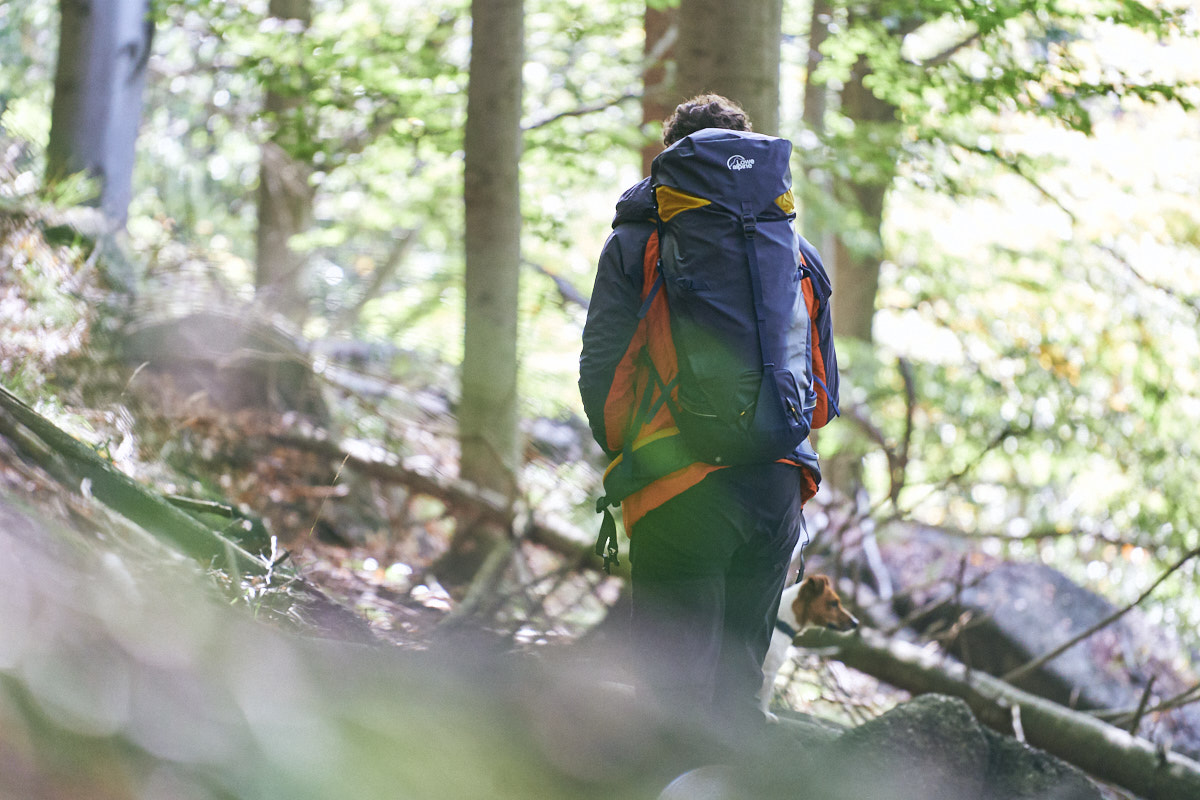
I also hear that diesel will get expensive, a crisis is coming, there are sales on here and there. It comes at us from every side, but I don't want to be part of it. So I look for my own place where none of that matters. And I've found it. It's in the mountains. In the forests. Among the granite boulders and little towers that I don't want to conquer or defeat. I want to become one with them, to understand them and, through each ascent, to get to know a piece of climbing history and the times when each route was first climbed.
Above all, I enjoy the solitude here when my soul needs patching up. I enjoy the forest paths, the hilltops of every shape imaginable and the smell of dry grass and leaves. When I need to, I find my refuge here, even if only in my thoughts.

Every day the internet also spews out loads of information and news about who climbed what and where. The hardest trad route in the world, a ten-year-old sends an 8B boulder, a new XIII on sandstone. On the one hand it's a strong motivation, but on the other you're so overloaded that you just want to sit down in the leaves among the rocks with your friends and chat – so that ordinary thoughts and ordinary words of friendship fly through the universe, too.
The best human moments tend to be small, but they stay tucked away in your soul for a lifetime. Each of us sees the point of our existence in something different. Talk to the trees about love and they'll grow up to the sky. Talk to them about hate and they'll plug their ears with resin. How lovely it is to lie down in the grass, just lie there and gaze at the clouds or into the treetops. Your soul is on holiday and your body gets peace and rest.

In the forest you make new acquaintances. The forest calms you, cheers you, lifts your spirits. Walk through the forest with humility, because neither tree, nor grass, nor moss is any less than you. The only crown that deserves respect is the crown of a tree.
I wish you all a lovely autumn. Enjoy life your own way and just be good to each other.

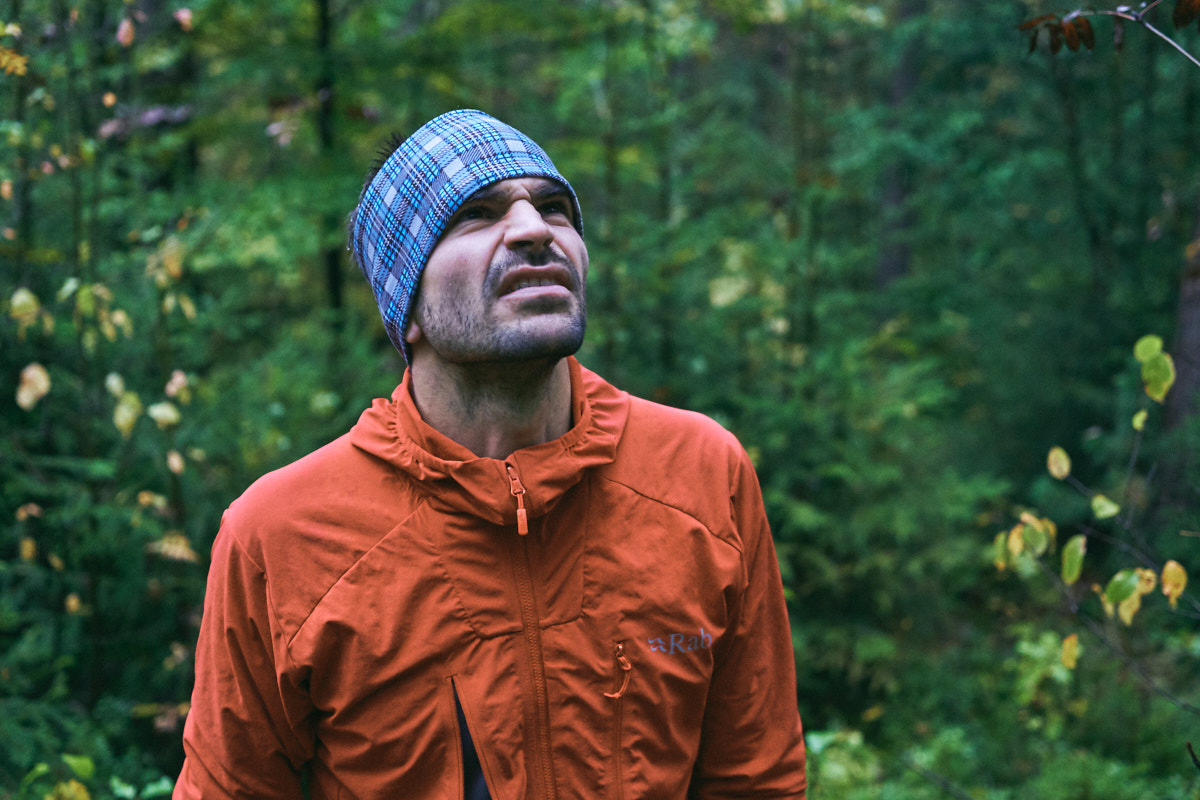
Three years ago I went for my first run without my watch and its built-in personal trainer. I ran in defiance of its order to rest that day. It was drizzling outside, the trail was covered in fallen leaves and the air was full of the scent of autumn. I only meant to run as far as the junction roughly halfway up to the ridge. But I didn't stop there and kept going. To the next junction. And then further still. All the way into the fog that had swallowed the ridges of the Jeseníky Mountains. Not a soul anywhere. Still an hour's run back down.
My digital coach had prescribed recovery. And I came back after 2.5 hours. An unacceptable breach of the training plan. So that was the end of it for me. By the next day, the bossy watch had been sold second-hand.

Is it better to watch numbers jumping on a display, or squirrels jumping through the trees? For me, the latter. Some call it being present; I'd call it undisturbed enjoyment of life out there. I sold my watch, took the computer off my bike, and outdoors I switch my phone to flight mode and stash it in my backpack. When will I be back home? No idea. When I feel like it, when I run out of steam, when I've had enough. That's freedom.

I have a brain and I listen to my body. I speed up when I feel like it. Not when a box on my wrist tells me to. I know whether I'm sitting or lying down without a gyroscope. And I can tell a storm is coming from the clouds; I don't need to wait for a barometer alert. Technology only distracts us from what's going on inside us and around us.
In the morning we get off the train at Bílý Potok. First we cross meadows, then dive into the forest and climb a wide gravel track. Sometimes we chat, sometimes we just stay silent and take in the granite boulders rising out of a forest carpet of moss and fallen leaves. It's drizzling, the temperature just a few degrees above zero. It's windy. A true Jizera Mountains autumn. We carry on along a breakneck rocky path, and at the junction below Frýdlantské cimbuří we leave the marked trail for the steep slopes above the Černý Potok stream. On the opposite bank we can see our goal. The highest rock face in the Jizera Mountains – Nos. But now it's pouring. We shelter under the trees and wait. We don't want to give up that easily.

And it pays off. Below the rock we boost morale with a can of Kozel beer and go for it. The first pitch flies by. Frozen fingers, but it's going fine. The fourth ring bolt is in sight, but I can't figure out the overhanging corner crack. I try once, twice, three times... I'm scared. I struggle to find footholds on the smooth wall. After the fifth attempt I feel like giving up. I rest, gathering my last reserves – physical and mental. All I'm aware of is the problem above me. The cold, the rock, the fight.
Sixth attempt and... "Yes! Yes! Yesss! On the verge of falling, I clip the ring. Hard, really hard. But it's behind us; the scramble to the top of Nos is easy. We sign the summit register, gaze out over the landscape, abseil down. "What? It's half past three already? Blimey!"

When you're fighting for your life on the rock, you're living to the full. You don't notice time. And that's the beauty of it. "Right, let's hurry down."
I weave between roots, hop from stone to stone, run across wooden footbridges. At this early hour the Bílá Opava valley is deserted. It's chilly. My fingers are freezing and the cold air licks my bare calves. The sun won't reach down into the valley for a long while yet. I savour the graceful movement. And the fact that I have the energy to run on terrain like this. I feel like a chamois. As I run up to Ovčárna, the first rays of sun start to warm me. It looks like a beautiful autumn day; I can't turn back now. I keep going. My feet seek out the easiest line between the stones. It's only a short way to the ridge now. I pick up the pace. I overtake the first morning hikers. And it doesn't go any higher.

I sink to my knees. I gulp down every mouthful of cold air. I pull myself up onto a wooden barrier and gaze at the outlines of Keprník, Králický Sněžník and Dlouhé Stráně. Somewhere back there, during a temperature inversion, you can often see Sněžka. I just sit there. Looking. Enjoying it. I have no idea what time it is, so nothing is rushing me back down. I don't know how long I ran for, but I know it was a lovely run. I haven't a clue how many calories I burned, but I feel I've earned that cauldron of pasta carbonara.
I get up, leave the ridge behind me and run back down into the valley. I'll find out what time it is when I unlock my front door. And that's the beauty of it – not keeping track of time.
Another good 30 centimetres fell overnight. The smell of breakfast, which our landlady is making for us, is already drifting up from downstairs. She's fantastic. Both the breakfast and the landlady. We'll eat and head out. From the headboard of the bed I grab blue-grey ski socks with the Bridgedale logo on the toe. I think today will be our sixth ski day here in Georgia. And every morning I slide my feet into my ski boots wearing the very same socks.
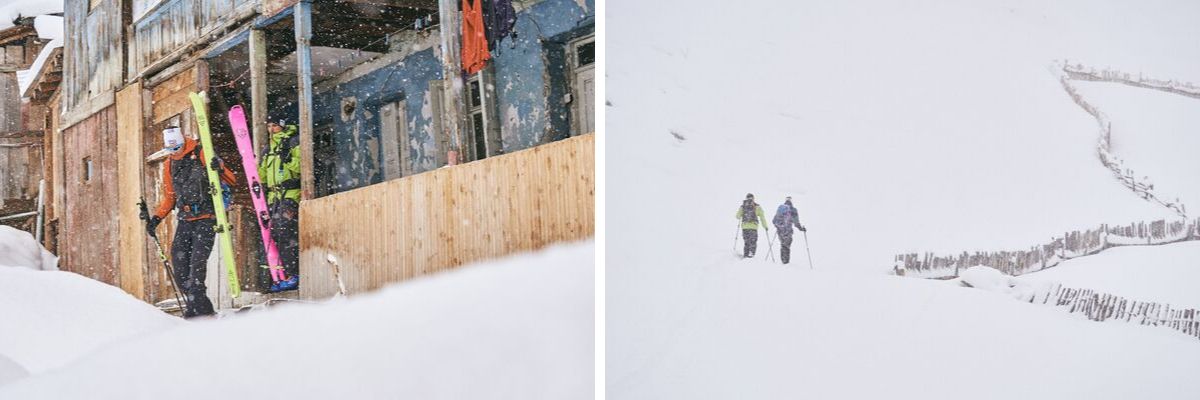
Because they don't smell at all. Only when I pull them out of my ski boots after a full day of skinning and skiing is there a faint whiff in the air. But as soon as they dry, the odour is gone. Merino wool is simply a gift of nature. And even after being worn in ski boots day after day, the socks stay soft, as if I'd just taken them out of the dryer – no sweat-starched tin cans. Enough talk, let's get to it! The powder is calling. And I'll probably pull that second pair of Bridgedale socks out of my bag just for appearances' sake – after all, skiing the whole of Georgia in one pair of socks would be weird, right?
Freshly knitted socks are half as big again as the final product. They are then steam-washed several times and shaped on a form – until they reach their final size.
— from the Bridgedale sock production process
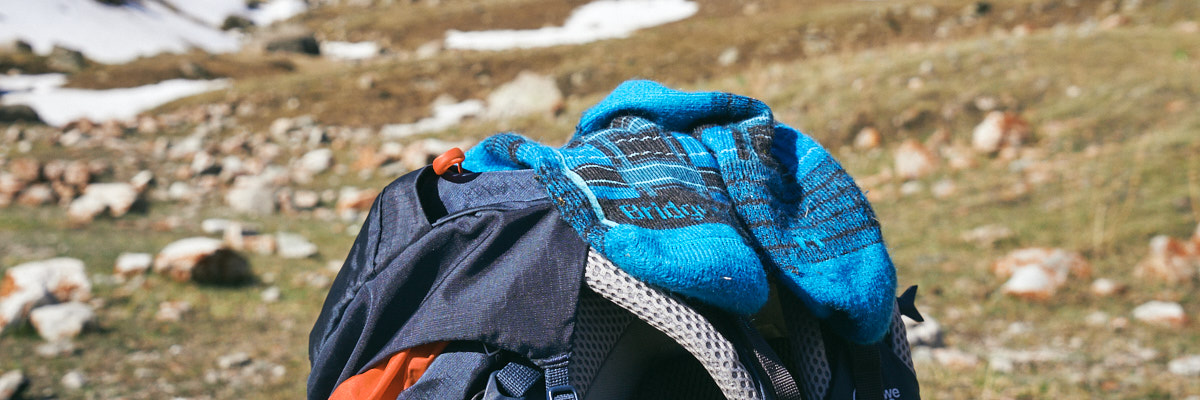
True, that's not exactly pocket money. But which socks can you wear for a week or longer? Well, you can wear any socks. The question is what the people around you think about it. And my daily routine is certainly no gentle shuffle. Mornings working in a café in town, afternoons at the crag, evenings on a floor covered in dog hair and splinters from a chewed-up stick. Tomorrow we'd better take the beast on an all-day trip to the Jizera Mountains. And so on, round and round, flat out. Two pairs a year are enough. Because Bridgedale lasts – no worn-out heels or holey toes. Unlike cheap socks which, if you're lucky, end up in the bin after six months.
The merino wool yarn is first wrapped in a synthetic fibre, and only then are the socks knitted from it. This creates a dense, hard-wearing knit that you won't wear through in a hurry.
— from the Bridgedale sock production process
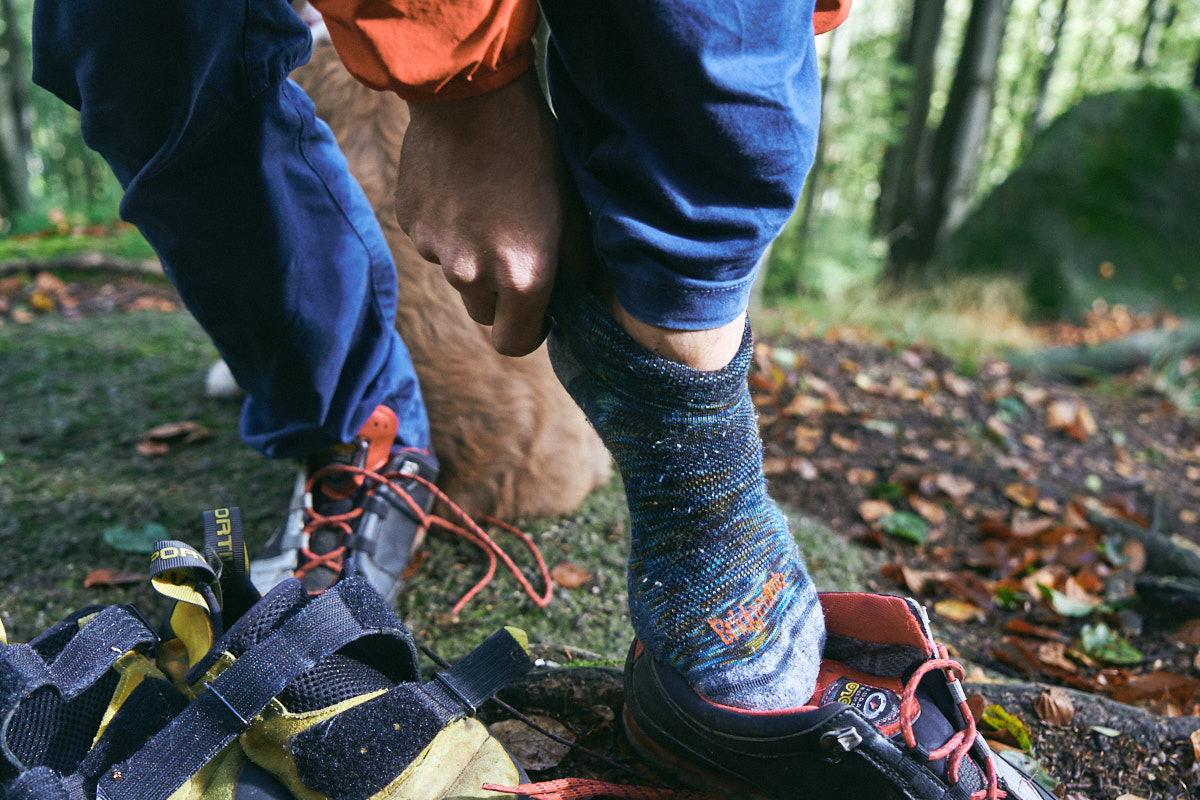
First snow in the Jeseníky Mountains. That light dusting that sugar-coats the mountains but doesn't yet flatten the bilberry bushes. I'm walking along an old hunting path. Wet grass brushes against my low Gore-Tex hiking shoes, and with every touch it tries to push moisture through the membrane. The trail climbs up to the ridges. I wade through bilberries and snow pours into my shoes from above. That's where the membrane gives up. My feet report damp inside. And it's still a good two hours' walk home to the warm. Over similar terrain.
I pull Bridgedale waterproof socks out of my pack – last year's new release. I brought them as a backup for exactly this situation. I pull them on instead of my soaked socks and put my damp hiking shoes back on. Now merino wool keeps me warm and a waterproof membrane keeps the water at a respectful distance from my feet. After six hours outside I unlock the front door. I'm done in. Shoes soaked through – feet just fine.
The Hydrotech membrane has a hydrostatic head of >10,000 mm and is breathable enough to cope even with intense activity.
Well, with the autumn drizzle on its way, I reckon my Bridgedale Stormsocks will be seeing plenty of action. After all, mud and rain are no reason to stop running in the mountains.

Just one warning to finish. The first time you put them on, the first step, the first all-day hike. Bridgedale socks are simply different. Soft, comfortable and unbelievably tough. It's hard to describe, you have to try it. Just be prepared not to take them off for at least a week. Except maybe to sleep.

Hike Lightweight – for hiking boots and low hiking shoes, from Czech mountains all the way up to four-thousanders.
Hike Ultralight – all year round in low hiking shoes and around town.
Stormsocks – for autumn and winter running, and as a backup in foul weather.
Ski Lightweight – for freeriding and ski touring.
"Blimey, what on earth are you lugging in that pack? It's decked out like a Christmas tree."
"Dunno, the usual. I just took everything that might come in handy up there."
"You fool, you're going to suffer."
14 days with a pack on your back. Freedom for some, purgatory for others. It all depends on how lean you can pack, how much useless junk you haul along and which clever little tricks you don't forget. And they're mostly tiny things – trifles – that in the end spare your shoulders more bruising than necessary and your mouth words you won't find in any dictionary.

Good night and sweet dreams! Comfort is a lovely thing, but this particular item is so easy to replace. Take your down jacket and stuff it into the empty compression sack of your sleeping bag. Voilà! A soft, fluffy pillow fit for a sleep clinic. You can fill the sack with other clothes too, but a puffy down jacket is the best.

Not a scrap of free space in your pack should go to waste. You're not going to carry air around the mountains, are you? Socks, boxers, gloves and other small bits of clothing perfectly fill every gap and crevice. Stuff them into your boots, your cookware and even the space between your crampons. And while we're on cookware – do you need a full set of pots, or will one do?

Clever compressing saves you a few litres of volume too. Cram your sleeping bag and down jacket tightly into compression sacks. Instead of folding T-shirts and fleeces, roll them up and secure them with a hair tie. And to keep your pack tidy, use handy Packing Cubes in different sizes.

Air again. Prick the bags of instant meals with a needle, squeeze out the excess air and tape over the hole so they don't puff up again. Now you can pack one more carbonara.

Backpacks aren't waterproof, after all. And a rain cover? It never protects what's inside 100%. In long, heavy rain, water runs down your back and seeps in. Clothes, sleeping bag, documents, money, electronics and anything you don't want wet – wrap it in plastic bags. They work a treat against moisture. And you can leave the rain cover at home. A good few grams saved.
In the mountains, cleanliness becomes a relative concept. Shower gel and shampoo? A six-degree mountain stream hardly invites a long splash about anyway. More like a quick dip and run. Besides, washing chemicals like that into it isn't exactly eco-friendly. You can get by perfectly well in the mountains without soap (and even in everyday life). Take a nearly finished tube of toothpaste – no need to carry a full one. Buy sunscreen in a small size. And ladies can swap tampons for a menstrual cup – nature will thank you.

Two are enough, right? While you're wearing one, you can wash the other in a river and dry it on your pack as you walk. Same with socks. Plus, merino wool doesn't smell even after several days of wear, and with Bridgedale socks it stays nice and soft too. More important than a clean T-shirt every day is getting your layers right for every kind of weather – from zero to thirty-five degrees. With a light fleece, a softshell, a down jacket and a waterproof jacket you'll always find a solution. And waterproof trousers? Unnecessary for the hardier among us – your legs can take anything.
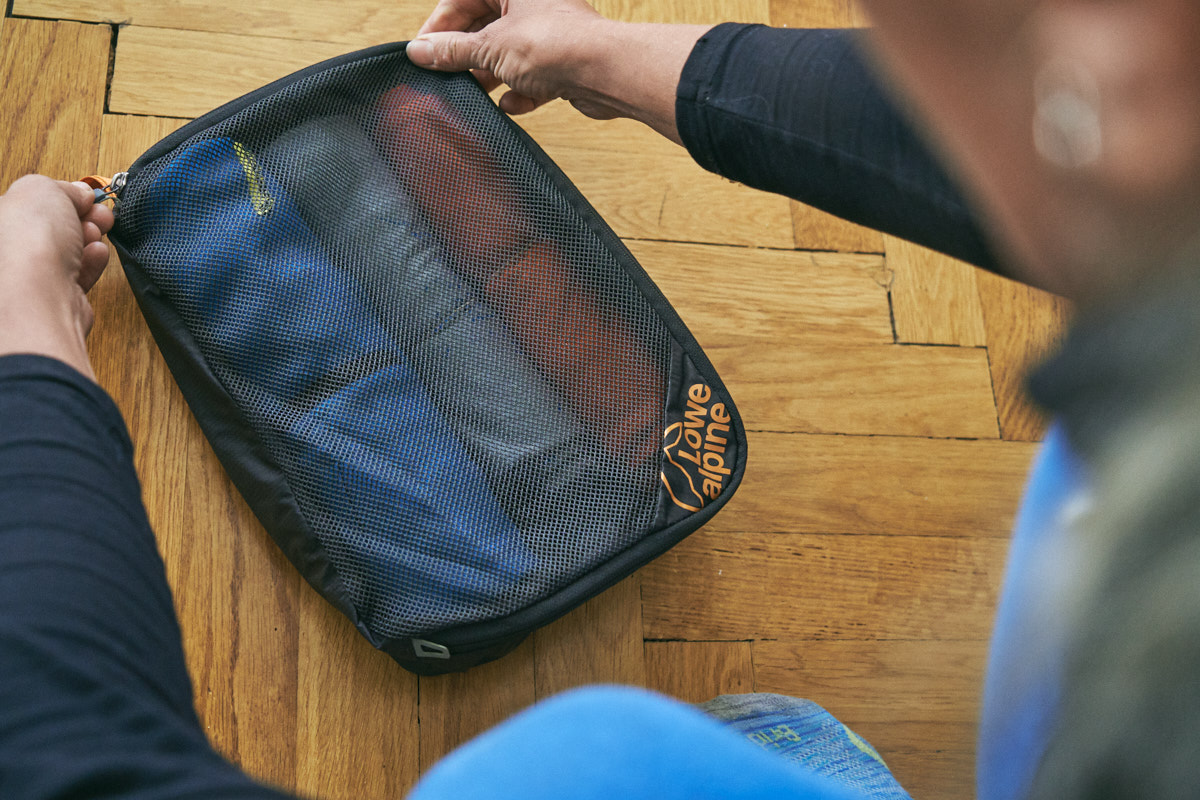
Do you know the Packing Cube from Lowe Alpine? With three sizes of mesh organisers, your pack or bag will stay neat and tidy.
Or better, a few. For rubbish, of course. And there'll be more and more of it.
One last tweak before heading up. Pull the side compression straps tight so the gear inside doesn't shift around. And once you swing the pack onto your back, don't forget to pull the load lifters on the shoulder straps. That sets your centre of gravity right and you'll tackle obstacles as if you were born with a pack on.

See you in the mountains!
"Wow, you guys are always outdoors somewhere." ... "Yep, pretty much."
"Looks like you don't work much, huh?" ... "Nah. Just don't really feel like it."
"So you don't need to earn money or what?" ... "Well, we do. Just not that much."
A chat with friends
Because falling asleep by the dying embers of a campfire, waking up to a sunrise view, cooking pasta in a mess tin and spending the whole day climbing rocks or wandering the Jizera Mountains costs next to nothing. Unlike an evening at the multiplex, lunch special number three and a two-hour yoga class – 518 Kč. Per day. That can easily add up to 15,000 Kč a month. Plus the mortgage, of course, the car repayments, and the car doesn't run on thin air either. But you comfort yourself with the idea that one day, once it's all paid off, it'll be your turn to enjoy life. Travel. Discovery. Adventure.
Or not. Because the heart attack turns up first. Somewhere around forty.

The outdoor life looks good in magazines. But it looks even better for real. And it isn't expensive. You don't have to go far for adventure either – just head out past your back garden. You can order a coffee for 45 Kč, or brew one for free on a stove in a moka pot. Sleeping under the stars costs nothing and the train is cheaper than the car.
“Freedom and simple beauty are too good to pass up.”
Christopher McCandless
Sure, society expects us to slog away for at least 8 hours, ideally 12. To keep the lawn round the house neatly mowed and never show up in town two days running in the same T-shirt. Then again, whose business is it anyway? We live in a free world and we're lucky enough to be able to do really, truly whatever we want. As long as it doesn't restrict other people, of course. Which our climbing and bivouacking on the crags probably doesn't.

Money and happiness don't depend on each other. If anything, the more we own, the more worries we have. And the time we could spend on real life out there vanishes into earning for the mortgage or the car repairs, tending the garden or deciding which T-shirt to put on in the morning. If you only own five, decision paralysis never catches up with you.
“There is no greater joy than to have an endlessly changing horizon, for each day to have a new and different sun.”
Christopher McCandless
Living with only the few things you really need gives you freedom. Pack your rucksack and go. Wear one pair of trousers until the Jizera granite shreds them to threads. Delete social media from your phone, because you're actually living and don't need to convince anyone of it. Not even yourself. Stop eyeing new trekking boots every six months that you'll wear twice, when in your current ones you can explore old hunters' trails without worrying about getting them muddy. They can't get any dirtier anyway.
In a sleeping bag under an overhang? Nothing. As long as the overhang isn't in the Tatra National Park (TANAP) and the rangers don't catch you. Then it's more than a Deluxe+ suite at Sliezsky dom. Otherwise you've got the most luxurious bed there is, for free – and a different one every day if you like.
And elsewhere on your travels? Look on Airbnb. Or try couchsurfing. You'll meet local people and soak up their culture in a way you'd never manage at a Holiday Inn. House sitting is another great way to stay for free – look after a house while its owners are off seeing the world. Ideally a house at the foot of the mountains.

Blueberries, blackberries and raspberries for your morning porridge you can pick for free. Oats for six breakfasts – 14 Kč. A bag of pasta, two eggs, a handful of black olives and a sprinkle of parmesan on top – 40 Kč. That's dinner for two. The dishwasher uses nothing. It's hand-powered. In a spring a hundred metres from the bivouac. A can of beer for a good night's sleep – 18 Kč. And a second one for morale at the foot of the crag.
Fried rice with chicken on a Bangkok street – 25 Kč. Fresh pineapple, papaya, guava or mango from a street cart – 15 Kč. And a heck of a lot better than that unripe dragon fruit you can get for 60 Kč at the supermarket when it happens to be Asian week.

A way to get to that adventure, probably. But you don't have to travel halfway round the world. The Jizera Mountains or Skalák are beautiful too. Even if these days a flight to Morocco can cost less than driving your own car to the Tatras. And travelling for several months around Southeast Asia means just a one-off upfront investment of 6,000–8,000 Kč for the ticket. One way. You can sort out the return when it becomes relevant. The more time you spend out in the world, the less it costs. Travelling around Asia like this cost me 12,000–14,000 Kč a month, including all the transfers and flights, motorbike rental, food and accommodation. And I lived like a king. So it can be done for less.
“If you want something in life, reach out and grab it.”
Christopher McCandless
Gear? A few really good-quality pieces last longer than cheap junk. When something breaks, it can often be repaired. And what's more, you'll form a bond with the rucksack that's been to the ends of the earth with you – one you won't want to break. Even when it's completely worn and tatty. Because every scar is a memory of what you've been through together.

It's more about what someone trapped in the consumer world is able to give up. And how they'll cope with questions like: "So what do you actually do, that you're always outdoors?"
"Nothing. I live."
Your answer
But sure. Even that bag of pasta and the duct tape to patch a torn down jacket cost something. You have to scrape the money together somewhere. Luckily there are a gazillion options these days. Maybe it'll be enough to go to work part-time. You can work a few months a year and spend the rest of the time living. Or find a job you can do remotely from anywhere – the internet is full of opportunities. Or start hosting at your place through Airbnb, or invest wisely – in shares, crypto, loans.
Back in the late 1920s, economist John Maynard Keynes predicted that thanks to technological progress, people in a hundred years would work just 15 hours a week. So where did it go wrong that it's more like four times that?

Let's admit it: sustainable growth is utterly unsustainable, because it leads to diabetes, heart attacks and strokes. Cutting your living costs and getting by with little, on the other hand, is sustainable. Definitely so for the soul of anyone who longs to spend more time outdoors – on the crags, in the mountains, in the snow.
Note: The author owns a property with a mortgage on it and doesn't live alone like a hermit. He makes a living from writing and guiding, and lives exactly as he writes – with five T-shirts and a battered rucksack. He's still a long way from the ideal of 365 days a year in the mountains.
