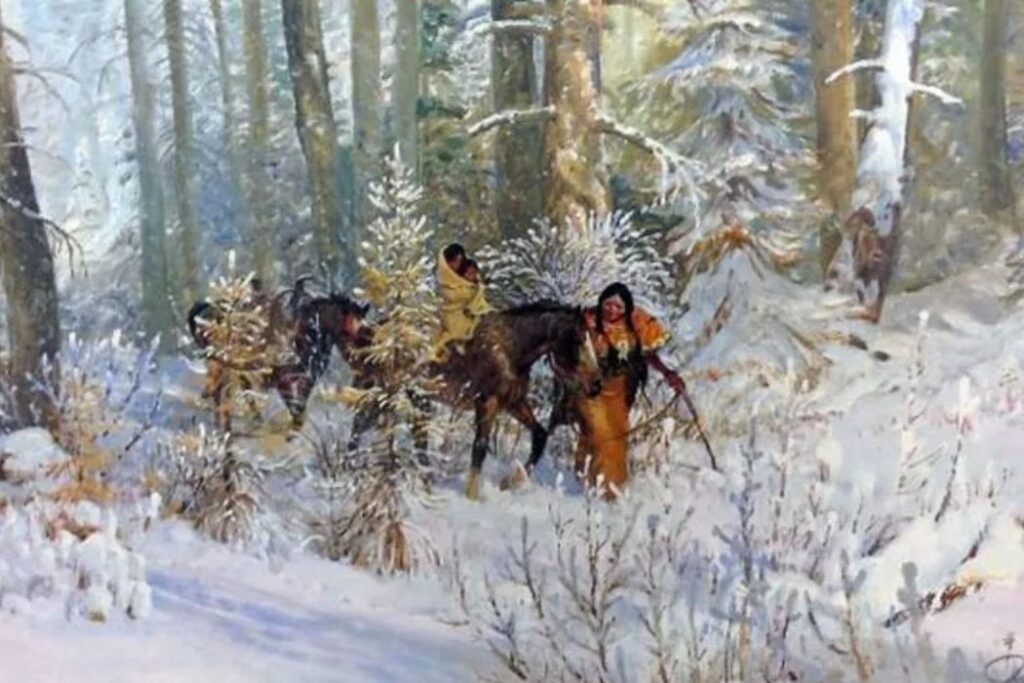
The snow was as hard as bone. Every step sounded like joints breaking – crunch, crunch, and then silence. Marie walked in front, her children bound beneath her buckskin cloak. Her back stiff, her breath short. The older boy held the younger one, who was asleep. His head swayed to the rhythm of her steps.
The sky hung low and motionless – heavy and grey, as if about to collapse. The trees around them – twisted and black, their branches coated in rime – looked like weary figures in cloaks of ice. The land was mute. Everything that could sing had long since frozen. And whatever still breathed kept its mouth shut.
“Mummy, how much further?” came a voice from behind. The boy was whispering. As if afraid of startling whatever it was that whispered to them which way to go.
Marie didn't stop. Water ran into her eyes – or perhaps just melting snow from her headscarf. “A bit further,” she said. Not because she knew. But because admitting she didn't know might have killed them.
Behind them stretched only tracks – a few trodden holes in the white mass. White darkness. Silence. Hunger.
They had left St. Louis in the spring. It was an expedition meant to change the trade of the West. Astor's expedition for the Pacific Fur Company. The goal was the vast ocean on the other side of the continent – the promise of change, of a new America. Fifteen men, a cargo of furs, barrels of gunpowder, salt and tobacco. And among them Marie Dorion. Pregnant, with two small children.
Her husband – Pierre Dorion – was blunt, hard and hot-tempered. In his veins, Ioway and European blood mixed. A capable interpreter, but also a brawler who drank too much and loved fiercely. Marie had lived with him for years. Sometimes he protected her, sometimes he endangered her. But she belonged to him – by an unspoken agreement between their fates.
The men on the expedition didn't welcome her – but they didn't reject her presence either. After all, they all knew she could do more than many of them – read a track, read the night sky, light a fire in the wind. She did what needed doing. Without questions. Without thanks.
In the mountains, far from home, beyond the edges of every map, the pains began. They stopped for the night by a stream; the wind blew from the north, the trees stood stiff and black. The men around her were silent. They knew. Perhaps they were just waiting until they could move on. She gave birth under the branches of an old fir. Alone. Pierre kept his distance. The boy was born quietly, without a cry. He breathed shallowly, but steadily. His eyes were closed, his hands clenched into fists. She wrapped him in a strip of buckskin and held him close. She didn't give him a name. Perhaps she carried it in her head – but she never spoke it.
A week later they reached the Grande Ronde Valley. Lowland with softer ground, a river free of ice. The camp of the friendly Umatilla people. The women took her in without questions. They warmed her, brought food, washed the baby. They knew what was needed. But it was too late. The baby died on the third night after they arrived. Marie sat in silence. She didn't cry. Then she stood up. And went on.
The Snake River was quiet. Almost without a current. It stretched between bare slopes, mirroring the sky like a cracked mirror. The morning they left camp was calm. A white mist sat low – it looked soft, almost friendly. Pierre Dorion walked in front. He kept glancing back – as if he sensed something wasn't right. Marie knew him well enough to know what his silence meant. The other men spoke in hushed voices. There were fifteen of them. Frozen, hungry. But they still believed they would succeed.
It was afternoon when they reached the ford. The first three men crossed. Then came a short hiss.
An arrow! It flew low and fast. Like a snake. It struck the neck of a man carrying a crate of tobacco. A second arrow followed straight after. Then a third. It all happened within a few seconds.
Then came the screaming. And the gunshots.
Marie grabbed the children. Pure reflex. She didn't think. They crawled under the bank, into a hollow overgrown with dry reeds. She held the boys beneath her; they breathed into her coat – quietly, like otters in their holts. Up above, the fighting raged. Gunfire, shrieks and then – silence again. The screaming stopped suddenly, like a cord snapping. It was cold, but drops of sweat were trickling from her armpits.
She heard footsteps. One man – running. He limped to the river. Drew a knife – and fell. Another shadow appeared behind him. A blow. And then nothing. Marie closed her eyes and pressed her hands over the children's ears. All that was left in her was a heavy white emptiness.

They left at night. Quietly. She held the children close. In one hand a knife, in the other a bone amulet she had worn since childhood. There was no path. They went by feel – by broken branches, by whatever her inner voice whispered to her. Pierre Dorion was dead. She hadn't seen it. But she knew it with a certainty that came not from her eyes but from deep within her soul.
For two days they didn't eat. On the third day she found an animal trail. She wove a snare from strips of cloth torn from her own skirt. A marten – small and fierce. But caught. She lit a fire, scraped off the fur with a stone and boiled the meat down to a mush. The children ate as if it were the first food of their lives.
The older son's leg was swollen. It turned blue. Marie took him on her back. She carried him for three days. Once she fainted. When she came round, the younger boy was sitting beside her, holding a snow-covered twig. He offered it to her like a gift.
The silence of the land changed. It was no longer the silence of peace. Everything around them breathed death. Winter was no longer just cold. It was torment. They spent the nights on the snow – covered by what was left of a wet blanket. Marie cradled the boys' heads in her arms. She breathed on their necks to drive the cold away from her children. Then she just lay there for a long time, eyes open to the dark. Counting breaths. Each one like a small cry that must not be heard.
They had been on the move for five weeks. Or six? Time no longer existed – only light and dark, step after step. And hunger. It was constant, but at some point it became something familiar, almost natural. Like a stone you carry in your pocket. It presses against you, but you get used to it.
Marie was weak. She knew she couldn't go on like this for many more days. When she sat down by the fire in the evening – if you could even call it that, the little flame she kept alive with wet branches – she wasn't sure she would get up in the morning.
The boys no longer spoke. The younger clung to her skirt like a shadow; the older, with his injured leg, she carried. When the frost wasn't biting too deep under her skin, Marie tried to sing to them. Very softly, indistinctly, more melody than words. Something from her childhood she had heard from her mother, back when they still lived by the Des Moines River. About a fish that survived a dry winter. About a woman who turned to stone so she could stand up to the blows of fate.
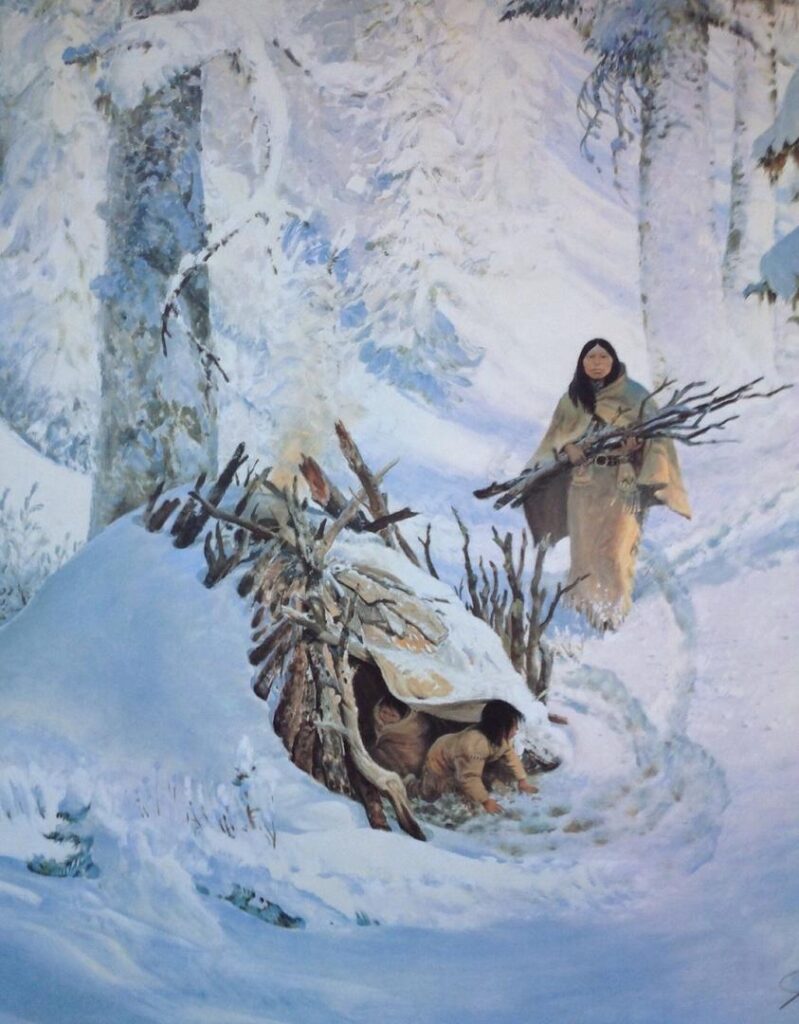
When the thaw came, the snow turned into heavy slush. The boys couldn't go any further. So Marie dug a pit in the snow and lined it with hide and the remains of the blanket. She laid both boys in it, covered them and pulled her cloak over the edge to keep out the rain. She kissed their hair – and set off for help. Alone, almost blind from the harsh light reflecting off the snow, her feet cracked and her tongue as dry as lichen.
The next day was different. She noticed it as she bent down to scoop water from a slushy little stream: the air smelled of smoke.
She froze. Raised her head. And against the bare branches she saw it – a faint wisp of smoke. Thin, like a child playing with ashes. She held her breath. Everything in her narrowed to a single point. Hope. And fear.
She walked slowly. Didn't hurry. Every step was careful. She tried to make out whether it was a camp – or a trap. The smoke didn't change. It rose straight up, without panic, without struggle. Somewhere a fire was burning contentedly. And if someone was cooking over it, they might have food. And perhaps mercy, too.
After two hours of walking, the land broke open. A valley opened out. And in it – tepees. Low, made of buffalo hide. In the middle, women. Squatting by the fires, stirring porridge in clay pots. Children playing with sticks. Dogs running around. The Walla Walla! She recognised their language within the first two sentences. It didn't sound like foreign words – but like conversation from her distant childhood. They didn't raise their weapons. They just watched.
Marie stopped at the edge of the camp. Her legs were shaking. Her throat was dry. When a woman with a heavily tattooed face came up to her, she couldn't speak.
“Where have you come from?” the woman asked.
Marie Dorion looked back. Into the forests, the white hills, the silence that now seemed like another world. “From the east,” she whispered. And said no more.
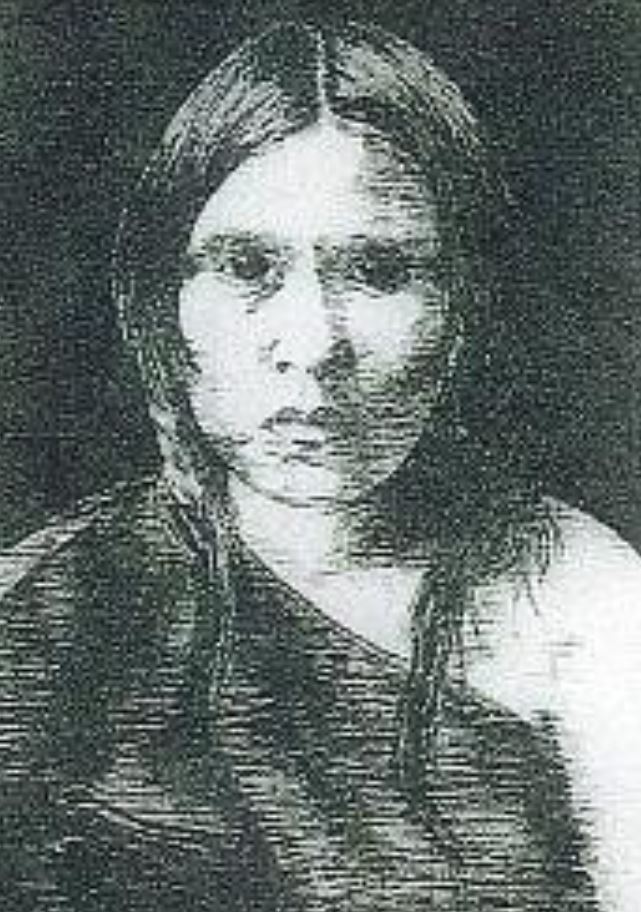
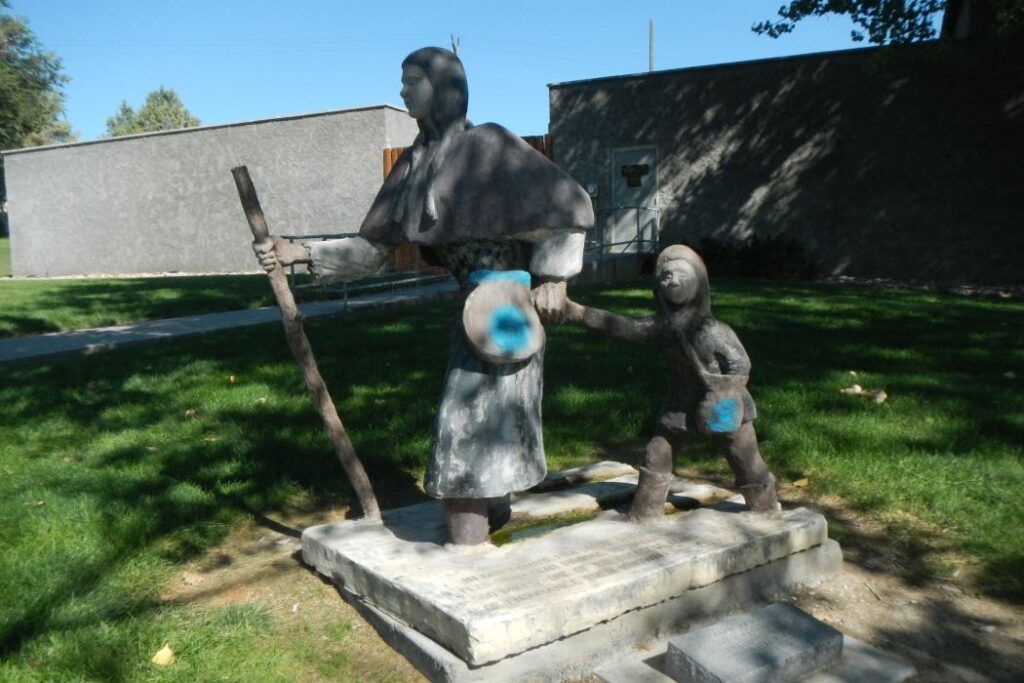
Marie Dorion (c. 1786–1850) was a woman of the Ioway tribe. She married Pierre Dorion – a man of mixed descent from the same tribe, who worked as a guide and interpreter for American fur companies. Marie was one of the few women to take part in pioneering journeys across the North American continent – and the first mother with children to survive such a gruelling journey west.
The Pacific Fur Company expedition was financed by New York businessman John Jacob Astor. Its aim was to build a trading network in the American Northwest and to found Fort Astoria in what is now Oregon. During the journey, in December 1811, Marie gave birth to her third child, who died a few weeks later in a camp of the Umatilla people.
In January 1814 came the tragic turning point – Pierre Dorion and most of the men were killed in an attack by the Bannock near the confluence of the Snake and Boise rivers (in today's Idaho). Marie fled into the wilderness with her children. She survived almost three months in the winter mountains without supplies, hunting and foraging for food and carrying her injured son on her back.
She was rescued by members of the Walla Walla tribe. In April 1814 she was found by members of a party connected with Fort Astoria who were heading back east. However, they didn't take her to Astoria but to Fort Okanogan – a British trading post in what is now Washington State.
For several years she lived there with French-Canadian trapper Louis Joseph Venier, with whom she had a daughter, Marguerite. He too later died in a clash with Native Americans. Marie remarried and spent the rest of her life in the Willamette Valley. She died in 1850 and is buried in St. Louis, Oregon.
A school in Portland is named after Marie Dorion, as are several streets and natural sites. For a long time her story was passed on only by word of mouth – and to this day it stands as quiet testimony to endurance, motherhood and a strength that needs neither weapons nor glory.