"How much further?"
"It's not far now."
"You told me that an hour ago."
"Yes," Castiglioni nodded.
"And how far have we walked since then?"
Castiglioni stopped and looked at the man of nearly seventy leaning on his stick. The weariness in his eyes was magnified by his round professorial glasses.
"Far enough," he replied.
Senator Einaudi, who would in fact remain a senator only a little longer, since his mandate would expire the moment he crossed the border in the middle of the night, smiled beneath his grey moustache.
"That's a curious unit of distance."
"Quite a useful one in the mountains," Castiglioni nodded.
The senator laughed, but immediately broke into a cough.
"When you spend your whole life sitting at a table with powerful people, you feel that everything important is decided right there," he said in a halting voice, adjusting the coat around his neck. "But then the day comes when you discover that the most important thing of all will probably be decided by some pass in the middle of the mountains."
"Once we're up top, it'll get better," Castiglioni assured him.
"Do you say that because it's true? Or because it's what the people you lead want to hear?"
"Because I need you to keep walking."
"That sounds like an honest answer."
They set off again. Soles crunched on the stony path and Senator Einaudi puffed like a steam engine. Step by step they drew closer to the heavens, leaving the heavy parts of their lives behind in the deep Aosta Valley. Now and then the moon emerged from behind the clouds, lit up their drawn faces and vanished again. As if it were just keeping a sidelong eye on its flock, being led away from a country where nothing good awaited them any more.
"Mr Castiglioni," the senator spoke up after a long while.
"Yes?"
"Why are you doing this?"
"Doing what?" Castiglioni didn't turn round and carried on at the same pace towards the Fenêtre de Durand pass.
"All of this. Why are you leading us? Us and all the other people you've taken across before us?"
"Because I know the way."
"Surely that's not enough."
"It is for me."
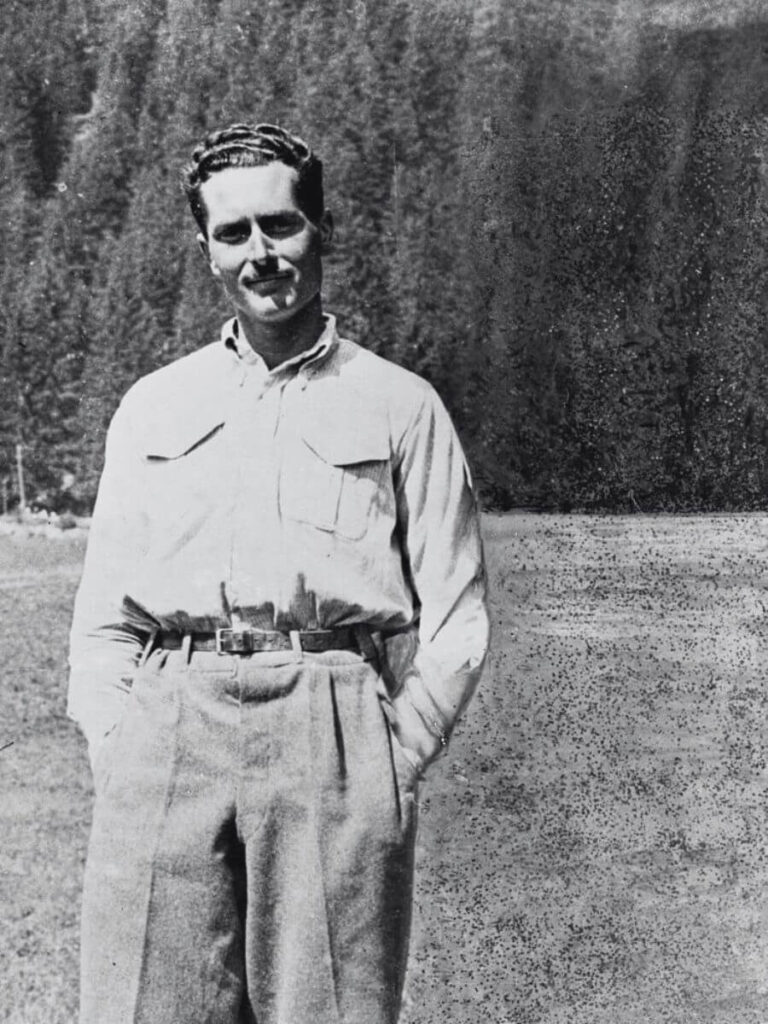
A week later Castiglioni set out alone over the 2,800-metre pass. There was no one left to lead. Senator Einaudi, his wife and a few other political dissidents had been the last to pack their bags in time.
He knew the way from the Alpe Berio farmstead, where he had settled with a community of anti-fascist climbers, by heart. And yet this time it was different. After three weeks of guiding refugees away from the Nazis, he was now responsible only for himself.
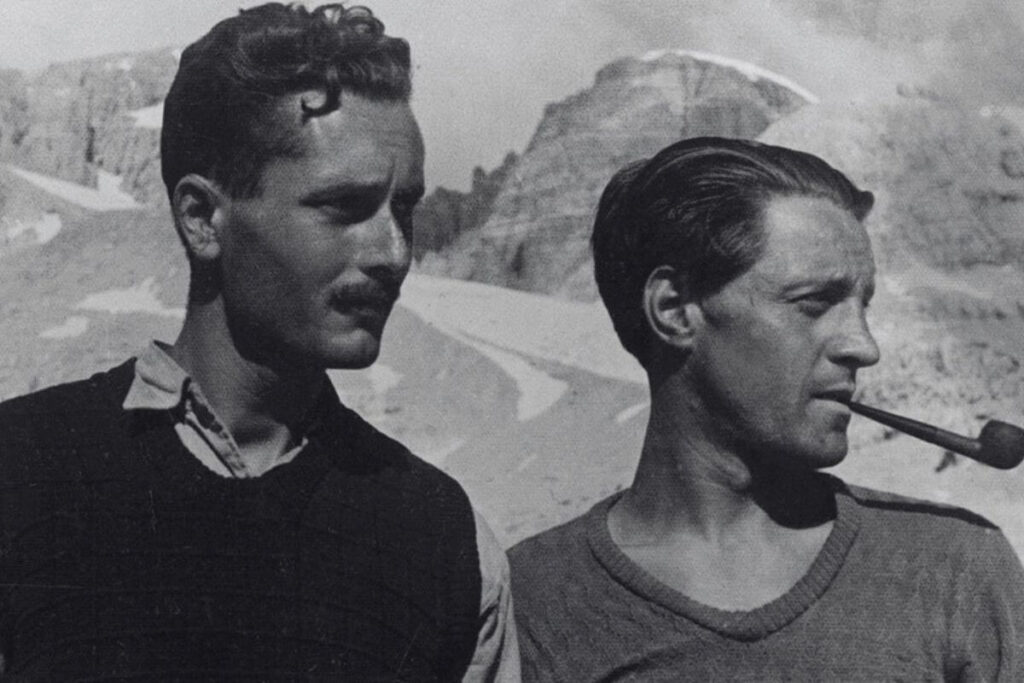
The mountains were his alone again. Like the first time, at thirteen, when he tied into a rope with the mountain guide Tita Piaz. Ah, they climbed all over the Dolomites together, before he and Bruno, his faithful climbing partner, dared to take on the south face of the Marmolada or the north-west face of Piz Badile. All those climbs – they were his alone. He did them for himself and nobody else. So that medal for mountaineering valour? A burden he had no desire to bear – but no strength to refuse either.
"What have all those people got to do with it? A silly masquerade. Just like the whole wretched business of fascism," he muttered to himself as he climbed the steep slopes. He knew nobody could hear him. Only the mountains around. And those he could confide in.
The wind chilled his face and little clouds of vapour streamed from his mouth. The sky cleared, stones froze onto the path and he prised them loose again with his boots.
He paused in the pass only for a moment. He didn't want to get too cold, and besides – he had to be back on the Italian side of the border before dawn. He descended along the moraine pushed aside by the Fenêtre glacier. Now and then his feet slid on the scree, but nothing his body wasn't used to handling.
The little light of the Cabane de Chanrion grew brighter and brighter, and Castiglioni's hands tingled strangely. He shoved them into his pockets, but it didn't help. He stopped for a moment, looked back at the Fenêtre de Durand pass behind him, took three deep breaths and carried on.
He crossed the bed of a stream springing straight from the snout of the glacier on a narrow wooden footbridge. He scrambled up the far bank and walked across grassy meadows to the hut. He had no intention of lingering. He would just have some hot tea, pack up the goods that would once again help fund the community at Alpe Berio for a while, and be off.
He leaned against the door; it was unlocked. The wooden floor creaked and damp warmth licked his face.
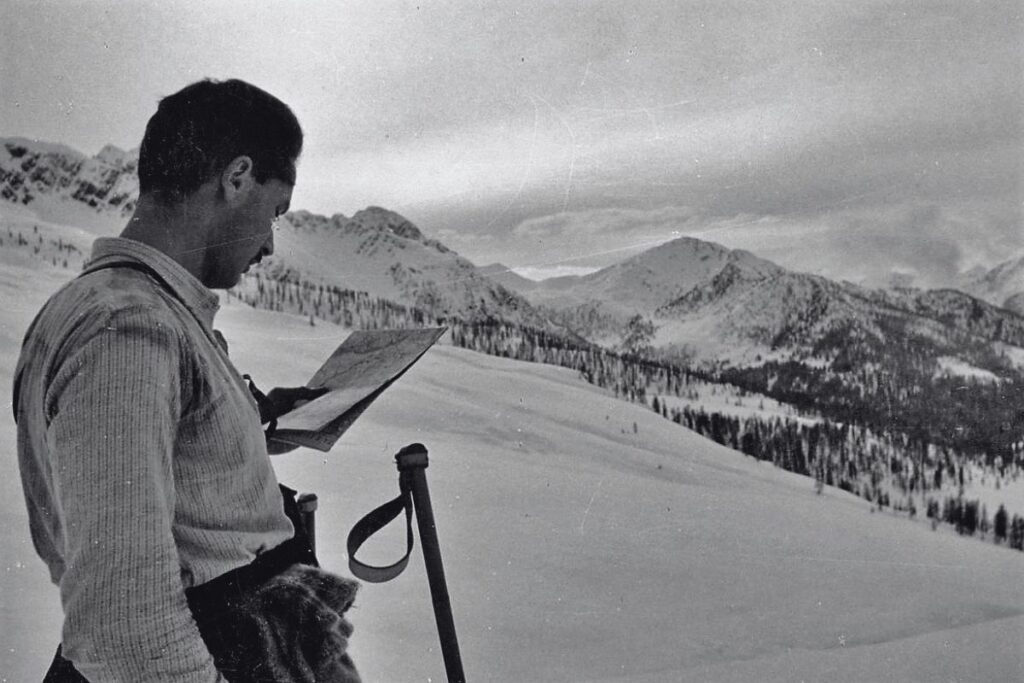
When, after a month of being shuttled by the Swiss gendarmes between the prisons in Martigny and Sion, he returned to the Alpe Berio farmstead, he found no one there. The surrounding meadows were already covered by the first dusting of snow. It had sprinkled the mountains the way a housewife sugars an apple strudel. The stove was cold, and it took a while before he managed to coax a warming little flame out of it to drive the icy loneliness from the stone walls. His companions must have left the farmstead a week earlier, if not sooner.
He stayed up there alone until December. No one turned up. And then even he couldn't stay. Hunger and cold drove him down into the valley.
He went all the way down to Milan, a city wrecked by bombing. He walked among the ruined houses, taking in the devastation. And among the rubble he searched for at least one familiar face. He had never felt at ease in that city, and now anxiety hit him with full force.
"I have to go back to the mountains," he confided to a friend, his former climbing partner Bramani, whom he found at Caffè Cova on Via Montenapoleone.
"This is hardly the moment to daydream about another expedition to Fitz Roy," Bramani smirked.
"Don't talk nonsense. You know I can be useful."
"I know a thing or two about that," he nodded, serious now.
"Well?"
"There is one job," he said, pushing the bottle of grappa aside and leaning towards him. "But it's not an easy one."
"What's not easy is being stuck down here."
"If that's how you see it."


There were at least eight metres of snow on the Muretto Pass, and another twenty centimetres fell before he skied down into the Swiss valley of Val Forno. Just as well it was snowing. His tracks would vanish before the people of Maloja woke up.
With Oskar Brändli's Swiss passport and a list of people who had fled over the mountains with his help several months earlier, he nursed a certain hope that he would manage to deliver the diaries he had collected before midnight at the Servite monastery by San Carlo al Corso. He carried them carefully wrapped in his rucksack, protected from the damp, like a sacrament. Even though he himself didn't know why they mattered so much. Better not to know, apparently.
He reached Maloja just in time for breakfast at the Alpina restaurant. Fresh brioches and coffee – just what he needed after the long journey over the mountains.
He finished his second cup, got up from the table and headed for the bar.
"Un vermut, per favore."
"White or red?"
Castiglioni looked towards the window. The glass scattered around the room the rays that had pushed the clouds from the sky. As tends to happen after a front passes.
"Red."
"Are you staying with us?"
Castiglioni let that pass. "Tell me how I can get to Lausanne."
"That won't be so easy," the barman shook his head, sliding over a glass filled to the brim.
"That's why I'm asking you."
"It'll take a while before they clear the road after last night's blizzard."
"Not today, then?"
"In a hurry?"
"My nephew is waiting for me there."
"Hmm," the barman nodded and went off into the kitchen.
There were still a few hours to go until dawn when Castiglioni decided he would wait no longer. That he wasn't going to blindly accept whatever fate had in store for him. As so many times before, people had let him down. The border guards had come for him right there at the Hotel Alpina, while his glass of vermouth was still half full.
Barmen know everything, he thought, as they inspected his papers. But they blab it all, too.
They would have sent him straight to the police station in St. Moritz. But not a single vehicle came along the snowed-in Engadine road all day. So they locked him in a hotel room on the second floor. To stop him escaping, they took his boots and jacket and even pulled off his trousers.
Freeze to death in the mountains, or sit in a cell for a few years? Castiglioni made up his mind. He opened the window and the frost nipped his cheeks. The star-strewn sky rested on the dark outlines of his mountains. They were the only ones who could never let him down. He wrapped himself in the blanket, slid his feet into the felt slippers and climbed down the knotted bedsheets. He sank into the snow up to mid-calf; the frozen powder poured like sugar.
Outside the post office, skis and poles stood planted in the snow. He tightened the straps around his slippers; they cut into his Achilles tendons, but he wasn't going to complain about that. His feet would get used to it in time.
Castiglioni climbed up the valley. As fast as he possibly could. So that the border guards, who would soon find the empty room and set off on his trail, couldn't catch him on Swiss soil.
At dawn he crossed the Forno Glacier; he could no longer feel the straps, because he could no longer feel his feet at all. His underwear, the only thing he had on beneath that flimsy blanket, was long since soaked with sweat. It clung to him – like an icy compress smothering the fire of humanity inside him. But ahead of him the pass was already opening up – a gap in the three-thousand-metre wall of mountains – and beyond the pass lay Italy.
Soon he would be home. And three months later they would find him there. Forever devoted to his honest mountains, resting on the Italian side of the Muretto Pass.
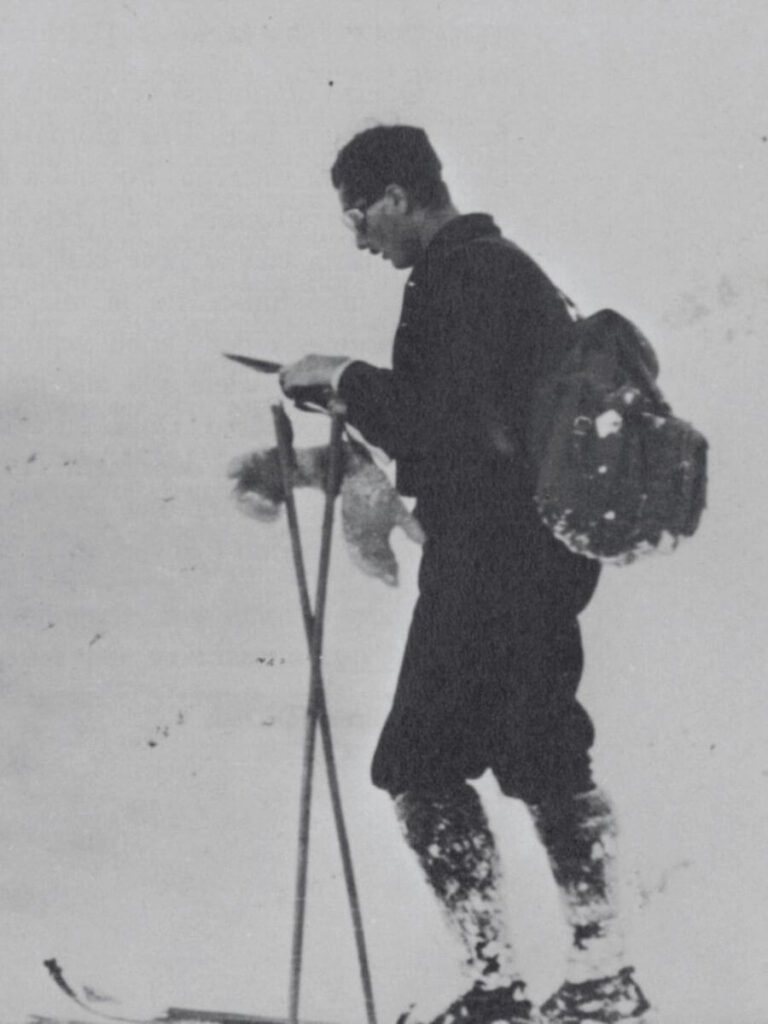
Ettore Castiglioni (28 August 1908 – 12 March 1944) was one of the most important Italian mountaineers of the interwar period. He started climbing Dolomite peaks at 13 and went on to make more than 200 first ascents across the Alps. He also wrote many climbing guidebooks, took part in the 1937 expedition to Fitz Roy in Patagonia, and in 1934 was awarded the gold medal for mountaineering merit.
In May 1943 Ettore Castiglioni was called up for military service and posted as an instructor to the military mountaineering school in Aosta.
After 8 September 1943, when the army descended into chaos, he and several comrades moved to the Alpe Berio farmstead in Valpelline, where they helped Jewish exiles and fleeing anti-fascists reach the Swiss border via the Fenêtre de Durand, a pass almost 2,800 metres above sea level between the Aosta Valley and the canton of Valais.
On 12 March 1944 he escaped from the Hotel Longhin in Maloja wearing only a blanket and bedsheets, without shoes. His frozen body was found three months later on the Italian side of the pass. The reasons for his journey to Switzerland and his desperate escape remain shrouded in mystery.
He is buried in Tregnago (Verona), where his family owned a villa that Castiglioni used for holidays and for writing some of his climbing guidebooks. The local branch of the Italian Alpine Club, founded in 1999, is named after him.
Luigi Einaudi (1874-1961) was an Italian politician, economist, journalist and the second President of the Italian Republic (the first to be elected by the Italian parliament). He is regarded as one of the fathers of the Italian Republic. After 8 September 1943 and the subsequent Nazi invasion of Italy, he fled to Switzerland with his wife Ida, guided by Ettore Castiglioni. He returned to Italy on 9 December 1944.