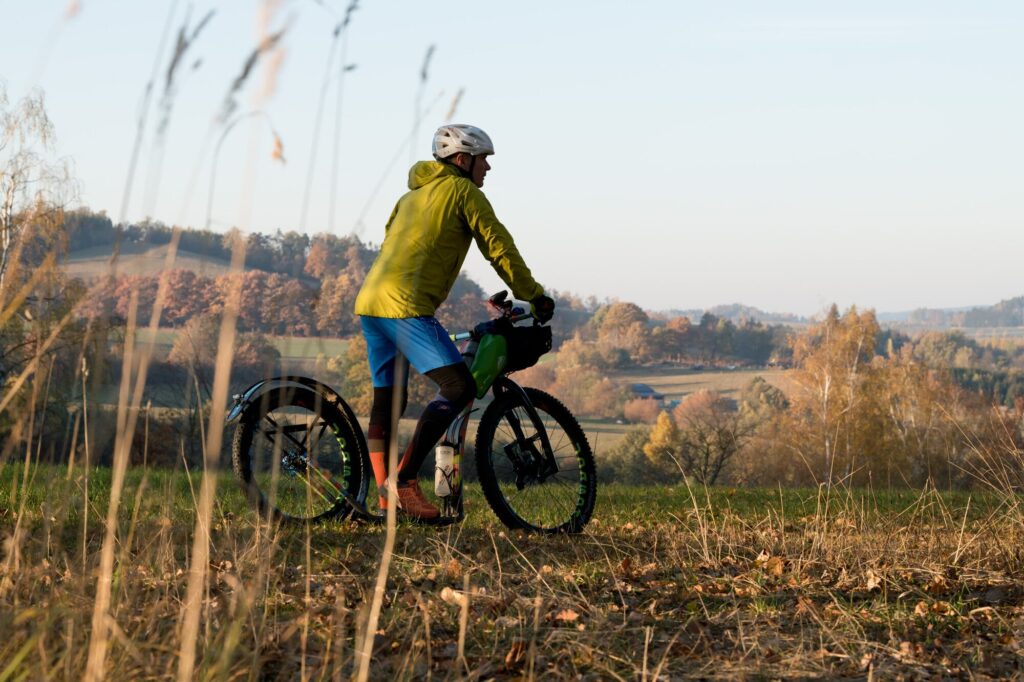
All things considered, though - isn't this exactly what I wanted this past year? To spend more time outdoors, to have room for my own writing, for work around the house (and there's plenty of it), for learning, reading books, heading out with my camera for sunsets. Covid may have shrunk the numbers on my invoices, but it may also have done something for me that I'd been edging towards in micro-millimetre steps.
"If you have a garden and a library, you have everything you need."
Marcus Tullius Cicero
There's nothing wrong with chasing income, social status, or outdoing the neighbours with a pool one metre longer. Sustainable economic growth demands it. If we all stop grafting, the system collapses. Probably. But the drop-in-the-ocean theory suggests the world won't fall apart if a few misfits choose the exact opposite: chasing the art of doing nothing.
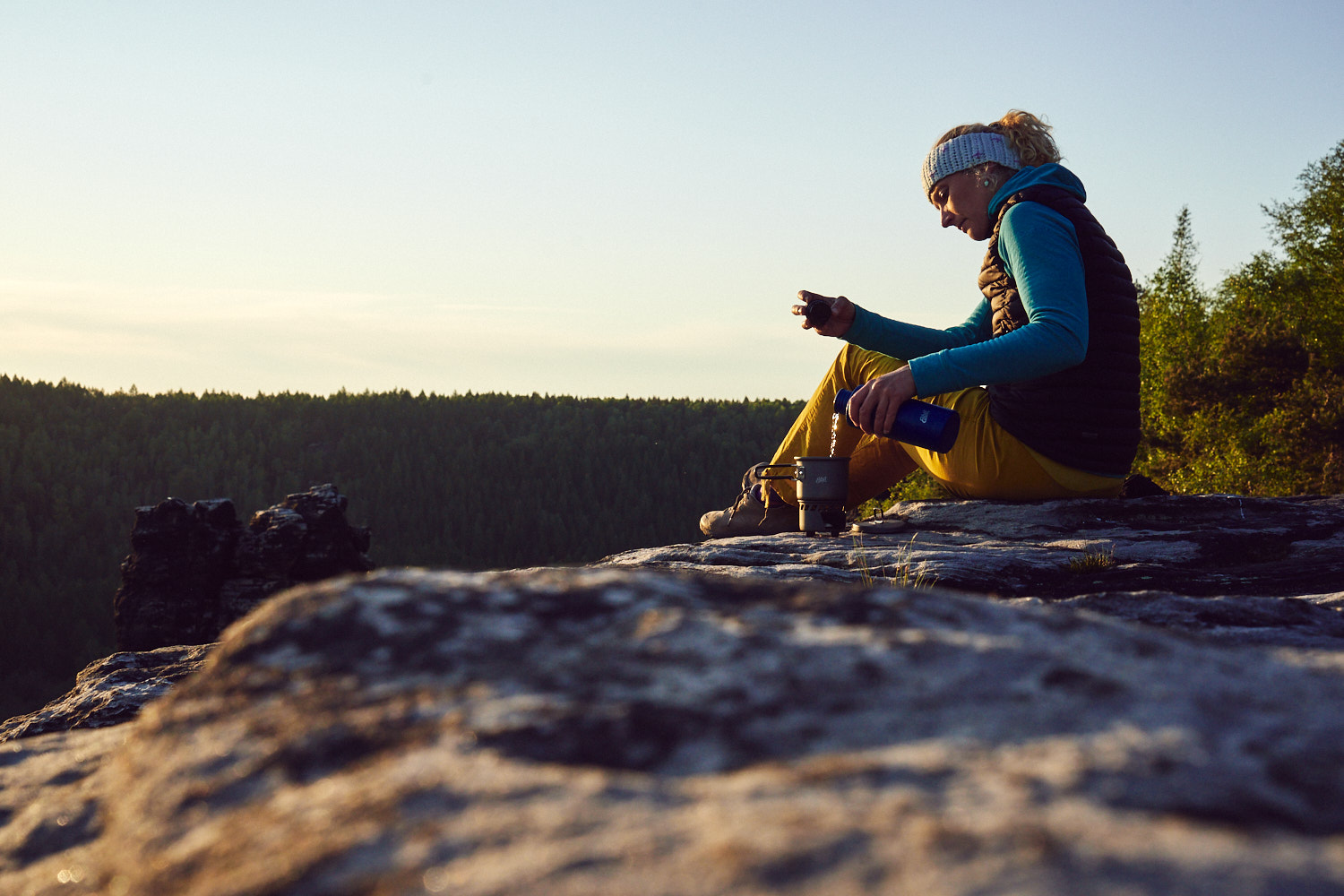
You don't have to be a freeloader on the system or, at the other end, a person of independent means. You just have to know what you want - and make everything else fit around it. Thousands, tens of thousands, maybe hundreds of thousands of nomads roam the world in battered vans, getting by on very little. Sometimes on a whole lot of very little. At the foot of the crag they pull on a shabby down jacket whose moulting through torn fabric has been fixed at least three times by all-powerful silver tape, and whose original Firecracker colour has, over six years of hard wear, acquired an outdoorsy patina of greasy basil pesto stains and repairs to a ripped-off exhaust. But it still works. It's still warm. So it doesn't look like it came out of a catalogue? You're hardly going to lock yourself in an office for a month just so that, two weeks later, you can stare at the hole left in your new six-grand down jacket by a spark that flew out of the campfire into a chilly autumn night.
"How can anyone want to trade a piece of life spent in strenuous, laborious work for better blinds? Are prettier window ornaments really worth so much time? Why add hours of work in the field just so you can buy a carriage?"
Henry David Thoreau
Back in the mid-19th century, the philosopher, moralist and poet Henry David Thoreau left behind life in Concord, Massachusetts, sped up by the Industrial Revolution, and on 4 July 1845 - symbolically, on Independence Day - moved into a wooden cabin by Walden Pond that he had built with his own hands for 28 dollars and twelve and a half cents. Read his book Walden; or, Life in the Woods and you'll be itching to pack an axe and a billy can into your rucksack and escape just like he did. Ideally today. And while we're singing Thoreau's praises, pack his essay Civil Disobedience for the getaway too. Just watch out that the tax office doesn't come down on you for not paying your taxes. Thoreau was a bit of a radical.
But back to doing nothing in the present day. Fancy a coffee? You've got a choice. An espresso "made with love" at 9 bars of pressure, in a porcelain cup with a saucer and a little glass of water, for 55 Kč. Or coffee "made with love for freedom" from your own moka pot and a kilo bag of Bellarom from Lidl, at about a crown a cup. Sparkling water free of charge. From a spring. As much as you like. What's it going to be?

That's exactly what I've been thinking hard about lately. And I'm trying to reprogram my long-standing mindset that a 7b onsight isn't the kind of result that fills a rumbling stomach. Of course it isn't. No pain, no gain - and no cake either. Nor pasta, nor a chop for the grill. But if you want to turn the norms on their head - climb five days a week and work two - it's not utopia. It just depends how much you're willing to sacrifice for it. Hunger on the way back from the crag is a beast, and the fried menu at the Koupák lake looks really tempting. But 140 Kč for fried cheese with chips and ketchup? That's an hour or two of work - after tax and contributions. Which way will the scales tip?
New trekking shoes would look nicer from above than your current grubby old clodhoppers, too. But are a hole by the little toe of your left foot and worn-through heels really such huge problems that you need new footwear again? Isn't it better to spend three days at the crag, where you lounge barefoot in the sand under the wall anyway, than three days grafting for new ones? Lots of people at the crag look like they're homeless. Bump into them at Prague's main station and you'd give them a few coins. But in their holey jeans, a harness with threads hanging out of it and karabiners as old as the hills, they climb two grades harder than you with your polished kit - so hard-won in the shackles of the system.
"How we spend our days is, of course, how we spend our lives."
Annie Dillard
Costs, costs, costs. It all revolves around them. The deeper you can push them down, the more freedom you gain. Rent, mortgage, energy - sure, you can't shake those off so easily. Except with that battered van. Savings are harder to find on the big things than on the small ones. So what about paid apps on your phone? Apple Music for 150 Kč a month? 1,800 Kč a year? Given how often I listen, I can probably put up with a few ads on YouTube. That 55-crown espresso twenty times a month also adds up to a tidy 1,100 Kč, or 13,200 a year. And once you've gained all that free time, couldn't you get to the crag by bike instead of by car? The combustion engine is a glutton.

Over the last three years, I've probably saved the most by not using soaps and shampoos. Believe it or not, your body doesn't need them. And then there's another saving on top - on creams. Soap dries your skin out, you see.
It's a process. And a matter of self-denial. Or modesty, minimalism, frugality. Call it whatever you like. You certainly won't become a financial rentier - that takes a long road of grafting from dawn till dusk, at the end of which your body and mind will be in such a state that you won't give a hoot about any performance on the rock anyway. More like a rentier of freedom - a decent chunk of it every day.
With all that, there's surely no need to hang your head over the dwindling stream of work emails. More of them always land in your inbox than a climbing person would like anyway. And anyone who built up a cushion in times of plenty (not the kind for sleeping in a hammock, but a financial one in the bank) can use the current crisis for a proper project. Project Freedom. You've already got everything else.
Disclaimer: The author has not yet reached the ideal of two working days a week; he is still in the process, so this article has no ambition to be a universally applicable guide. Please see it rather as a collection of ideas on how to get closer to the ideal. Which in itself can be considered a success.
I climb mountains. I write about mountains. I photograph mountains. And I always come back happy. It's written in my name, after all.