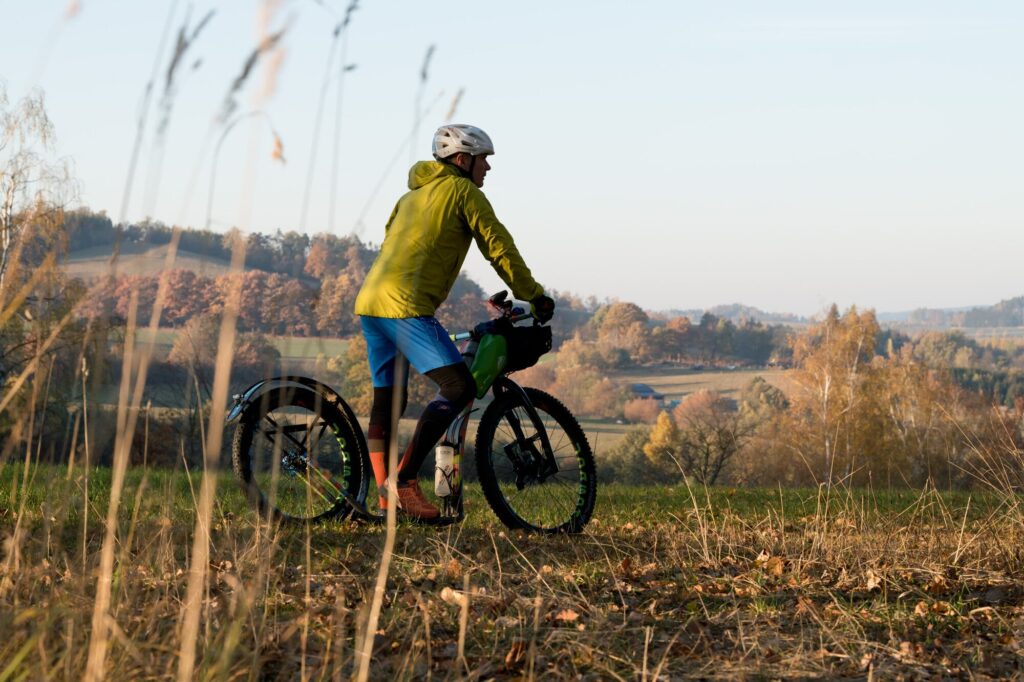
"Wow, you guys are always outdoors somewhere." ... "Yep, pretty much."
"Looks like you don't work much, huh?" ... "Nah. Just don't really feel like it."
"So you don't need to earn money or what?" ... "Well, we do. Just not that much."
A chat with friends
Because falling asleep by the dying embers of a campfire, waking up to a sunrise view, cooking pasta in a mess tin and spending the whole day climbing rocks or wandering the Jizera Mountains costs next to nothing. Unlike an evening at the multiplex, lunch special number three and a two-hour yoga class – 518 Kč. Per day. That can easily add up to 15,000 Kč a month. Plus the mortgage, of course, the car repayments, and the car doesn't run on thin air either. But you comfort yourself with the idea that one day, once it's all paid off, it'll be your turn to enjoy life. Travel. Discovery. Adventure.
Or not. Because the heart attack turns up first. Somewhere around forty.

The outdoor life looks good in magazines. But it looks even better for real. And it isn't expensive. You don't have to go far for adventure either – just head out past your back garden. You can order a coffee for 45 Kč, or brew one for free on a stove in a moka pot. Sleeping under the stars costs nothing and the train is cheaper than the car.
“Freedom and simple beauty are too good to pass up.”
Christopher McCandless
Sure, society expects us to slog away for at least 8 hours, ideally 12. To keep the lawn round the house neatly mowed and never show up in town two days running in the same T-shirt. Then again, whose business is it anyway? We live in a free world and we're lucky enough to be able to do really, truly whatever we want. As long as it doesn't restrict other people, of course. Which our climbing and bivouacking on the crags probably doesn't.

Money and happiness don't depend on each other. If anything, the more we own, the more worries we have. And the time we could spend on real life out there vanishes into earning for the mortgage or the car repairs, tending the garden or deciding which T-shirt to put on in the morning. If you only own five, decision paralysis never catches up with you.
“There is no greater joy than to have an endlessly changing horizon, for each day to have a new and different sun.”
Christopher McCandless
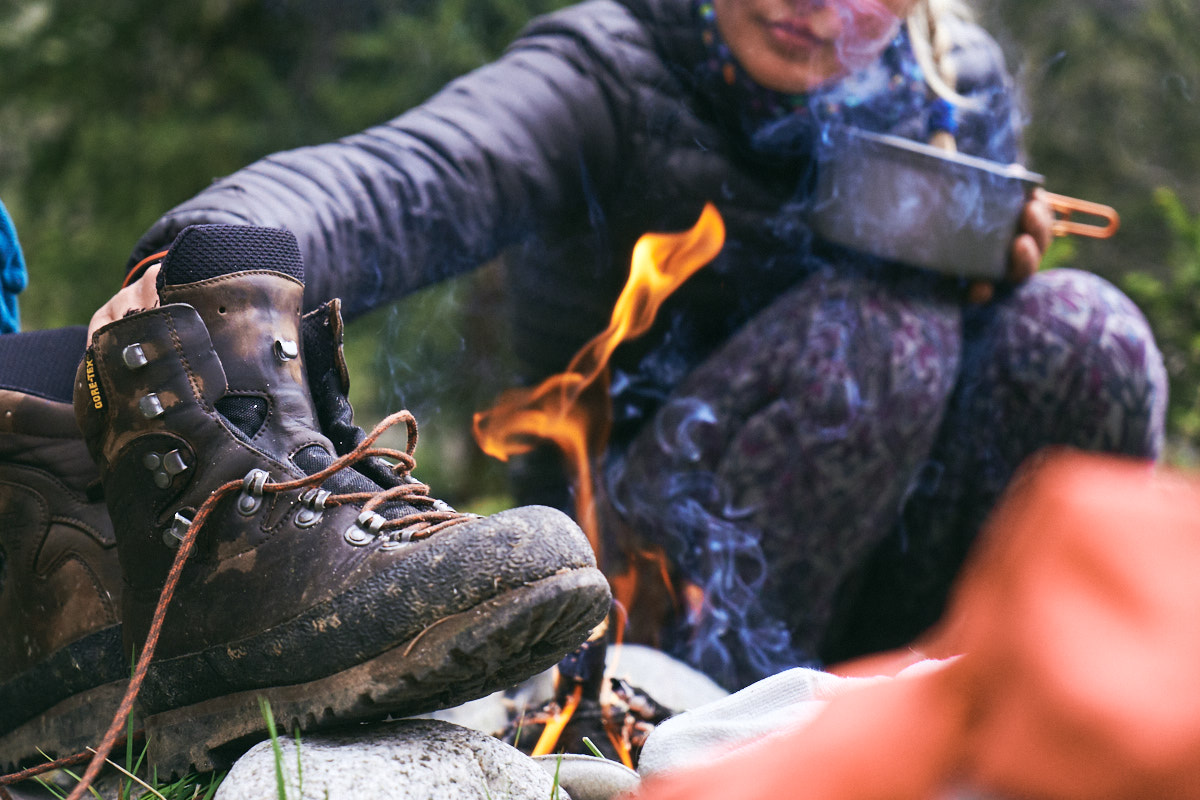
Living with only the few things you really need gives you freedom. Pack your rucksack and go. Wear one pair of trousers until the Jizera granite shreds them to threads. Delete social media from your phone, because you're actually living and don't need to convince anyone of it. Not even yourself. Stop eyeing new trekking boots every six months that you'll wear twice, when in your current ones you can explore old hunters' trails without worrying about getting them muddy. They can't get any dirtier anyway.
In a sleeping bag under an overhang? Nothing. As long as the overhang isn't in the Tatra National Park (TANAP) and the rangers don't catch you. Then it's more than a Deluxe+ suite at Sliezsky dom. Otherwise you've got the most luxurious bed there is, for free – and a different one every day if you like.
And elsewhere on your travels? Look on Airbnb. Or try couchsurfing. You'll meet local people and soak up their culture in a way you'd never manage at a Holiday Inn. House sitting is another great way to stay for free – look after a house while its owners are off seeing the world. Ideally a house at the foot of the mountains.

Blueberries, blackberries and raspberries for your morning porridge you can pick for free. Oats for six breakfasts – 14 Kč. A bag of pasta, two eggs, a handful of black olives and a sprinkle of parmesan on top – 40 Kč. That's dinner for two. The dishwasher uses nothing. It's hand-powered. In a spring a hundred metres from the bivouac. A can of beer for a good night's sleep – 18 Kč. And a second one for morale at the foot of the crag.
Fried rice with chicken on a Bangkok street – 25 Kč. Fresh pineapple, papaya, guava or mango from a street cart – 15 Kč. And a heck of a lot better than that unripe dragon fruit you can get for 60 Kč at the supermarket when it happens to be Asian week.

A way to get to that adventure, probably. But you don't have to travel halfway round the world. The Jizera Mountains or Skalák are beautiful too. Even if these days a flight to Morocco can cost less than driving your own car to the Tatras. And travelling for several months around Southeast Asia means just a one-off upfront investment of 6,000–8,000 Kč for the ticket. One way. You can sort out the return when it becomes relevant. The more time you spend out in the world, the less it costs. Travelling around Asia like this cost me 12,000–14,000 Kč a month, including all the transfers and flights, motorbike rental, food and accommodation. And I lived like a king. So it can be done for less.
“If you want something in life, reach out and grab it.”
Christopher McCandless
Gear? A few really good-quality pieces last longer than cheap junk. When something breaks, it can often be repaired. And what's more, you'll form a bond with the rucksack that's been to the ends of the earth with you – one you won't want to break. Even when it's completely worn and tatty. Because every scar is a memory of what you've been through together.

It's more about what someone trapped in the consumer world is able to give up. And how they'll cope with questions like: "So what do you actually do, that you're always outdoors?"
"Nothing. I live."
Your answer
But sure. Even that bag of pasta and the duct tape to patch a torn down jacket cost something. You have to scrape the money together somewhere. Luckily there are a gazillion options these days. Maybe it'll be enough to go to work part-time. You can work a few months a year and spend the rest of the time living. Or find a job you can do remotely from anywhere – the internet is full of opportunities. Or start hosting at your place through Airbnb, or invest wisely – in shares, crypto, loans.
Back in the late 1920s, economist John Maynard Keynes predicted that thanks to technological progress, people in a hundred years would work just 15 hours a week. So where did it go wrong that it's more like four times that?

Let's admit it: sustainable growth is utterly unsustainable, because it leads to diabetes, heart attacks and strokes. Cutting your living costs and getting by with little, on the other hand, is sustainable. Definitely so for the soul of anyone who longs to spend more time outdoors – on the crags, in the mountains, in the snow.

Note: The author owns a property with a mortgage on it and doesn't live alone like a hermit. He makes a living from writing and guiding, and lives exactly as he writes – with five T-shirts and a battered rucksack. He's still a long way from the ideal of 365 days a year in the mountains.