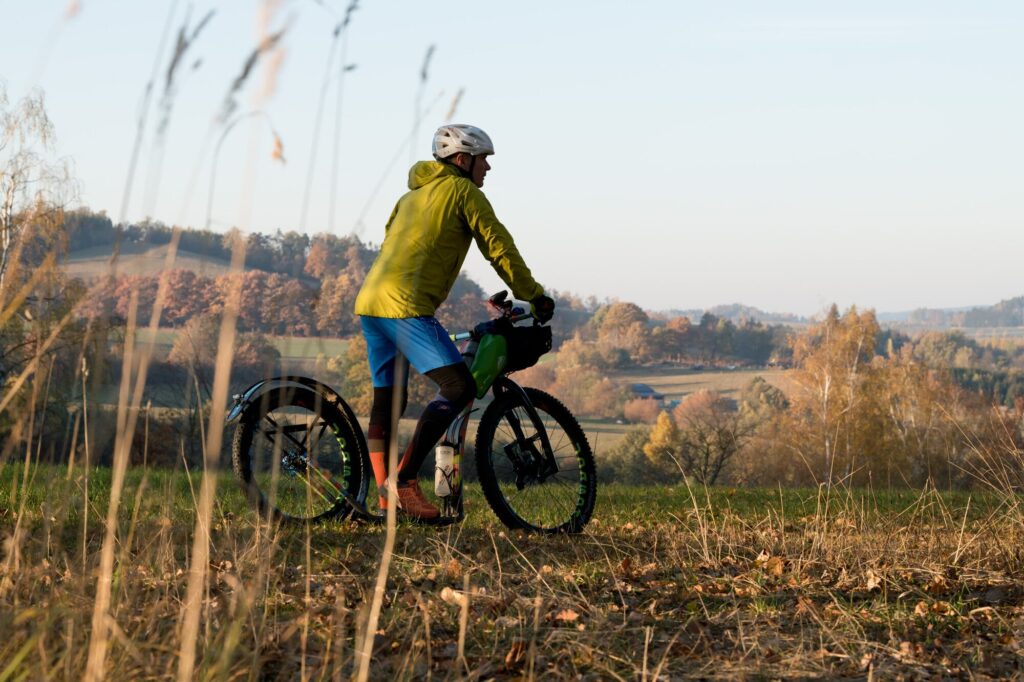
At home we have a clear idea of how the world works, how things get done, how people behave and how we should look after ourselves. But all of that is just a bubble. The real world is completely different, and it teaches us a lot about ourselves.

Islam is bad. Russians are scumbags. Americans are full of themselves. And black men have big penises. Apart from the last one, which I haven't verified, none of it is true. But we live in Czechia - a monocultural country in the middle of Europe where we somehow have a deep-rooted fear of anything foreign. An unfounded fear, though. As soon as you travel beyond Europe, you discover that people just like us live everywhere. With much the same joys and worries. In 99% of cases kind and good. Maybe even better than back home. People who are helpful, welcoming and quite happy to invite you into their homes and look after you like an honoured guest.
Women go about covered up, you mustn't touch children's heads and banknotes are always handed over with both hands? That's their custom - just like our beer drinking. Let's respect it and adapt. Each of us was born into our own world, and it taught us to live by certain rules. And there's no single set of correct rules for the whole world. There's only tolerance.

When you pack a small rucksack and travel with it for months around Southeast Asia, or wander through Kyrgyzstan for a few weeks, you find out how many things you can suddenly do without. In countries where people live in tin shacks and children play with an old plastic spoon found in the roadside ditch, you learn to value what you have.
And actually... are we missing anything? Given the minimalist packing and the low living standards of the locals, we come to realise that satisfaction doesn't come with the latest iPhone. On your back, one or two clean T-shirts, a toothbrush, a camera, a book, a notebook and the essential mountain gear. Your shoulders won't carry any more knick-knacks. And with that experience behind you, once you're home you can get rid of half your clothes and 90% of the junk on your shelves. And maybe the shelves too.

Here we live in a spotlessly clean environment. We recycle plastics, shop package-free, drink coffee from reusable cups. Commendable, but (almost) pointless. Environmental problems are far more tangled than they look from our Central European vantage point. For a start, it might be enough to cancel the weekly bin collection and let the rubbish rot outside the house for a few months. Just so we could see what pigs we really are.
Nothing against paper straws and eco bags from Lidl. Every little helps. But when, in the waves of the Vietnamese sea, plastic bags keep brushing against your body, you realise you won't save the planet from Czechia. You clean up a stretch of beach, and after the next tide it's as if you'd done nothing. A Thai finishes his cola and tosses the bottle into the bushes. You can tell which textile colour is in fashion by the colour of India's rivers. And have you seen the Aral Sea? No, you haven't. Because 90% of what was once the fourth-largest lake in the world was sucked dry to irrigate cotton. It's called an ecological disaster.
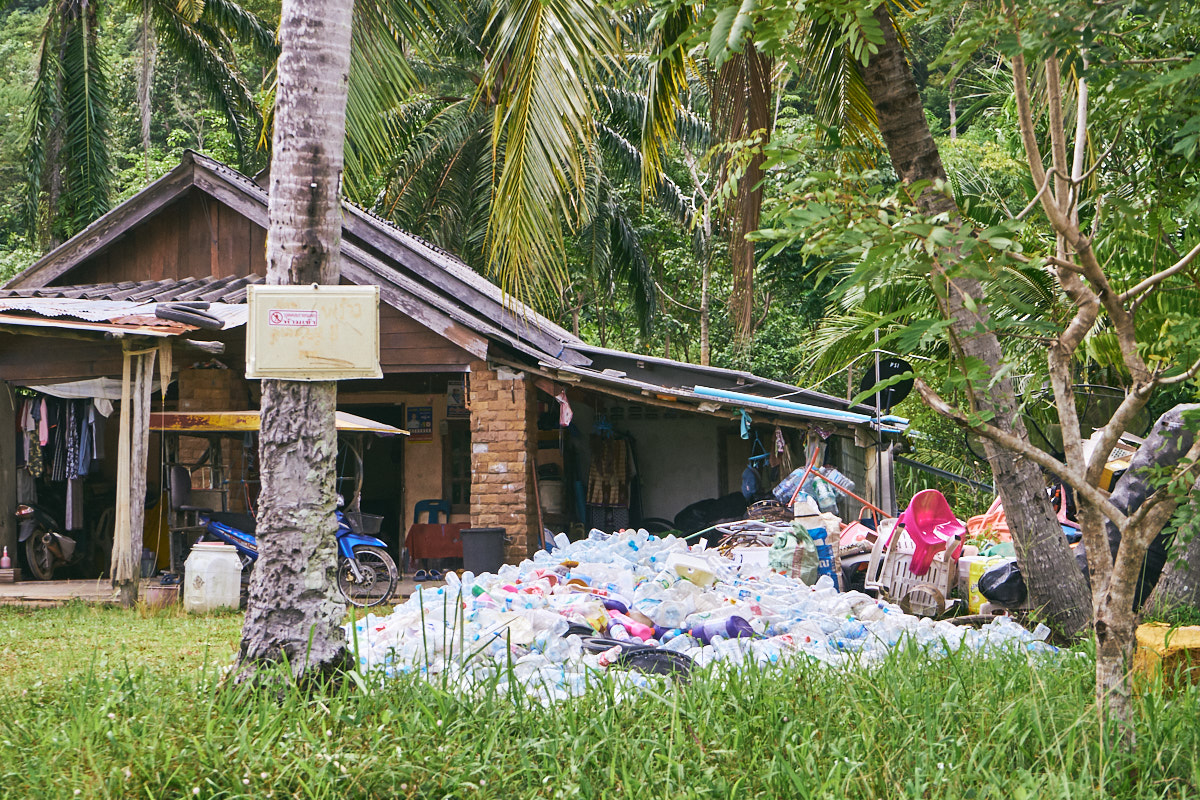
Once you see these problems with your own eyes, skipping the plastic lid on your takeaway coffee starts to feel utterly marginal. And maybe you'll start looking for other ways to help save the planet. Like not buying that coffee at all.
In the evening you rinse off at a spring or in the snow on a glacier. Your skin gets by without body lotion before bed. And when you come down from the mountains into the valley, you have a proper bath in the river. And lo and behold! Even without soap and shampoo your body will be clean and your hair healthy. Nature designed our bodies perfectly, and plain water is absolutely enough for hygiene. On the road and at home. Soap dries out your skin, which is why you then need the body lotion. And what your body takes in, it also gives off. So if you don't eat processed food and other nasties, you don't smell.
Clean mountain air does wonders for your health too. Better than the whole pharmaceutical industry. And after a few weeks of eating street food in Asia and sleeping with cockroaches, you stop minding when a bit of your roll drops on the ground under a rock or a spider nests on the ceiling. It's nature, after all, and a bit of dirt is good for your immune system.

Whether in the streets of Phnom Penh or in the middle of the Caucasus, there probably won't be anyone around to solve your problems for you. You need to open your mouth and take your fate into your own hands. People are kind everywhere - especially to foreigners in trouble - and even if you don't speak their language, that's no problem. Hands, feet and gestures work all over the world. And up there in the mountains, where you have to cope entirely on your own? Hopefully you didn't set off with no experience at all, and now is the time to put it into practice. Just no heroics.
Travel toughens you up. It teaches you to talk to strangers, which can come in handy at a party back home too. It gives you self-confidence and teaches you an independence that is becoming quite a rarity in our society.

You sit in your tent for two days waiting for better weather. You chill with a family in one of four inhabited houses in the middle of the Caucasus - no running water and cut off from civilisation by snow. Your only concerns are what you'll eat, where you'll sleep and whether you'll be warm. You wander around Thailand, where time is a relative quantity and nobody knows when the train will leave. And nobody cares, either. It'll leave. Sometime. And then you land back in Prague - among those lunatics running up the escalator so they can hurry up and sit in the traffic jam to Brno.
Phew! Will you join them? No? Maybe travel will teach you to slow down at home too, and to accept that you can rush as much as you like and you'll still never catch up with everything. The only thing you'll catch is a heart attack.
So? Travel while you can, I guess!