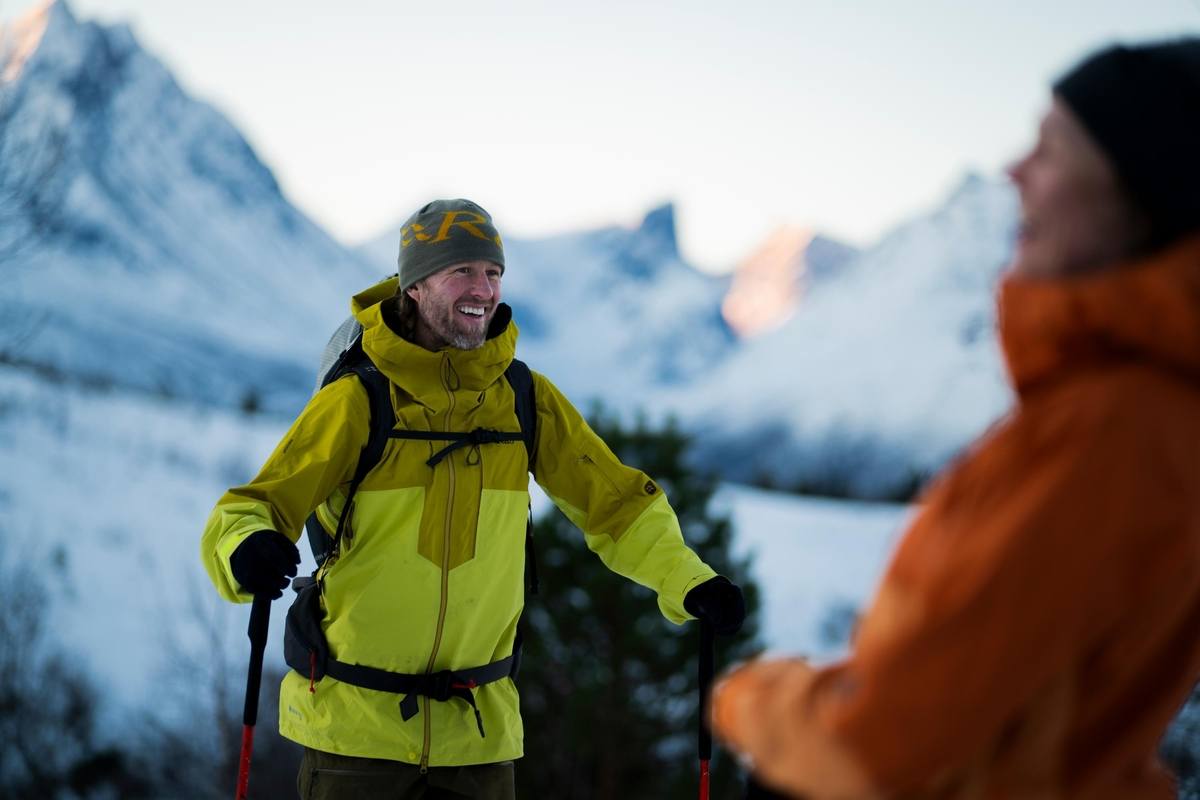
Maybe in the mountains you just nod or say nothing. Sure, greeting isn't compulsory. But picture this: the wind is howling, you can barely see a step ahead – and a person emerges from the fog. One simple “Ahoj!” rings out and everything changes. Up there it's not a formality. It's a gesture that says: “I see you. We're in this together.”
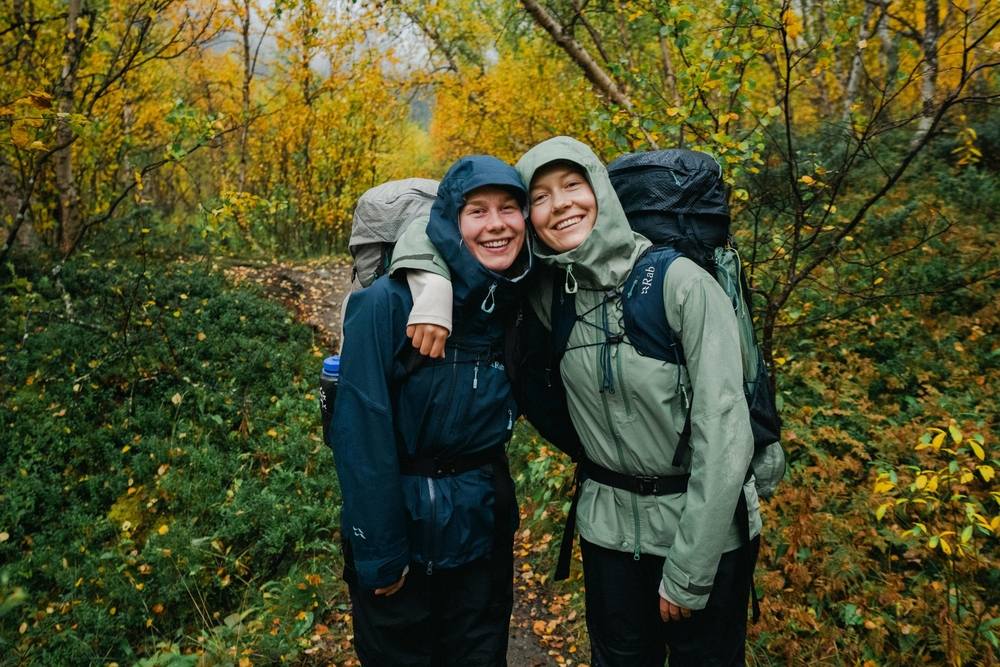
Even if we're seeing each other for the first time in our lives. Even if one of us looks like the Eiger's north face has been chewing on him for a week and the other has just stepped out of a catalogue. Even if you're a CEO and I sweep the streets. Up here in the mountains we're equals. We drop the formalities and say: “Ahoj!”
And what if you offend someone older? No. Not up here. An informal, ordinary human greeting is part of mountain culture. It's a bridge that connects absolutely everyone.
In the 18th century, English sailors shouted “Ahoy!” at each other as their ships passed. Later it was picked up by German canoeists and hikers, who passed it on to Czech “tramps” (the Czech backwoods hiking movement) and paddlers. And from there it was just a short step to the mountains – where “Ahoj!” fitted perfectly. It's short, playful, friendly. And above all – you can shout it into the wind.


Not so long ago, meeting someone in the middle of the mountains was almost a special occasion. Today the mountains are teeming with people, but the idea remains – greeting each other keeps us together.
After all, we're just guests in a world that can look like a fairy tale, but also like Judgement Day – depending on the weather and the mountains' other tests. And the greeting? A kind of silent agreement: “I'm keeping an eye on you. Are you OK? Me too. And if anything happens, we're here for each other.”
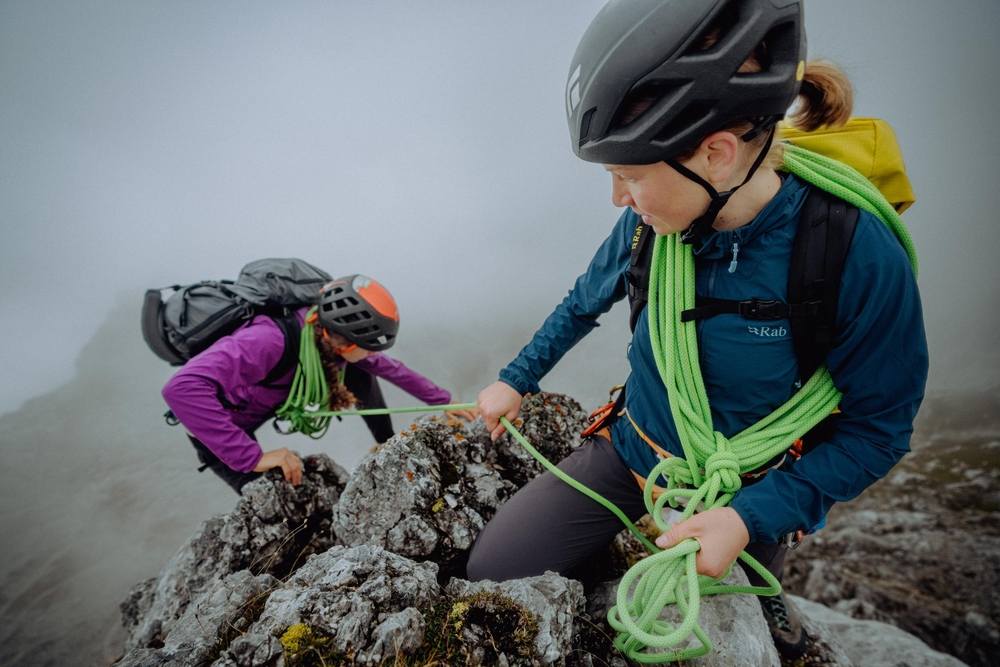
Where people stream along in queues, greet as you see fit. A hundred “Ahoj!”s would wear out even a die-hard mountaineer. But on narrower, more remote and more technical routes – via ferratas, ski tours, mountain ridges – a greeting belongs. And when you're gasping for breath? Just nod. Raise a pole. Wink. In the mountains, even micro-gestures count.


Every corner of the mountains has its own customs and traditions. And its own greetings too. It's nice to greet people in the language of the country whose mountains you're walking – even if just for the joy of touching the local culture and the hearts of the local mountain folk.
But if you can't squeeze anything out, the mountains won't collapse. A smile or a gesture is enough. Up there you don't need a dictionary. It's about showing you're present and respectful.
Poland: “Cześć!”, “Dzień dobry!”
Austria: “Servus!”, “Griaß di!”, “Grüß Gott!”
Germany: “Hallo!”, “Grüß Gott!”
Italy: “Ciao!”, “Salve!”, “Buongiorno!”
France: “Salut!”, “Bonjour!”, “Bonne journée!”
Switzerland: “Grüezi!”, “Griaß di!”, “Hoi!”, “Salü!”
Slovenia: “Živjo!”, “Zdravo!”, “Dober dan!”
When Czech skiing pioneers led by Josef Rössler-Ořovský hung out with Norwegians, they heard a loud “Skål!” at every toast. It means “cheers”. But the Czechs thought it was some traditional skiing greeting. So they brought home a Czechified “Skol!” – which some skiers still use to greet each other today, a little by mistake.


Some people learned to say hello in the mountains from their parents, others from a youth club leader or an older climbing partner. And those who don't greet? Maybe they just weren't lucky enough to have a mentor like that.
So your “Ahoj!” might be exactly the moment you show someone how things are done in the mountains. With a greeting, you pass on mountain culture itself. Say hello first. Smile. Raise your hand. Be the one who inspires others to do the same.
Respect. With a greeting you're saying: “We're both here for a similar reason and I respect that.”
Community. A small gesture that turns complete strangers into companions on the trail.
Safety. A quick check on how the other person is doing. No answer, looking rough? Maybe they need help.
Tradition. For generations, greetings have belonged to the mountains just like huts and footpaths. And it's up to us whether we carry that tradition on.