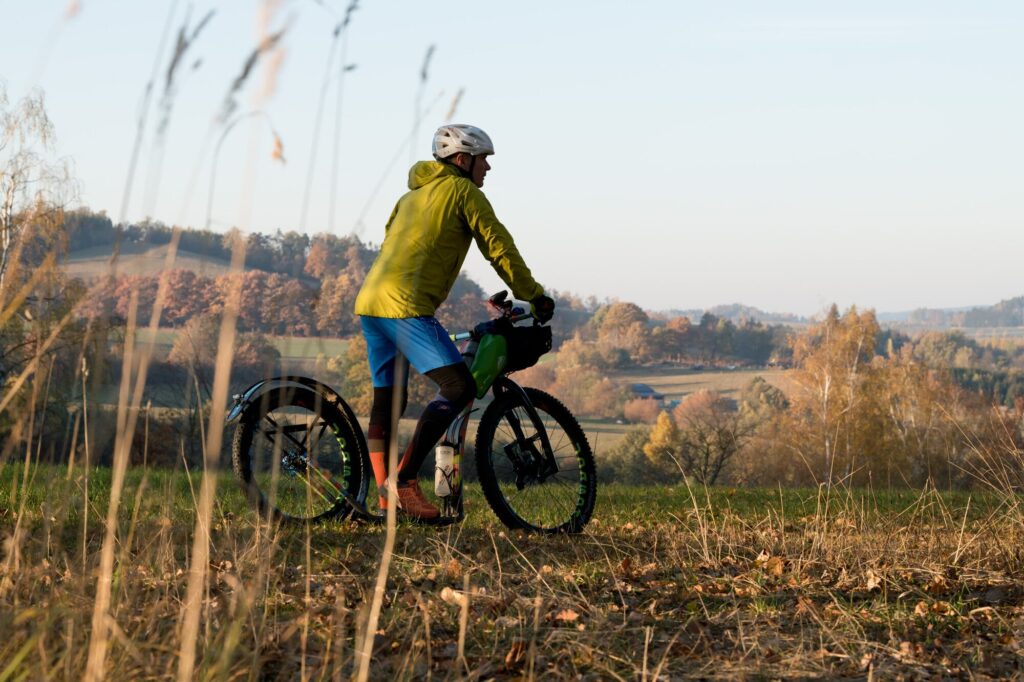
That's exactly how it was a year ago. With fresh snow falling almost every day, a warm-up with the shovel awaited me first thing in the morning, and then there was simply no way I could sit at home on my backside staring at the computer screen. The work wouldn't have gone well anyway. At least two hours of off-piste skiing, or just shuffling uphill on skins through powder, was a daily necessity. And this year? Fine, right now something is fluttering about outside the window. But the result is about the same as dusting a cake with icing sugar. One puff and it's gone.
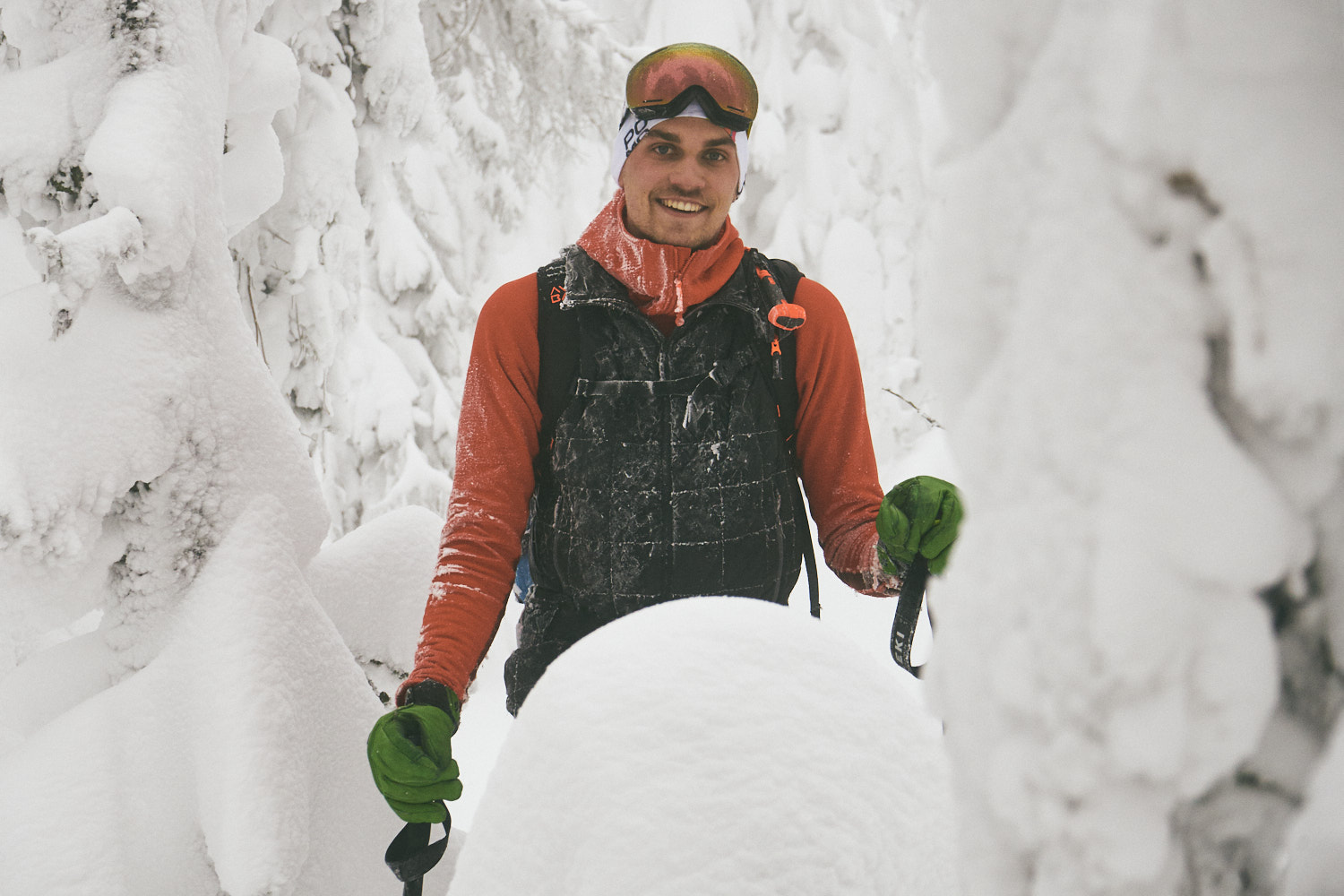
Still, this is simply the stage nature has reached, and we can only guess how many spanners humans have thrown in its works along the way. Greenland was supposedly green once too, so whatever. As homo sapiens outdooriens, we just have to adapt. And by that I don't mean heading for a white strip of snow sprayed into the middle of a green meadow at a cost of millions of crowns. That goes against nature and common sense alike. No snow? Then I'll make some - so I don't get bored. And besides, as I've written before, every crown we spend in these factories of snow and skiing fun helps shape the future face of the mountains. The calendar may say it's winter, but it's no weather for winter sports. Even so, there are some pretty good things you can do. Certainly better than scraping your skins along the edge of a piste or sledging on mud.
Am I holding on to that tiny crimp because my fingers haven't frozen yet, or precisely because they've frozen solid, so I can't feel the sharp crystal cutting into my skin? That's the eternal question that comes with rock climbing at temperatures just above zero. Either way, if the sun is shining and the thermometer doesn't show a minus sign, I'd a hundred times rather gulp fresh air, even on an easy route on real rock, than snort the chalk hanging in the sweaty air of a bouldering gym. So on the hard sandstone of Český ráj (Bohemian Paradise) and the even harder granite of the Jizera Mountains we look for dry south-facing walls that will let us climb. Of course, it's no time for hard projects. After all, numb fingers get on far better with a deep pocket than with a crystal sticking out a centimetre. But I'm holding real rock. Not pink plastic bolted to plywood. In spring it'll feel like new. And maybe thanks to this training I won't be so frozen at the belay in the Tatras.

From the crags we climb on up along the ridge. On the north-eastern slopes some snow is hanging on after all. A dusting. When we look back, we can count only two sets of human footprints in the snow, but dozens of animal tracks. And when we turn our eyes forward again to keep our steps out of the mud bath, two hefty stags cross our path. The last time I met a big fellow like that was seven years ago in the Jeseníky Mountains above Zelené kameny. It was October, and I think I was more in awe of him than he was of me. These two pretend not to see us and after a few seconds vanish into the forest on the other side of the trail. We soon leave it too and search the steep slopes above the stream for a cave to spend the night in.
There it is. A bit different from what we imagined, and maybe a little damp. But once we manage to coax up flames strong enough to cope with slightly wet wood, we'll be fine. And with the words "Once it gets dark, it'll be boring", we didn't skimp on hauling up provisions, so for a first warm-up a few hearty swigs of slivovitz go straight into our veins. Later, as we read aloud chapters from a book found on the dusty shelves of a second-hand bookshop, Příběhy mužů a hor (Stories of Men and Mountains), we sip hot mulled wine from a white enamel mug and the lid of a thermos. Good night.

A secondary-school teacher, Jan Havelka, set out to climb Praděd. That's what this whole book is about - 88 pages. Most people can sum that up in four slides of an Instagram story, so why does the old boy go on and on? Well, because he hiked up there in 1883. 137 years ago! Back then there was no tarmac road, no lookout tower, not even the pub without which hardly anyone would drag themselves up there today. And the climb from the nearest railway station in Sobotín took him two days. What's more, he only made it on the second attempt. And that's what I love. Reading about how people walked the mountains when they approached them with humility and knew that getting up a hill meant damn hard work. Not a damn hard bill. And I also love discovering, in lines written in old-fashioned Czech, not only places that look completely different today, but also those that haven't changed much in a century and a half, because getting there on foot hurts.
In fact, I've got quite a decent stack of books here, collected from bookshops and second-hand shops, which I just never get round to during the summer, when we can't stay under a roof any longer than strictly necessary to earn a few crowns for living and travelling. So now, with no powder pulling me outside, I'm devouring the pages and soaking up inspiration. Perhaps for when I follow in Mr Havelka's footsteps in the spring.
Skinning on those few centimetres of refrozen snow - dirtied by a layer of needles that fell from the trees during the last thaw - is no fun at all. And on foot? What a drag. If it isn't slippery, the crust gives way under your feet every third step. And where there's no snow, there's mud. And where conditions are like that, there's not a soul around. So it's the ideal opportunity for those of us who are drawn outside and don't mind getting our new sapphire-coloured Gore-Tex jackets dirty.
The mountains are criss-crossed with old hunting trails and paths. Local mountain people - starting with the German inhabitants before their post-war expulsion - maintained these tracks for decades, and they always had a practical purpose. So wandering around the mountains like this brings a certain sense of mystery and takes you back in your thoughts a century or so. "How much work must it have taken to build this dry-stone wall holding up the path on the steep slope? And why did they run it right here? In the middle of the woods, where there's nothing?" Back home, the frozen wanderer can then settle on the sofa with a hot cup of tea and start digging into some ancient book. And there are loads of places like that "just behind the house" that we have no idea about.
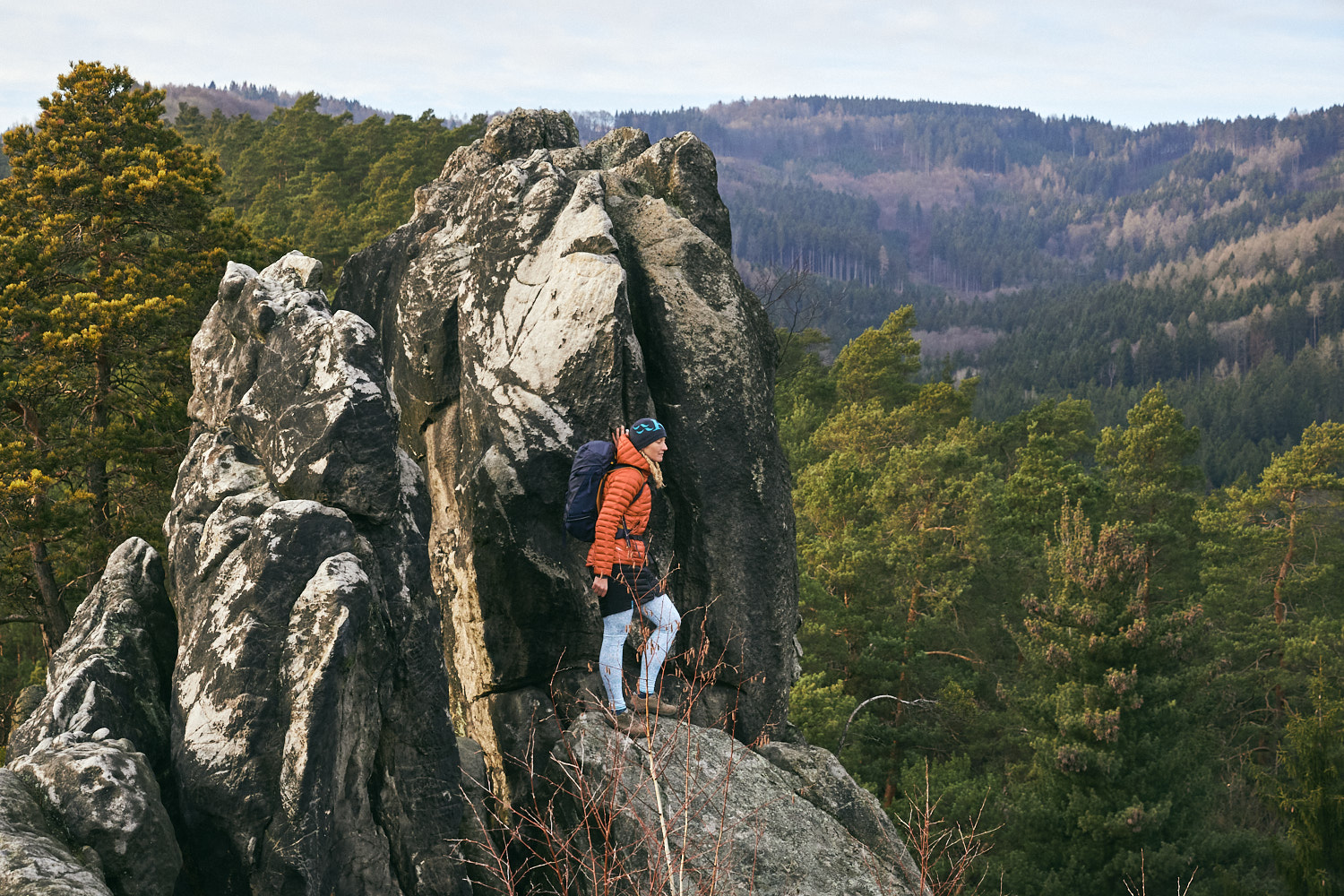
"What's up!? What are you looking for down there?" ... "Oh, just catching my breath." ... "Well, catch it and stop staring at the ground when it's so lovely all around." ... There's no getting away from it. With big lungs and pumped-up thighs, climbing a hill is simply easier. Even the walk-in to the crag with an 80-metre rope on your back and two sets of cams leaves fewer chalky handprints on your knees. So when conditions aren't good for anything, you can always run. True, sometimes your path is blocked by weak willpower treacherously propped up by warm central heating, a sofa with a fluffy cushion in the corner, and the cake your partner is just taking out of the oven. But it'll taste even better after your training session and a hot shower. So get out there.

Lowe Alpine Halcyon 35:40 pack
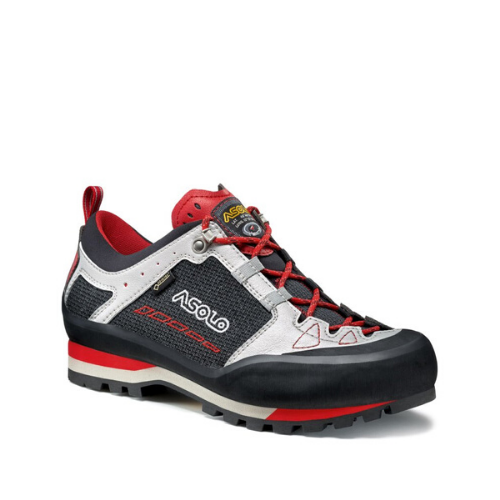
Boty Asolo Freney Low GV

Stormsocks waterproof socks

Boty Asolo Apex GV
I climb mountains. I write about mountains. I photograph mountains. And I always come back happy. It's written in my name, after all.