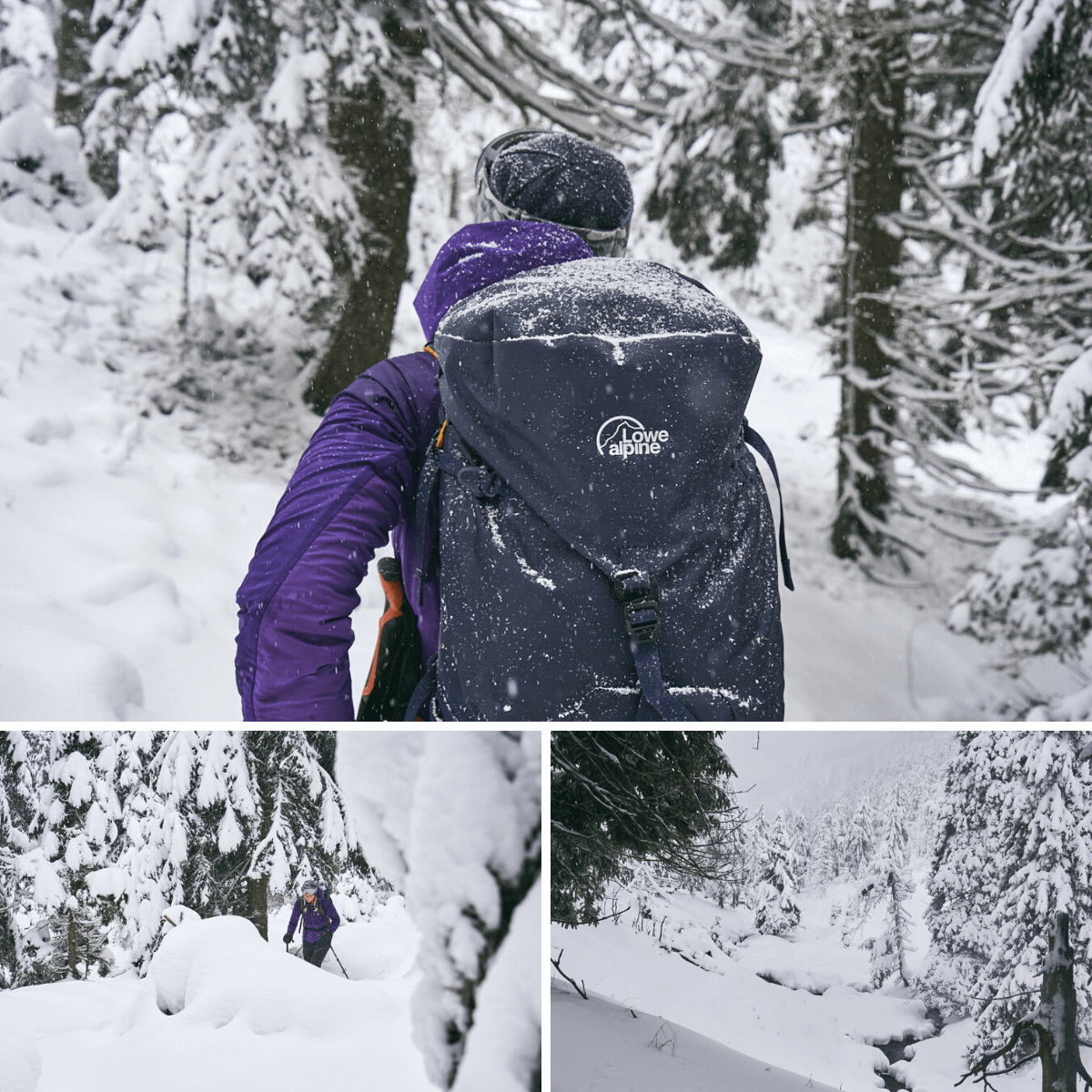
We shoulder our skis and trudge up the Kotelský potok valley. In the snow, which a few hundred metres higher starts to be just about deep enough to put our skis on, we don't spot a single sign of human presence. Everyone is flocking to Praděd. And by "everyone" I mean thousands upon thousands of people. For now, we're breaking our own trail in complete silence, and below the ridges two chamois size us up. Three kilometres further on, though, they'd rather stick their heads in the snow – if they were ostriches.
What a paradox that in the place with the cleanest air in Central Europe you can count more cars than in a shopping centre on the twenty-third of December. The designated car parks obviously can't cope, so the verges of all three roads leading into... ahem... the climatic spa town of Karlova Studánka come in handy. Clean air? Used to be. Environmental awareness has to give way to the longing to see what winter looks like. No wonder, when the lift operators down in the valley made such a miserable amount of it this year. Either way, that oh-so-precious white treasure – moving it from the stream onto the slope uses more electricity in one day than our household consumes in 20 years – can light things up all the way to the heavens. Never mind that the glare of the artificial lighting means you can't see the stars. Such paupers' pleasures as gazing at the sky don't make anyone any money.
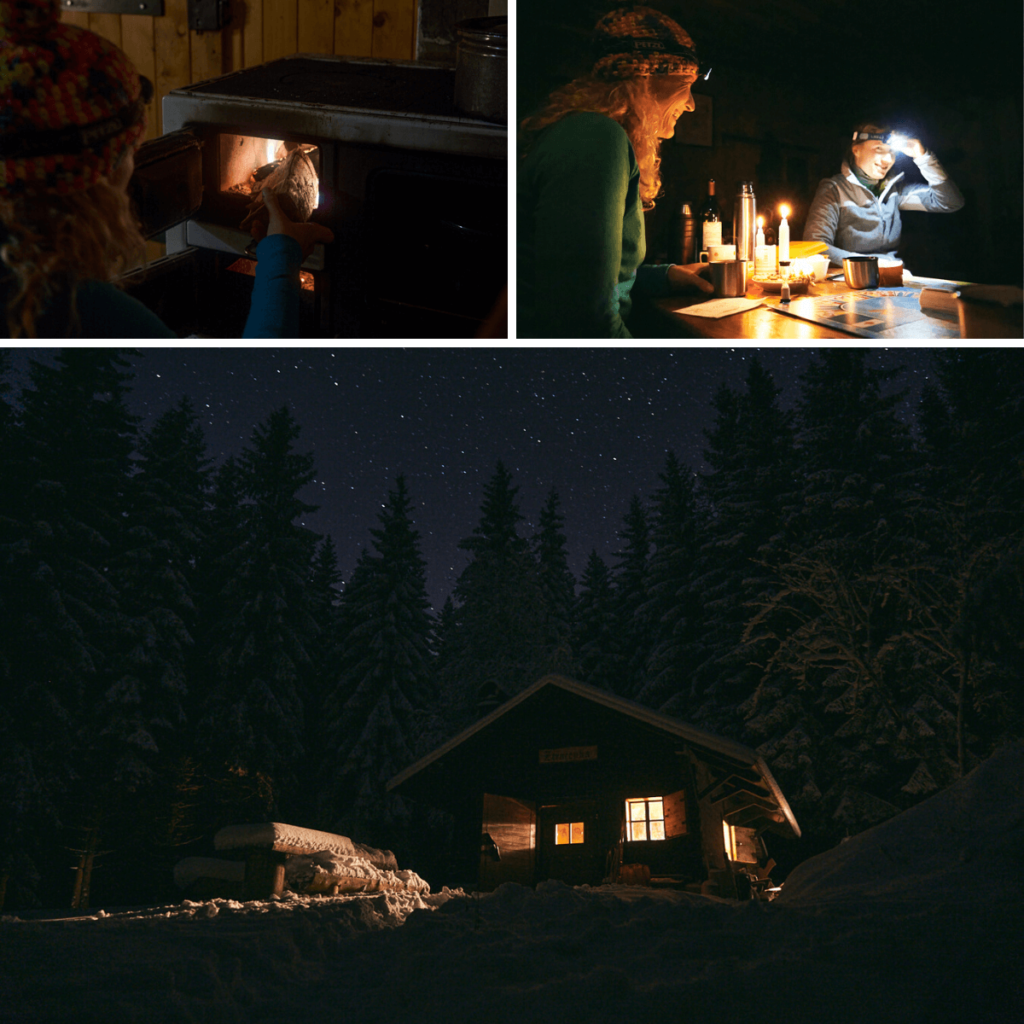
But we don't support this industry. We go to the mountains considerately, as part of nature. So we squeeze through the gap between the rear bumper of one car and the front bumper of another and disappear into the forest. We sink into the snow. We look for the right way. And we find it. In a little clearing in the middle of nowhere, we try which of the five keys on the ring fits the rust-stained lock on the door of a tiny cabin nobody has been to in six months. Nobody – except mice. Plenty of those have been through. But the stink will air out, the droppings will get swept up and we'll be warm, too – once we chop some wood in the woodshed behind the cabin and get the stove going. Food is served as it comes – as each of us pulls it out of the pack we carried up here on our backs. We've even got wine. And board games, which we play by the light of old candle stubs. And when I step outside for a pee in a snowdrift, I can see the sky clearing. The stars will be out. Here, they will.
But this way of being in the mountains, where we wash our faces with snow, have to take care of keeping warm at night ourselves and leave behind minimal or no trace, is becoming more of an anomaly. Under the onslaught of people who have put the mountains on a par with pastimes like the gym, the shopping centre or the aquapark, humility and consideration are losing 0:1. Still, we try to do our bit to nudge the score at least a little.
1. We walk, cycle and use public transport. In that order, depending on distance, and we take the car only as a last resort. We may not get as far or as high, but why should we make everything easier with technology?
2. We behave considerately, don't shout and don't do damage. Like guests who know how to repay their hosts' hospitality – for example by picking up litter along the trail.
3. Instead of e-scooters, sky walks and alpine coasters, we find our own fun in what nature offers. Because every koruna we spend on these attractions is a vote for what the mountains will one day look like.