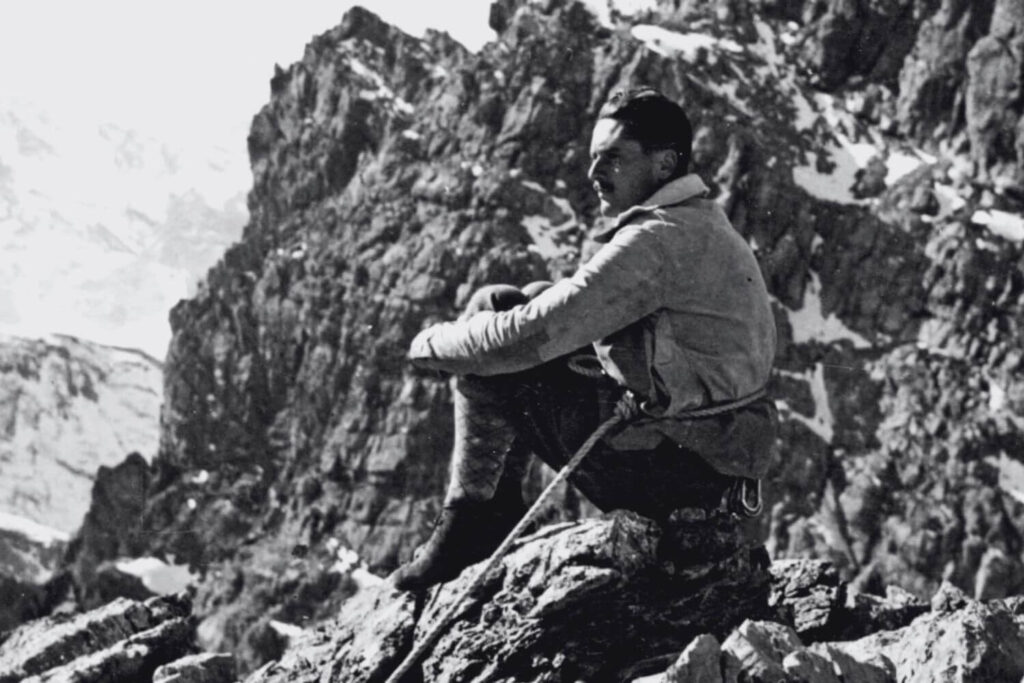
Winters in Akita were harsh. The wind stung your cheeks and icicles hung from the temple roofs, as solemn as the fingers of long-forgotten gods. Nobu sat in the snow and watched the river ice shatter against the stones. He was nine. And he was different from the others.
In the evenings, while his father recited sutras, Nobu drew maps of unknown lands in his head. His thoughts wandered to places where the sun never sets and dogs pull sledges across country that forgives nothing. All he knew about the far north came from travel books and scraps of news. But something about it drew him in. Like a calling.
At first it looked as if his path to enlightenment would lead through the temple. At eighteen he entered a school for Buddhist monks. But meditation made him restless. The sound of silence that was supposed to settle inside him kept whispering something. It was the voice of the ice. The voice of frozen distances.
So he left.
He joined the army. Not for the weapons. For the chance to get out there. Up north. To the Kuril Islands. All the way to where land turns into ice, where the weather changes in a minute and where you learn to survive. He lasted two winters there. And then he made up his mind: "I'm going to the Pole!"
Back then every adventurer had their eyes fixed on one obvious goal – the North Pole. But then a certain Robert Peary announced he had already got there. He planted the American flag in the eternal snow – and that route was taken. Nobu had no wish to walk in someone else's footsteps.
He looked at the other end of the map. "Fine, then. South it is!"
It was 1910. Japan had occupied Korea and was modernising and growing stronger. The empire was gone and a republic had taken over. But nobody wanted to hear about polar expeditions. People laughed. The press called him a madman. Politicians sent him packing – such foolishness was put firmly back in its place.
And yet Nobu Shirase started gathering a crew. Dogs. Sledges. And a ship.

She was called the Kainan Maru. A vessel that would hardly satisfy a weekend angler. Thirty metres long – a third the size of Scott's ship, the Terra Nova. The crew barely squeezed in. And the engine? Just a feeble rumble in the hull.
They set sail on 29 November 1910. Twenty-seven men. Thirty dogs. Thousands of jeers.
Supplies? Instead of pemmican – rice, dried cuttlefish, beans and pickles. Experience: none. Precautions – inadequate, to say the least.
When they reached Wellington in New Zealand, reporters flocked around them like seagulls. "This is meant to be a polar ship?" they wrote. "Bamboo sledges? A dog that's limping before it's even left the harbour?"
And yet – on 11 February they headed for the frozen seas.

By the time Shirase's Kainan Maru left Wellington, Scott's Terra Nova had been under way for a month. A delay like that – in Antarctica it's almost a whole season. Amundsen, too, was long on the move. And Nobu Shirase and his crew were heading into a world that can decide a person's fate in a hundredth of a second.
In the very first days a storm hit them. Waves as high as houses, sails thrashing wildly in the wind. Half the dogs didn't survive. Those that remained limped around the deck like veterans of a battle that hadn't even started yet. The ship clawed its way forward. Icebergs, fog, gusts of wind, seasickness. And then – at last – there it was in front of them. The white land.
On 6 March they sighted land again. A spur of Antarctica. But they could go no further. The sea was already locked in ice. Nobu stood at the bow, fists clenched, eyes narrowed in awe and quiet anger.
Getting frozen in out here would mean death. Not a glorious, heroic one. A slow and painful one. He knew it. So he made the decision no starry-eyed adventurer ever wants to make: "We're turning back!"

They sailed into Sydney on 1 May. The ship was barely holding together and they had just one dog left. Australia didn't exactly welcome them warmly. After the Russo-Japanese War and the occupation of Korea, the Japanese weren't the neighbours' favourites. And these strange men had supposedly set off for the South Pole? In that wooden nutshell? Laughable gear, odd supplies – and not a single serious scientist. It sounded like a bad joke. Or perhaps – espionage?
Some said they were scouting for seal hunting grounds. That they weren't an expedition, just a cover. That they were preparing for war.
The press turned them into comic figures. Their ship was nicknamed the Floating Bento Box*.
And yet Nobu Shirase stayed calm. Unlike his critics, he knew where the truth – and his goal – lay. And he was lucky, too. A certain Tannatt Edgeworth David took his side, a famous Australian geologist and member of Shackleton's expedition. He believed in him and declared publicly: "Shirase is a genuine explorer. No spy. And no madman."
That settled it. A local patron offered them the garden of his house. The men pitched camp there. And started again.
* A bento is a traditional Japanese lunch box.

They went back to their maps. To their plans. It was no longer a race. The Pole was gone for good. Amundsen was racing south – and Scott was trying to overtake him. But for Nobu Shirase, Antarctica meant more than a point on a map. He renamed the goal. It was no longer an assault on the Pole – it was a scientific expedition. Even though, deep down, he kept telling himself: "I'll still give it a go. One more time."
They set off on 20 January. No fanfare. No journalists. Just ice and wind. They called the expedition the Dash Patrol.
This time they landed. Antarctica echoed beneath their feet. And the first days went briskly. But then another storm struck. Bitter frost. And finally a silence in which you can hear the blood crunching in your veins.
Temperatures fell below minus twenty-five degrees. The dogs could barely drag themselves along; some lay down and never got up again. Only four were left. In a wasteland where even the thought of turning back can become deadly.
By 26 January they had supplies for only the last few days. But they kept going. On and on, without a word. Listening only to their own breathing, the rattle of the sledges, the creak of fresh snow.
And then – they stopped.
80° 5′ south. The end.
They climbed off the sledges. Around them, nothing but an endless white horizon. In his frozen hands Nobu Shirase held the Japanese flag. He drove it into the snow and next to it buried a tin with the names of his men. Then they all turned to the east – and bowed. To their country, and to the quiet voice that had brought them here.
They took one last look at the flag fluttering in the wind – and headed home.

Meanwhile the Kainan Maru sailed along the coast. At a place called King Edward VII Land, another group from Shirase's expedition went ashore. They had split up. While Shirase and a few of the strongest headed for the Pole, the remaining men mapped, measured and tried to record what someone else may well have seen before them.
The scientific value of it all? Debatable. But they were there. The first men from Asia.
On 3 February 1912 every last one of them was back on board. And three months later they were home in Tokyo.
Crowds were waiting for them at the station. Flags waved. Cameras flashed. There was celebrating. But it didn't last long. Amundsen was the hero. Scott the mad tragedy. And Nobu Shirase? Neither. As if he didn't fit into the story of the South Pole.
In the end he was left alone. With debts for the whole foolhardy expedition. And only the quiet knowledge that he had survived the impossible – and brought all his men back home.
Nobu Shirase (1861–1946) was a Japanese army officer and adventurer who led the first Japanese expedition to Antarctica. He grew up in a Buddhist temple, but even as a boy he dreamed of icy landscapes. After serving in the army on the Kuril Islands, he turned his attention to polar exploration – first the North Pole, later Antarctica.
The Japanese Antarctic Expedition took place in 1910–1912. Although they didn't reach the Pole, they became the first non-European and non-American explorers in Antarctica. All members of the expedition came back alive.
The Kainan Maru was a small three-masted ship, 30 metres long with a displacement of 200 tonnes. Three times smaller than Robert Scott's ship. She left Tokyo on 29 November 1910 with a crew of 27 men and 30 dogs. She had only a basic engine, bamboo sledges and unconventional supplies (rice, dried fish, beans). Even so, she managed to sail all the way to the Bay of Whales in Antarctica.
The Dash Patrol was Shirase's five-man assault party, aiming to get as close to the South Pole as possible. They set off on 20 January 1912 and reached 80° 5′ south – one of the southernmost points reached at that time. They left the Japanese flag and a list of names in Antarctica and returned safely.
Roald Amundsen (1872–1928) was a Norwegian polar explorer who, on 14 December 1911, became the first person to reach the South Pole. His ship, the Fram, was anchored in the Bay of Whales at the same time as the Kainan Maru. Amundsen relied on meticulous preparation, minimalism and speed. After his return he became an international celebrity.
Robert Falcon Scott (1868–1912) was a British naval officer and leader of the Terra Nova expedition, which reached the South Pole on 17 January 1912 – a month after Amundsen. Scott and four other members of the party died on the return journey.
Tannatt Edgeworth David (1858–1934) was an Australian geologist and polar explorer who helped defend Shirase's expedition against suspicions of foul play. During Ernest Shackleton's expedition he himself led the party to the South Magnetic Pole.
King Edward VII Land is an area of eastern Antarctica which the Japanese expedition partly mapped. Their scientific contribution was later questioned – some areas had already been visited by Amundsen's crew.
Nobu Shirase spent the rest of his life in modest circumstances. He died in 1946, almost forgotten. Today there is a museum in his hometown of Nikaho and a Japanese icebreaker, the Shirase, bears his name.