
It's simply got a God-given talent. Or rather, it's the legacy left in it by Jeff Lowe. He knew very well how to prepare for a solo ascent of Ama Dablam or one of the Trango Towers. Either way, here it is. It's called Halcyon, and over recent months it's taken a beating that fully revealed all its strengths and maybe a few weaknesses.
This is a hard-earned report on how the Lowe Alpine Halcyon climbing pack performed on my back.

This time, at the little pond near the "Koupák", we don't carry on right as usual along the yellow-marked tarmac road to the Maják. We turn left onto the blue trail instead. Towards Kapelník. A 60-metre rope on my back, a bundle of slings – including two brand-new hand-tied knot chocks – the essential hardware and, above all, lots of water. One look through the treetops at the yellow terrorist camping in the sky makes it clear we're going to sweat on the wall. We scramble up the slope below "Herr Kapellmeister" and I'm loving how perfectly the Halcyon sits on my back. Or, to be precise, no pack loaded with twelve kilos of climbing gear has ever fitted me this well. Maybe it's because I chose the smallest back length (Lowe Alpine offers three – S, M, L), which suits my 171-centimetre frame perfectly – a frame that never fits one-size-fits-all designs.
The last thing I do before stepping into the opening crack is pull the tape out of the lid pocket and wrap eyeballed strips around the third joints of my left index and middle fingers. One main compartment with side access, two lid pockets – outer and inner. That's it. Simplicity itself, nothing superfluous to break. That's how I like it. And the first bolt is waiting – time to climb. I put the tape away and the pack stays down in the sand.

"Along the cutting path on the southern slope of Klínový vrch. Follow it along the contour for about a kilometre, then up to the left to Supí hlava." According to the guidebook, a breeze. In reality, though, the steep slope throws rocks hidden under fallen leaves and rock steps in our way, while young beech saplings whip at us. We scramble up to the rock pulling on whatever branches offer themselves, and my shorts are already properly soaked with sweat. The Jizera Mountains! A beer before climbing would go down nicely – for the thirst and for the courage.
We're here mainly for photos, so I climb with the pack, carrying the camera and a second lens. And it works – the hip belt doesn't clash with my harness, and if worst comes to worst I can take it off. Again, the right back length probably played its part, because the hip belt sits just right so that my gear loops are easy to reach. But hang on! Up a chimney? Seriously? Great, let's find out who's sharper – the granite around me or the Halcyon on my back. I have a feeling I know the result. Wrong. Not a single quartz crystal managed to bite into the pack as I shuffled through the tight space, let alone tear it. Looks like it can take a lot. So let's do it again, now that I don't have to worry about scraping the pack on the biting granite and can drag it through any old mess. Which is what we do here in the Jizera Mountains several times a week.

The alarm goes off at 5:30. It's still dark outside as we close the door of Zamkovského chata behind us and descend the slippery steps to an even more slippery path. Our goal is somewhere up in the starry sky above our heads, and it's clear we'll sweat buckets after sunrise. Maybe the long johns weren't a good idea. Before the steep slope below Téryho chata, I drop the pack in the snow, undo the side zip and easily pull the crampons out of its belly. The Tatras are under ice, after all. Through the same side opening I also pull out my flask in one go throughout the long day.
At Prostredné Spišské pleso we leave the trodden track and take a technical ice axe in hand – just one for now. The second stays fixed to the pack in a clever head-locker system that works quite differently from the usual – the shaft is cinched into a special loop in the compression strap, and a metal toggle simply passes through the hole in the axe head. No plastic "slider" on a bungee that sooner or later breaks and the elastic wears out. Plus, it's all easy to operate even in thick gloves. I love that.
Halfway up the Jordánka gully, the couloir gets steeper and the snow harder. Only the four front points of the crampons are touching the snow now, so we take the second axe off the pack. We puff. We groan. Our calves burn. But we keep at it. On the north side of Posledná veža, the echoes of our breathing are joined by the screech of crampons on bare rock, which doesn't stop even on the ridge of Lomnický štít. So little snow in January. Under the astonished looks of the tourists and their quick-witted questions "Isn't that dangerous?", we climb over the railing at the viewpoint as one. Me and the Halcyon pack. All day it didn't shift on my back once, and its quiet company contributed to a frosty reward from the Šariš brewery. Now just the normal route down. Back to Zamka.

It's a good mate. It looks good, fits well and holds up well – against granite, snow, even rain. Snow doesn't stick to its back panel, it has no useless gimmicks and there's nothing on it to break. A true mountaineer, plain and simple.

Lowe Alpine Halcyon 35:40 Navy

Lowe Alpine Halcyon 35:40 Red

Lowe Alpine Halcyon 45:50 Navy

Lowe Alpine Halcyon 45:50 Red
I climb mountains. I write about mountains. I photograph mountains. And I always come back happy. It's written in my name, after all.
That's exactly how it was a year ago. With fresh snow falling almost every day, a warm-up with the shovel awaited me first thing in the morning, and then there was simply no way I could sit at home on my backside staring at the computer screen. The work wouldn't have gone well anyway. At least two hours of off-piste skiing, or just shuffling uphill on skins through powder, was a daily necessity. And this year? Fine, right now something is fluttering about outside the window. But the result is about the same as dusting a cake with icing sugar. One puff and it's gone.
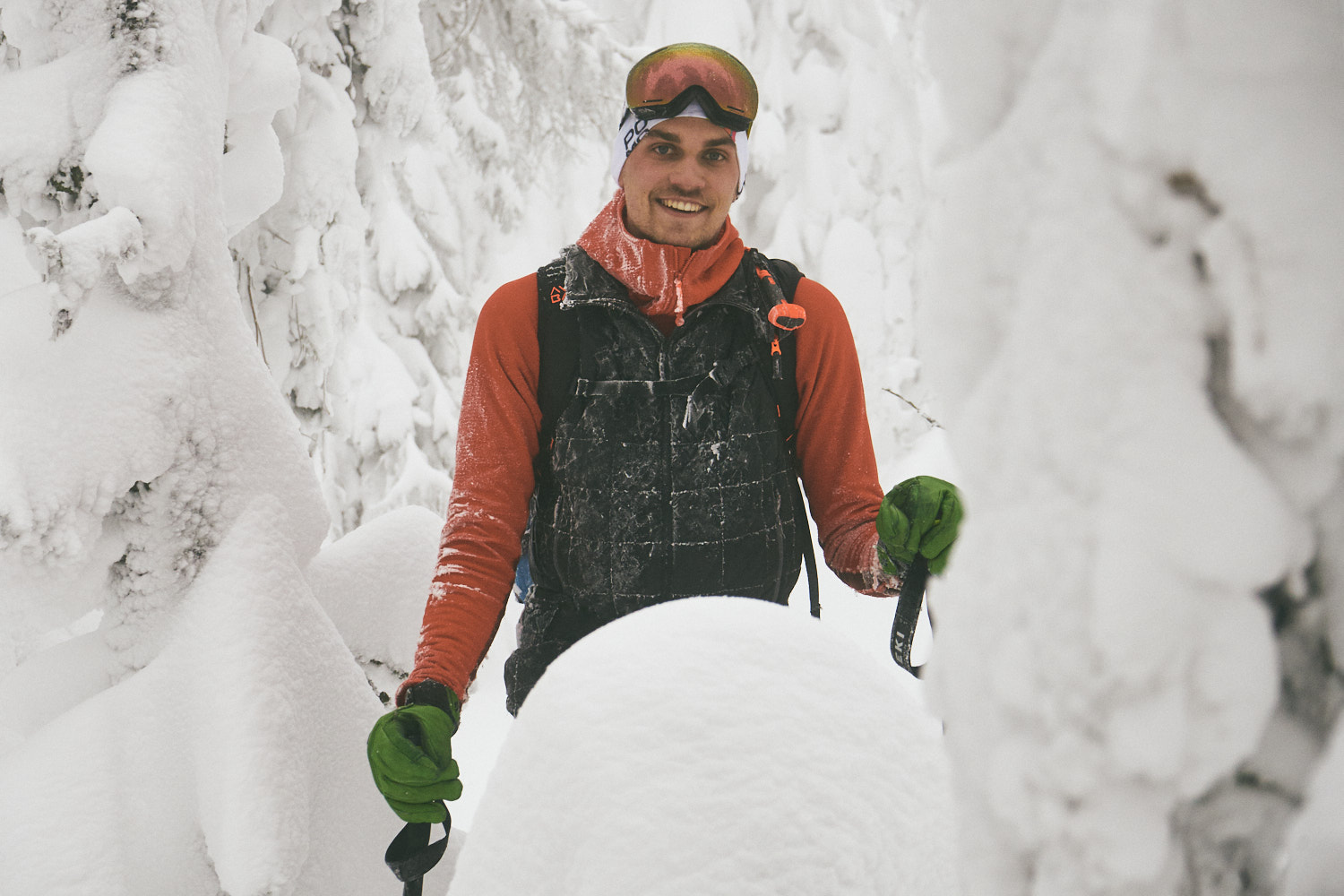
Still, this is simply the stage nature has reached, and we can only guess how many spanners humans have thrown in its works along the way. Greenland was supposedly green once too, so whatever. As homo sapiens outdooriens, we just have to adapt. And by that I don't mean heading for a white strip of snow sprayed into the middle of a green meadow at a cost of millions of crowns. That goes against nature and common sense alike. No snow? Then I'll make some - so I don't get bored. And besides, as I've written before, every crown we spend in these factories of snow and skiing fun helps shape the future face of the mountains. The calendar may say it's winter, but it's no weather for winter sports. Even so, there are some pretty good things you can do. Certainly better than scraping your skins along the edge of a piste or sledging on mud.
Am I holding on to that tiny crimp because my fingers haven't frozen yet, or precisely because they've frozen solid, so I can't feel the sharp crystal cutting into my skin? That's the eternal question that comes with rock climbing at temperatures just above zero. Either way, if the sun is shining and the thermometer doesn't show a minus sign, I'd a hundred times rather gulp fresh air, even on an easy route on real rock, than snort the chalk hanging in the sweaty air of a bouldering gym. So on the hard sandstone of Český ráj (Bohemian Paradise) and the even harder granite of the Jizera Mountains we look for dry south-facing walls that will let us climb. Of course, it's no time for hard projects. After all, numb fingers get on far better with a deep pocket than with a crystal sticking out a centimetre. But I'm holding real rock. Not pink plastic bolted to plywood. In spring it'll feel like new. And maybe thanks to this training I won't be so frozen at the belay in the Tatras.

From the crags we climb on up along the ridge. On the north-eastern slopes some snow is hanging on after all. A dusting. When we look back, we can count only two sets of human footprints in the snow, but dozens of animal tracks. And when we turn our eyes forward again to keep our steps out of the mud bath, two hefty stags cross our path. The last time I met a big fellow like that was seven years ago in the Jeseníky Mountains above Zelené kameny. It was October, and I think I was more in awe of him than he was of me. These two pretend not to see us and after a few seconds vanish into the forest on the other side of the trail. We soon leave it too and search the steep slopes above the stream for a cave to spend the night in.
There it is. A bit different from what we imagined, and maybe a little damp. But once we manage to coax up flames strong enough to cope with slightly wet wood, we'll be fine. And with the words "Once it gets dark, it'll be boring", we didn't skimp on hauling up provisions, so for a first warm-up a few hearty swigs of slivovitz go straight into our veins. Later, as we read aloud chapters from a book found on the dusty shelves of a second-hand bookshop, Příběhy mužů a hor (Stories of Men and Mountains), we sip hot mulled wine from a white enamel mug and the lid of a thermos. Good night.

A secondary-school teacher, Jan Havelka, set out to climb Praděd. That's what this whole book is about - 88 pages. Most people can sum that up in four slides of an Instagram story, so why does the old boy go on and on? Well, because he hiked up there in 1883. 137 years ago! Back then there was no tarmac road, no lookout tower, not even the pub without which hardly anyone would drag themselves up there today. And the climb from the nearest railway station in Sobotín took him two days. What's more, he only made it on the second attempt. And that's what I love. Reading about how people walked the mountains when they approached them with humility and knew that getting up a hill meant damn hard work. Not a damn hard bill. And I also love discovering, in lines written in old-fashioned Czech, not only places that look completely different today, but also those that haven't changed much in a century and a half, because getting there on foot hurts.
In fact, I've got quite a decent stack of books here, collected from bookshops and second-hand shops, which I just never get round to during the summer, when we can't stay under a roof any longer than strictly necessary to earn a few crowns for living and travelling. So now, with no powder pulling me outside, I'm devouring the pages and soaking up inspiration. Perhaps for when I follow in Mr Havelka's footsteps in the spring.
Skinning on those few centimetres of refrozen snow - dirtied by a layer of needles that fell from the trees during the last thaw - is no fun at all. And on foot? What a drag. If it isn't slippery, the crust gives way under your feet every third step. And where there's no snow, there's mud. And where conditions are like that, there's not a soul around. So it's the ideal opportunity for those of us who are drawn outside and don't mind getting our new sapphire-coloured Gore-Tex jackets dirty.
The mountains are criss-crossed with old hunting trails and paths. Local mountain people - starting with the German inhabitants before their post-war expulsion - maintained these tracks for decades, and they always had a practical purpose. So wandering around the mountains like this brings a certain sense of mystery and takes you back in your thoughts a century or so. "How much work must it have taken to build this dry-stone wall holding up the path on the steep slope? And why did they run it right here? In the middle of the woods, where there's nothing?" Back home, the frozen wanderer can then settle on the sofa with a hot cup of tea and start digging into some ancient book. And there are loads of places like that "just behind the house" that we have no idea about.
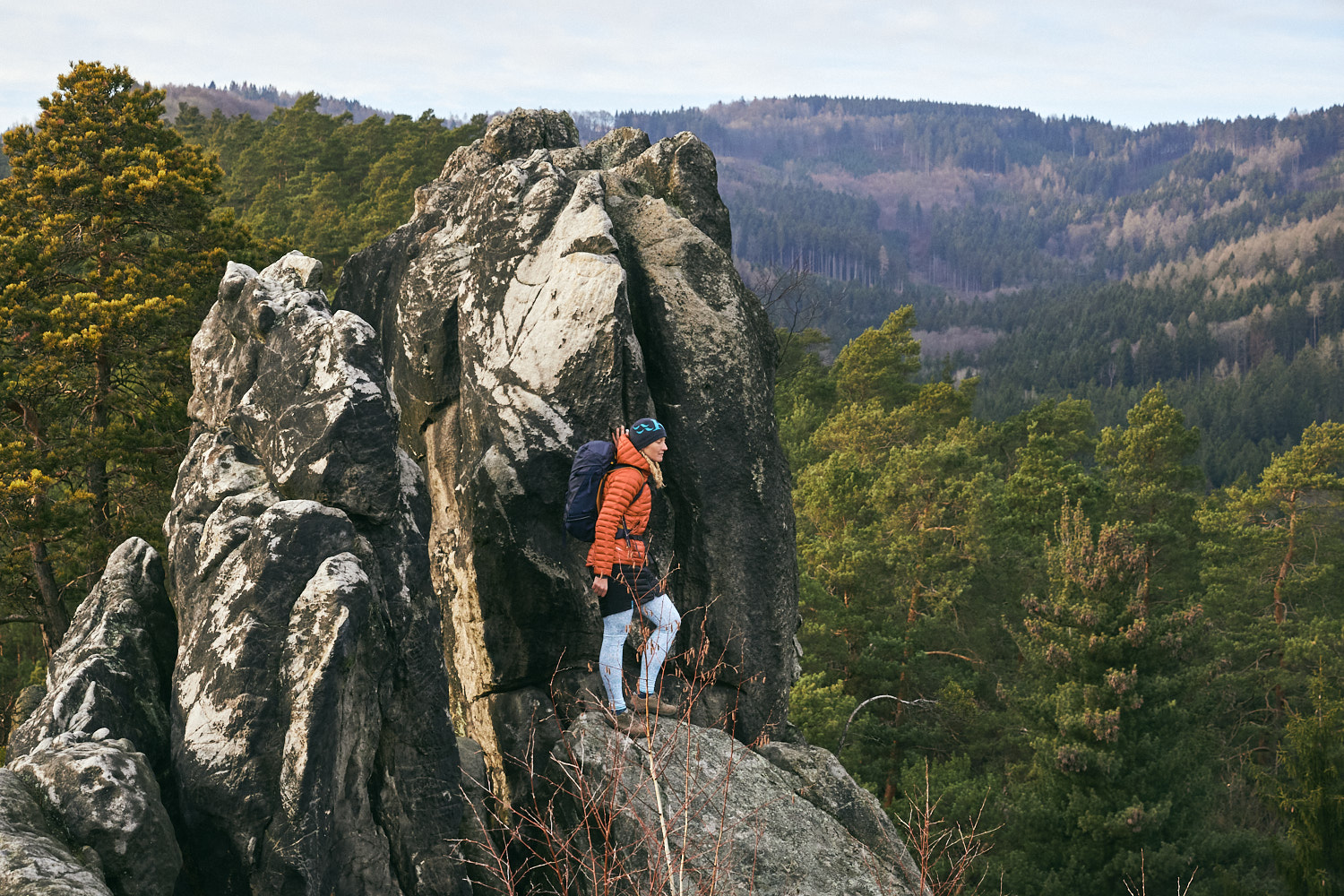
"What's up!? What are you looking for down there?" ... "Oh, just catching my breath." ... "Well, catch it and stop staring at the ground when it's so lovely all around." ... There's no getting away from it. With big lungs and pumped-up thighs, climbing a hill is simply easier. Even the walk-in to the crag with an 80-metre rope on your back and two sets of cams leaves fewer chalky handprints on your knees. So when conditions aren't good for anything, you can always run. True, sometimes your path is blocked by weak willpower treacherously propped up by warm central heating, a sofa with a fluffy cushion in the corner, and the cake your partner is just taking out of the oven. But it'll taste even better after your training session and a hot shower. So get out there.

Lowe Alpine Halcyon 35:40 pack
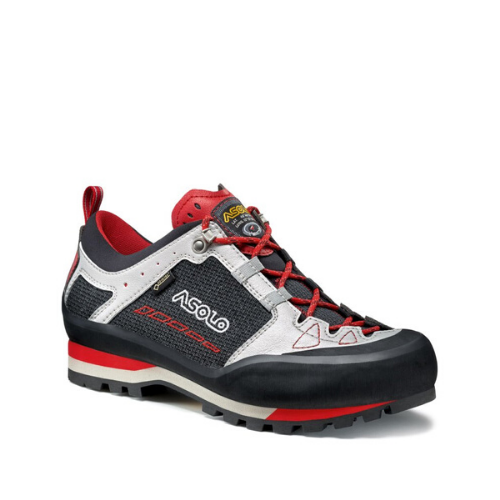
Boty Asolo Freney Low GV

Stormsocks waterproof socks

Boty Asolo Apex GV
I climb mountains. I write about mountains. I photograph mountains. And I always come back happy. It's written in my name, after all.
We shoulder our skis and trudge up the Kotelský potok valley. In the snow, which a few hundred metres higher starts to be just about deep enough to put our skis on, we don't spot a single sign of human presence. Everyone is flocking to Praděd. And by "everyone" I mean thousands upon thousands of people. For now, we're breaking our own trail in complete silence, and below the ridges two chamois size us up. Three kilometres further on, though, they'd rather stick their heads in the snow – if they were ostriches.
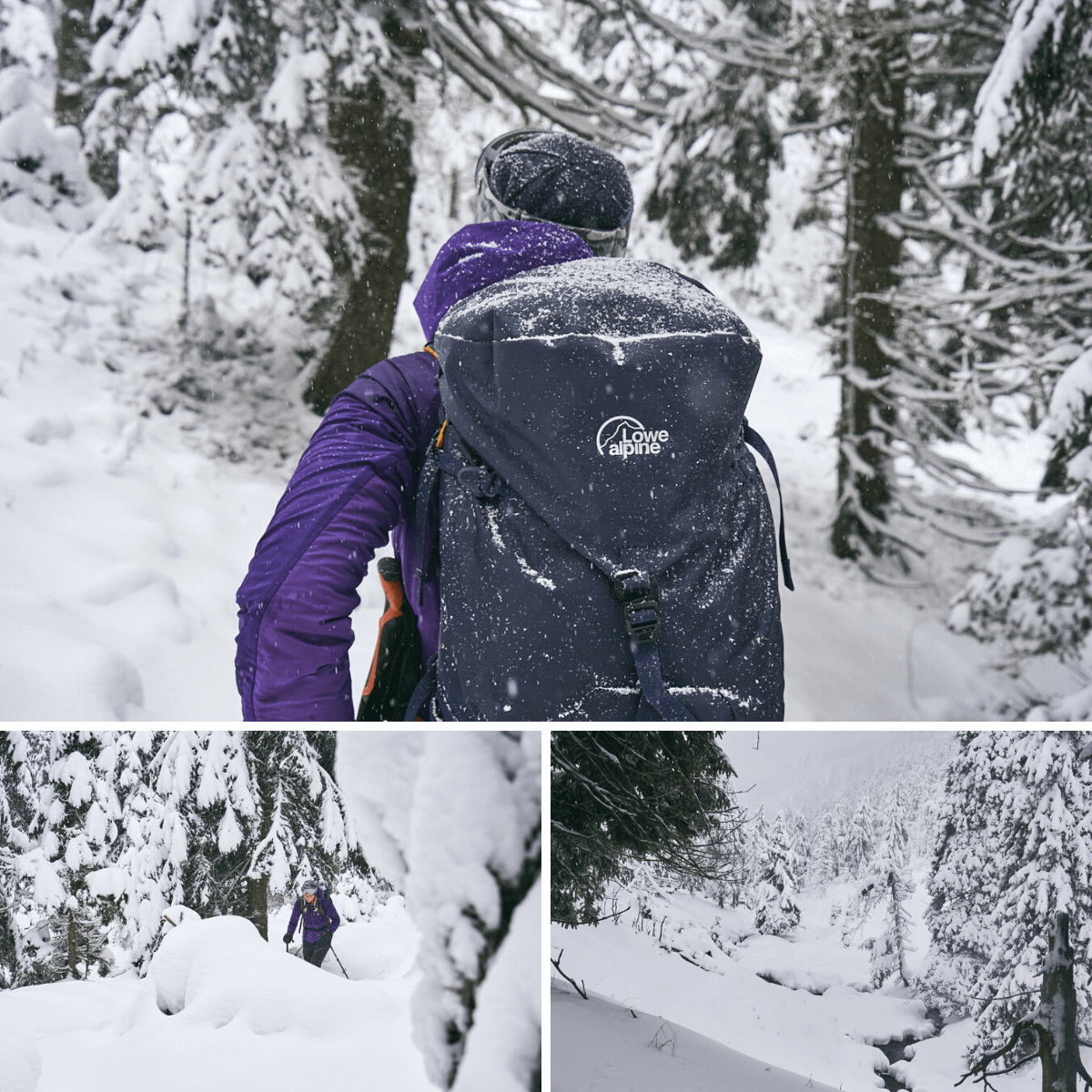
What a paradox that in the place with the cleanest air in Central Europe you can count more cars than in a shopping centre on the twenty-third of December. The designated car parks obviously can't cope, so the verges of all three roads leading into... ahem... the climatic spa town of Karlova Studánka come in handy. Clean air? Used to be. Environmental awareness has to give way to the longing to see what winter looks like. No wonder, when the lift operators down in the valley made such a miserable amount of it this year. Either way, that oh-so-precious white treasure – moving it from the stream onto the slope uses more electricity in one day than our household consumes in 20 years – can light things up all the way to the heavens. Never mind that the glare of the artificial lighting means you can't see the stars. Such paupers' pleasures as gazing at the sky don't make anyone any money.
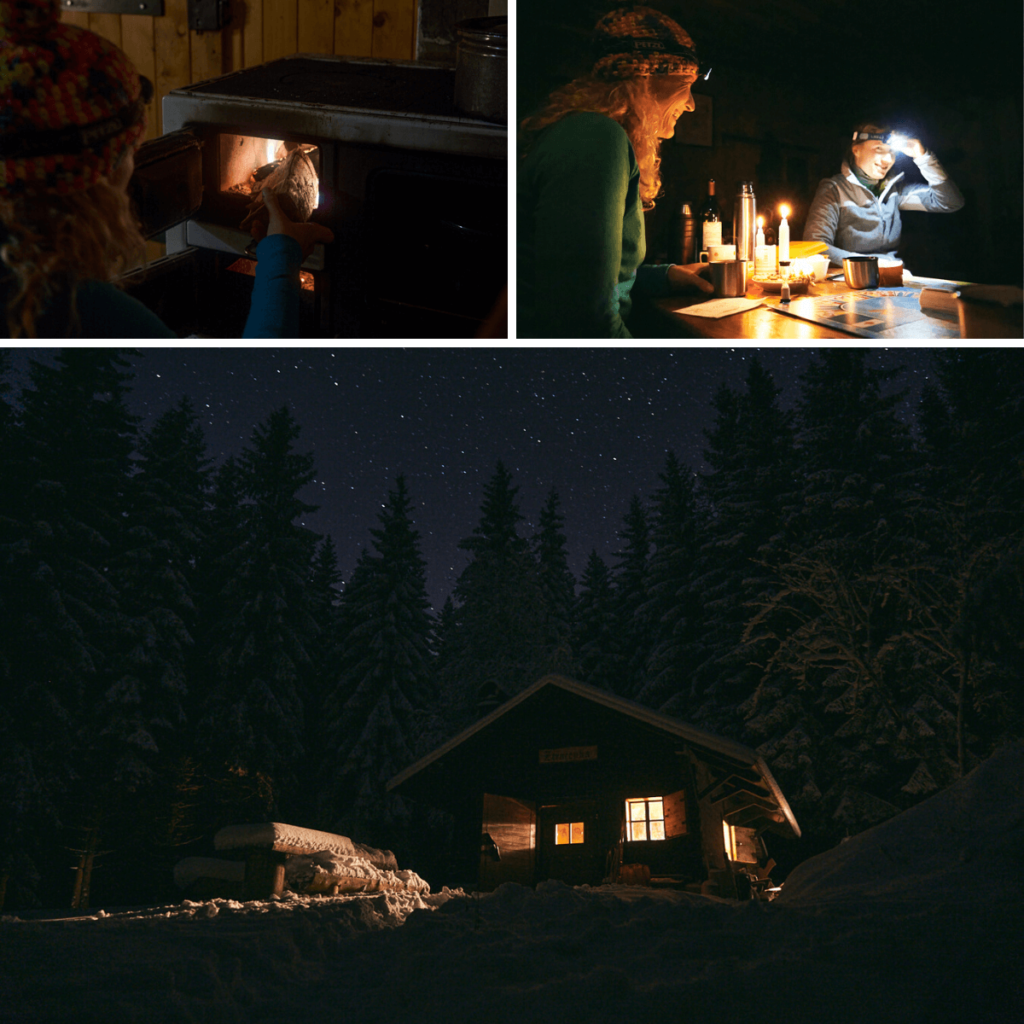
But we don't support this industry. We go to the mountains considerately, as part of nature. So we squeeze through the gap between the rear bumper of one car and the front bumper of another and disappear into the forest. We sink into the snow. We look for the right way. And we find it. In a little clearing in the middle of nowhere, we try which of the five keys on the ring fits the rust-stained lock on the door of a tiny cabin nobody has been to in six months. Nobody – except mice. Plenty of those have been through. But the stink will air out, the droppings will get swept up and we'll be warm, too – once we chop some wood in the woodshed behind the cabin and get the stove going. Food is served as it comes – as each of us pulls it out of the pack we carried up here on our backs. We've even got wine. And board games, which we play by the light of old candle stubs. And when I step outside for a pee in a snowdrift, I can see the sky clearing. The stars will be out. Here, they will.
But this way of being in the mountains, where we wash our faces with snow, have to take care of keeping warm at night ourselves and leave behind minimal or no trace, is becoming more of an anomaly. Under the onslaught of people who have put the mountains on a par with pastimes like the gym, the shopping centre or the aquapark, humility and consideration are losing 0:1. Still, we try to do our bit to nudge the score at least a little.
1. We walk, cycle and use public transport. In that order, depending on distance, and we take the car only as a last resort. We may not get as far or as high, but why should we make everything easier with technology?
2. We behave considerately, don't shout and don't do damage. Like guests who know how to repay their hosts' hospitality – for example by picking up litter along the trail.
3. Instead of e-scooters, sky walks and alpine coasters, we find our own fun in what nature offers. Because every koruna we spend on these attractions is a vote for what the mountains will one day look like.

I know exactly that three years ago Baby Jesus – who brings the presents in Czechia – left nothing under the tree for me. Because I didn't have a tree. True, we could have sung carols under the big artificial spruce, which here in the 35-degree heat – together with a plastic snowman – stuck out like a sore thumb. But when we decided to spend Christmas in Cambodia, it definitely wasn't to show off on social media with annoying pictures from our exotic holiday, during which the only things we'd get to know about the whole country would be the resort staff, deep-fried squid and the fact that Coca-Cola is just as sweet here as anywhere else in the world.
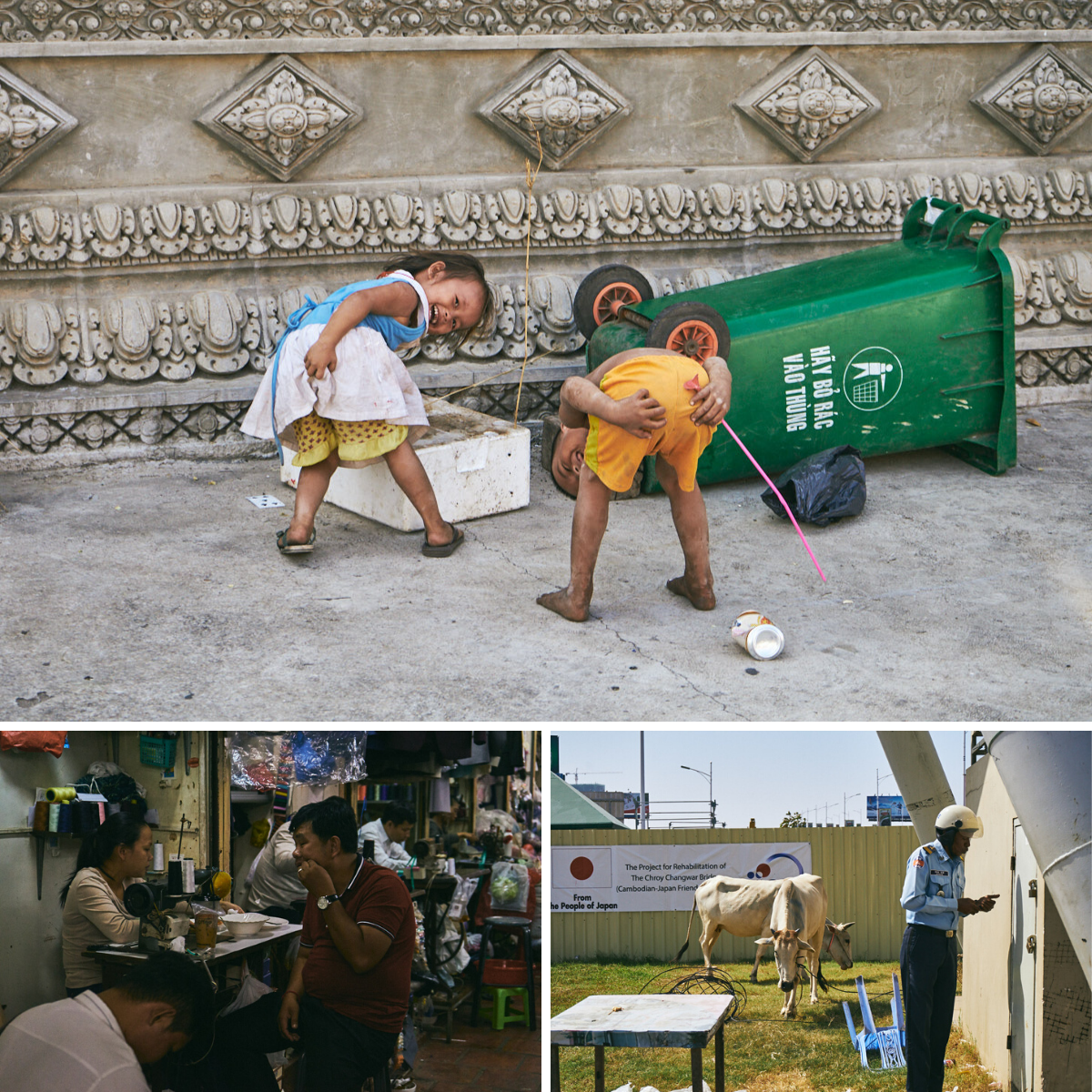
So on 23 December I was sitting with my laptop in a café where the staff behind the bar were bopping around in funny Santa hats, the speakers were blasting the chart-topper of the day by One Direction, and on the surface of the dirty Mekong – barely 50 metres from me – members of the local lower middle class were trying to catch something to eat from their floating home measuring four metres by one.

You're sitting over a cappuccino in surroundings that even a Prague café wouldn't turn its nose up at. Leather armchairs, a Nuova Simonelli espresso machine, air conditioning set to the perfect temperature. And over the screen of your MacBook you're watching people who have nothing in life but that four-metre junk with a ragged sheet of plastic stretched over it against the rain. And on the bank, their cow is grazing – so skinny it would give you goosebumps back home.
On the one hand, mobile data here is more affordable than in Czechia, the Cambodian king studied in the Czech Republic, and even Brno could envy Phnom Penh its Vattanac Capital Tower skyscraper. On the other hand, meat is dried in the dust on the street, rubbish lies everywhere and people live in shacks made of corrugated iron. Granted, if you stay somewhere nice and out of the way – in a pretty resort – you don't have to see any of it. But we wanted to. That's why we stayed in Phnom Penh – the capital of Cambodia – for a good 10 days.
We stayed in an apartment booked through booking.com. With a family who spoke French. Our landlord wore a waistcoat and polished leather shoes. And for lunch we went to a nearby street where rice was served from an enormous pot, the daily menu was kept warm behind a glass display and dished straight onto your plate, and the locals were seeing a white man for the second time in their lives. The first time was Lionel Messi with a can of Pepsi on a billboard by the bridge over the Mekong. We saw children playing in the dust by the road with old plastic straws, a cow grazing at a roundabout under the watchful eye of a police officer, and we saw a man die on the street.
Cambodia gives the greatest Christmas present of all. Humility.
But we wanted to see more. So the day after our Christmas Eve dinner at the local night market – rice with prawns – we moved on a bit further.
Also read our article on how travelling changes your values and the way you see the world.
The temples of Angkor are on the UNESCO World Heritage List, and as a classic Czech film line goes: "Compared with that trip to Kokořín, I was downright disappointed with this tour." Wall-to-wall people. American pensioners, Japanese documentary makers, European influencers. The whole world. Only about Cambodia itself you'll learn absolutely nothing here. Unless all those people give you a headache and you get the runs from a pineapple bought by the roadside. And I mean fast. So I only saw the biggest and most famous temple, Angkor Wat, from the other side of a canal, where the toilet was within sprinting distance. Apparently it was really beautiful. I don't know, I don't regret it.
After two days, when my guts had nothing left to give the toilet bowl, we got back on the pedals of our hired bikes. This time heading south of the town of Siem Reap. To Tonlé Sap lake, where tourists don't go.
A few kilometres out of town, the road stopped meeting the criteria for that name and turned into a dusty track full of potholes. And then it suddenly ended among shacks of corrugated iron. "Are we in the right place? A woman is plucking a chicken, a dad with a stone in his hand is staring at two pale figures who've suddenly appeared, and a gang of kids is charging towards us." We didn't manage to get away. And for our audacity we were "punished" with half an hour of messing about with the local youngsters. At one point I had two little Cambodians on my rear rack, another standing on the top tube between my legs and a fourth pushing us.
If a grubby little Asian man in flip-flops walked through a Czech suburb of villas and started playing with your kids... They probably wouldn't play for long. More likely he'd get hit with that stone. Nothing bad happened to us. If anything, we got another present. Another dose of humility.

True, there are people in Cambodia who live pretty well. Like Reth, who after a week of us staying at his house invited us to breakfast with the whole family. He showed us how to eat a typical Cambodian soup properly and let us taste bananas that those stunted, tasteless Czech ones can't hold a candle to. And he also explained that to live this well, he works in Phnom Penh during the week, his wife on the other side of the country in Battambang, and they only see each other and their two little girls at weekends, here in Siem Reap.
That was our Reth. And then there are plenty of people in Cambodia with nothing over their heads but that corrugated iron. And at least one phone in the family with YouTube, where they watch us in the West throwing away a third of our food and buying all sorts of rubbish we'll soon cast aside. In the name of sustained economic growth, we also exported Coca-Cola, Lay's, canned Heineken and plastic bags to them. Sadly, we didn't pack instructions saying they can't just toss them in the ditch like a banana leaf. And so the place is a mess. Partly also thanks to the factories that make those nice "Outdoor is my passion" T-shirts for under our Czech Christmas trees.

We wrote about how to deal with your own waste on the road in the article Don't Destroy, Don't Litter and... Don't Travel at All?
After New Year we left Cambodia and headed for Vietnam. To keep exploring. By the way, the beaches there... also quite a rubbish dump. And a year later, on the morning of 24 December 2018, in a gale of the kind only the Jeseníky Mountains can produce, I'm skinning up Praděd with my parents and other great people. Every single one of us has the left half of our face frostbitten. Judging by that, I'd guess it's blowing from the north-east. It's foul. And we're having a great time. Up at the transmitter, Dalibor's bottle of slivovice passes from hand to hand, the bottom of the Christmas biscuit tin is slowly coming into view, and every now and then you have to lean in to hear the person next to you. But better than leaning off the sofa for the remote.
Will there be presents this evening? Probably. But since coming back from Cambodia, I'm more than happy to find one soft parcel with socks under the tree. Whatever that green grump in the striped scarf might say.

The next day the storm calms down, but breaking trail along a twelve-kilometre ridge at seven thousand metres with just two people seems impossible. The only option is to descend and put the Snow Leopard title on ice for at least another year.
Katka Mandulová has stood on the summits of the four highest seven-thousanders of the former Soviet Union, and only one more – Pik Pobeda – separates her from the Snow Leopard title. Some years nobody even attempts this mountain, while there are queues beneath the eight-thousanders in Nepal. Katka climbs mountains that stand off the beaten track, and few would call her a climbing celebrity. Despite that – or perhaps because of it – she is hugely inspiring. Among other things, she has met the Dalai Lama, hitchhiked across the whole of Russia to Vladivostok and learned from the people of Siberia how to dress for the cold. And last but not least, she is a key lawyer at Deloitte Legal. Read our chat with Katka Mandulová.

Let's start gently. What did you have for breakfast today?
An egg – that's about the only thing I can cook.
What book are you reading at the moment?
Two Poor Romanians Speaking Polish (Dwoje biednych Rumunów mówiących po polsku) – a slim little booklet I found in a book-swap box, and it really made my day.
Now a bit deeper. Can you remember the last thing in the mountains that made you happy?
I was happy with our last expedition to Pik Pobeda. We had some beautiful moments high up in the Tian Shan, the Heavenly Mountains – what more could you want? We had some good climbing, came back alive and we're still friends.

And the other way round – what really disappointed you in the mountains?
This year we didn't make it to the summit, and that's always a bit of a letdown. But in the end it's not the most important thing. At least it's a reason to go back to Pobeda and take down the imaginary bag we hung up there.
Judging by your love of old Jasan wooden skis, you must be quite a nostalgic. What do you miss most in the mountains from times gone by?
I'm not a nostalgic. I'm just drawn to things that aren't mainstream at the moment. Whether it's hitchhiking, skiing on old wooden skis or seven-thousanders. Everyone wants the eight-thousanders, yet the future of climbing lies in the sevens. They're often unexplored mountains, out of sight of the crowds, and the expeditions heading there tend to be non-commercial. They promise new, endless possibilities for climbing and adventure. From times gone by, I miss some glaciers that have completely disappeared or are disappearing. Or trees being wiped out by bark beetle. It's worrying, but hopefully we'll find a way to save the beauty of nature.

You've written two books, and you have my great admiration for that. How did you get into writing books?
I'm a natural scribbler. And I have a thousand stories in my head from my travels around the world, so at some point I decided to share them. Vladivostop was a kind of upgrade of my travel articles, which people devoured. And Jasanové básně (Ash-Wood Poems)? That's for a more discerning audience. Above all you have to be a skier to really appreciate them. Anyone who shares my passion for skiing will enjoy reading them.
Can you briefly introduce the books?
Vladivostop is a travelogue about hitchhiking across the whole of Russia to Vladivostok. Hence Vladivostop. I self-published it in 2010. It's a hitchhiking bestseller and an inspiring read. Some readers even shot off eastwards after finishing it. Jasanové básně is really an encyclopaedia of skiing in verse. It came out the year before last, and I have fun sometimes reciting the poems to skiers right there on the trail. Both books have an original design – I always worked with interesting creatives – so they're little works of art.

You've travelled a good chunk of the world. South America, Russia, China, Iran and more. Did you meet anyone on your travels who influenced you significantly?
At Lake Rewalsar I briefly met the Dalai Lama, which was of course wonderful and, given my experience of travelling in Tibet, also sad. But I value much more the real friendships that came about on my travels or because of them. I have many good friends among climbers and I draw inspiration from them for what I do.
Climbing seven-thousanders undoubtedly means a lot of sacrifice. You already have four under your belt – Khan Tengri, Peak Korzhenevskaya, Peak Communism and Lenin Peak. What do you miss most on expeditions?
I don't particularly suffer up there. I don't miss material things – I'm happy to live simply. On the other hand, if you decide to spend every summer somewhere on a glacier, you logically miss out on other opportunities that are at least as tempting. When you've been stuck in a tent for a week and can't move, you start wondering whether the whole thing makes sense and whether you'd be better off at Lago di Garda, say. In the hard moments especially, despondency creeps in, but with time everything looks different again.
How do you cope with the cold? Especially your hands, I'd guess. Women often struggle with it in the Czech mountains, let alone on seven-thousanders at minus twenty.
I once had frostbite on my feet. The blackened tips of my toes healed in the end, but it was an unpleasant experience. Since then I've been very careful. I learned my lesson and bought better boots. Gear matters. I learned that in Siberia, when I was finding out how the locals cope with the bitter cold. Siberians are nothing special compared with other people. They just know how to dress better.

Was it ever like that up there, where you told yourself: “Well, if this doesn't work out, that's it.”
In the high mountains you move through terrain that is anything but friendly. The slopes are avalanche-prone, there's often a risk that a cornice will break off with you and carry you down into the valley. Or when the wind has been lashing your tent for days on end, all you want is to be out of there. These aren't conditions you can endure for long. You have to hope you'll somehow slip away, that the mountain will let you go – up, or at least down. I've taken conscious risks many times, but I've never been in a situation where I was truly fighting for my life. That, of course, can change your perspective too.
Do you feel like coming back from the mountains to civilisation? To normal life and the daily grind at work?
Surprisingly, yes. I'm a lawyer and my work makes sense to me. Any work makes more sense than endless loafing around. Travelling doesn't have to be just loafing, but after a while the travelling life runs its course in its own way. Years ago, when I was coming home after a year on the road, I almost envied shoe-shiners for being more useful to the world than me. It's good to know why you travel, what it gives you and what it gives the world around you. Once that sense of the new, of discovery and adventure fades, it's better to go home.
When you climb mountains, are you interested in their history? Who discovered them, named them, first tried to reach the summit? Does that inspire you?
I'm mainly interested in the exploration of Central Asia. Alexander the Great's phenomenal expedition to somewhere in northern Pakistan, or the monk Faxian's journey to Turkestan, made a big impression on me. I'm also fascinated by the work of the geographical societies in the imperial era and the so-called Great Game played over this territory. That included crossings of the high mountain passes of the Karakoram and Hindu Kush, secret incursions into the closed kingdom of Tibet, the journeys of the famous explorer Przhevalsky and the mapping of the mountain terrain of the Tian Shan. That's what I grew up on, and it's why I keep coming back to this part of the world.
Why do you climb mountains?
Because the mountains reveal what really matters. It's easier to see what's worth it in life and what isn't. Through climbing I get to know myself, my new possibilities and my limits. I love giving my body a proper workout, taking a deep breath of fresh air, getting a bit frozen and clearing my head. It toughens me up, gives me resilience, the inner strength to handle big things calmly and, above all, joy. Wouldn't you like to look at the world from above?

These days there's a cable car up almost every hill. In the Pitztal they're bulldozing the glacier for the sake of the skiing experience. A snowcat will take you almost to the top of Elbrus, and Everest is now climbed mostly by those who have the money. Do you ever think about how we could repay the mountains for the indelible mark we leave on them as humans?
When I walked around the sacred mountain of Kailash, home of the god Vishnu, I learned from sad Tibetans that the Chinese want to build a road and a McDonald's there. I don't understand how anyone could even think of it. We're losing respect for spiritual places and for nature, and in doing so we impoverish ourselves. We choose shortcuts, comfort and short-term profit. The only way to turn it around is by setting a personal example and educating others. It would be great to change the trend so that cheerful modesty became the highest virtue again. I'm not entirely consistent, but at least when travelling I try to do no harm, minimise my footprint and inspire others.
And the last question. If you could tell the readers of this interview one single thing, what would it be?
Want less!
"Almost everyone who was on the summit when the storm hit never made it back down. Of five climbers, only one reached base camp. The others died."
Thanks to her achievements and her approach to the mountains, Katka Mandulová has earned the support of our brands Asolo, Lowe Alpine, Rab and Bridgedale.

It's mid-October, it has to be said. And the plan is to set off exactly as Kauschka did back then – at 2 a.m. from Liberec's Lidové sady park. We pack minimalist. At worst we'll warm up with soup at some mountain hut.
The only dilemma is footwear. I'll get further on an empty stomach than with raw heels and an aching instep. So they have to be light, yet comfortable. Roomy, too, because your feet swell after so many kilometres, and if my little toes start getting squashed, I'd rather jump into the Snow Pits. Although... well... that's Poland... I'll have to think about it.
So I have a brilliant idea. I get Asolo to send me a pair of Flyer trainers. Friday morning I collect them from the post office, in the afternoon I wear them into town for a coffee – to break them in, that's what you're supposed to do with new shoes, apparently – and at 2 a.m. on Saturday we set off.

I hate tarmac. I hate the never-ending Promenádní road. I hate whoever came up with this Sněžka idea. Which is me. By five in the morning at Smědava my thighs have turned to wood. After all, Jakuszyce isn't a bad destination either, is it? At least there's a bus back to Liberec from there. Luckily, with the sun rising over Jizerka and a switch to a soft forest path, it's as if we've been given new legs. No more tarmac today. And honestly – I'm amazed that nothing on my feet is pinching yet. My toes have so much room you could smuggle some Polish contraband in there. Quite a surprise for an otherwise narrow Asolo.
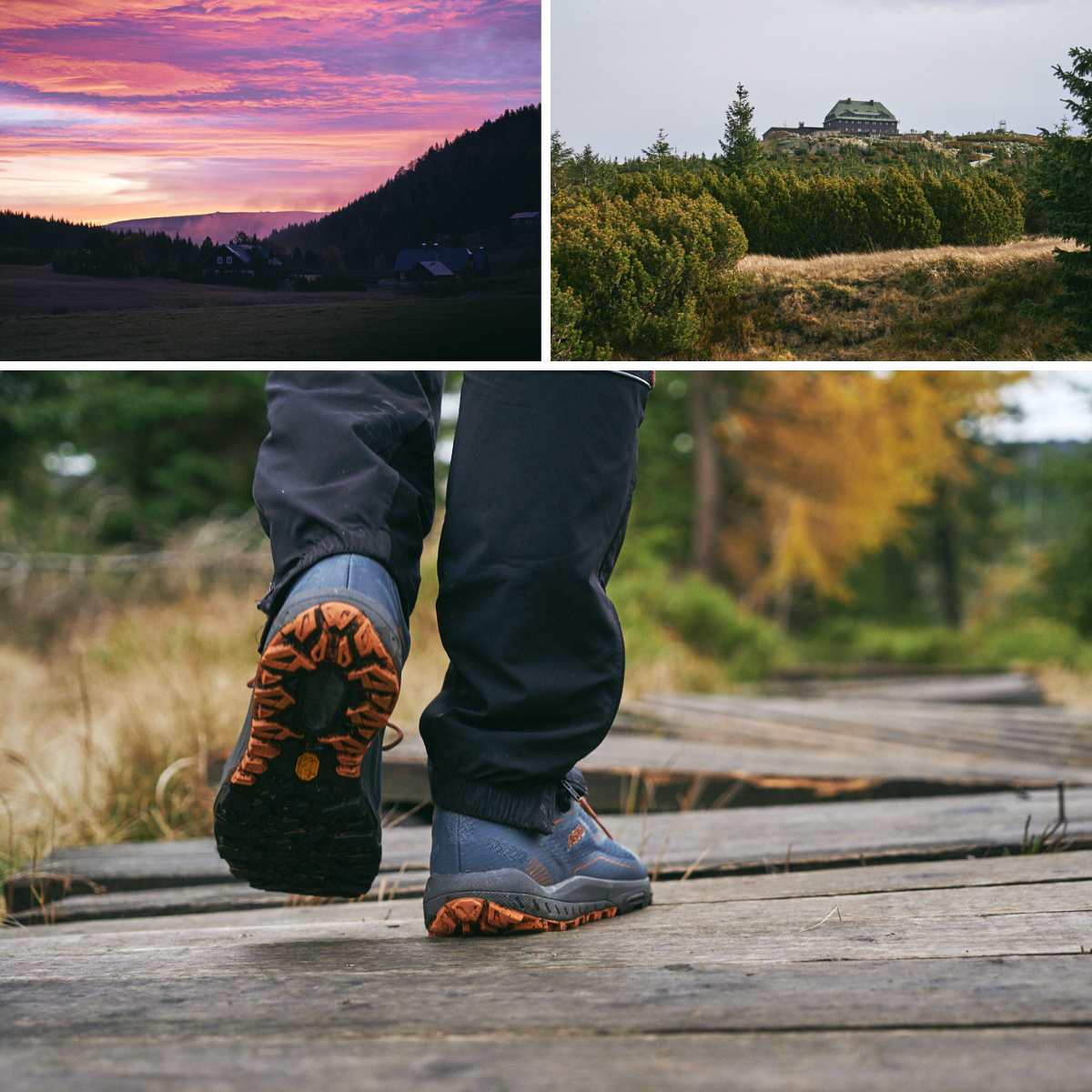
Shall we stop for soup at Vosecká hut? It's only a half-kilometre detour. No, we shan't. Every 100 metres saved is good for our legs. Though I have to say that even with more than 40 kilometres behind me, I can't feel the slightest hint of discomfort in my Asolo Flyer trainers. They're doing the job nicely.
And below Vysoké kolo we finally see it. Sněžka! And it's still a hell of a long way off. So we'd better not look at it. At Petrovka we take a break and wolf down bread rolls, Ája takes her shoes off, her instep is starting to ache. My feet don't need a break – I can't even tell I'm wearing shoes.

No, the Poles just keep walking and won't step aside for love nor money. And their Agnieszkas shriek like mad while they're at it... Are we there yet? My legs are slowly refusing to obey, and the Czech-Polish Friendship Trail isn't exactly a solid foundation to build on. Nothing but boulders and holes. Luckily, the Vibram sole on the Flyers grips like a dream. Wherever I step. All it's missing is a pair of little wings.
At a quarter to five we're standing on Sněžka. In fog. Ája can't put weight on her foot any more for the pain. My thighs have turned to wood. The remaining 28 km to Harrachov probably isn't happening today. We finish as high as we possibly can, after 66 km, 2,400 metres of ascent and 1,200 metres of descent. Hats off to Mr Kauschka. Hats off to the Asolo Flyer trainers for carrying me all the way here without a single sore spot or blister.
And now tell us what time the chairlift goes and where we can get something to eat!

Since getting back from Sněžka I haven't gone out in any shoes other than the Asolo Flyer. I wear them for climbing trips to the Jizera Mountains, for strolls in the Jeseníky Mountains and for that coffee in town. I've even climbed in them – an easier route on Jizera granite. I wonder how they'll like the Jordanian desert?

