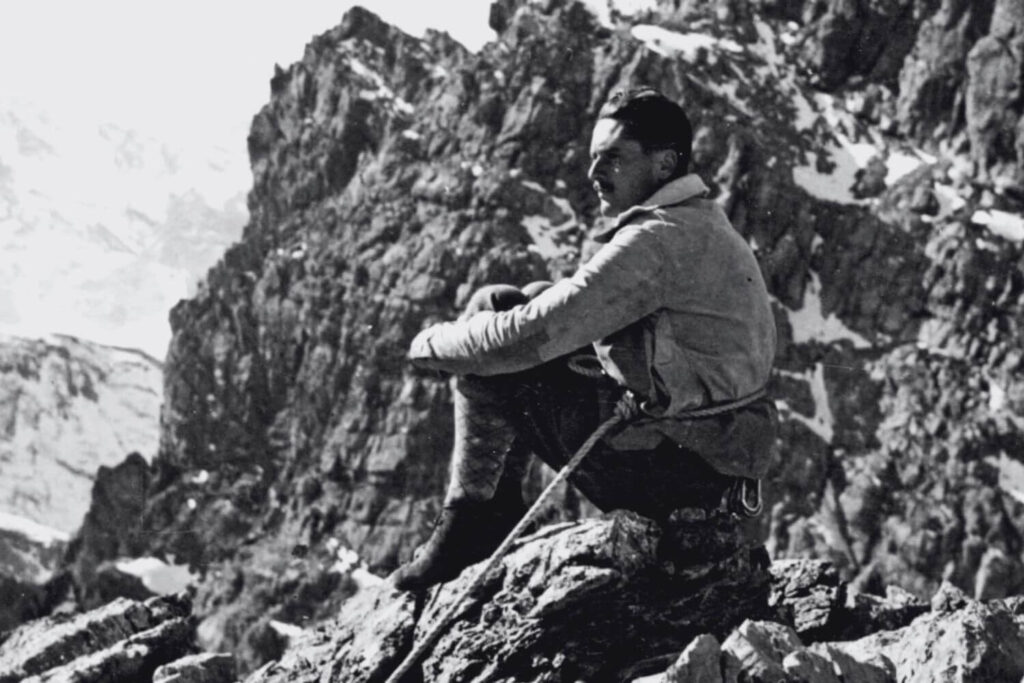
She sat at the desk in her flat in Dilli Bazaar, crammed with books, stacks of notes and photographs of mountains. An old map of Annapurna lay on the desk. She took a sip of black Darjeeling tea from her favourite blue cup. A faint whiff of exhaust fumes crept in through the half-open window. She had long since grown used to the constant honking and rattling of engines that eventually blended into one continuous hum. Kathmandu was far from a quiet city. Inside her flat, though, a different pace reigned – and the old clockwork on the shelf tapped out its slow rhythm.
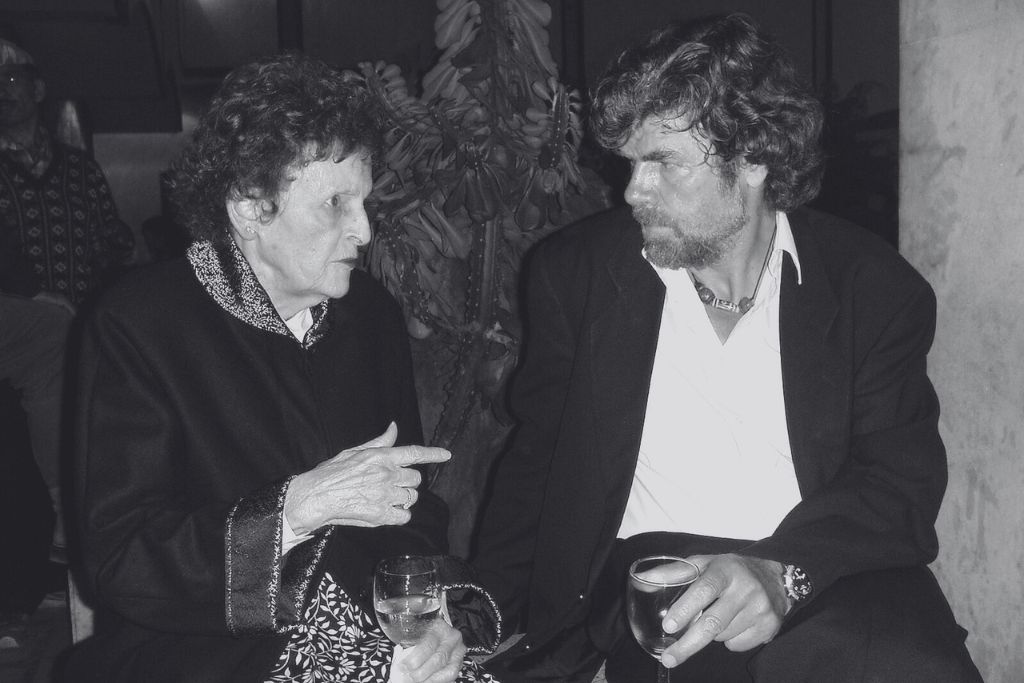
In the corner of the room, next to a shelf of climbing diaries, a photograph of Reinhold Messner leaned against the wall, taken during one of his visits to Nepal. “Elizabeth,” he had told her back then over a glass of wine, “mountains aren't about who stands on top. They're about who stays true to their own view.” That conversation had stuck in her memory. Messner's take on climbing was different – less about trophies, more about philosophy. But even he always brought proof. Truth was something they agreed on.
Behind Messner's photo hid a picture of her with Tenzing Norgay. When she first met him, she was fascinated by how warmly he spoke of Hillary. “Mr Hillary always treated me as a partner,” he told her. “In the mountains, that's not a given.” Tenzing's perspective shaped Elizabeth's way of seeing, too – she realised that mountains reveal not only strength, but humanity as well.
The squeal of brakes snapped her out of her thoughts. She leaned out of the window. The air was heavy and humid. From a nearby temple came the soft tinkling of prayer bells, interrupted by a white pickup that had just pulled up in front of the house. A tall man got out.
“George Wright,” she murmured to herself, finishing her note. His ascent of Annapurna was already the third this season about which she'd heard conflicting reports. “He'll have to explain this to me.”
“Good afternoon, Miss Hawley,” he greeted her as he appeared in the doorway. A blue T-shirt covered in sponsors' logos hung off him, his face was tanned and his features sunken to the bone. He looked exhausted, but confident.
“Mr Wright,” she replied calmly. “Come in. I have questions.”
Wright sighed and sat down in the armchair. The wooden frame creaked under his weight, releasing a faint scent of wood mixed with the wax used to care for old furniture. “Elizabeth, I don't know what you've heard, but I reached that summit. The storm came out of nowhere, I couldn't stay more than a few minutes. That's why I have no photos. But I was there.”
Elizabeth looked at him over the rim of her glasses. Her wrinkled fingers ran along the spine of her notebook. Its leather cover was smooth and worn from long years of use. “And your partner? He went back down to base camp with symptoms of altitude sickness, didn't he? Why did you carry on?”
“We were close,” George Wright protested. “I felt I could make it.”
“Let's say so,” Elizabeth replied calmly, and fell silent for a moment.

Meanwhile, Wright was looking around the room. His gaze fell on an old rug that looked as if it had seen more than one century – its patterns worn away in places, yet still beautiful. On the walls hung photographs of climbers who were long gone from this world. There were snapshots from Elizabeth's early years, too – in one of them she was smiling alongside Sir Edmund Hillary and other members of the Himalayan Trust. Hillary had asked her back then to help build schools and hospitals in mountain villages. What struck Elizabeth was not only his determination, but his humility. “Helping those who have little is worth more than climbing Everest,” he once told her.
Thunder rumbled outside. Elizabeth glanced out of the window. The darkening sky seemed to threaten to swallow the whole city. She felt the air thicken, and a light breath of damp tickled her skin. She laid her Parker pen down on the notebook.
“Mr Wright, do you remember Sergio Martini? He claimed he'd been on Lhotse. He had no proof. Do you know what he did?”
Wright shrugged. “He went back?”
“Exactly! Three years later,” Elizabeth nodded. “And Ed Viesturs? He claimed he'd been on Shishapangma, but he'd only reached the central summit. I told him that wasn't enough. And what did he do?”
“Went back too?” Wright muttered.
Elizabeth smiled and leaned closer. The old wooden desk creaked under her hands. Its surface bore faint dents and fine scratches. “Understand, Mr Wright. This isn't personal. But we have to keep the stories true. Not for my sake. For the sake of those who come after you.”
Wright ran a hand across his forehead and pushed his fingers through his overgrown dark hair.
“I didn't come to Nepal fifty years ago to be a judge of climbers,” Elizabeth went on. She knew many considered her strict. But she was only trying to preserve what mattered.
“Elizabeth, what do you do when you're not dealing with expeditions?” Wright asked out of the blue.
The question surprised her. “I read. I love novels. And I look after my garden here in Dilli Bazaar. It's my little oasis in all this chaos.” She smiled. “Even I need some peace now and then.”
Wright nodded, but he seemed to be thinking about something else. “I understand, Miss Hawley. But what if I don't make it again? You know it's partly a question of luck.”
Elizabeth watched him for a moment, as if putting together in her head what she would say. “Then your ascent will remain disputed,” she replied. “But remember, the mountains will wait. They're not there for trophies. They're there for you.”
Wright was silent for a long time. Finally he stood up and nodded.
“When you come back, I'll be here. If you want your story to live on, do it properly.”
When Wright had gone, Elizabeth sat down at her desk. The rain was now drumming harder on the tin roof, and the sound of running water mingled with dogs barking in the distance. Elizabeth listened and closed her eyes for a moment. The tea had long gone cold, but she could still taste it on her palate.
She opened her notebook and wrote another line. She thought of Anatoli Boukreev, of Edmund Hillary, of everyone who had passed through her flat – the brave and the foolish alike. Each of them was part of the story of the mountains. And those stories had to be preserved – truthfully and completely. That was the point of her work. And the point of her life.
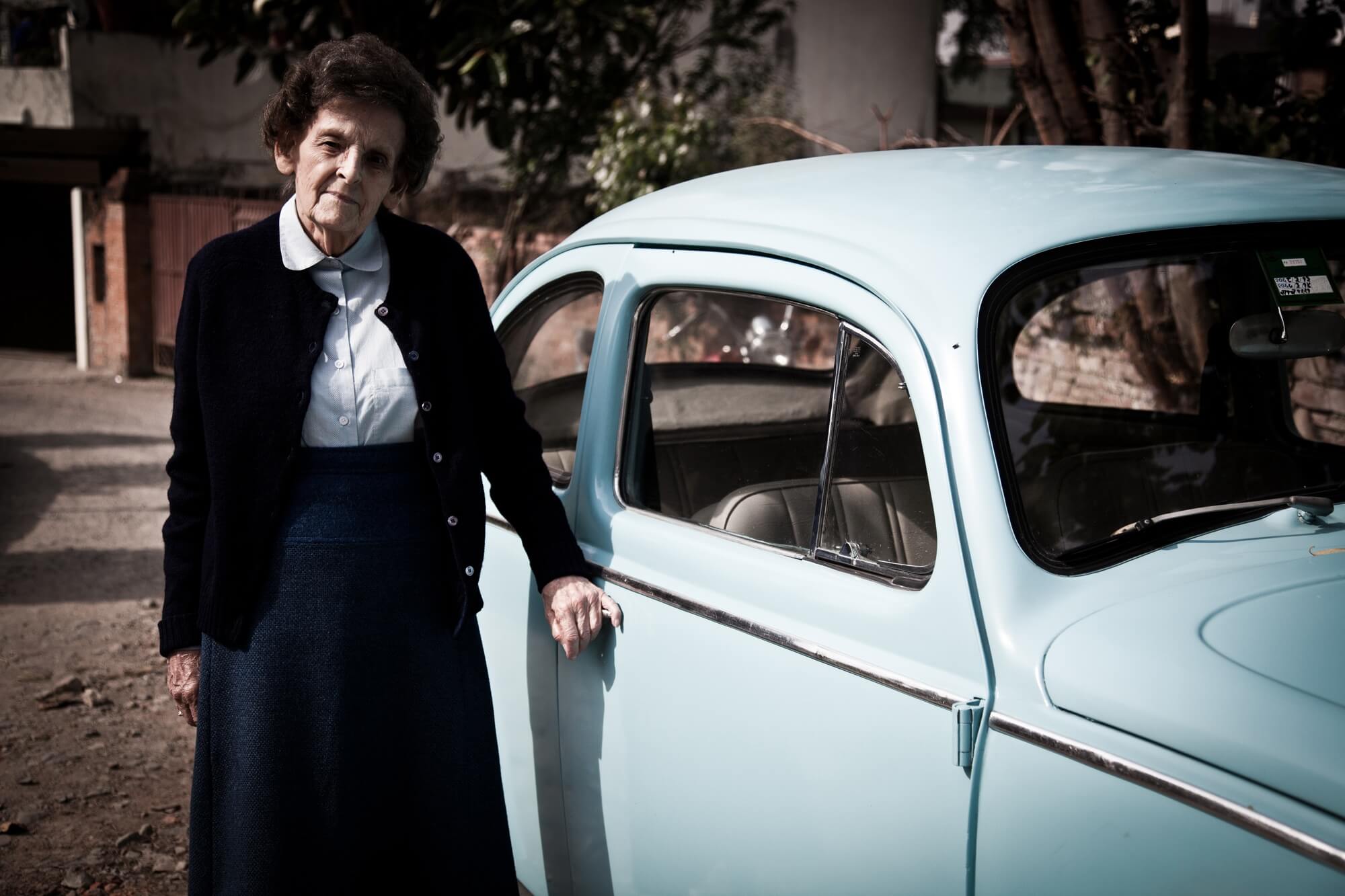
Elizabeth Hawley (1923–2018) was an American journalist and mountaineering chronicler whose name became synonymous with thorough and truthful records of Himalayan expeditions. Born in Chicago, she studied history at the University of Michigan. After a short stint working for a magazine in New York and travelling the world by ship, she settled in Kathmandu in 1960, where she lived until her death.
Elizabeth Hawley originally worked as a political correspondent, but soon became involved with Edmund Hillary's Himalayan Trust, which brought her to the heart of the climbing world. Although she never climbed herself, her knowledge, sharp mind and uncompromising questioning made her the authority on documenting mountaineering ascents. Her database, known as The Himalayan Database, contains more than 25,000 records of Himalayan expeditions since 1905.
Elizabeth Hawley was known for her meticulous approach and her ability to interview climbers in a way that drew out the details of their ascents. She wasn't afraid to label some of them as disputed when evidence was lacking – among the best-known cases are her decision to mark Sergio Martini's ascent of Lhotse as unverifiable, and her challenge to Ed Viesturs to go back and climb the main summit of Shishapangma.
Hawley played a key role not only as a chronicler, but also as a witness to the changes in Nepal, where she watched the country modernise and climbing transform into a commercial sport. Even so, she stayed true to her belief in the importance of the truth. Her work, valued by climbers and historians alike, became a fundamental source for the study of mountaineering history. Elizabeth Hawley devoted her life to documenting the stories of the mountains and those who conquered them, remaining the embodiment of precision and impartiality.