“GORE-TEX? Useless! My feet sweat more than in boots without a membrane. And after two hours in the rain? It squelches like I'm standing in a pond.” Yes, yes. People do say that sometimes. And it does happen. But is the membrane to blame? Or is it that moisture has other ways in and every membrane has its physical limits?

The membrane is hidden in the boot between the lining and the outer material. So you can't see it, but it wraps around your whole foot. From the toe to the top of the boot. When moisture seeps through the upper or the seams, it stops right at the membrane – and gets no further.
But it's not some kind of magic plastic bag. More like a clever sieve. It contains billions of pores that are so small a drop of water can't get through, yet big enough for molecules of water vapour (in this case, sweat) to pass. A drop is roughly 20,000 times bigger than the pores, while water vapour is 700 times smaller. So water stays out, vapour can get out.
The membrane is a full structural component of the boot – not just a glued-on film. Inside the boot it sits as a very thin, separate layer between the outer material (leather or textile) and the lining. Think of it as another “sock” wrapped around your foot. It's sewn separately, its seams are sealed with waterproof tape and the whole package is then inserted under the upper and joined to the sole.

There was no way round this, not even if Bob Gore (the man who invented GORE-TEX) had joined forces with Einstein and Oppenheimer. You might remember an experiment from physics lessons. You add salt to a glass of water, spoon by spoon. But at a certain point there's so much salt in the glass that the next spoonful won't dissolve. The salt just sits on the bottom. It's called a saturated solution.
It works the same way when the air outside is full of water – 100% humidity, fog, warm heavy rain. The water vapour from your sweat simply has nowhere to squeeze into. It could push through the membrane, but beyond it is an environment that can't take any more moisture. And then you feel like that damned “Gore” has leaked. It hasn't. The water vapour has just condensed into water.
A membrane works best when it's cooler and not too humid – spring, autumn, winter, rain or snow. Simply put, it has to be warmer and more humid inside the boot than outside – so the sweat has somewhere to go. It's worse in warm, muggy weather and in a long downpour, when the air is at 100% humidity and the boot upper is soaked with water too. The surroundings then act like that saturated solution.


When the boot upper soaks up water, we're back to the problem of water vapour having nowhere to go. It can't get into soaked leather or textile. So your feet feel damp even though the membrane hasn't leaked. That's why you need a water-repellent treatment on the upper. Thanks to it, water doesn't soak in (or only minimally) and the membrane can let water vapour out.
A water-repellent treatment keeps the upper as dry as possible. But it's not as if you spray on some proofing and the boots become waterproof even without a membrane. It's just a surface effect – water behaves differently on a treated surface than on bare nubuck or textile. So the water-repellent treatment mainly supports the membrane in doing its job.
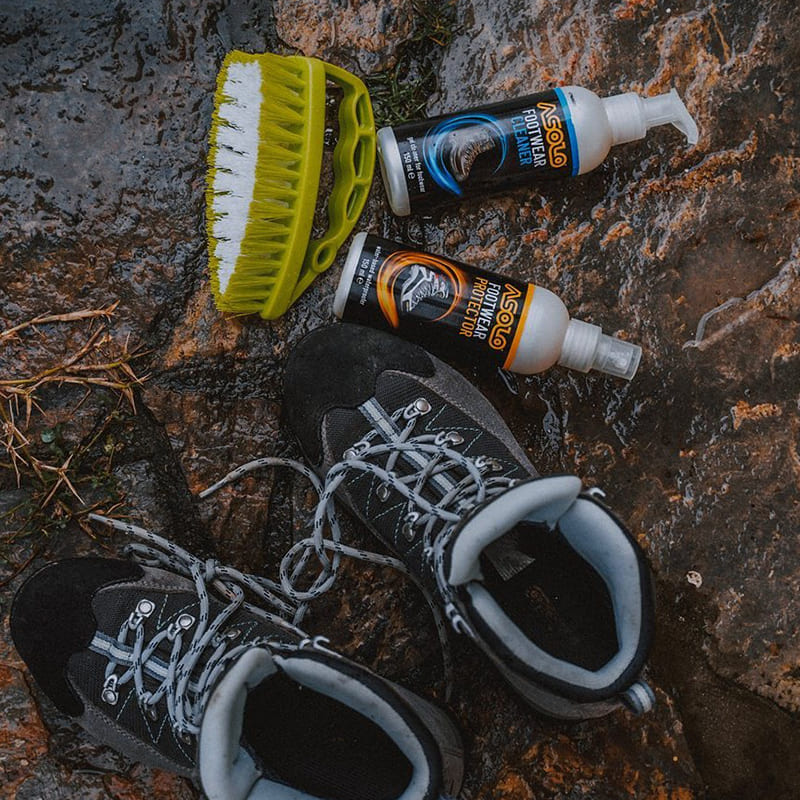
It wears off with use and eventually stops working. You'll know because the toe darkens in the wet and water soaks into the material instead of beading up and running off. That's why you need to clean and reproof your boots every so often. But careful – each material needs a different proofer, and the wrong products can make the upper even less breathable. Read how not to mess it up here.

If your boots feel damp, the membrane usually isn't the culprit. Unless it's damaged or long past its prime, it's probably working fine – and you need to look for the cause elsewhere. After all, you're up against nature, which is fiendishly varied and always finds a way in.
Low trekking shoes in wet grass or spring snow. The textile or leather around the ankle gradually soaks through, the moisture “climbs” up the upper and “tips over” the collar inside. The membrane is still holding – but a wet ring forms above its edge. And if it goes on for long, you'll feel like the whole boot has leaked.
When it's bucketing down and your trouser legs end above the boot collar, water runs down your trousers into the boot. Or down your bare legs – if you're wearing shorts. The membrane works – but the water came in from above. Get gaiters that cover the gap between boot and trousers. The water spreads over the surface instead of running inside.
Wading an ankle-deep stream or sinking shin-deep in slush – once the water level goes over the collar, there's nothing to discuss. The water's in. It's not rocket science. A boot is only waterproof up to the height where the tongue is stitched to the sides. Everything above that is just an open funnel.
A membrane lets sweat out only if the air outside is drier and cooler than inside the boots. When it's muggy, a summer downpour, fog – basically a “laundry room” – the sweat has nowhere to go. It stays inside, condenses into water and you feel damp. Yet the membrane hasn't let in a single drop – it just has nowhere to send any more moisture.
An upper that isn't regularly cleaned and proofed turns into a sponge – water doesn't run off it, it soaks in. And when the material is soaked right through, it's as if the membrane had a “wet blanket” thrown over it. Sweat transport almost stops – it stays inside, condenses and your boot feels damp.
The only time you can actually blame the membrane. It does take a beating and it ages. After years of use it can crack or wear through – mainly where it flexes most. Water then shows up in one specific spot. Say the toe of your right boot keeps getting damp while the other boot and the rest of your foot stay dry.
Most membranes last many seasons and hundreds to thousands of kilometres. But even a pebble in your boot or a lack of care on your part can shorten that. The critical spots are mainly where the boot flexes most and takes the most punishment – the front of the instep, around the toes and toe cap, and where the edges of the insole press. In short – just as you wear down the sole, the membrane won't last forever either.


They can be your lifesaver. Plan B. Waterproof socks step in when moisture somehow gets into your boots after all – and you still have more kilometres ahead. Or – heaven forbid – another full day of walking and the boots have no chance of drying overnight.
Either way, the membrane in waterproof socks has the same limits as any other membrane. Water vapour needs somewhere to go – and if the surroundings are full of moisture, the sweat stays in the socks. Waterproof socks also tend to be warmer and less breathable than ordinary ones – and suit the colder months better than summer.

On the outside, waterproof socks have a tough knit that can take some punishment. Underneath is a thin – waterproof yet breathable – membrane. And closest to your foot is a soft layer of merino wool that wicks sweat and adds warmth. So the outer layer can be soaked, but the membrane makes sure your feet stay dry and warm.

“GORE-TEX is useless, it leaks anyway!” we're back where we started. But now you know that's not quite the whole truth. We're just not (yet) good enough to get round the laws of physics. So what matters is understanding how things work – and doing everything you can.
To finish, here are a few examples of how you can give yourself the best chance of dry feet in different situations.
As you already know, warmth and high humidity aren't a great combo. The membrane won't let water in from outside – but inside, your own sweat starts to chill you. Technical merino socks and a change into a dry pair help, say halfway through the hike.
Chilly, persistent drizzle, wet grass. High membrane hiking boots, well proofed of course – that's the basis. And ideally gaiters over them. That can keep your feet mostly dry all day. Meeting comfort halfway pays off.
You misjudge the depth – and the water just pours in. It happens. Your socks are soaked, and so is the inner lining of the boots. Now what? Changing into dry ordinary socks won't help. They'll get soaked too. This is exactly when waterproof socks come in handy.
Spring firn, slushy from the sun. If you trudge through it for long, the upper eventually soaks through – and your own moisture starts building up inside, or moisture wicks up and “tips over” the top. A dry pair of socks helps. Or go straight for waterproof ones.
Trainers without a membrane. So your feet don't bake. But in the morning you set off across a meadow full of dew. Want to start the day with wet feet? No way! The fix? Waterproof socks. Once your shoes have dried out a bit, swap them for regular socks.
It's simple. Whoever looks after their gear well gets years of use out of it. Certainly longer than those who couldn't care less. So – dry your boots at room temperature (not by a direct heat source), clean the upper regularly and proof them with products suited to the material. Suede, nubuck and synthetics with a spray; smooth (or even buffed) leather with wax. Here's how.